Article Content
33kV Cast-Resin Voltage Transformer UNKNOWN for Metering and Protection – IEC 61869-3 Standard
Introduction to the UNKNOWN Voltage Transformer
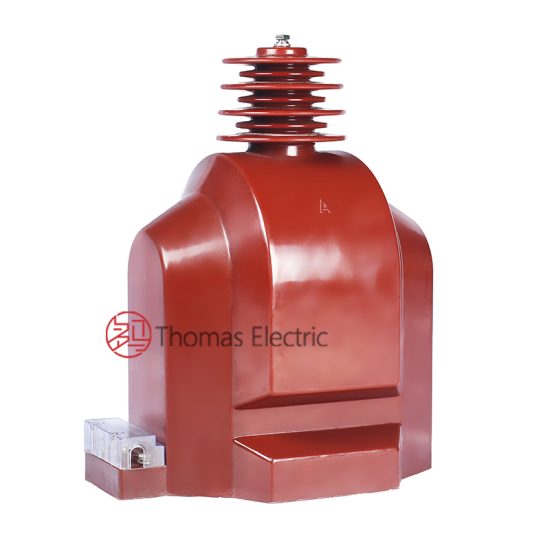
The UNKNOWN voltage transformer (VT) is a single-phase, cast-resin insulated instrument transformer engineered for reliable operation in 33kV (IEC) / 35kV (domestic) medium-voltage power systems. Designed in strict compliance with IEC 61869-3 and GB/T 20840.3, this device accurately steps down high primary voltages to standardized secondary levels—typically 100 V or 100/√3 V—for use in metering, protective relaying, and monitoring circuits. Its construction leverages vacuum pressure impregnation (VPI) epoxy resin technology encapsulating a grain-oriented electrical steel (GOES) core, ensuring superior dielectric strength, mechanical robustness, and long-term stability under both steady-state and transient conditions.
Operating Principle of Cast-Resin Insulation
Cast-resin insulation in the UNKNOWN VT employs a two-component cycloaliphatic epoxy system processed under vacuum and pressure to eliminate voids and moisture ingress. This technique fully encapsulates the primary and secondary windings along with the magnetic core, creating a monolithic structure with uniform electric field distribution. The absence of air pockets prevents partial discharge inception below 10 pC at 1.2 × Um/√3 (where Um = 40.5 kV), as verified per IEC 61869-3 Clause 7.4. The resin’s high tracking resistance (>600 V per IEC 60112) and hydrophobic surface properties ensure reliable outdoor performance even in polluted or humid environments. Thermal conductivity of the cured resin (~0.8 W/m·K) facilitates efficient heat dissipation during continuous operation at rated burden, maintaining winding temperature rise within 60 K limits specified in GB/T 20840.3.
Advantages Over Oil-Immersed Designs
Compared to traditional oil-filled VTs, the UNKNOWN cast-resin design eliminates fire hazards, environmental contamination risks, and maintenance-intensive oil sampling. It requires no conservator tanks, breather systems, or periodic dielectric testing of insulating fluid. The solid insulation system exhibits negligible aging under normal operating conditions, contributing to a service life exceeding 25 years. Additionally, the compact footprint and lighter weight simplify transportation and mounting on pole-top or pad-mounted switchgear. Crucially, the absence of liquid insulation enables safe deployment in indoor substations, urban areas, and environmentally sensitive zones where flammable materials are prohibited. Partial discharge levels remain stable over time due to the resin’s self-healing microstructure, unlike oil-paper systems that degrade with moisture absorption.
Typical Applications Overview
The UNKNOWN VT is deployed across utility distribution networks, industrial plants, and renewable energy facilities requiring precise voltage measurement at 33/35kV levels. In 35kV substations, it supplies secondary voltage signals to revenue-class kWh meters (accuracy class 0.2 or 0.5) and distance relays (class 3P or 6P). Its robust transient response supports fault detection during lightning surges or switching operations, with a defined knee-point voltage ensuring linear behavior up to 2× rated voltage. The transformer’s phase displacement error remains within ±10 minutes for metering classes, critical for three-phase power calculations. Due to its hermetic sealing, it performs reliably in coastal regions (Class III pollution per IEC 60815) and high-altitude sites up to 2000 m without derating.
Technical Specifications
The UNKNOWN voltage transformer delivers precision performance through rigorously defined electrical and environmental parameters aligned with international and Chinese standards.
| Parameter | Value |
|---|---|
| Primary Voltage (Up) | 33 kV (IEC) / 35 kV (GB) |
| Secondary Voltage (Us) | 100 V or 100/√3 V |
| Voltage Ratio | 33000/100 V or 35000/100 V |
| Accuracy Class (Metering) | 0.2, 0.5 |
| Accuracy Class (Protection) | 3P, 6P |
| Rated Output (VA) | 30, 50, 100 (per burden class) |
| Insulation Level (LI/AC) | 170 kV / 70 kV (per IEC 60071-1) |
| Short-Time Withstand Voltage | 4.5 kV for 1 min (secondary circuit) |
| Frequency | 50 Hz ±0.5 Hz |
| Phase Displacement (Class 0.2) | ≤ ±10 minutes |
| Voltage Error (Class 0.2) | ≤ ±0.2% |
Standard Service Conditions
The UNKNOWN VT operates under standard ambient conditions defined in IEC 61869-3: ambient temperature range of –25°C to +40°C, relative humidity ≤95% at 25°C, and installation altitude ≤1000 m above sea level. For altitudes between 1000–2000 m, external insulation must be corrected per IEC 60071-2; however, internal resin insulation remains unaffected. The transformer withstands daily thermal cycling without cracking due to matched coefficients of thermal expansion between copper windings, GOES core, and epoxy matrix (≈60 × 10–6/K). Condensation resistance is ensured by complete encapsulation—no internal air gaps exist to permit dew formation. In tropical climates, UV-stabilized resin additives prevent surface chalking after 10,000 hours of accelerated weathering per IEC 60068-2-5.
Core and Winding Construction
The magnetic circuit uses CRGO (cold-rolled grain-oriented) silicon steel laminations (M4 grade, 0.27 mm thickness) with flux density limited to 1.6 T at rated voltage to minimize hysteresis losses (<0.8 W/kg at 1.5 T, 50 Hz). Primary winding consists of enameled copper wire (Class H insulation, 180°C rating) wound in layered concentric sections to control impulse voltage distribution. Secondary windings employ double-insulated magnet wire with reinforced termination points to handle fault currents up to 10× rated for 1 second. All windings undergo pre-casting bake-out at 120°C for 4 hours to remove moisture before VPI resin injection at 60°C under 5 mbar vacuum. Post-curing at 80°C for 12 hours ensures full cross-linking, achieving glass transition temperature (Tg) >110°C.
Typical Applications
The UNKNOWN 33kV cast-resin VT serves diverse roles in modern power infrastructure, combining metrological accuracy with rugged reliability.
Substation Secondary Metering
In 35kV distribution substations, the UNKNOWN VT provides voltage inputs to Class 0.2S or 0.5S revenue meters for accurate energy billing. Its low phase displacement error (≤±5 minutes for 0.2 class) ensures minimal cosine error in kW/kVAR calculations across varying power factors (0.5 lag to unity). The transformer maintains ratio accuracy within ±0.15% from 25% to 100% of rated burden, critical for multi-tariff metering. When connected in V-V or Y-Y configurations, inter-unit ratio mismatch is held below 0.1% through factory laser-trimmed secondary taps. Compliance with DL/T 614 ensures compatibility with Chinese smart grid AMI systems.
Industrial Power Distribution
Large manufacturing facilities using 35kV primary distribution rely on the UNKNOWN VT for motor protection and power quality monitoring. Connected to multifunction relays (e.g., SEL-351, Siemens 7SJ), it enables undervoltage lockout, overvoltage tripping, and vector shift detection during islanding events. The 3P accuracy class guarantees voltage measurement within ±3% up to 5× rated voltage during ferroresonance or single-line-to-ground faults. In arc furnace plants with high harmonic distortion, the GOES core’s low magnetostriction reduces audible noise (<55 dB at 1 m), while the resin’s damping properties suppress mechanical resonance at 150 Hz and 250 Hz harmonics.
Renewable Energy Integration
Solar farms and wind parks interfacing at 35kV utilize the UNKNOWN VT for grid synchronization and anti-islanding protection. During rapid irradiance changes or gust events, the VT’s fast transient response (rise time <50 µs) ensures timely detection of voltage sags/swells per GB/T 19964 requirements. Its high saturation margin (knee point >150 V at 100 V secondary) prevents core saturation during DC offset in fault recovery. Inverter-based resources require precise zero-sequence voltage measurement; the UNKNOWN VT’s tertiary winding option (100/3 V) supports residual voltage relaying with 6P accuracy under unbalanced conditions.
Rural and Suburban Distribution Networks
For remote feeders with long line lengths, the UNKNOWN VT’s low capacitive leakage current (<0.5 mA at 1.2 Un) minimizes loading errors on electromechanical relays. Mounted on pole-top reclosers, its IP54-rated housing resists dust and rain ingress per IEC 60529. In cold climates (–30°C), the resin’s impact strength (>8 kJ/m² per ISO 179) prevents brittle fracture during ice-shedding events. Utilities deploy these VTs in automated sectionalizing schemes where consistent ratio stability over 10-year intervals reduces recalibration costs. The 100 V secondary standard simplifies spare parts logistics across mixed-vendor relay fleets.
Compliance with International Standards
The UNKNOWN VT meets stringent requirements of both global and Chinese regulatory frameworks, ensuring interoperability and safety.
IEC 61869-3 Compliance Details
Per IEC 61869-3:2011, the UNKNOWN VT undergoes type tests including temperature rise (Clause 7.2), short-circuit withstand (Clause 7.3), and partial discharge (Clause 7.4). The insulation coordination follows IEC 60071-1: standard lightning impulse withstand voltage (LIWV) of 170 kV and power frequency test voltage of 70 kV for 1 minute. Accuracy verification per Clause 8 uses calibrated reference standards traceable to national labs, with ratio error measured at 25%, 50%, 100%, and 120% of rated voltage. Transient response is validated via chopped wave tests (1.2/50 µs, 170 kV peak) to ensure secondary voltage recovery within 20 ms post-surge. Markings include rated insulation level (e.g., “170/70”), accuracy class, and vector group per Clause 10.
GB/T 20840.3 Alignment
Chinese standard GB/T 20840.3-2013 aligns closely with IEC 61869-3 but adds specific requirements for domestic grids. The UNKNOWN VT complies with mandatory clauses on seismic withstand (horizontal acceleration 0.3g per DL/T 5729), salt fog resistance (1000 hours neutral salt spray per GB/T 10125), and electromagnetic compatibility (radiated emissions <40 dBµV/m at 30–230 MHz per GB/T 17626.3). Secondary terminal blocks meet GB/T 11022 creepage distances: ≥25 mm/kV for 35kV systems (total ≥875 mm). Factory routine tests include 100% power frequency withstand at 3 kV (secondary to ground) for 1 minute—exceeding IEC’s 3 kV requirement by applying it to every unit.
Key Differences Between IEC and Domestic Standards
While IEC 61869-3 permits 33kV as nominal system voltage, GB/T 20840.3 mandates testing at 35kV (Um = 40.5 kV). Consequently, the UNKNOWN VT’s insulation is designed for 40.5 kV maximum system voltage, satisfying both regimes. Accuracy class definitions differ slightly: IEC allows ±0.2% voltage error for Class 0.2, whereas GB/T tightens it to ±0.18% for revenue metering. Pollution severity classification also varies—IEC uses creepage distance per kV (e.g., 25 mm/kV for Medium), while GB/T specifies absolute minimums (e.g., 900 mm for 35kV outdoor). The UNKNOWN VT bridges this gap by providing 950 mm creepage on its porcelain bushings, certified by CEPREI and SGS.
On-Site Testing Procedures
Post-installation verification ensures the UNKNOWN VT performs within specification before energization.
Insulation Resistance Test
Measure insulation resistance between primary winding and ground, and between secondary windings and ground, using a 2500 V DC megohmmeter per IEC 60270. Acceptance criterion: ≥1000 MΩ at 20°C. Correct readings for temperature using RT = R20 × 2(20–T)/10. Low values (<100 MΩ) indicate moisture ingress or resin cracking—requiring drying or replacement. Test duration: 1 minute after stabilization. Ensure all secondary terminals are shorted together and grounded during primary measurement to avoid false lows from inter-winding capacitance.
Turns Ratio Test
Apply 100–200 V AC (50 Hz) to the primary and measure secondary voltage with a calibrated voltmeter (±0.1% accuracy). Calculate actual ratio = Vp/Vs. Compare to nameplate ratio; tolerance per IEC 61869-3: ±0.2% for Class 0.2, ±0.5% for Class 0.5. Use a dedicated turns ratio tester (e.g., Omicron TTR) for automatic comparison. Perform at 25%, 50%, and 100% of test voltage to detect turn-to-turn shorts. Deviation >1% indicates winding damage during shipping.
Polarity Test
Verify reducing polarity per IEC 61869-3 Figure 3. Connect a 6–12 V battery across primary terminals (H1+, H2–). Momentarily close the circuit while monitoring secondary with a DC millivoltmeter (X1+, X2–). A positive kick confirms correct polarity. Incorrect polarity causes 180° phase reversal in metering—leading to negative kWh accumulation. Repeat three times to rule out meter inertia errors. Document results with oscillogram if using electronic testers.
Power Frequency Withstand Voltage Test
Apply 70 kV RMS (for 35kV class) at 50 Hz between primary and grounded tank for 1 minute per IEC 60060-1. Use a calibrated sphere gap or capacitive divider for measurement. Leakage current must remain <300 mA; sudden increase indicates flashover. Secondary windings must be short-circuited and grounded during test. For maintenance testing, apply 80% of factory value (56 kV) for 1 minute. Never exceed 1.1 × test voltage to avoid cumulative insulation damage.
Open-Circuit Characteristic Test
Gradually increase primary voltage from 0 to 190 V (secondary basis) while measuring excitation current. Plot Vs vs. Iexc. Knee point occurs where slope decreases sharply—should exceed 150 V for protection-class VTs. Excessive excitation current (>10 mA at 100 V) suggests core lamination damage or shorted turns. Compare to factory curve; deviation >15% warrants investigation. This test validates saturation margin for fault current interruption.
Preventive Maintenance Guide
Proactive upkeep maximizes service life and prevents unexpected failures in the UNKNOWN VT.
Periodic Inspection Protocol
Conduct visual inspections quarterly: check for resin cracks, tracking marks, or terminal corrosion. Clean bushings with isopropyl alcohol if salt deposits exceed 0.1 mg/cm² (per IEC 60815). Annually, verify torque on terminal bolts (15 N·m for M8 studs) and inspect grounding continuity (<0.1 Ω resistance). Use infrared thermography during peak load to detect hot spots (>10 K above ambient indicates internal fault). Record partial discharge levels with portable detectors; values >20 pC warrant lab analysis. Replace silica gel breathers if present (though rare in cast-resin designs).
Maintenance Intervals and Fault Diagnosis
| Interval | Action | Fault Indicator |
|---|---|---|
| Annual | Insulation resistance, ratio check | Rins ↓ 50%, ratio error ↑ 0.3% |
| 5-Year | Full accuracy retest per IEC 61869-3 | Phase error >15 min (Class 0.2) |
| After Fault | Withstand voltage, PD measurement | Flashover, PD >50 pC |
| 10-Year | Core loss measurement | Losses ↑ 20% vs. baseline |
Common failure modes include moisture-induced surface tracking (evidenced by white powder on resin) and secondary winding open-circuit (causing relay misoperation). Diagnose via bridge measurements: inter-winding capacitance should be 150–250 pF; values >400 pF suggest delamination. Always de-energize and ground before maintenance—VTs can retain charge via capacitive coupling.
Conclusion
The UNKNOWN 33kV cast-resin voltage transformer represents a technically mature solution for precision voltage transformation in medium-voltage networks. By integrating VPI epoxy resin insulation with high-permeability GOES cores, it achieves exceptional dielectric integrity, thermal stability, and mechanical resilience—surpassing the limitations of oil-immersed alternatives. Its compliance with both IEC 61869-3 and GB/T 20840.3 ensures seamless integration into global and Chinese power systems, supporting applications from revenue metering to renewable energy grid interconnection. Rigorous factory testing and straightforward on-site verification protocols guarantee long-term accuracy, while minimal maintenance requirements reduce lifecycle costs. With a design life of 25–30 years under standard operating conditions, the UNKNOWN VT delivers sustained performance even in harsh environments, making it a cornerstone component for reliable and accurate secondary system operation in 35kV infrastructure worldwide.