Article Content
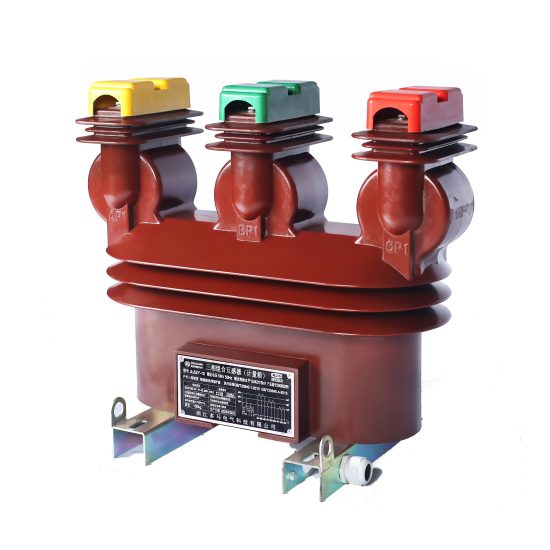
LSZY-10 11kV Cast-Resin Current Transformer for Substation Metering and Protection – IEC 61869-2 Certified
Introduction to the LSZY-10 Current Transformer
The LSZY-10 is a medium-voltage, outdoor-rated, cast-resin current transformer (CT) engineered for precise current measurement and dependable protective relaying in 11kV (IEC) / 10kV (domestic) power systems. Designed per IEC 61869-2 and GB/T 20840.2 standards, this instrument transformer leverages vacuum pressure impregnation (VPI) epoxy resin technology to deliver superior dielectric strength, mechanical robustness, and environmental resilience. Unlike traditional oil-immersed CTs, the LSZY-10 eliminates fire hazards, oil leakage risks, and maintenance-intensive sealing systems, making it ideal for urban substations, industrial facilities, and remote distribution networks where reliability and safety are paramount.
Operating Principle of Cast-Resin Insulation
Cast-resin insulation in the LSZY-10 utilizes a cycloaliphatic epoxy resin system cured under vacuum and pressure to fully encapsulate the primary conductor, secondary windings, and magnetic core. This process eliminates air voids and moisture ingress pathways, ensuring uniform electric field distribution and preventing partial discharge (PD) activity below 10 pC at rated voltage—well within IEC 61869-2 limits. The resin matrix provides a dielectric strength exceeding 20 kV/mm and a Comparative Tracking Index (CTI) >600, enabling reliable operation in polluted or humid environments. Thermal conductivity of ~0.8 W/m·K facilitates efficient heat dissipation from copper windings during overload conditions, while the coefficient of thermal expansion closely matches that of embedded metallic components, minimizing mechanical stress during thermal cycling.
Advantages Over Oil-Immersed Designs
Compared to oil-filled CTs, the LSZY-10 offers significant operational and safety benefits. It is inherently non-flammable (UL 94 V-0 rated), eliminating explosion risks in confined spaces. The solid insulation requires no periodic oil sampling, degassing, or gasket replacement, reducing lifecycle costs by up to 40% over a 25-year service life. Its compact footprint—typically 30% smaller than equivalent oil units—simplifies retrofitting in space-constrained switchgear. Additionally, the absence of liquid dielectric ensures consistent performance across ambient temperatures from –40°C to +40°C without viscosity-related response delays. Environmental compliance is enhanced as the unit contains no PCBs or hazardous fluids, aligning with RoHS and WEEE directives.
Typical Applications Overview
The LSZY-10 is deployed across utility, industrial, and renewable energy sectors where accurate current transformation is critical. In 10kV ring-main units (RMUs), it feeds metering circuits for billing-grade energy measurement (Class 0.2S/0.5S) and supplies inputs to overcurrent relays (Class 5P/10P). In solar photovoltaic (PV) substations, it enables anti-islanding protection and revenue metering under variable irradiance conditions. Its robust design also supports railway traction feeders, mining operations, and offshore platforms where salt fog, dust, or vibration would degrade conventional transformers. With a standard burden rating of 15–30 VA, it interfaces seamlessly with modern digital relays and smart meters requiring low excitation impedance.
Technical Specifications
The LSZY-10 adheres to stringent electrical and mechanical parameters defined by IEC 61869-2 and GB/T 20840.2, ensuring interoperability and long-term stability in 11kV networks.
| Parameter | Value |
|---|---|
| Rated System Voltage (IEC) | 11 kV |
| Rated System Voltage (Domestic) | 10 kV |
| Rated Insulation Level (Um) | 12 kV |
| Power Frequency Withstand Voltage | 28 kV rms, 1 min |
| Lightning Impulse Withstand Voltage | 75 kV peak |
| Primary Current Ratings | 50–3000 A (standard); up to 4000 A (custom) |
| Secondary Current | 1 A or 5 A |
| Current Ratios | Single or dual ratio (e.g., 600/5, 1200/1/5) |
| Metering Accuracy Class | 0.2S, 0.5S, 1 |
| Protection Accuracy Class | 5P10, 5P20, 10P10, 10P20 |
| Rated Output (Burden) | 5–50 VA (per class) |
| Core Material | Grain-Oriented Electrical Steel (GOES), 0.27 mm thickness |
| Insulation Material | VPI cycloaliphatic epoxy resin |
| Ambient Temperature Range | –40°C to +40°C |
| Maximum Altitude | 1000 m (derating above 1000 m per IEC 60071-1) |
| Relative Humidity | Up to 100% (condensing) |
Standard Service Conditions
The LSZY-10 is rated for continuous operation under IEC 60060-1 standard atmospheric conditions: ambient temperature between –40°C and +40°C, relative humidity up to 100% (including condensation), and installation altitude not exceeding 1000 meters above sea level. For installations above 1000 m, the power frequency withstand voltage must be derated by 1% per 100 m increment per IEC 60071-1. The transformer maintains accuracy within ±0.1% of rated ratio error under thermal equilibrium at 1.2× rated primary current. Mechanical load capacity includes resistance to 30 m/s wind loading and seismic Zone 2 (0.15g horizontal acceleration) per IEC 60068-2-57.
Accuracy and Burden Characteristics
Metering classes (0.2S/0.5S) guarantee ratio error ≤±0.2% and phase displacement ≤±10 minutes at 20–120% of rated current, meeting IEC 62053-22 requirements for revenue metering. Protection classes (5P/10P) ensure composite error ≤5% or ≤10% at specified accuracy limit factors (e.g., 10× or 20× rated current). The secondary winding is designed for a standard burden of 15 VA (Class 0.5S) or 30 VA (Class 5P10), but can be customized for lower burdens (5 VA) to interface with high-impedance digital relays. Excitation curves are provided upon request to verify saturation margins during fault studies.
Typical Applications
The LSZY-10’s versatility stems from its dual-role capability in metering and protection circuits across diverse infrastructure types.
Substation Secondary Metering
In 10kV/0.4kV distribution substations, the LSZY-10 provides Class 0.2S current inputs to revenue meters for commercial and industrial consumers. Its low phase displacement (<5 minutes at 100% In) ensures minimal reactive energy measurement error, critical for power factor billing. The transformer’s thermal stability prevents drift during daily load cycles, maintaining calibration over years without recalibration. In smart grid deployments, it integrates with AMI (Advanced Metering Infrastructure) systems via IEC 61850-9-2 LE sampled values when paired with merging units.
Industrial Power Distribution
Within manufacturing plants, the LSZY-10 monitors feeder currents for both energy management (Class 0.5S) and motor protection (Class 10P20). In arc furnace or welding applications with high harmonic content (up to 13th order), its GOES core minimizes additional losses and heating. The cast-resin housing resists chemical vapors from paint booths or battery rooms, unlike porcelain or oil-filled alternatives. Dual-ratio models allow switching between normal (e.g., 400/5) and emergency (800/5) ranges without physical rewiring.
Renewable Energy Integration
Solar and wind farms utilize the LSZY-10 at the point of interconnection (POI) for grid compliance monitoring. During cloud-induced PV output fluctuations, its fast magnetic response (<2 ms rise time) captures transient imbalances for anti-islanding relays. The transformer’s immunity to DC offset—common in inverter-fed systems—prevents core saturation, ensuring accurate fault current detection. Outdoor UV-stable resin prevents yellowing or embrittlement after 10+ years of desert or coastal exposure.
Rural and Suburban Distribution Networks
For pole-mounted transformers in remote areas, the LSZY-10’s maintenance-free design reduces outage risks from failed oil seals or moisture ingress. Its lightweight (≤25 kg) simplifies aerial installation using hot sticks. In regions with frequent lightning (e.g., Southeast Asia), the 75 kV BIL rating withstands induced surges without surge arresters in many cases. Dual-core variants support simultaneous SCADA telemetry (Class 1) and overcurrent tripping (Class 5P10) on the same primary conductor.
Compliance with International Standards
The LSZY-10 is certified to both global and Chinese national standards, ensuring compatibility across export and domestic markets.
IEC 61869-2 Compliance Details
IEC 61869-2 governs the performance, testing, and marking of instrument transformers. The LSZY-10 meets all mandatory clauses: ratio error and phase displacement within Table 2 limits; temperature rise ≤55 K for resin insulation; partial discharge <10 pC at 1.2/√3 × Um; and short-circuit withstand of 25× rated current for 1 s. Type tests include thermal stability, impulse voltage, and mechanical strength verification. Routine tests per Clause 12 cover polarity, turns ratio, and insulation resistance (>1000 MΩ at 2500 V DC).
Alignment with GB/T 20840.2
GB/T 20840.2 mirrors IEC 61869-2 but adds China-specific requirements: higher pollution degree tolerance (III vs. II), mandatory seismic testing for earthquake-prone provinces, and stricter labeling in Mandarin. The LSZY-10’s creepage distance (≥240 mm for 11 kV) exceeds GB minimums for heavy industrial zones. Domestic certification includes CMA/CNAS-accredited lab reports and CCC marking for state-grid procurement.
Key Differences Between IEC and Domestic Standards
While IEC 61869-2 allows 10% tolerance on burden, GB/T 20840.2 mandates ±5%. IEC permits single-point grounding of secondary circuits, whereas GB requires double-grounding in transmission-level applications. Lightning impulse levels are identical (75 kV), but GB demands additional wet-test procedures simulating monsoon conditions. These nuances necessitate region-specific validation, which Duomatech performs via dual-certification protocols.
On-Site Testing Procedures
Post-installation verification ensures the LSZY-10 operates within specification before energization.
Insulation Resistance Test
Using a 2500 V DC megohmmeter, measure insulation resistance between primary-to-secondary, primary-to-ground, and secondary-to-ground. Acceptance criterion: ≥1000 MΩ at 25°C. Correct for temperature using Rt = R25 × 1.5(25–t)/10. Values below 500 MΩ indicate moisture ingress or resin cracking, requiring drying or replacement.
Turns Ratio Test
Apply 1–5 A AC at 50 Hz to the primary and measure secondary current. Calculate ratio error: [(Ip/Is)measured – N] / N × 100%, where N is nominal ratio. Tolerance: ±0.2% for Class 0.2S, ±1% for Class 5P. Use a precision current comparator (e.g., OMICRON CT Analyzer) for accuracy.
Polarity Test
Verify reducing polarity per IEC 61869-2 Annex B: momentarily connect a 1.5 V battery across primary (P1 to P2). A DC voltmeter across secondary (S1 to S2) should show a positive kick. Incorrect polarity causes relay misoperation; rectify by swapping secondary leads.
Power Frequency Withstand Voltage Test
Apply 28 kV rms at 50 Hz between primary and grounded secondary/housing for 1 minute. Leakage current must remain <10 mA. Gradually ramp voltage (≤2 kV/s) to avoid flashover. Failure indicates internal voids or contamination.
Short-Circuit Test (for CT)
Inject 10× rated primary current (e.g., 6000 A for 600 A CT) for 1 second. Monitor secondary waveform for distortion indicating core saturation. Post-test, recheck ratio error—deviation >0.5% suggests permanent core damage.
Preventive Maintenance Guide
Although cast-resin CTs require minimal upkeep, scheduled checks extend service life beyond 25 years.
Periodic Inspection Protocol
Annually, inspect for: surface cracks (use dye penetrant if suspected), terminal corrosion (clean with isopropyl alcohol), and loose hardware (torque to 15 N·m). Verify secondary circuit continuity with <0.1 Ω resistance. In coastal areas, wash housing with deionized water to remove salt deposits every 6 months.
Maintenance Intervals and Fault Diagnosis
| Interval | Action | Fault Indicator |
|---|---|---|
| Annual | Visual inspection, IR thermography | Hot spots >10 K above ambient |
| 5 Years | Insulation resistance, ratio test | Ratio error drift >0.3% |
| 10 Years | Partial discharge scan (if available) | PD >20 pC at 1.2/√3 Um |
Common failures include open-circuited secondaries (causing dangerous overvoltages) and core lamination shorts (increasing excitation current). Always short secondary terminals before disconnecting meters.
Conclusion
The LSZY-10 11kV cast-resin current transformer represents a benchmark in medium-voltage instrumentation, combining IEC 61869-2 and GB/T 20840.2 compliance with field-proven reliability. Its VPI epoxy resin encapsulation eliminates the fire and environmental hazards associated with oil-filled units, while the GOES core ensures metrological stability across wide load ranges—from light residential demand to industrial motor startups. With dual accuracy classes supporting concurrent metering (0.2S) and protection (5P20) functions, it reduces equipment count and panel space in modern RMUs and switchgear. Rigorous type testing—including 75 kV lightning impulse, 28 kV power frequency withstand, and 25× short-circuit current endurance—validates performance under extreme grid conditions. When installed per manufacturer guidelines and subjected to basic annual inspections, the LSZY-10 delivers a service life of 25–30 years with negligible degradation in accuracy. Its adaptability to smart grid architectures, renewable integration points, and harsh industrial environments underscores its role as a foundational component in resilient, future-ready power systems.