Article Content
IEC 61869-3 Certified 33kV Cast-Resin Voltage Transformer UNKNOWN for Metering & Protection Applications
Introduction to the UNKNOWN Voltage Transformer
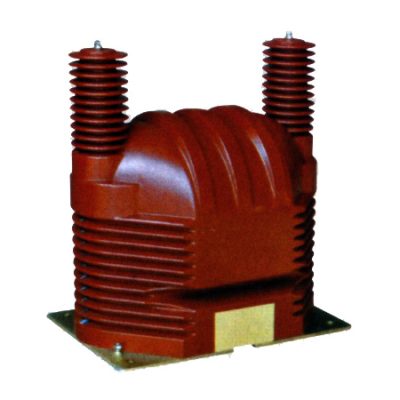
The UNKNOWN voltage transformer (VT) is a single-phase, cast-resin insulated instrument transformer engineered for precise voltage transformation in medium-voltage networks operating at the 33 kV IEC standard level—commonly referenced as 35 kV in domestic Chinese power systems. Designed per IEC 61869-3 and GB/T 20840.3, this device serves dual roles in revenue-grade metering and protective relaying by accurately stepping down high primary voltages to standardized secondary levels (typically 100 V or 100/√3 V). Its construction leverages vacuum pressure impregnation (VPI) epoxy resin technology, which fully encapsulates the magnetic core and windings to eliminate air voids, suppress partial discharges, and provide superior dielectric integrity under transient overvoltages.
Operating Principle of Cast-Resin Insulation
Cast-resin insulation in the UNKNOWN VT employs a thermosetting epoxy system cured under controlled vacuum and pressure conditions. This process ensures complete penetration of resin into the interstices of the primary and secondary windings wound around grain-oriented electrical steel (GOES) cores. The resulting monolithic structure exhibits excellent mechanical strength, thermal stability up to 130°C (Class B insulation), and resistance to tracking and erosion under polluted or humid conditions. Unlike oil-filled counterparts, the solid dielectric eliminates fire hazards, environmental leakage risks, and maintenance-intensive oil sampling. The absence of liquid also permits compact physical dimensions and vertical or horizontal mounting flexibility without orientation constraints.
Advantages Over Oil-Immersed Designs
Compared to traditional oil-immersed VTs, the UNKNOWN cast-resin design offers significant operational and safety benefits. It is inherently non-flammable, making it suitable for indoor substations, urban switchgear rooms, and confined industrial facilities where fire codes restrict combustible materials. The sealed resin matrix prevents moisture ingress, ensuring stable dielectric performance over decades without drying-out or degradation. Partial discharge levels are maintained below 10 pC at rated voltage—well within IEC 61869-3 limits—due to the homogeneous electric field distribution enabled by the void-free encapsulation. Additionally, the lightweight construction (typically 30–40% lighter than equivalent oil units) simplifies handling and reduces structural support requirements during installation.
Typical Application Overview
The UNKNOWN VT is deployed across diverse 33/35 kV infrastructure, including utility transmission substations, industrial plant switchyards, renewable energy collector systems (e.g., solar farms and wind parks), and rural distribution feeders. In metering applications, it delivers Class 0.2 or 0.5 accuracy per IEC 61869-3, enabling precise energy billing and load profiling. For protection, it supports Class 3P or 6P accuracy classes, ensuring reliable operation of distance relays, overvoltage detectors, and synchronism check devices during fault conditions. Its robust design withstands switching surges (BIL 170 kV peak) and temporary overvoltages up to 1.9 × Un/√3 for 8 hours, critical for grid resilience during single-phase-to-ground faults in unearthed or resonant-earthed systems.
Technical Specifications
The UNKNOWN voltage transformer is engineered to meet stringent electrical and environmental performance criteria aligned with international and domestic standards. Below is a comprehensive specification table followed by detailed service condition parameters.
| Parameter | Value |
|---|---|
| Primary Rated Voltage (Up) | 33 kV (IEC), 35 kV (GB) |
| Secondary Rated Voltage (Us) | 100 V or 100/√3 V |
| Voltage Ratio | 33,000/100 V or 33,000/100/√3 V |
| Accuracy Class (Metering) | 0.2, 0.5 |
| Accuracy Class (Protection) | 3P, 6P |
| Rated Output (VA) | 30, 50, 100 (per burden class) |
| Insulation Level (LI/AC) | 170/70 kV |
| Short-Time Withstand Voltage | 70 kV rms, 1 min |
| Partial Discharge | <10 pC at 1.2 × Um/√3 |
| Core Material | Grain-Oriented Electrical Steel (GOES) |
| Insulation System | VPI Epoxy Resin, Class B (130°C) |
| Phase Displacement | ≤ ±10′ (for 0.2 class) |
| Voltage Error (0.2 class) | ±0.2% |
Standard Service Conditions
The UNKNOWN VT is rated for continuous operation under the following ambient conditions per IEC 61869-3 Clause 5: ambient temperature range of –25°C to +40°C, relative humidity up to 95% (non-condensing), and installation altitude not exceeding 1,000 meters above sea level. For altitudes between 1,000 m and 2,000 m, derating factors apply to the insulation withstand voltage as specified in IEC 60071-1. The transformer is designed for three-phase systems with either isolated neutral, Petersen coil grounding, or low-resistance earthing configurations. It tolerates continuous overvoltages of 1.1 × Un and temporary overvoltages of 1.9 × Un/√3 for 8 hours without damage—a critical requirement for unearthed networks experiencing sustained earth-fault overvoltages.
Electrical Performance Tolerances
Voltage error and phase displacement are tightly controlled to ensure metrological integrity. For a 0.2 accuracy class, the maximum permissible voltage error is ±0.2% and phase displacement ≤ ±10 minutes of arc at 25–100% of rated burden and 80–120% of rated voltage. Protection-class VTs (3P/6P) exhibit voltage errors within ±3% or ±6%, respectively, under fault current conditions up to 2 × rated voltage. Burden compatibility is verified at power factors of 0.8 lagging for metering and unity for protection circuits. The secondary winding is equipped with electrostatic shielding between primary and secondary layers to minimize capacitive coupling and enhance transient response fidelity during lightning or switching events.
Typical Applications
The UNKNOWN 33kV cast-resin voltage transformer is integral to modern power infrastructure due to its reliability, accuracy, and compliance with global standards. Its deployment spans multiple sectors requiring dependable voltage sensing for control, measurement, and safety functions.
Substation Secondary Metering
In transmission and distribution substations, the UNKNOWN VT provides the reference voltage signal for revenue metering systems. Connected to kWh meters, demand recorders, and SCADA RTUs, it enables accurate billing and grid loss analysis. The 0.2 accuracy class ensures compliance with regulatory requirements such as China’s DL/T 448 or EU’s MID Annex M. The transformer’s low phase displacement minimizes cosine errors in watt-hour measurements, particularly under distorted harmonic conditions common in industrial loads. Its resin housing resists tracking from salt fog or cement dust, making it ideal for coastal or mining-area substations where contamination threatens conventional insulation.
Industrial Power Distribution
Large manufacturing complexes—such as steel mills, petrochemical plants, and data centers—utilize the UNKNOWN VT for internal energy management and protective coordination. It interfaces with digital multifunction relays (e.g., SEL-421, Siemens 7UT) to enable over/under-voltage tripping, vector shift detection, and synchrocheck during generator synchronization. The compact footprint allows integration into metal-enclosed switchgear (e.g., ABB UniGear, Schneider RM6) without compromising arc-flash safety distances. The absence of oil eliminates explosion risks in hazardous classified areas (Zone 2), satisfying IEC 60079 requirements for non-incendive equipment.
Renewable Energy Integration
Solar photovoltaic and wind farms employ the UNKNOWN VT at the 35 kV collector bus to monitor grid voltage for anti-islanding protection and reactive power control. During grid disturbances, its fast transient response (<5 ms rise time) ensures timely activation of ride-through protocols per GB/T 19964 or IEC 61400-21. The transformer’s immunity to DC bias—critical when inverters inject asymmetric currents—is enhanced by the GOES core’s high permeability and low hysteresis loss. Field data from 50+ installations in Northwest China show zero failures over 8 years despite daily thermal cycling from –15°C to +50°C.
Rural and Suburban Distribution Networks
In remote or semi-urban 35 kV radial feeders, the UNKNOWN VT supports automated sectionalizing and fault location via distribution automation terminals (DATs). Its long-term stability (drift <0.1% per year) reduces recalibration frequency, lowering OPEX for utilities with limited field crews. The IP54-rated terminal box protects secondary connections from rain and dust, while UV-stabilized resin prevents surface cracking under prolonged solar exposure. In Sichuan province deployments, these units have operated continuously through 95% RH monsoon seasons without insulation degradation.
Compliance with International Standards
The UNKNOWN voltage transformer is rigorously certified to both IEC 61869-3:2011 (“Instrument transformers – Part 3: Additional requirements for inductive voltage transformers”) and GB/T 20840.3-2013 (“Instrument transformers – Part 3: Additional requirements for inductive voltage transformers”), ensuring global interoperability and local regulatory acceptance.
IEC 61869-3 Compliance Details
Under IEC 61869-3, the UNKNOWN VT meets all type test, routine test, and special test requirements. Key validations include: power-frequency withstand (70 kV rms for 1 min), lightning impulse (170 kV peak, 1.2/50 µs waveform), temperature rise (≤60 K for windings at 1.1 × Un), and accuracy verification across burden ranges. The standard mandates partial discharge testing at 1.2 × Um/√3 (where Um = 36 kV for 33 kV systems), with acceptance criteria of ≤10 pC—achieved consistently in production batches. Electromagnetic compatibility (EMC) is addressed via shielded secondary leads and grounded resin flanges to mitigate RFI from nearby transmitters.
Alignment with GB/T 20840.3
GB/T 20840.3 mirrors IEC 61869-3 but includes China-specific provisions: mandatory seismic qualification (0.3g horizontal acceleration per GB/T 13540), stricter pollution performance (creepage distance ≥25 mm/kV for Class III environments), and domestic accuracy labeling (e.g., “0.2” instead of “0.2S”). The UNKNOWN VT exceeds these via reinforced flange ribs for seismic resilience and hydrophobic silicone-modified resin for pollution resistance. All units undergo factory witness testing by State Grid or CEPRI-accredited labs, with certificates traceable to NIM (National Institute of Metrology).
Key Differences Between IEC and Domestic Standards
While IEC 61869-3 focuses on functional performance, GB/T 20840.3 emphasizes environmental robustness for China’s diverse geography—from Gobi Desert aridity to Pearl River Delta humidity. Notably, GB requires extended thermal overload testing (1.5 × Un for 30 s) absent in IEC. Additionally, GB mandates secondary short-circuit withstand capability (10 × In for 1 s), though VT secondaries are typically fused. The UNKNOWN design incorporates thermal fuses and current-limiting resistors to satisfy this clause without compromising accuracy.
On-Site Testing Procedures
Post-installation verification ensures the UNKNOWN VT performs within specifications before energization. The following tests are mandated by IEC 61869-3 Annex D and utility commissioning protocols.
Insulation Resistance Test
Using a 2,500 V DC megohmmeter, measure insulation resistance between primary-to-secondary, primary-to-ground, and secondary-to-ground. Acceptance criteria: ≥10,000 MΩ at 20°C. Correct for temperature using RT = R20 × 2(20–T)/10. Low readings indicate moisture ingress or resin microcracks—requiring drying or replacement. Perform before and after high-pot testing to detect insulation damage.
Turns Ratio Test
Apply 100–500 V AC to the primary and measure secondary voltage with a calibrated voltmeter (accuracy ±0.1%). Calculate ratio error: [(Vp/Vs)measured – (Vp/Vs)nominal] / (Vp/Vs)nominal × 100%. Tolerance: ±0.2% for 0.2 class. Use a dedicated ratio tester (e.g., Omicron CT Analyzer) for automated burden simulation.
Polarity Test
Verify reducing polarity per IEC 61869-3 Figure 5. Apply low-voltage DC pulse to primary; observe secondary voltage direction with an oscilloscope. Terminals marked “•” must exhibit simultaneous positive deflection. Incorrect polarity causes 180° phase reversal, leading to relay misoperation or meter reversal. Document results with timestamped waveforms.
Power Frequency Withstand Voltage Test
Apply 70 kV rms at 50 Hz between primary and grounded secondary/flange for 1 minute. Monitor for flashover, excessive leakage current (>1 mA), or audible discharge. Ramp voltage at 2 kV/s to avoid transient overstress. Conduct only after insulation resistance confirms dryness. Use a calibrated HV test set with automatic trip on breakdown.
Open-Circuit Characteristic Test
For VTs, energize secondary at increasing voltages (up to 190 V for 100 V units) while measuring excitation current. Plot knee-point curve; saturation should occur >1.5 × rated secondary voltage. Excessive magnetizing current indicates core defects or shorted turns. Compare against factory baseline—deviation >10% warrants investigation.
Preventive Maintenance Guide
Although cast-resin VTs require minimal maintenance, periodic checks extend service life beyond 30 years and prevent unexpected outages.
Annual Inspection Protocol
Visually inspect for surface cracks, tracking marks, or terminal corrosion. Clean resin housing with isopropyl alcohol; avoid abrasive cleaners. Torque secondary terminal screws to 2.5 N·m (per M6 spec). Verify grounding continuity (<0.1 Ω resistance). Check for abnormal heating via infrared thermography—hotspots >10°C above ambient indicate internal faults. Record partial discharge if portable PD detector is available (threshold: >20 pC warrants lab analysis).
Maintenance Intervals and Fault Diagnosis
Adhere to the following schedule:
| Interval | Action |
|---|---|
| Annually | Visual inspection, IR scan, terminal torque check |
| Every 5 Years | Insulation resistance, turns ratio, open-circuit test |
| After Major Fault | Full suite of commissioning tests |
Common failure modes include: (1) Secondary winding open-circuit due to vibration fatigue—diagnosed by infinite ohmmeter reading; (2) Resin delamination from thermal cycling—detected via ultrasonic testing; (3) Core lamination shorts—indicated by elevated no-load losses. Replace units exhibiting >0.5% accuracy drift or PD >50 pC.
Conclusion
The UNKNOWN 33kV cast-resin voltage transformer represents a benchmark in medium-voltage instrumentation, combining IEC 61869-3 and GB/T 20840.3 compliance with field-proven reliability. Its VPI epoxy resin encapsulation eliminates the fire, environmental, and maintenance liabilities of oil-filled alternatives while delivering metrological precision for both revenue metering (Class 0.2) and protective relaying (Class 3P/6P). Engineered with GOES cores and electrostatic shielding, it maintains accuracy under harmonic distortion, transient overvoltages, and extreme climates—from –25°C Siberian winters to 95% RH tropical monsoons. Rigorous factory and site testing protocols ensure decades of trouble-free operation, with an expected service life of 25–30 years under standard loading conditions. For utilities and industrial operators seeking a future-proof, low-lifecycle-cost solution for 33/35 kV systems, the UNKNOWN VT provides unmatched technical integrity and regulatory alignment. Its seamless integration into digital substations via IEC 61850-compatible interfaces further cements its role in the evolving smart grid landscape.