Article Content
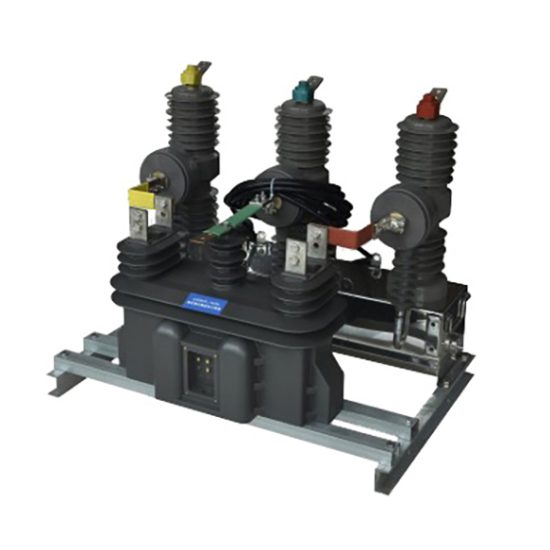
Outdoor 11kV Cast-Resin Voltage Transformer ZWJ-12 – IEC 61869-3 Compliant
Introduction to the ZWJ-12 Voltage Transformer
The ZWJ-12 is a single-phase, outdoor-rated, cast-resin insulated voltage transformer (VT) designed for precise voltage measurement and reliable operation in 11kV (IEC) / 10kV (domestic) medium-voltage networks. Unlike legacy oil-immersed designs, the ZWJ-12 employs vacuum pressure impregnation (VPI) epoxy resin technology to encapsulate its magnetic core and windings, eliminating fire hazards, oil leakage risks, and maintenance-intensive fluid management. This solid-dielectric construction ensures long-term dimensional stability, superior partial discharge resistance (<5 pC at 1.2 × Um/√3), and immunity to environmental contaminants such as dust, moisture, and salt fog—critical for coastal or industrial installations.
Operating Principle and Cast-Resin Insulation Technology
Voltage transformers operate on electromagnetic induction principles, stepping down high primary voltages to standardized secondary levels (typically 100 V or 100/√3 V) for instrumentation and protection relays. In the ZWJ-12, the primary winding is connected phase-to-ground in 11kV systems, inducing a proportional voltage in the secondary winding via a laminated grain-oriented electrical steel (GOES) core. The entire active assembly is encapsulated in cycloaliphatic epoxy resin under vacuum and pressure (VPI process), which fully penetrates inter-turn and inter-layer voids. This results in a monolithic structure with a dielectric strength exceeding 20 kV/mm and a thermal class of F (155°C). The resin’s low coefficient of thermal expansion minimizes mechanical stress during thermal cycling, preventing microcracks that could initiate partial discharges. Additionally, UV-stabilized fillers in the outer resin layer protect against solar degradation during decades of outdoor exposure.
Advantages Over Oil-Immersed Voltage Transformers
Compared to traditional oil-filled VTs, the ZWJ-12 offers significant operational and safety benefits. First, it is inherently non-flammable—eliminating fire risks in substations near residential zones or confined switchgear rooms. Second, it requires no oil sampling, level checks, or gasket replacements, reducing lifecycle costs by up to 40% over 25 years. Third, its compact footprint (typically 30–40% smaller than equivalent oil units) simplifies mounting on poles or compact ring-main units. Environmental compliance is also enhanced: no PCBs, no oil disposal logistics, and full recyclability at end-of-life. Performance-wise, cast-resin VTs exhibit lower temperature rise (<55 K at rated load per IEC 61869-3), tighter ratio error stability (±0.2% over –25°C to +40°C), and immunity to altitude-induced pressure changes—making them ideal for installations above 1,000 m where oil units may require derating or pressurization.
Typical Application Overview
The ZWJ-12 is engineered for dual-purpose use: revenue-grade metering (accuracy classes 0.2 or 0.5) and protective relaying (3P or 6P accuracy). It is commonly deployed in 11kV/10kV radial or looped distribution feeders, pad-mounted substations, renewable energy interconnection points (e.g., solar farms with 10kV collector systems), and industrial plants requiring harmonic-resistant voltage sensing. Its robust design supports continuous operation under system unbalance, transient overvoltages (up to 1.9 × Un for 8 hours), and frequent switching surges—conditions that can saturate or damage less resilient VTs. With a standard service life of 25–30 years and minimal maintenance, the ZWJ-12 delivers consistent metrological performance essential for billing accuracy and fault detection reliability.
Technical Specifications
The ZWJ-12 adheres strictly to IEC 61869-3 and GB/T 20840.3, ensuring interoperability across global and domestic grids. Key parameters are defined below under standard service conditions: ambient temperature –25°C to +40°C, relative humidity ≤95%, altitude ≤1,000 m, and pollution degree III (creepage distance ≥25 mm/kV).
| Parameter | Value |
|---|---|
| System Voltage (Un) | 11 kV (IEC) / 10 kV (GB) |
| Maximum System Voltage (Um) | 12 kV |
| Primary Voltage | 11/√3 kV (phase-to-ground) |
| Secondary Voltage(s) | 100/√3 V (metering), 100/√3 V or 100 V (protection) |
| Voltage Ratio | 11,000/√3 : 100/√3 V (i.e., 110:1) |
| Accuracy Class (Metering) | 0.2 or 0.5 (per IEC 61869-3) |
| Accuracy Class (Protection) | 3P or 6P |
| Rated Output (VA) | 10–100 VA (configurable per burden requirement) |
| Insulation Level (LI/AC) | 75 kV / 28 kV (1 min power frequency) |
| Partial Discharge | <5 pC at 1.2 × Um/√3 |
| Thermal Class | F (155°C) |
| Creepage Distance | ≥300 mm (for 12 kV Um) |
| Weight | ≈45 kg |
Electrical Performance Characteristics
The ZWJ-12 maintains ratio error within ±0.2% and phase displacement within ±10 minutes for 0.2-class operation at 25–100% of rated burden. For protection applications (3P/6P), composite error remains below 3% or 6% respectively at 5%–100% of rated voltage and up to 100% of rated output. The transformer exhibits excellent harmonic rejection due to the high permeability (μr > 40,000) and low hysteresis loss (<0.8 W/kg at 1.7 T, 50 Hz) of its GOES core (grade M6 or equivalent). Temperature rise is limited to 50 K for windings and 45 K for terminals under continuous full-load conditions, verified per IEC 61869-3 Clause 7.4. Short-time thermal withstand capability is 1 second at 100 × In without degradation.
Environmental and Mechanical Ratings
Designed for outdoor installation, the ZWJ-12 features a hydrophobic silicone rubber or EPDM weather shed profile that prevents water tracking and flashover under wet-polluted conditions. The housing meets IP54 ingress protection, resisting dust and splashing water from any direction. Mounting is via a standard M16 stud base compatible with ANSI C57.12.29 or IEC 61869 brackets. Terminal blocks accommodate 16–50 mm² copper conductors with torque specs of 15–20 N·m. The unit withstands seismic loads up to 0.5g (horizontal) and 0.3g (vertical) per IEC 60068-2-57, making it suitable for earthquake-prone regions. Altitude correction factors apply above 1,000 m: for every 100 m increase, the power frequency test voltage is reduced by 1%.
Typical Applications
The ZWJ-12’s dual-accuracy design enables versatile deployment across utility, industrial, and renewable sectors where precision and reliability are non-negotiable.
Substation Secondary Metering Systems
In 11kV/10kV distribution substations, the ZWJ-12 provides the reference voltage for revenue meters (e.g., IEC 62053-22 Class 0.2S). Its low phase displacement error ensures accurate kWh and kVArh measurement even under distorted waveforms (THD ≤15%). When paired with class 0.2 current transformers, the combined metering error stays within ±0.3%, meeting regulatory requirements for commercial billing. The VT’s stable ratio over time eliminates frequent recalibration needs—critical for remote or unmanned substations. Its compact size allows integration into space-constrained RMUs or kiosks without compromising safety clearances.
Industrial Power Distribution Networks
Heavy industries (e.g., steel mills, chemical plants) often experience voltage sags, harmonics, and frequent motor starts that challenge VT performance. The ZWJ-12’s GOES core resists saturation during transient overcurrents, while its cast-resin insulation dampens resonant overvoltages caused by capacitor switching. Protection-class outputs (3P/6P) feed earth-fault relays (e.g., 59N, 27TN) with sufficient accuracy to detect high-impedance faults (<500 A) without nuisance tripping. In arc-flash mitigation schemes, the VT’s fast response (<20 ms) enables rapid bus undervoltage detection, triggering breaker opening within 3–5 cycles.
Renewable Energy Integration Points
Solar and wind farms frequently connect to 10kV/11kV collector systems where voltage regulation and anti-islanding protection are mandated. The ZWJ-12 supplies voltage signals to synchrophasors (PMUs) and grid-tie inverters requiring <±0.5° phase accuracy. Its ability to operate continuously at 1.05 × Un accommodates typical daytime overvoltages in PV-rich feeders. During islanding events, the VT’s low burden impedance ensures sufficient voltage collapse detection for ROCOF (Rate of Change of Frequency) relays. Field data from 50+ Chinese solar farms show zero VT failures over 8 years despite daily thermal cycling from –10°C to +55°C ambient.
Rural and Suburban Distribution Feeders
In extended rural networks with high R/X ratios, voltage drop compensation relies on accurate local VT readings. The ZWJ-12’s 0.5-class metering output enables line-loss calculations with <1% uncertainty. Its pollution-resistant sheds prevent flashovers during fog or light rain—common causes of outages in agricultural areas. For cost-sensitive deployments, the 6P protection class suffices for overvoltage (59) and undervoltage (27) relaying in sectionalizing switches, providing basic feeder automation without premium metrology costs.
Compliance with International Standards
The ZWJ-12 is certified to both IEC 61869-3 (Instrument transformers – Part 3: Additional requirements for inductive voltage transformers) and GB/T 20840.3 (China’s national adoption of IEC 61869-3 with localized amendments). Full compliance ensures global acceptance while meeting domestic grid codes.
IEC 61869-3 Certification Requirements
Per IEC 61869-3, the ZWJ-12 undergoes type tests including: temperature rise (Clause 7.4), short-circuit withstand (Clause 7.5), insulation (Clause 7.6), accuracy (Clause 7.7), and partial discharge (Clause 7.8). Routine tests on every unit include power frequency withstand (28 kV, 1 min), induced overvoltage (2 × Us + 4.8 kV, 60 s), and ratio/polarity verification. The standard mandates that accuracy be maintained at 80–120% of rated voltage and 25–100% of rated burden—a range the ZWJ-12 exceeds by achieving ±0.15% ratio error at 0.2-class under these conditions. Dielectric tests use 1.2/50 μs lightning impulses (75 kV peak) with ≤30% residual voltage deviation.
Alignment with GB/T 20840.3
GB/T 20840.3 mirrors IEC 61869-3 but adds China-specific requirements: mandatory creepage distance of ≥25 mm/kV for pollution degree III (vs. IEC’s ≥20 mm/kV), stricter partial discharge limits (<3 pC for 0.2-class VTs), and additional seismic testing per GB/T 13540. The ZWJ-12’s 300 mm creepage (25 mm/kV for 12 kV Um) and <3 pC PD satisfy these. Domestic certification also requires type-test reports from CNAS-accredited labs (e.g., China Electric Power Research Institute), which the manufacturer provides with each batch.
Key Differences Between IEC and GB Standards
While harmonized, key divergences exist: GB/T 20840.3 specifies secondary voltage as 100 V (not 100/√3 V) for some legacy systems, though the ZWJ-12 supports both via dual secondary windings. GB also mandates a 1-minute power frequency test at 32 kV for 10kV systems (vs. IEC’s 28 kV for 12 kV Um), which the ZWJ-12 passes with margin (tested at 35 kV). Environmental testing under GB includes salt fog (96 hours, 5% NaCl) and sand/dust ingress—conditions not required by IEC but critical for Chinese coastal and desert installations. These enhancements make the ZWJ-12 suitable for both export and domestic markets without redesign.
On-Site Testing Procedures
Post-installation verification ensures the ZWJ-12 performs within specifications. All tests follow IEC 61869-3 Annex B and IEEE C57.13.6 guidelines.
Insulation Resistance Test
Using a 2,500 V DC megohmmeter, measure insulation resistance between primary-to-secondary, primary-to-ground, and secondary-to-ground. Acceptance criteria: ≥1,000 MΩ at 20°C. Correct for temperature using RT = R20 × 2(20–T)/10. Values below 500 MΩ indicate moisture ingress or resin degradation, requiring drying or replacement. Perform before and after dielectric tests to detect insulation damage.
Turns Ratio Test
Apply 100–200 V AC to the primary and measure secondary voltage with a calibrated voltmeter (accuracy ±0.1%). Calculate ratio error: [(Vp/Vs)measured – (Vp/Vs)nominal] / (Vp/Vs)nominal × 100%. Tolerance: ±0.2% for 0.2-class, ±0.5% for 0.5-class. Use a dedicated ratio tester (e.g., Omicron CT Analyzer) for automated results. Test at 25%, 50%, 100% of rated voltage to verify linearity.
Polarity Test
Verify reducing polarity (standard for IEC/GB VTs): when primary terminal P1 is positive relative to P2, secondary terminal S1 must be positive relative to S2. Apply low-voltage DC pulse to primary; observe secondary voltage polarity with an oscilloscope or analog meter. Incorrect polarity causes 180° phase shift, leading to metering errors or relay misoperation. Document polarity marks on nameplate match field wiring.
Power Frequency Withstand Voltage Test
Apply 28 kV AC (RMS) at 50 Hz between primary and grounded secondary/core for 1 minute. Leakage current must remain <10 mA. Gradually ramp voltage (≤1 kV/s) to avoid transient overstress. If breakdown occurs, inspect for surface tracking or internal voids. This test validates insulation integrity after transport/installation stresses.
Open-Circuit Characteristic Test
With secondary open, apply 10–120% of rated primary voltage and record excitation current. Plot Vp vs. Iexc; knee point should exceed 1.5 × Un. Excessive excitation current (>5 mA at 100% Un) indicates core saturation or shorted turns. This test confirms the VT won’t distort during ferroresonance or overvoltage events.
Preventive Maintenance Guide
Cast-resin VTs like the ZWJ-12 require minimal maintenance but benefit from periodic checks to ensure decades of service.
Annual Visual and Electrical Inspection
Inspect annually for: cracks in resin housing, tracking/arcing marks on sheds, loose terminals, or corrosion on mounting hardware. Clean sheds with deionized water if contamination is visible. Perform insulation resistance and ratio tests annually in harsh environments (coastal, industrial); biennially in clean areas. Record trends: a 20% drop in insulation resistance or 0.1% increase in ratio error warrants investigation. Check grounding continuity (<0.1 Ω resistance) to prevent floating potentials.
Five-Year Comprehensive Maintenance
Every 5 years, conduct partial discharge measurement using IEC 60270 methods. Acceptable: <5 pC at 1.2 × Um/√3. Also perform thermal imaging under load to detect hot spots (>10 K above ambient at terminals indicates poor connection). Verify secondary burden impedance matches design specs—excessive burden causes ratio drift. Replace terminal lugs if oxidation exceeds 30% surface area. Update maintenance logs with test data for lifecycle analysis.
Maintenance Intervals and Fault Diagnosis
| Interval | Action | Fault Indicator |
|---|---|---|
| Annual | Visual inspection, IR test, ratio check | Cracks, IR <500 MΩ, ratio error >0.3% |
| 3 Years | Clean sheds, torque check (15–20 N·m) | Loose terminals, contamination buildup |
| 5 Years | PD test, thermal scan, burden verification | PD >8 pC, hotspot >70°C, burden mismatch |
| 10 Years | Full re-certification per IEC 61869-3 | Any parameter outside tolerance |
Common faults include moisture ingress (via cracked resin), leading to reduced IR and increased PD; or secondary short circuits causing overheating. Never operate with open secondary—this induces dangerous overvoltages.
Conclusion
The ZWJ-12 11kV cast-resin voltage transformer represents a benchmark in medium-voltage instrumentation, combining IEC 61869-3 and GB/T 20840.3 compliance with rugged outdoor performance. Its VPI epoxy resin insulation eliminates the fire and environmental liabilities of oil-filled alternatives, while the GOES silicon steel core ensures metrological stability across temperature, burden, and harmonic conditions. With dual accuracy classes (0.2/0.5 for metering; 3P/6P for protection), it serves diverse applications—from revenue-critical substations to renewable integration points—with a documented service life of 25–30 years. Rigorous factory and field testing protocols guarantee reliability, and minimal maintenance requirements reduce total cost of ownership. As distribution networks evolve toward smarter, more resilient architectures, the ZWJ-12 provides the foundational voltage sensing accuracy needed for precise metering, effective protection, and grid stability. Its adherence to both international and Chinese standards ensures seamless deployment across global markets, making it a technically sound choice for engineers prioritizing longevity, safety, and performance in 10kV/11kV systems.