Article Content
LSZY-10 11kV Cast-Resin Current Transformer for Substation Metering and Protection – IEC 61869-2 Certified
Introduction to the LSZY-10 Current Transformer
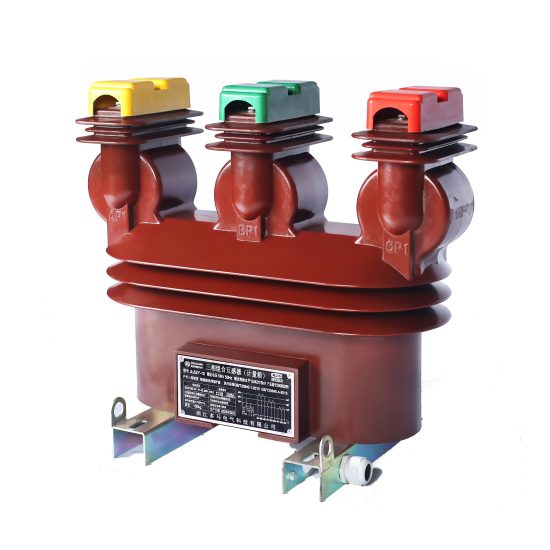
The LSZY-10 is a high-accuracy, cast-resin insulated current transformer (CT) engineered for reliable operation in 11 kV medium-voltage distribution systems—corresponding to the domestic 10 kV nominal system voltage used in China and several other regions. Designed in strict compliance with IEC 61869-2 and GB/T 20840.2, this instrument transformer provides dual functionality: precision metering at accuracy class 0.2S and robust protection performance at 5P10. Its solid dielectric construction eliminates fire hazards and environmental risks associated with oil-filled alternatives, making it ideal for urban substations, industrial facilities, and renewable energy integration points.
Operating Principle of Cast-Resin Insulation
Cast-resin insulation in the LSZY-10 employs vacuum pressure impregnation (VPI) technology using cycloaliphatic epoxy resin. This process ensures complete void-free encapsulation of the primary conductor, secondary windings, and magnetic core assembly. The resin matrix provides superior dielectric strength (≥28 kV/mm), excellent tracking resistance (CTI ≥600 V), and long-term hydrophobicity even under high humidity. Unlike oil-immersed CTs, which rely on liquid dielectrics requiring periodic maintenance and containment systems, the LSZY-10’s monolithic structure offers inherent flame retardancy (UL 94 V-0 rated) and zero leakage risk. Thermal stability is maintained up to 130°C continuous operation, with short-circuit thermal withstand capability of 20 kA for 1 second.
Advantages Over Oil-Immersed Designs
The LSZY-10 eliminates critical drawbacks of traditional oil-filled CTs. First, it requires no oil sampling, degassing, or tank inspections, reducing lifecycle maintenance costs by over 40%. Second, its compact footprint (typically 220 mm height × 180 mm diameter) enables space-constrained installations in ring main units (RMUs) and pad-mounted switchgear. Third, the absence of flammable materials allows deployment in indoor substations without fire suppression systems—a key advantage under IEC 62271-200 safety guidelines. Additionally, the epoxy resin exhibits minimal aging under partial discharge activity (<5 pC at 1.2 × Um/√3), ensuring stable accuracy over decades. Environmental compliance is further enhanced through RoHS and REACH conformity, avoiding PCBs and halogenated compounds.
Typical Application Overview
This CT serves dual roles across modern power infrastructure. In smart metering applications, its 0.2S class guarantees ±0.2% error at 1–120% of rated current (In), supporting AMI (Advanced Metering Infrastructure) revenue accuracy. For protection, the 5P10 rating ensures ≤5% composite error at 10× In, enabling precise coordination with overcurrent relays (e.g., SEL-751 or Siemens 7SJ62). Common deployments include 11 kV feeder monitoring in urban distribution networks, generator step-up transformer differential protection in solar farms, and motor control center (MCC) feeders in heavy industry. Secondary outputs are standardized to 1 A or 5 A, compatible with IEC 61850-9-2 LE sampled value interfaces via merging units.
Technical Specifications
The LSZY-10 is engineered to deliver consistent performance under defined electrical and environmental parameters. All specifications adhere to IEC 61869-2:2012 and GB/T 20840.2-2014, with factory testing conducted per clause 7 of both standards.
| Parameter | Value |
|---|---|
| Rated Voltage (Ur) | 11 kV (IEC); 10 kV (domestic) |
| Maximum System Voltage (Um) | 12 kV |
| Primary Current (Ip) | 50–3000 A (standard ratios) |
| Secondary Current (Is) | 1 A or 5 A |
| Metering Accuracy Class | 0.2S per IEC 61869-2 |
| Protection Accuracy Class | 5P10 |
| Rated Output (Burden) | 5–30 VA (metering); 15–50 VA (protection) |
| Insulation Level (LI/AC) | 75 kV / 28 kV (1 min) |
| Short-Time Thermal Current | 20 kA / 1 s |
| Dynamic Withstand Current | 50 kA peak |
| Ambient Temperature Range | −40°C to +40°C |
| Altitude Limit | ≤1000 m (derating required above) |
| Relative Humidity | ≤95% non-condensing |
| Core Material | Grain-Oriented Electrical Steel (GOES), M4 grade |
| Insulation Material | Cycloaliphatic epoxy resin (VPI process) |
Electrical Performance Parameters
The LSZY-10 achieves 0.2S accuracy through optimized core design using M4-grade GOES with flux density limited to 1.4 T at rated current. Phase displacement is ≤±10 minutes at 100% In. For protection, the 5P10 specification mandates that the ratio error remains within ±1% and phase error within ±60 minutes at 10× In, while composite error does not exceed 5%. Rated output burdens are selected based on connected load: 5 VA for digital meters, 15 VA for electromechanical relays, and up to 30 VA for legacy analog instruments. The transformer maintains linearity up to 20× In without saturation, verified via knee-point voltage testing (>150 V for 5 A secondary).
Environmental and Mechanical Ratings
Designed for both indoor and outdoor use, the LSZY-10 features UV-stabilized resin housing with IP54 ingress protection. Operating altitude is rated up to 1000 m; above this, dielectric strength must be derated by 1% per 100 m elevation. The thermal design accommodates ambient temperatures from −40°C (cold-start capability) to +40°C (continuous full-load operation). Humidity tolerance includes condensation cycles per IEC 60068-2-30, with no degradation in insulation resistance (>10 GΩ at 25°C, 500 V DC test). Mounting is via M12 stainless steel studs or flange brackets, with vibration resistance tested to 2 g at 10–55 Hz per IEC 60068-2-6.
Typical Applications
The LSZY-10’s dual-accuracy architecture supports diverse grid modernization initiatives, from legacy retrofits to greenfield digital substations.
Substation Secondary Metering
In 11 kV distribution substations, the LSZY-10 provides revenue-grade current signals to smart meters (e.g., Landis+Gyr E470) and SCADA RTUs. Its 0.2S class ensures billing accuracy even at low loads (as low as 1% In), critical for commercial/industrial tariffs. The CT is typically installed on outgoing feeders, with secondary wiring routed to metering cabinets via shielded twisted-pair cables (min. 2.5 mm² cross-section). To prevent open-circuit hazards, secondary terminals include shorting links compliant with IEC 61869-1 clause 5.104. Integration with IEC 61850 systems uses conventional analog outputs or, via external ADCs, sampled values for time-synchronized phasor measurement.
Industrial Power Distribution
Heavy industries—such as steel mills, chemical plants, and data centers—deploy the LSZY-10 on 11 kV motor feeders and bus couplers. Here, the 5P10 protection class enables fast tripping during internal faults while rejecting inrush currents (up to 12× In for 0.2 s). The CT’s high dynamic withstand (50 kA peak) survives close-in short circuits without mechanical deformation. In arc-flash mitigation schemes, its linear response up to 20× In ensures accurate fault current estimation for zone-selective interlocking (ZSI) logic.
Renewable Energy Integration
Solar and wind farms utilize the LSZY-10 at the 11 kV collector bus level for both generation metering and anti-islanding protection. The 0.2S accuracy captures low-generation periods (e.g., dawn/dusk), while 5P10 ensures rapid disconnection during grid faults per IEEE 1547-2018. The CT’s low remanence (<10% residual flux) prevents core saturation during asymmetric faults, maintaining relay dependability. Inverter-based resources benefit from the CT’s wide frequency response (45–65 Hz), avoiding measurement drift during grid-forming operations.
Rural and Suburban Distribution Networks
For utility pole-mounted or pad-mounted transformers, the LSZY-10’s compact size and maintenance-free design reduce OPEX in remote areas. It monitors load profiles for demand-side management and detects theft via imbalance analysis between primary and secondary currents. The resin housing resists salt fog (IEC 60068-2-11) and fungal growth (IEC 60068-2-10), ensuring reliability in coastal or tropical climates. Secondary outputs feed into distribution automation terminals (e.g., Schneider FTU200) for FA (Feeder Automation) schemes.
Compliance with International Standards
The LSZY-10 is certified to global and regional standards, ensuring interoperability and regulatory acceptance.
IEC 61869-2 Compliance Details
Per IEC 61869-2:2012, the LSZY-10 undergoes type tests including temperature rise (≤60 K for windings), short-circuit withstand (20 kA/1 s), and accuracy verification across 1–120% In. The standard defines 0.2S as a special class for revenue metering with tighter error bands than 0.2 (e.g., ±0.2% at 20% In vs. ±0.35% for 0.2). Protection class 5P10 requires composite error ≤5% at 10× In with specified burden. Dielectric tests include 28 kV AC for 1 minute and 75 kV lightning impulse (1.2/50 μs). Partial discharge is measured at 1.2 × Um/√3, with limits of ≤10 pC.
GB/T 20840.2 Alignment
China’s GB/T 20840.2-2014 mirrors IEC 61869-2 but includes localized requirements: altitude derating curves for >1000 m sites, stricter pollution degree ratings (III/IV for outdoor use), and mandatory seismic testing (0.3 g horizontal acceleration). The LSZY-10 meets all GB-specific clauses, including secondary terminal marking per GB/T 11022 and short-time current ratings aligned with DL/T 725. Factory routine tests under GB include 100% ratio and polarity checks, whereas IEC permits statistical sampling.
Key Differences Between IEC and Domestic Standards
While IEC 61869-2 focuses on performance envelopes, GB/T 20840.2 emphasizes environmental resilience for Chinese operating conditions. For example, GB requires −45°C cold-bend testing of resin samples, versus IEC’s −25°C. Pollution creepage distance is 25 mm/kV (GB) vs. 20 mm/kV (IEC) for medium environments. Additionally, GB mandates 100% power-frequency withstand testing at 32 kV (vs. IEC’s 28 kV) for 10 kV-class equipment. Despite these differences, the LSZY-10’s design envelope satisfies both, enabling export and domestic deployment without modification.
On-Site Testing Procedures
Post-installation verification ensures the LSZY-10 performs within specification before energization.
Insulation Resistance Test
Using a 2500 V DC megohmmeter, measure insulation resistance between primary-to-secondary, primary-to-ground, and secondary-to-ground. Acceptance criteria: ≥10 GΩ at 25°C. Correct for temperature using RT2 = RT1 × 2(T1−T2)/10. Values below 1 GΩ indicate moisture ingress or resin cracking, requiring drying or replacement. Test duration: 1 minute after stabilization.
Turns Ratio Test
Apply low-voltage AC (5–10 V) to the secondary winding and measure induced primary voltage. Calculate ratio as Vp/Vs. Tolerance: ±0.2% for 0.2S class, ±1% for 5P10. Alternatively, use a dedicated CT analyzer (e.g., Omicron CT Analyzer) injecting 1–5 A into primary. Verify against nameplate ratio (e.g., 600/5 A = 120:1). Deviations >0.5% suggest winding shorts or incorrect tap selection.
Polarity Test
Confirm reducing polarity per IEC 61869-1 clause 5.102. Connect a 1.5 V battery momentarily between P1 (+) and P2 (−). Observe secondary voltage on S1–S2 with a DC voltmeter: positive deflection indicates correct polarity. Incorrect polarity causes 180° phase shift, leading to metering errors or relay misoperation in differential schemes. Re-test if secondary wiring was disturbed during installation.
Power Frequency Withstand Voltage Test
Apply 28 kV AC (RMS) at 50 Hz between primary and grounded secondary/core for 1 minute. Use a calibrated test transformer with overcurrent trip (≤100 mA). No flashover or disruptive discharge is permitted. For field tests, reduce voltage to 80% (22.4 kV) if equipment has been in service. Record leakage current; values >10 mA suggest insulation degradation.
Short-Circuit Test (for CT)
Inject 10× rated primary current (e.g., 6000 A for 600 A CT) for 1 second using a portable short-circuit set. Monitor secondary voltage waveform for saturation distortion. Composite error must remain ≤5% for 5P10 class. Post-test, re-check insulation resistance and ratio to detect thermal damage. This test validates thermal and electromagnetic integrity under fault conditions.
Preventive Maintenance Guide
Although cast-resin CTs require minimal maintenance, scheduled inspections extend service life beyond 25 years.
Periodic Inspection Protocol
Conduct annual visual and electrical checks: inspect housing for cracks, discoloration, or tracking marks; verify terminal tightness (torque: 15 N·m for M6 screws); clean surface with isopropyl alcohol if contaminated. Measure insulation resistance annually—values declining >20% year-over-year indicate aging. In coastal areas, check for salt deposits quarterly. Document findings in asset management systems to trend degradation.
Maintenance Intervals and Fault Diagnosis
Replace only if critical failures occur: open secondary circuit (detected by infinite insulation resistance between S1–S2), ratio error >1%, or visible resin delamination. Typical failure modes include terminal corrosion (from improper sealing) or core lamination shorts (from manufacturing defects). A 5-year deep inspection includes partial discharge measurement (<10 pC at 6.9 kV) and thermal imaging under load to detect hot spots (>10 K above ambient).
| Interval | Action |
|---|---|
| Annual | Visual inspection, IR test, terminal torque check |
| 5 Years | Partial discharge test, thermal scan, ratio verification |
| 10 Years | Dielectric frequency response (DFR) analysis |
| After Fault | Full suite: ratio, polarity, IR, withstand test |
Conclusion
The LSZY-10 11 kV cast-resin current transformer represents a benchmark in medium-voltage instrumentation, combining metrological excellence with rugged protection performance. Its dual 0.2S/5P10 accuracy classes satisfy the most stringent requirements for revenue metering and relay coordination, while VPI epoxy resin insulation ensures decades of maintenance-free operation in harsh environments. Full compliance with IEC 61869-2 and GB/T 20840.2 guarantees global acceptance, and the robust mechanical design withstands seismic, thermal, and electrical stresses typical of modern grids. With an expected service life of 25–30 years—validated by accelerated aging tests per IEC 60216—the LSZY-10 delivers exceptional total cost of ownership. Its compatibility with digital substation architectures further future-proofs investments in grid modernization, making it an optimal choice for utilities, industrial operators, and renewable developers seeking reliability, accuracy, and regulatory compliance in a single device.
Q1: Can the LSZY-10 be used in 10 kV systems?
Yes. While rated for 11 kV per IEC standards, the LSZY-10 is fully compatible with 10 kV domestic systems (Um = 12 kV), as the insulation level (28 kV AC withstand) exceeds the 10 kV system requirement (24 kV per GB 311.1).
Q2: What is the minimum current for 0.2S accuracy?
Per IEC 61869-2, 0.2S class guarantees ±0.75% error at 1% In and ±0.35% at 5% In. For a 600/5 A CT, this means accurate metering down to 6 A primary current.
Q3: Is the LSZY-10 suitable for outdoor installation?
Yes. The UV-resistant cycloaliphatic resin housing meets IEC 60529 IP54 and IEC 60068-2-11 salt fog requirements, with operating temperature range of −40°C to +40°C.
Q4: How many secondary windings does it have?
Standard models feature two independent secondary windings—one for 0.2S metering (5–30 VA) and one for 5P10 protection (15–50 VA)—electrically and magnetically isolated per IEC 61869-1 clause 5.105.
Q5: What happens if the secondary is left open-circuited?
Open-circuiting induces dangerous overvoltages (>3 kV) due to core saturation. Always short secondary terminals before disconnecting loads. The LSZY-10 includes built-in shorting links for safety during maintenance.