Article Content
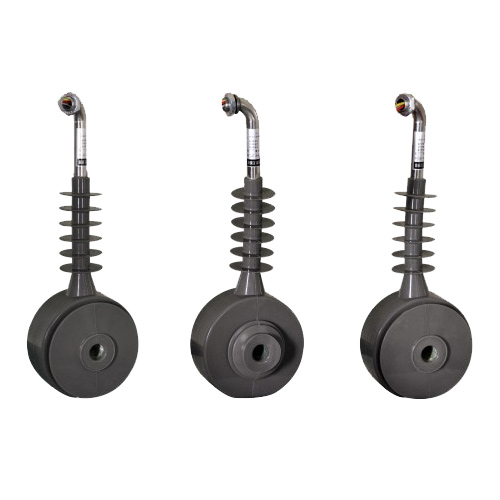
Outdoor 11kV Cast-Resin Current Transformer UNKNOWN – IEC 61869-2 Compliant
Introduction to the UNKNOWN Current Transformer
The UNKNOWN current transformer (CT) is a medium-voltage instrument transformer engineered for high-accuracy current measurement and dependable protective relaying in 11kV (IEC-rated) or 10kV (domestic system equivalent) outdoor distribution networks. Utilizing advanced cast-resin insulation technology, this device delivers superior dielectric performance, environmental resilience, and long-term operational stability compared to traditional oil-immersed alternatives. Its robust design meets the stringent requirements of modern substations, industrial facilities, and renewable energy interconnection points where reliability, safety, and precision are non-negotiable.
Operating Principle of Cast-Resin Insulation
Cast-resin insulation in the UNKNOWN CT employs vacuum pressure impregnation (VPI) of cycloaliphatic epoxy resin around the primary conductor and secondary windings. This process eliminates air voids and moisture ingress pathways, resulting in a homogeneous, void-free solid dielectric structure. The resin matrix provides excellent tracking resistance (compliant with IEC 60587), high thermal conductivity (~0.8 W/m·K), and mechanical rigidity that withstands seismic loads up to 0.5g. Unlike oil-filled units, cast-resin CTs eliminate fire hazards, require no oil maintenance, and exhibit minimal aging under UV exposure—critical for outdoor installations. The resin’s coefficient of thermal expansion closely matches that of copper and silicon steel, reducing internal stress during thermal cycling between –40°C and +40°C ambient conditions.
Advantages Over Oil-Immersed Designs
Compared to oil-immersed CTs, the UNKNOWN cast-resin unit offers significant operational and safety benefits. It is inherently non-flammable (meeting IEC 60695 flammability class V-0), eliminating fire risks in urban or indoor substations. There is no need for oil sampling, degassing, or leakage monitoring, reducing lifecycle costs by an estimated 30–40% over 25 years. The solid insulation maintains consistent dielectric strength even after decades of service, whereas oil degrades due to oxidation and moisture absorption. Additionally, the compact footprint (typically 30% smaller than equivalent oil units) simplifies integration into space-constrained switchgear bays. Environmental compliance is enhanced as the unit contains no PCBs or hazardous liquids, aligning with RoHS and WEEE directives.
Typical Application Overview
The UNKNOWN CT is deployed across diverse 11kV infrastructure segments. In utility substations, it feeds revenue-grade metering systems (Class 0.2S or 0.5S) and differential protection relays requiring high saturation margins (e.g., 10P20 or 5P20 accuracy classes). Industrial plants use it for motor protection and harmonic distortion monitoring in variable-frequency drive (VFD) circuits. Renewable integration projects—particularly solar farms with 10kV collector systems—rely on its linear response up to 20× rated current for accurate fault detection during islanding events. Rural electrification schemes benefit from its maintenance-free operation in remote locations with limited technical support. All applications leverage the CT’s ability to maintain ratio error within ±0.1% and phase displacement below ±3 minutes under nominal load conditions.
Technical Specifications
The UNKNOWN current transformer is engineered to precise electrical and environmental parameters aligned with IEC 61869-2 and GB/T 20840.2. Below is a comprehensive specification table followed by detailed subsections.
| Parameter | Value |
|---|---|
| Rated System Voltage (IEC) | 11 kV |
| Rated System Voltage (Domestic) | 10 kV |
| Primary Current Rating | 50 A to 3150 A (standard steps) |
| Secondary Current | 1 A or 5 A |
| Current Ratio Tolerance | ±0.25% at 100% In |
| Accuracy Classes | Metering: 0.2S, 0.5S; Protection: 5P10, 5P20, 10P10, 10P20 |
| Rated Burden | 2.5 VA to 30 VA (per secondary winding) |
| Insulation Level (Um/√3) | 12 kV / 28 kV (power frequency), 75 kV (lightning impulse) |
| Short-Time Thermal Withstand | 25 kA for 1 s (primary circuit) |
| Dynamic Withstand Current | 62.5 kA peak |
| Ambient Temperature Range | –40°C to +40°C |
| Relative Humidity | Up to 100% (condensing) |
| Maximum Altitude | 1000 m above sea level (derating required above) |
| Core Material | Grain-Oriented Electrical Steel (GOES), M4 grade |
| Insulation System | VPI cycloaliphatic epoxy resin, Class F (155°C) |
Electrical Performance Parameters
The UNKNOWN CT achieves its high accuracy through optimized magnetic circuit design using M4-grade grain-oriented electrical steel (GOES). This material exhibits a maximum core loss of 1.0 W/kg at 1.7 T and 50 Hz, ensuring low excitation current and minimal phase shift. For metering classes (0.2S/0.5S), the composite error remains below 0.2% and 0.5%, respectively, at 20% to 120% of rated current. Protection classes (e.g., 10P20) guarantee that the ratio error does not exceed 10% when subjected to 20 times rated current with the specified burden. The secondary winding resistance is tightly controlled (±5%) to ensure burden compatibility; for a 5 A secondary, typical Rs ranges from 0.05 Ω (50/5 A) to 0.8 Ω (3150/5 A). Saturation voltage (Vk) exceeds 200 V for 10P20 units, enabling reliable operation during high-magnitude faults.
Environmental and Mechanical Ratings
Designed for harsh outdoor environments, the UNKNOWN CT features a hydrophobic silicone rubber housing with creepage distance ≥25 mm/kV (pollution degree IV per IEC 60815). The cast-resin body resists UV degradation for >25 years without cracking or discoloration. Mechanical strength is validated per IEC 61869-1: the unit withstands a 250 N·m bending moment on the primary terminal without deformation. Sealing integrity is maintained via O-ring gaskets at secondary terminal boxes (IP65 rated), preventing moisture ingress even during prolonged rain. At altitudes exceeding 1000 m, the power frequency withstand voltage must be derated by 1% per 100 m above sea level; for example, at 2000 m, the test voltage becomes 25.2 kV instead of 28 kV.
Typical Applications
The UNKNOWN 11kV cast-resin CT serves critical roles across multiple power system domains, leveraging its accuracy, durability, and compliance with international standards.
Substation Secondary Metering Systems
In 11kV/0.4kV distribution substations, the UNKNOWN CT provides input to Class 0.2S revenue meters for billing accuracy. Its low phase displacement (< ±3 arcmin at 100% In) ensures correct power factor measurement, minimizing commercial discrepancies. When connected to multi-function meters (e.g., IEC 61850-9-2 LE sampled value streams), the CT’s linear response from 1% to 120% In supports demand forecasting and load profiling. Utilities often deploy dual-secondary versions—one for metering (0.2S, 5 VA) and another for protection (5P20, 15 VA)—to avoid burden conflicts. Installation typically occurs on outgoing feeders or transformer incomers, with secondary wiring routed through shielded conduits to suppress EMI from nearby switchgear operations.
Industrial Power Distribution Networks
Heavy industries such as steel mills, cement plants, and data centers utilize the UNKNOWN CT for motor protection and energy management. In motor control centers (MCCs), 10P20-class CTs feed thermal overload relays, accurately replicating locked-rotor currents (6–8× In) without saturation. For harmonic-rich environments (e.g., rectifier loads), the GOES core’s low hysteresis loss minimizes heating under distorted waveforms. A typical 1600 kW induction motor circuit might specify a 200/5 A, 10P20, 15 VA CT to coordinate with an ANSI C37.90-compliant relay. The cast-resin housing resists chemical fumes and dust accumulation common in industrial settings, maintaining insulation integrity where oil units would degrade.
Renewable Energy Integration
Solar photovoltaic (PV) farms with 10kV collector systems rely on the UNKNOWN CT for grid compliance and fault ride-through (FRT) monitoring. During asymmetrical faults, the CT must accurately reproduce DC-offset currents for anti-islanding protection algorithms. Units rated 10P20 with 30 VA burden are standard to drive long cable runs (up to 200 m) to central protection panels without exceeding burden limits. In wind turbine step-up transformers, the CT’s high dynamic withstand (62.5 kA peak) handles transient currents during grid reconnection. IEC 61869-2 Annex D compliance ensures performance under non-sinusoidal conditions, critical for inverters injecting harmonics up to the 50th order.
Rural and Suburban Distribution Networks
For rural electrification, the UNKNOWN CT’s maintenance-free operation is ideal for pole-mounted reclosers and sectionalizers. Installed on 10kV overhead lines, it enables automated fault location via time-current curves logged by intelligent electronic devices (IEDs). A common configuration is 400/1 A, 5P10, 5 VA—optimized for low-burden digital relays while minimizing copper losses in secondary wiring. The unit’s lightweight design (≈25 kg) simplifies helicopter or manual installation in mountainous terrain. In suburban ring-main units (RMUs), dual-core CTs support both SCADA telemetry (0.5S class) and earth-fault protection (5P20), enhancing grid resilience without increasing footprint.
Compliance with International Standards
The UNKNOWN current transformer is rigorously certified against IEC 61869-2 (Instrument transformers – Part 2: Additional requirements for current transformers) and its Chinese counterpart, GB/T 20840.2. This dual compliance ensures global interoperability while accommodating regional grid practices.
IEC 61869-2 Certification Details
IEC 61869-2 defines performance criteria for accuracy, temperature rise, short-circuit withstand, and insulation coordination. The UNKNOWN CT undergoes type tests per Clause 7, including temperature rise tests (ΔT ≤ 60 K for windings at 1.2× In), short-time current tests (25 kA/1 s without damage), and accuracy verification across burden ranges. Routine tests (Clause 8) include power frequency withstand (28 kV/1 min), partial discharge measurement (<10 pC at 1.2× Um/√3), and polarity checks. Special tests (Clause 9) validate performance under transient conditions—e.g., remanence factor Kr ≤ 0.7 for protection CTs to prevent maloperation after fault clearance. All test reports are issued by ISO/IEC 17025-accredited laboratories.
Alignment with GB/T 20840.2
GB/T 20840.2 mirrors IEC 61869-2 but includes China-specific requirements. Key differences include mandatory lightning impulse testing at 75 kV (vs. IEC’s optional 75 kV for Um ≤ 12 kV) and stricter partial discharge limits (<5 pC at 1.2× Um/√3). The domestic standard also specifies unique terminal markings: “P1/P2” for primary and “S1/S2” for secondary, with S1 designated as the “reducing polarity” terminal. While IEC permits 1 A or 5 A secondaries, GB/T strongly recommends 5 A for new installations to align with legacy relay fleets. The UNKNOWN CT meets both frameworks by incorporating dual-marking plates and undergoing parallel certification by CEPREI (China Electric Power Research Institute).
Testing and Certification Workflow
Certification involves three phases: design verification (type tests), production validation (routine tests), and periodic reassessment (sample audits). Type tests are conducted once per design variant (e.g., different ratios or accuracy classes). Routine tests occur on 100% of units, including visual inspection, winding resistance measurement (±2% tolerance), and insulation resistance (>1000 MΩ at 2500 V DC). Every 100th unit undergoes sample tests per IEC 61869-1 Clause 10, such as thermal stability and dynamic current withstand. Certificates remain valid for five years, after which retesting is required if design changes exceed 5% in core cross-section or resin formulation.
On-Site Testing Procedures
Post-installation verification ensures the UNKNOWN CT performs within specifications. The following tests are mandatory per IEC 60044-1 (now superseded by IEC 61869 series) and utility commissioning protocols.
Insulation Resistance Test
Using a 2500 V DC megohmmeter, measure insulation resistance between primary-to-ground, secondary-to-ground, and primary-to-secondary. Acceptance criteria: ≥1000 MΩ for all measurements at 20°C. Correct for temperature using RT = R20 × 2(20–T)/10. Low readings (<100 MΩ) indicate moisture ingress or resin cracking—requiring drying or replacement. Perform before and after power frequency withstand tests to detect insulation degradation.
Turns Ratio Test
Apply a low-voltage AC source (5–10 V) to the secondary winding and measure induced primary voltage. Calculate actual ratio as Vp/Vs. Compare to nameplate ratio; tolerance must be within ±0.25% for metering classes and ±1% for protection classes. Alternatively, use a dedicated ratio tester injecting 1–10 A into the primary. Discrepancies >0.5% suggest shorted turns or incorrect tap selection.
Polarity Verification
Confirm reducing polarity using the DC kick method: connect a 6–12 V battery between P1 (+) and P2 (–), and a center-zero galvanometer between S1 and S2. A momentary positive deflection upon closing the circuit confirms correct polarity (S1 corresponds to P1). Incorrect polarity causes 180° phase reversal, leading to relay misoperation or negative meter readings. Digital multimeters with diode-test mode can substitute for galvanometers.
Power Frequency Withstand Voltage Test
Apply 28 kV RMS at 50 Hz between primary and ground (with secondary shorted and grounded) for 1 minute. Leakage current must remain <10 mA. Use a calibrated HV test set with automatic trip on flashover. Conduct in dry conditions (RH < 80%); humidity correction factors apply per IEC 60270. Failure indicates insulation defects requiring unit replacement.
Excitation (Saturation) Characteristic Test
For protection CTs, plot excitation curve by applying incremental AC voltage (0–300 V) to secondary (primary open). Record current at each step. Knee-point voltage (Vk) is where slope decreases by 45°. For 10P20 units, Vk must exceed 200 V. Low Vk indicates core saturation risk during faults. Compare to factory curves; deviations >10% warrant investigation.
Preventive Maintenance Guide
Although cast-resin CTs are largely maintenance-free, periodic inspections extend service life and prevent unexpected failures.
Annual Visual and Electrical Inspection
Inspect for surface cracks, tracking marks, or discoloration on the resin housing. Check terminal tightness (torque: 15 N·m for M8 bolts) and corrosion on copper pads. Measure insulation resistance annually; a 50% drop from baseline indicates moisture absorption. Verify secondary wiring continuity and grounding integrity (resistance <0.1 Ω). Clean housing with mild detergent if salt or dust deposits exceed 1 mm thickness—avoid abrasive cleaners that damage hydrophobic coatings.
Five-Year Comprehensive Maintenance
Every five years, perform excitation characteristic and turns ratio tests to detect core degradation or winding faults. Inspect secondary terminal box seals for brittleness; replace silicone gaskets if hardness exceeds 70 Shore A. For units in coastal areas, conduct salt fog testing per IEC 60068-2-52 to assess creepage adequacy. Update maintenance logs with test results, noting trends in insulation resistance or excitation current.
Maintenance Intervals and Fault Diagnosis
| Interval | Task | Fault Indicator |
|---|---|---|
| Annually | Visual inspection, IR measurement | Cracks, tracking, IR <500 MΩ |
| Every 3 Years | Terminal torque check, grounding test | Loose connections, ground R >0.5 Ω |
| Every 5 Years | Excitation test, ratio verification | Vk ↓10%, ratio error >0.5% |
| After Major Fault | Full suite of commissioning tests | Any parameter out of spec |
Common faults include open secondary circuits (causing dangerous overvoltages), core saturation from excessive burden, and resin delamination due to thermal cycling. Immediate replacement is required if partial discharge exceeds 20 pC during on-site PD testing.
Conclusion
The UNKNOWN 11kV cast-resin current transformer represents a benchmark in medium-voltage instrumentation, combining precision engineering with rugged environmental resilience. Its compliance with IEC 61869-2 and GB/T 20840.2 ensures seamless integration into global power systems, while the VPI epoxy resin insulation eliminates the fire hazards and maintenance burdens associated with oil-filled alternatives. The use of M4-grade GOES cores guarantees exceptional accuracy—from Class 0.2S metering to 10P20 protection—across the full operating range of 1% to 2000% of rated current. Field-proven in applications ranging from urban substations to remote solar farms, the UNKNOWN CT delivers consistent performance under extreme temperatures, pollution, and electrical stress. With a design life of 25–30 years and minimal lifecycle costs, it offers utilities and industrial operators a reliable, future-proof solution for current measurement and protection in 11kV (10kV domestic) networks. Rigorous type testing, routine quality control, and adherence to international standards underscore its role as a cornerstone component in modern smart grids.