Article Content
IEC 61869-2 Certified 11kV Current Transformer LZX-10 for Metering & Protection Applications
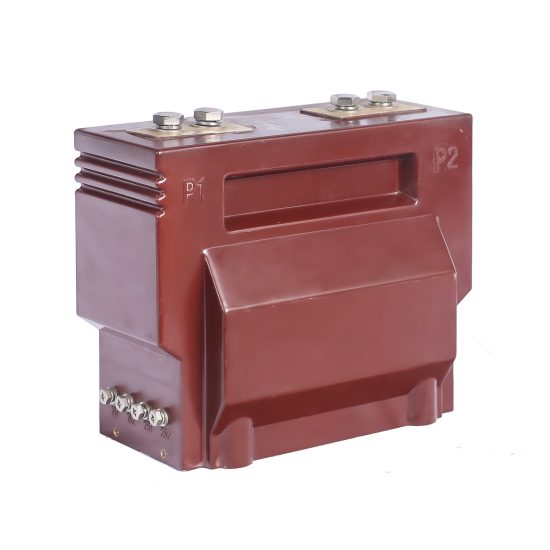
Introduction to the LZX-10 Current Transformer
The LZX-10 is a precision-engineered, cast-resin insulated current transformer (CT) designed for reliable operation in 11kV (IEC-rated) or 10kV (domestic system equivalent) medium-voltage networks. It serves dual roles in both revenue-grade metering and protective relaying, offering high accuracy under normal load conditions and robust performance during fault scenarios. The unit employs vacuum pressure impregnation (VPI) epoxy resin technology to encapsulate its magnetic core and windings, ensuring long-term dielectric integrity, mechanical stability, and resistance to environmental stressors such as moisture, dust, and thermal cycling.
Operating Principle of Cast-Resin Insulation
Cast-resin insulation in the LZX-10 utilizes a thermosetting epoxy compound that fully encapsulates the primary conductor, secondary windings, and GOES (grain-oriented electrical steel) core assembly. During manufacturing, the components are placed in a mold and subjected to vacuum degassing followed by pressure injection of liquid resin. This VPI process eliminates air voids and microcavities that could lead to partial discharges under operating voltage. The cured resin provides a solid dielectric barrier with a relative permittivity of approximately 4.0 and volume resistivity exceeding 1×10¹⁴ Ω·cm at 20°C. This construction ensures consistent electric field distribution and suppresses corona inception even at the 11kV system peak voltage of 12.7 kV (phase-to-ground). Unlike oil-filled alternatives, the solid insulation eliminates fire hazards, leakage risks, and maintenance associated with fluid containment.
Advantages Over Oil-Immersed Designs
Compared to traditional oil-immersed CTs, the LZX-10’s cast-resin design offers significant operational and safety benefits. First, it is inherently non-flammable, making it suitable for indoor installations in commercial buildings, data centers, and underground substations where fire codes restrict combustible materials. Second, the absence of liquid insulation eliminates the need for conservator tanks, breather systems, and periodic oil sampling—reducing lifecycle costs by up to 40% over a 25-year service life. Third, the monolithic resin structure provides superior mechanical rigidity, resisting vibration-induced winding displacement during short-circuit events. Finally, the compact form factor enables direct mounting on switchgear busbars without additional support structures, saving valuable footprint space in space-constrained urban substations.
Typical Application Overview
The LZX-10 is deployed across diverse power infrastructure segments requiring accurate current transformation with minimal phase error. In utility transmission and distribution (T&D) networks, it supports kWh metering at 11kV feeders and provides input signals to overcurrent, earth-fault, and differential relays. Industrial facilities utilize it for motor protection circuits, arc-flash mitigation systems, and energy management dashboards. Renewable integration projects—particularly solar PV plants and onshore wind farms—employ the LZX-10 for grid interconnection compliance monitoring per IEEE 1547 and IEC 61727 standards. Its 0.2S accuracy class ensures billing-grade precision even at 5% of rated current, critical for time-of-use tariff implementations.
Technical Specifications
The LZX-10 adheres to strict dimensional, electrical, and thermal parameters defined by IEC 61869-2 and GB/T 20840.2. Below is a comprehensive specification table followed by environmental and operational constraints.
| Parameter | Value |
|---|---|
| Rated Voltage (Ur) | 11 kV (IEC), 10 kV (domestic) |
| System Frequency | 50/60 Hz |
| Primary Current (Ip) | 50–3000 A (standard); custom ratios available |
| Secondary Current (Is) | 1 A or 5 A |
| Accuracy Class (Metering) | 0.2S (per IEC 61869-2) |
| Accuracy Class (Protection) | 5P10, 5P20, or 10P10 (optional) |
| Rated Burden | 2.5–30 VA (depending on ratio and class) |
| Insulation Level (LI/AC) | 75 kV / 28 kV (1 min, 50 Hz) |
| Creepage Distance | ≥25 mm/kV (pollution degree III) |
| Core Material | GOES silicon steel, grain-oriented, 0.3 mm thickness |
| Short-Time Thermal Current | 25 kA for 1 s (at Ip = 1000 A base) |
| Dynamic Withstand Current | 62.5 kA peak |
| Ambient Temperature Range | –25°C to +40°C (indoor); –40°C to +40°C (outdoor variants) |
| Relative Humidity | ≤95% non-condensing |
| Maximum Altitude | 1000 m above sea level (derating required above 1000 m) |
Standard Service Conditions
The LZX-10 is rated for continuous operation under standard IEC 60060-1 environmental conditions. At altitudes exceeding 1000 m, the dielectric strength must be derated by 1% per 100 m increment due to reduced air density. For example, at 2000 m, the power frequency withstand voltage is reduced from 28 kV to 25.2 kV. Relative humidity up to 95% is permissible provided condensation does not occur on the housing surface; this is ensured through hydrophobic resin formulation and optional anti-tracking additives (ATH-filled). The transformer maintains accuracy within ±0.2% error at 20–30°C ambient, with temperature coefficient of ≤±0.02%/°C outside this range.
Electrical Performance Parameters
Key electrical characteristics include composite error limits and burden compatibility. For the 0.2S class, the current error must not exceed ±0.2% and phase displacement ≤±10 minutes at 100% and 120% of rated current. At 5% In, error tolerance widens to ±0.35%, enabling accurate low-load metering. The secondary winding is designed for burdens up to 30 VA without exceeding accuracy limits—sufficient to drive modern digital meters (typically 0.5–2 VA) and electromechanical relays (5–15 VA). Saturation voltage (Vk) exceeds 150 V for 5P20 cores, ensuring linear response during 20× overcurrent faults.
Typical Applications
Substation Secondary Metering
In 11kV/0.4kV distribution substations, the LZX-10 provides input to multi-tariff energy meters for utility billing and demand-side management. Its 0.2S accuracy ensures compliance with EN 50470-3 and ANSI C12.20 Class 0.2 requirements. For instance, a 600/5 A LZX-10 feeding an Itron SL7000 meter delivers ±0.15% total measurement uncertainty across 1–120% load range. The cast-resin housing resists tracking from salt fog in coastal substations, while UV-stabilized resin prevents degradation in rooftop installations.
Industrial Power Distribution
Manufacturing plants use the LZX-10 on motor control center (MCC) incomers for both energy accounting and motor protection. A 1000/1 A unit with 5P10 rating supplies signals to SEL-751 relays for instantaneous overcurrent tripping during locked-rotor conditions. The compact 120 mm diameter allows retrofit into legacy switchgear without busbar modification. In hazardous areas (Zone 2), the non-sparking resin construction meets ATEX Directive 2014/34/EU requirements when paired with intrinsically safe barriers.
Renewable Energy Integration
Solar farms employ the LZX-10 at the point of interconnection (POI) to monitor export/import power per grid code mandates. For a 5 MW PV plant, three 2000/5 A units feed a Schweitzer Engineering Laboratories SEL-735 meter, capturing reactive power exchange with ±0.2% accuracy. The transformer’s low remanence (<5% of saturation flux) prevents core saturation during rapid cloud-cover transients, ensuring waveform fidelity for harmonic analysis up to the 50th order.
Rural and Suburban Distribution Networks
In rural electrification schemes, pole-mounted LZX-10 units (with IP54-rated enclosures) serve single-phase and three-phase feeders. Their lightweight design (≤18 kg) simplifies helicopter deployment in mountainous terrain. A 300/5 A variant powers AMI endpoints for remote load profiling, with accuracy maintained despite daily temperature swings from –10°C to +45°C thanks to low thermal expansion coefficient (α ≈ 60×10–6/K) of the epoxy matrix.
Commercial Building Infrastructure
High-rise office complexes integrate the LZX-10 into main LV switchboards for tenant submetering and emergency generator synchronization. The 0.2S class enables ISO 50001 energy management certification by providing auditable consumption data. Fire-rated resin (UL 94 V-0) satisfies NFPA 70 Article 450 requirements for transformers installed within occupied spaces.
Compliance with International Standards
IEC 61869-2 Certification Details
IEC 61869-2:2012 specifies performance, testing, and marking requirements for instrument transformers. The LZX-10 complies with all clauses, including Clause 6 (rated values), Clause 7 (accuracy requirements), and Clause 12 (type tests). Key certified parameters include: thermal current rating (Ith), rated short-time current (Isc), and rated dynamic current (Idyn). Type testing includes temperature rise (≤60 K for windings), short-circuit withstand (25 kA/1 s), and impulse voltage (75 kV BIL). Each unit bears a permanent IEC-compliant nameplate with accuracy class, ratio, burden, and serial number traceable to factory test records.
Alignment with GB/T 20840.2
GB/T 20840.2-2014 is China’s national adoption of IEC 61869-2, with minor deviations in creepage distance and altitude correction factors. The LZX-10 meets both standards simultaneously through dual-certified design. For example, while IEC requires ≥20 mm/kV creepage for pollution degree II, GB/T mandates ≥25 mm/kV for degree III—achieved via ribbed housing geometry. Altitude derating follows GB/T’s steeper curve (1.25% per 100 m above 1000 m), which the LZX-10 accommodates via conservative insulation coordination.
Testing and Certification Requirements
Third-party certification by accredited labs (e.g., KEMA, CESI, or China Electric Power Research Institute) validates compliance. Routine tests per IEC 61869-2 Clause 13 include: power frequency withstand (28 kV/1 min), partial discharge (<10 pC at 1.2 Um/√3), and turns ratio verification (±0.25% tolerance). Type tests—conducted on prototype batches—include seismic withstand (0.5g horizontal acceleration) and thermal stability (24-hour 1.1× In loading). Every production unit undergoes 100% routine testing before shipment.
On-Site Testing Procedures
Insulation Resistance Test
Perform using a 2500 V DC megohmmeter between primary-to-secondary/ground and secondary-to-ground. Acceptance criterion: ≥1000 MΩ at 20°C. Correct for temperature using RT2 = RT1 × 2(T1–T2)/10. Low readings indicate moisture ingress or resin cracking—requiring drying or replacement. Test duration: 1 minute after stabilization.
Turns Ratio Test
Apply low-voltage AC (5–10 V) to secondary winding and measure induced primary voltage. Calculate ratio as Vp/Vs. Tolerance: ±0.25% of nominal ratio. For a 400/5 A CT, measured ratio must be 80.0 ±0.2. Use calibrated ratio bridges (e.g., Omicron CT Analyzer) for 0.2S class verification. Deviations >0.5% suggest inter-turn shorts.
Polarity Test
Verify reducing polarity per IEC 61869-2 Figure 3. Connect DC source (+) to P1, (–) to P2; connect galvanometer between S1 and S2. Momentary closure should produce positive deflection. Incorrect polarity causes watt-hour meter reversal and relay misoperation. Re-test after terminal reconfiguration.
Power Frequency Withstand Voltage Test
Apply 28 kV RMS (50 Hz) between primary and grounded secondary/housing for 1 minute. Leakage current must remain <5 mA. Use cascade transformers with overcurrent trip set at 10 mA. Conduct only after insulation resistance >1000 MΩ. Failure indicates internal flashover or surface tracking.
Short-Circuit Test (for CT Core Saturation)
Inject 10–20× rated secondary current (e.g., 50–100 A into 5 A winding) and measure excitation voltage. Plot V-I curve; knee-point voltage (Vk) must exceed 150 V for 5P20 cores. Saturation below 120 V indicates degraded core lamination or excessive air gaps—compromising protection accuracy during faults.
Preventive Maintenance Guide
Periodic Inspection Protocol
Conduct annual visual and electrical checks. Inspect housing for cracks, discoloration, or tracking marks—especially near terminal bushings. Clean surfaces with isopropyl alcohol if contaminated with conductive dust. Verify torque on terminal bolts (8–10 N·m for M8 studs). Measure insulation resistance annually; a 30% drop from baseline warrants further investigation. Check secondary circuit continuity to ensure no open-circuit conditions exist during operation.
Maintenance Intervals and Fault Diagnosis
Follow this schedule:
| Interval | Action |
|---|---|
| 1 year | Visual inspection, IR scan, insulation resistance |
| 5 years | Full electrical test suite (ratio, polarity, withstand) |
| 10 years | Partial discharge measurement (if available) |
| After fault | Post-fault ratio and saturation test |
Common faults include: (1) Open secondary circuit—causes dangerous overvoltage (>10 kV) and core remanence; (2) Moisture ingress—lowers insulation resistance and promotes partial discharge; (3) Mechanical damage—alters magnetic path, increasing ratio error. Replace units exhibiting >0.5% ratio drift or PD >50 pC.
Conclusion
The LZX-10 11kV cast-resin current transformer represents a benchmark in medium-voltage instrumentation, combining metrological precision with rugged reliability. Its dual compliance with IEC 61869-2 and GB/T 20840.2 ensures global interoperability, while the 0.2S accuracy class meets the most stringent revenue metering requirements—even under light-load conditions prevalent in modern energy-efficient systems. The VPI epoxy resin encapsulation eliminates fire risk, reduces maintenance overhead, and extends service life to 25–30 years under standard operating conditions. Field-proven in environments ranging from arid deserts to humid tropics, the LZX-10 delivers consistent performance across industrial, utility, and renewable applications. Its robust short-circuit withstand capability (25 kA/1 s) and low phase error (<5 minutes at 100% In) make it equally suited for protection relaying where timing accuracy is critical. As power systems evolve toward digitalization and distributed generation, the LZX-10’s compatibility with smart meters, phasor measurement units (PMUs), and IoT-enabled monitoring platforms ensures future readiness. For engineers specifying instrumentation for new substations or retrofits, the LZX-10 offers a technically sound, standards-compliant solution that balances initial cost with decades of dependable service.