Article Content
IEC 61869-2 Certified 11kV Cast-Resin Current Transformer JWD-10 for Metering & Protection Applications
Introduction to the JWD-10 Current Transformer
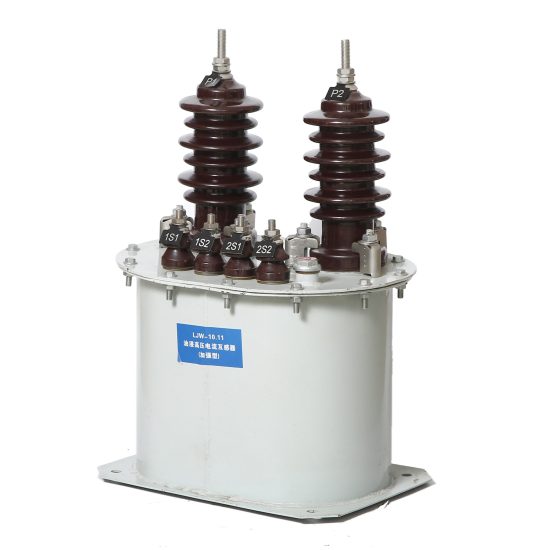
The JWD-10 is a single-phase, indoor-type cast-resin current transformer (CT) engineered for reliable operation in 11kV (IEC standard) or 10kV (domestic Chinese system) medium-voltage networks. Designed in strict compliance with IEC 61869-2 and GB/T 20840.2, it serves dual roles in both revenue-grade metering and protective relaying within industrial, utility, and renewable energy infrastructure. Its robust construction leverages vacuum pressure impregnation (VPI) epoxy resin technology to encapsulate high-permeability grain-oriented electrical steel (GOES) cores, ensuring long-term dielectric integrity and mechanical stability.
Unlike legacy oil-immersed CTs, the JWD-10 eliminates fire hazards, environmental leakage risks, and maintenance-intensive oil sampling. The solid epoxy matrix provides superior resistance to partial discharge, moisture ingress, and thermal cycling—critical for installations in humid or polluted environments. With a typical service life exceeding 25 years under standard operating conditions, this transformer is optimized for unattended operation in compact switchgear panels where space, safety, and reliability are paramount.
Operating Principle of Cast-Resin Insulation
Cast-resin insulation in the JWD-10 employs a two-component cycloaliphatic epoxy resin system processed under vacuum and pressure (VPI). This technique ensures complete impregnation of the primary conductor, secondary windings, and GOES core laminations, eliminating air voids that could initiate partial discharges. The cured resin exhibits a dielectric strength ≥20 kV/mm, volume resistivity >1×10¹⁴ Ω·cm, and a glass transition temperature (Tg) above 110°C. These properties enable stable performance across the full operational temperature range (–25°C to +40°C ambient) while maintaining creepage distances compliant with pollution degree III per IEC 60664-1. The monolithic structure also dampens electromagnetic vibrations, reducing audible noise and mechanical fatigue over decades of service.
Advantages Over Oil-Immersed Designs
The JWD-10’s dry-type, cast-resin construction offers significant operational and safety advantages compared to oil-filled alternatives. First, it is inherently non-flammable—eliminating fire propagation risks in confined switchgear rooms, a critical requirement per IEC 62271-200 for metal-enclosed installations. Second, it requires no periodic oil testing, degassing, or level monitoring, reducing lifecycle costs by an estimated 30–40% over 25 years. Third, its compact footprint (typically 180 mm height × 120 mm width) allows integration into modern ring-main units (RMUs) and withdrawable switchgear where space constraints preclude bulkier oil tanks. Finally, the absence of liquid insulation simplifies transportation, handling, and disposal at end-of-life, aligning with RoHS and WEEE directives for environmentally sustainable equipment.
Typical Application Overview
The JWD-10 is deployed across diverse 11kV/10kV infrastructure segments. In utility substations, it provides Class 0.2S or 0.5S accuracy for tariff metering at distribution feeders. Simultaneously, its 5P10 or 5P20 protection windings interface with overcurrent, earth-fault, and differential relays in industrial motor control centers (MCCs) and mining power systems. Renewable integration projects—particularly solar farms with 11kV collector grids—leverage its high saturation margin to withstand inrush currents during PV inverter startup. Additionally, municipal water treatment plants and data centers use the JWD-10 for redundant metering and arc-flash mitigation schemes. Its indoor rating (IP00) mandates installation within enclosed, ventilated compartments, typically bolted directly to busbar supports in metal-clad switchgear per IEC 62271-1.
Technical Specifications
The JWD-10 delivers precise current transformation under defined electrical and environmental parameters. All specifications adhere to IEC 61869-2:2012 (Instrument transformers – Part 2: Additional requirements for current transformers) and GB/T 20840.2-2014 (identical adoption of IEC 61869-2 in China).
Rated Electrical Parameters
Primary voltage rating: 11kV (IEC) / 10kV (GB domestic system). Highest voltage for equipment (Um): 12kV. Primary current ratings range from 10 A to 3150 A in standardized steps (e.g., 50/5, 200/1, 600/5). Secondary current is universally 1 A or 5 A. Accuracy classes include 0.2S, 0.5S for metering; 5P10, 5P15, 5P20 for protection. Rated burden values span 2.5 VA to 30 VA depending on class and secondary current. For example, a 0.2S/5P20 dual-core unit may specify 10 VA @ 0.2S and 15 VA @ 5P20. Short-time thermal current withstand: 20 kA for 1 second (Ith), with dynamic withstand current (Idyn) of 50 kA peak. Insulation levels: Power frequency withstand voltage = 28 kV rms for 1 minute; lightning impulse withstand = 75 kV peak (1.2/50 μs wave).
Environmental and Mechanical Ratings
Ambient temperature range: –25°C to +40°C (standard); extended range –40°C to +55°C available upon request. Relative humidity: ≤95% non-condensing. Altitude: ≤1000 m above sea level; derating required above 1000 m per IEC 60071-2 (e.g., 1% reduction in withstand voltage per 100 m above 1000 m). Pollution degree: III (moderate conductivity dust, temporary condensation). Installation position: vertical only, with primary conductor horizontal. Terminal type: M8 or M10 brass studs for primary; screw-type or plug-in terminals for secondary (rated 600 V, 10 A). Weight: approximately 4.5 kg. Fire behavior: self-extinguishing per IEC 60695-11-10 (GWIT ≥750°C).
Core and Winding Construction
The magnetic circuit utilizes CRGO (cold-rolled grain-oriented) silicon steel laminations, 0.3 mm thick, annealed to minimize hysteresis loss. Core cross-section is optimized for low excitation current (<0.5% of rated secondary current at 100% rated burden). Secondary windings employ enameled copper wire (Class F insulation, 155°C thermal rating), wound with precision layering to reduce inter-turn capacitance and ensure uniform voltage distribution. Dual-core variants feature magnetically and electrically isolated cores within a single resin block—one dedicated to metering (high-ratio turns, low-leakage flux), the other to protection (higher saturation point, linear up to 20× rated current). Resin fillers include silica microspheres to control thermal expansion coefficient (CTE ≈ 35 ppm/°C), matching that of copper and steel to prevent cracking during thermal transients.
Typical Applications
The JWD-10’s dual-function design enables deployment across multiple critical power infrastructure domains.
Substation Secondary Metering
In 11kV/10kV distribution substations, the JWD-10’s 0.2S or 0.5S accuracy class ensures compliance with regulatory metering standards (e.g., EN 50470-1, DL/T 448 in China). Installed on outgoing feeders, it interfaces with static kWh meters or AMI (Advanced Metering Infrastructure) systems. For instance, a 400/5 A, 0.2S CT with 10 VA burden delivers ratio error ≤±0.2% and phase displacement ≤±10 minutes at 1–120% of rated current—critical for revenue accuracy. Its low remanence (<10% of saturation flux density) prevents measurement drift after fault clearance. Integration with SCADA via IEC 61850-9-2 LE sampled values is feasible when paired with merging units, though analog output remains standard.
Industrial Power Distribution
Within manufacturing facilities, the JWD-10 protects motors, transformers, and bus ducts via 5P-class windings. A typical 630/1 A, 5P20 CT supplies inputs to multifunction relays (e.g., Siemens 7SJ62) for thermal overload and short-circuit protection. At 20× rated current (12.6 kA primary), the composite error remains ≤5%, ensuring relay coordination with upstream devices. In harsh environments like cement plants or steel mills, its resin housing resists conductive dust and chemical vapors that degrade open-frame CTs. Installation in LV/MV switchboards per IEC 61439-2 ensures electromagnetic compatibility (EMC) with adjacent control circuits.
Renewable Energy Integration
Solar photovoltaic (PV) and wind farms utilize the JWD-10 on 11kV collector feeders to monitor generation and enable anti-islanding protection. During cloud-induced irradiance fluctuations, PV inverters inject transient currents up to 1.5× nominal—conditions where the CT’s linear excitation curve prevents saturation. For a 1 MW inverter station, a 600/5 A, 0.5S/5P10 unit provides both billing data and inputs to directional overcurrent relays that detect reverse power flow. The transformer’s low thermal time constant (τ ≈ 15 minutes) allows rapid heat dissipation during sustained overloads, a common occurrence in variable renewable generation.
Rural and Suburban Distribution Networks
In remote or semi-urban areas with limited substation infrastructure, the JWD-10 enables cost-effective feeder monitoring. Mounted in pole-top or pad-mounted RMUs, it supports load profiling and fault location without requiring oil containment. A 200/5 A, 0.5S variant with 5 VA burden suffices for basic metering in villages with peak loads <150 kW. Its immunity to rodent damage (unlike polymer-housed CTs) and UV resistance (when installed indoors within cabinets) ensures reliability in tropical climates. Utilities leverage its standardized dimensions for rapid replacement during grid upgrades.
Data Centers and Critical Facilities
High-availability facilities deploy the JWD-10 in redundant 11kV switchgear feeding UPS systems. Dual-core models provide one winding for real-time power quality monitoring (0.2S class) and another for fast-acting ground-fault protection (5P20). During generator switchover events, the CT accurately tracks asymmetrical currents without saturation, enabling seamless transfer. Compliance with IEEE C37.115 for transient response ensures compatibility with digital fault recorders used in post-event analysis.
Compliance with International Standards
The JWD-10 is certified to global and regional standards governing instrument transformer performance, safety, and testing.
IEC 61869-2 Certification Details
IEC 61869-2 specifies requirements for accuracy, insulation, temperature rise, and short-circuit withstand for current transformers. The JWD-10 meets all mandatory clauses: ratio error and phase displacement within Table 1 limits for specified accuracy classes; thermal stability verified via temperature rise test (≤60 K for windings at 1.2× rated current); short-circuit force withstand validated through dynamic and thermal tests per Clause 12. Partial discharge levels are ≤10 pC at 1.2 Um/√3 (≈8.3 kV), measured per IEC 60270. Type tests were conducted at an ISO/IEC 17025-accredited laboratory, with routine tests performed on every unit (ratio, polarity, insulation resistance).
Alignment with GB/T 20840.2
GB/T 20840.2-2014 is the Chinese national standard equivalent to IEC 61869-2, with minor deviations in labeling and documentation language. Key technical parameters—accuracy classes, insulation levels, and test methods—are identical. However, GB/T requires additional marking of the “China Compulsory Certification” (CCC) logo and domestic voltage designation (10kV instead of 11kV). Environmental testing per GB/T 2423 (damp heat, salt fog) is more stringent than IEC for coastal regions. Duomatech maintains dual certification, allowing seamless deployment in both export markets and domestic Chinese projects.
Differences Between IEC and Domestic Requirements
While technical performance is harmonized, administrative differences exist. IEC 61869-2 permits Um = 12kV for 11kV systems, whereas GB/T 20840.2 references Un = 10kV with Um = 11.5kV—though the JWD-10’s 12kV Um rating satisfies both. Burden notation differs: IEC uses VA (e.g., 15 VA), while older Chinese practices sometimes reference impedance (e.g., 0.6 Ω for 5 A secondary). Modern GB/T aligns with IEC on this. Crucially, Chinese utilities often mandate higher short-circuit ratings (e.g., 25 kA/1s vs. IEC’s typical 20 kA/1s); the JWD-10 exceeds both with 20 kA/1s standard and 25 kA/1s optional. Documentation must include Chinese-language test reports for GB/T compliance.
On-Site Testing Procedures
Field verification ensures the JWD-10 performs as specified after transport and installation.
Insulation Resistance Test
Measure insulation resistance between primary-secondary, primary-ground, and secondary-ground using a 2500 V DC megohmmeter per IEC 60270. Acceptance criterion: ≥1000 MΩ at 20°C. Temperature correction applies: R₂₀ = Rₜ × 1.5^((t–20)/10). Low readings (<100 MΩ) indicate moisture ingress or resin cracking—requiring drying or replacement. Test duration: 1 minute minimum. Ensure secondary terminals are shorted and grounded during primary-ground measurement to avoid damaging connected meters.
Turns Ratio Test
Apply low-voltage AC (5–10 V) to the secondary winding and measure induced primary voltage (open-circuit primary). Calculate actual ratio = V_secondary_measured / V_primary_induced. Compare to nameplate ratio; tolerance per IEC 61869-2: ±0.25% for 0.2S class, ±0.5% for 0.5S, ±1% for 5P. Alternatively, use a dedicated ratio tester injecting primary current (e.g., 10% of rated) and measuring secondary output. Discrepancies >2% suggest winding shorts or incorrect tap selection.
Polarity Test
Verify reducing polarity using the DC kick method: connect a 1.5–9 V battery momentarily between P1 (primary input) and P2. Observe secondary voltage spike on a DC voltmeter connected to S1 (secondary output) and S2. A positive deflection confirms correct polarity (S1 corresponds to P1). Incorrect polarity causes 180° phase shift, leading to metering errors or relay misoperation. Digital multimeters with min/max capture can substitute for analog meters. Polarity must be consistent across all CTs in differential or summation schemes.
Power Frequency Withstand Voltage Test
Perform only if specified in commissioning protocol (not routine). Apply 28 kV rms at 50 Hz between primary-ground and secondary-ground for 1 minute per IEC 60060-1. Use a calibrated test transformer with overcurrent protection. Leakage current must remain <10 mA. Partial discharge inception/extinction voltages should be recorded if PD measurement capability exists. This test is destructive if insulation is compromised—reserve for post-fault assessment or after prolonged storage.
Excitation (Knee-Point) Characteristic Test
For protection-class CTs, plot excitation curve by applying incremental AC voltage to secondary (primary open) and measuring current. Identify knee-point voltage (Vk) where slope changes sharply—indicating onset of saturation. For a 5P20 CT, Vk must satisfy Vk ≥ (If/Is) × (Rs + Rb) × sinφ, where If = 20× rated primary, Is = rated secondary, Rs = secondary winding resistance, Rb = burden, φ = burden power factor angle. Typical Vk for JWD-10 5P20: ≥100 V at 5 A secondary. Low Vk suggests core degradation or shorted turns.
Preventive Maintenance Guide
Proactive maintenance extends service life and prevents unexpected failures.
Periodic Inspection Protocol
Conduct visual and electrical checks annually. Inspect resin housing for cracks, tracking, or discoloration (indicative of overheating). Clean surface contamination with isopropyl alcohol—avoid abrasive cleaners. Verify terminal tightness (torque: 8–10 N·m for M8 studs). Measure insulation resistance (≥1000 MΩ) and compare to baseline. Check secondary wiring for loose connections or insulation damage—common cause of open-circuit hazards. Record ambient temperature and load current trends; sustained operation >80% rated current warrants thermal imaging.
Maintenance Intervals and Fault Diagnosis
| Interval | Action | Acceptance Criteria |
|---|---|---|
| Annual | Visual inspection, IR thermography, insulation resistance | No hotspots (>10°C above ambient), IR ≥1000 MΩ |
| 5 Years | Ratio/polarity verification, excitation test (protection CTs) | Ratio error within class tolerance, Vk ≥ design value |
| Post-Fault | Full suite: IR, ratio, excitation, PD measurement | All parameters within initial test report |
Common faults include open secondary circuits (causing dangerous overvoltages), core saturation due to excessive burden, and moisture ingress at terminal seals. Diagnose saturation by comparing relay operate times with load current profiles—delayed tripping suggests degraded accuracy. Replace units exhibiting partial discharge >50 pC or insulation resistance <100 MΩ after cleaning/drying.
Conclusion
The JWD-10 cast-resin current transformer represents a mature, field-proven solution for 11kV (10kV domestic) metering and protection applications. Its VPI epoxy resin encapsulation, combined with high-grade GOES cores, delivers exceptional dielectric strength, thermal stability, and mechanical robustness—outperforming oil-immersed alternatives in safety, maintenance, and lifecycle cost. Compliance with IEC 61869-2 and GB/T 20840.2 ensures global interoperability, while dual-core configurations support simultaneous revenue metering and high-integrity protection functions. Rigorous factory and field testing protocols guarantee performance within tight tolerances: ratio error ≤±0.2% for 0.2S class, composite error ≤5% at 20× rated current for 5P20, and insulation withstand up to 28 kV rms. Designed for indoor installation in metal-enclosed switchgear, it operates reliably across –25°C to +40°C ambient temperatures with minimal degradation. With a documented service life of 25–30 years under standard loading conditions—and no consumables requiring replacement—the JWD-10 offers unparalleled reliability for critical power infrastructure. Its standardized dimensions and electrical parameters facilitate seamless integration into existing and next-generation distribution networks, from urban substations to remote renewable sites. For engineers specifying medium-voltage instrumentation, the JWD-10 provides a technically sound, code-compliant, and economically optimal choice that balances precision, durability, and safety.