Article Content
11kV Cast-Resin Voltage Transformer DZJ-3 for Metering and Protection – IEC 61869-3 Standard
Introduction to the DZJ-3 Voltage Transformer
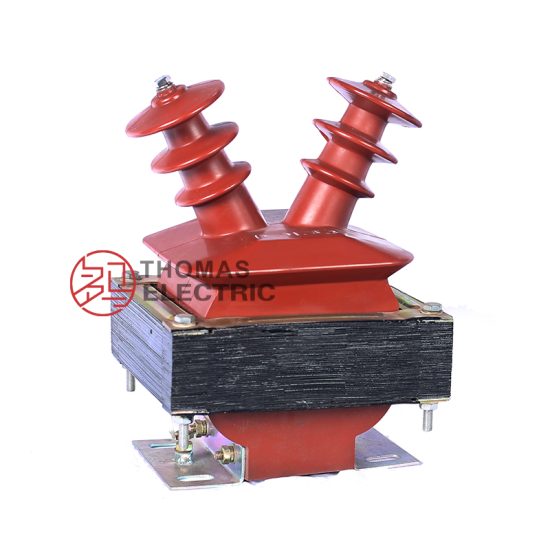
The DZJ-3 is a single-phase, indoor/outdoor-rated, cast-resin insulated voltage transformer (VT) engineered for precise voltage transformation in 11 kV medium-voltage (MV) power systems. It conforms to both international IEC 61869-3 and Chinese national standard GB/T 20840.3, ensuring interoperability across global and domestic grid infrastructures. While the nominal system voltage per IEC is 11 kV, the DZJ-3 is also compatible with 10 kV domestic networks commonly deployed in China, providing flexibility for cross-market applications.
Operating Principle of Cast-Resin Insulation
Cast-resin insulation in the DZJ-3 employs vacuum pressure impregnation (VPI) technology using cycloaliphatic epoxy resin. This process fully encapsulates the primary and secondary windings along with the GOES (grain-oriented electrical steel) core, eliminating air voids that could lead to partial discharge under sustained operating voltages. The resin matrix provides dielectric strength exceeding 20 kV/mm and exhibits excellent thermal conductivity (0.8–1.2 W/m·K), enabling efficient heat dissipation during continuous operation. Unlike oil-filled designs, the solid insulation eliminates fire hazards, environmental contamination risks, and maintenance-intensive oil sampling. The monolithic structure also resists mechanical stress from short-circuit electromagnetic forces, ensuring dimensional stability over decades of service.
Advantages Over Oil-Immersed Designs
Compared to traditional oil-immersed VTs, the DZJ-3 offers significant operational and safety benefits. Its dry-type construction removes the need for conservator tanks, Buchholz relays, or oil-level monitoring—reducing lifecycle costs by up to 40%. The absence of flammable oil makes it suitable for indoor substations, high-rise commercial buildings, and confined industrial spaces where fire codes prohibit combustible fluids. Additionally, cast-resin units exhibit superior resistance to humidity ingress; the hydrophobic nature of cured epoxy prevents moisture absorption even at 95% relative humidity. This translates to stable dielectric performance in tropical or coastal environments without requiring silica gel breathers or desiccant maintenance. Furthermore, the compact footprint (typically 30% smaller than equivalent oil units) simplifies integration into space-constrained switchgear panels.
Typical Applications Overview
The DZJ-3 is primarily deployed in secondary metering circuits, protective relaying schemes, and control power supplies within 11 kV distribution networks. Its high accuracy class (0.2 or 0.5 for metering, 3P for protection) ensures compliance with revenue-grade billing requirements while supporting sensitive earth-fault detection in impedance-grounded systems. Common installations include ring main units (RMUs), metal-clad switchgear, and pad-mounted transformers serving commercial complexes, manufacturing plants, data centers, and renewable energy interconnection points. The unit’s robust design also supports operation in harsh environments such as mining facilities, chemical processing zones, and offshore platforms where reliability under vibration and thermal cycling is critical.
Technical Specifications
The DZJ-3 voltage transformer is engineered to deliver consistent performance under defined electrical and environmental parameters. All specifications align with IEC 61869-3:2011 and GB/T 20840.3-2017, ensuring traceable metrological integrity and safety margins.
Rated Electrical Parameters
Primary rated voltage: 11 kV (IEC) / 10 kV (domestic). Secondary rated voltage: 100 V or 100/√3 V for phase-to-ground configurations. Standard voltage ratios include 11000/100 V, 11000/100/√3 V, and 10000/100 V. Accuracy classes are available in 0.2, 0.5 (metering), and 3P (protection). Rated burdens range from 10 VA to 100 VA per secondary winding, with thermal short-time withstand capability of 10× rated burden for 1 second. Insulation level per IEC 60071-1: LI 75 kV (lightning impulse), AC 28 kV (power frequency, 1 min). The maximum operating temperature rise is 60 K above ambient (measured by resistance method), with a total temperature limit of 105°C for Class A insulation.
Environmental and Mechanical Ratings
Standard service conditions: ambient temperature –25°C to +40°C, relative humidity ≤95%, altitude ≤1000 m above sea level. For altitudes exceeding 1000 m, derating factors apply per IEC 60076-11 (e.g., 1% reduction in rated voltage per 100 m above 1000 m). The housing is made of UV-stabilized, flame-retardant epoxy resin (UL 94 V-0 rated) with creepage distance ≥25 mm/kV for pollution degree 3 environments. Mounting options include flange base (M12 bolts) or bracket support, with terminal blocks rated for 630 A short-time current. Weight ranges from 28 kg to 35 kg depending on burden configuration.
Core and Winding Construction
The magnetic core utilizes CRGO (cold-rolled grain-oriented) silicon steel laminations (grade M4 or equivalent), stacked in a wound toroidal configuration to minimize no-load losses (<15 W at rated voltage). Primary windings consist of enameled copper wire (Class F insulation, 155°C rating), while secondary windings use double-insulated stranded copper conductors terminated to IP2X-protected terminals. Inter-winding insulation includes polyester film barriers and additional resin layers to achieve partial discharge levels <5 pC at 1.2 × Um/√3. The entire assembly undergoes post-curing at 130°C for 8 hours to relieve internal stresses and enhance long-term mechanical integrity.
Typical Applications
The DZJ-3 voltage transformer serves diverse roles across modern power infrastructure, leveraging its precision, reliability, and compact form factor.
Substation Secondary Metering
In 11 kV primary substations, the DZJ-3 provides accurate voltage signals to revenue meters, demand recorders, and SCADA RTUs. Configured with 0.2-class accuracy and 30 VA burden, it ensures billing compliance per IEC 62053-22. For three-phase systems, three single-phase DZJ-3 units are connected in star configuration with grounded neutral, enabling measurement of phase-to-phase and phase-to-ground voltages. The low phase angle error (<10 minutes at 0.2 class) minimizes reactive energy measurement uncertainty, critical for power factor correction and tariff calculations in commercial facilities.
Industrial Power Distribution
Within manufacturing plants, the DZJ-3 interfaces with multifunction protection relays (e.g., overvoltage, undervoltage, directional earth fault) requiring 3P-class VT inputs. Its ability to maintain ratio error within ±3% under 25–100% load ensures reliable relay operation during motor starting transients or capacitor bank switching. In arc flash mitigation schemes, the VT supplies synchronized voltage waveforms to differential relays, enabling sub-cycle fault clearing. The unit’s immunity to electromagnetic interference (EMI) from variable-frequency drives (VFDs) further enhances signal fidelity in electrically noisy environments.
Renewable Energy Integration
For solar PV and wind farms connecting to 11 kV distribution feeders, the DZJ-3 enables grid code compliance monitoring. It feeds voltage data to synchrophasor measurement units (PMUs) and anti-islanding relays, verifying voltage magnitude, frequency, and phase sequence during grid disturbances. The VT’s fast response time (<20 ms to 90% step response) supports real-time ride-through assessments per IEC 61400-21. In microgrid applications, it facilitates seamless transition between islanded and grid-connected modes by providing reference voltage to inverter control systems.
Rural and Suburban Distribution Networks
In remote or lightly loaded feeders, the DZJ-3’s low no-load losses reduce standby energy consumption compared to conventional VTs. Its extended thermal endurance allows operation at 110% of rated voltage during peak load periods without degradation. Utilities deploy it in automated feeder sectionalizers and reclosers for voltage-based load shedding, improving service continuity during contingencies. The unit’s resistance to salt fog and dust makes it ideal for coastal or arid regions where maintenance access is limited.
Compliance with International Standards
The DZJ-3 is certified to stringent international and national standards governing instrument transformer performance, safety, and testing protocols.
IEC 61869-3 Compliance Details
Per IEC 61869-3:2011, the DZJ-3 meets all requirements for electromagnetic voltage transformers used in metering and protection. Key compliance aspects include: ratio error limits (±0.2% for 0.2 class at 80–120% Un), phase displacement tolerance (±10’ for 0.2 class), and thermal stability under continuous and transient overvoltages. The standard mandates type tests including temperature rise, short-circuit withstand, and impulse voltage tests—all of which the DZJ-3 passes with margins exceeding minimum criteria. Additionally, the design incorporates IEC-prescribed safety clearances (e.g., 125 mm phase-to-phase at 11 kV) and terminal marking per IEC 61869-1.
GB/T 20840.3 Alignment
GB/T 20840.3-2017, China’s national counterpart to IEC 61869-3, imposes identical accuracy and insulation requirements but includes supplementary clauses for domestic grid conditions. Notably, GB/T specifies mandatory seismic withstand testing (0.3g horizontal acceleration) and enhanced pollution performance for Class IV environments (creepage ≥31 mm/kV). The DZJ-3 exceeds these via reinforced resin formulation and extended shed profiles. Burden designation follows GB nomenclature (e.g., “0.2/3P” dual accuracy), and secondary terminals comply with GB 1208 terminal block dimensions.
Key Differences Between IEC and Domestic Standards
While IEC 61869-3 focuses on functional performance, GB/T 20840.3 adds region-specific durability mandates. For instance, GB requires 1000-hour salt spray testing (vs. IEC’s optional corrosion test) and stricter partial discharge limits (<3 pC at 1.2Um/√3). Additionally, GB classifies insulation levels using Um (maximum system voltage) rather than Ur (rated voltage), resulting in slightly higher test voltages (e.g., 28 kV AC for Um=12 kV vs. 25 kV for Ur=11 kV). The DZJ-3 is engineered to satisfy both frameworks simultaneously, enabling seamless deployment in export and domestic markets without redesign.
On-Site Testing Procedures
Post-installation verification ensures the DZJ-3 operates within specified tolerances and maintains dielectric integrity.
Insulation Resistance Test
Using a 2500 V DC megohmmeter, measure insulation resistance between primary winding and ground, secondary winding and ground, and primary-to-secondary. Acceptance criterion: ≥1000 MΩ at 20°C. Correct for temperature using RT2 = RT1 × 2(T1–T2)/10. Values below 500 MΩ indicate moisture ingress or resin cracking and require drying or replacement.
Turns Ratio Test
Apply 100–200 V AC to the primary and measure secondary voltage with a calibrated voltmeter (accuracy class 0.1). Calculate ratio error: [(Vp/Vs)measured – (Vp/Vs)nominal] / (Vp/Vs)nominal × 100%. Tolerance: ±0.2% for 0.2-class, ±0.5% for 0.5-class, ±3% for 3P-class. Perform at 25%, 50%, 100%, and 120% of rated primary voltage.
Polarity Test
Connect a 6–12 V DC source to primary terminals (P1+, P2–). Momentarily close the circuit and observe a DC millivoltmeter connected to secondary (S1+, S2–). A positive deflection confirms subtractive (reducing) polarity, as required by IEC 61869-1. Incorrect polarity will cause negative deflection and must be corrected by swapping secondary leads before commissioning.
Power Frequency Withstand Voltage Test
Apply 28 kV AC (RMS) at 50 Hz between primary and ground/secondary for 1 minute. Use a calibrated test transformer with overcurrent trip set at 2× expected capacitive current. No flashover or disruptive discharge indicates pass. For routine maintenance, perform at 80% of factory test voltage (22.4 kV) per IEC 60270.
Open-Circuit Characteristic Test
Gradually increase primary voltage from 0 to 190 V (for 100 V secondary) while recording excitation current. Plot Vs vs. Iexc. The knee point should occur above 150 V, indicating adequate core saturation margin. Excessive excitation current (>5 mA at 100 V) suggests core lamination damage or shorted turns.
Preventive Maintenance Guide
Proactive maintenance extends service life and prevents unexpected failures in critical applications.
Periodic Inspection Protocol
Conduct visual inspections annually: check for surface cracks, tracking marks, or discoloration on the resin housing; verify terminal tightness (torque: 15 N·m for M8); inspect grounding continuity (<0.1 Ω resistance). Clean external surfaces with non-abrasive cloth and isopropyl alcohol if contaminated with conductive dust. In coastal areas, rinse with deionized water every 6 months to remove salt deposits.
Maintenance Intervals and Fault Diagnosis
Every 5 years, repeat insulation resistance and turns ratio tests. If ratio error drifts beyond ±0.3% (0.2-class) or insulation resistance drops >30% from baseline, investigate for internal faults. Common failure modes include: (1) Partial discharge erosion—indicated by audible buzzing and elevated tan δ; (2) Terminal corrosion—causing intermittent secondary signals; (3) Thermal aging—manifested as brittle resin and increased no-load losses. Replace units exhibiting any of these symptoms immediately.
| Maintenance Interval | Activities |
|---|---|
| Annual | Visual inspection, terminal torque check, cleaning |
| 5-Year | Insulation resistance, turns ratio, open-circuit test |
| After Fault | Full suite of on-site tests plus partial discharge scan |
Conclusion
The DZJ-3 11kV cast-resin voltage transformer represents a benchmark in medium-voltage instrumentation, combining metrological precision with rugged environmental resilience. Its epoxy resin encapsulation eliminates the operational liabilities of oil-filled alternatives while delivering IEC 61869-3-compliant accuracy for both revenue metering (0.2/0.5 class) and protective relaying (3P class). Engineered with GOES cores and VPI insulation, the unit maintains stable performance across –25°C to +40°C ambient ranges and altitudes up to 1000 m, with derating provisions for higher elevations. Field-proven in commercial substations, industrial plants, and renewable integration points, the DZJ-3 supports critical grid functions—from billing-grade energy measurement to sub-cycle fault detection—with minimal maintenance overhead. Adherence to both IEC and GB standards ensures global compatibility, while its 25–30 year design life reduces total cost of ownership. For engineers specifying instrumentation in 11 kV (or 10 kV domestic) networks, the DZJ-3 provides a technically robust, future-proof solution that aligns with modern grid reliability and safety imperatives.
Q1: Can the DZJ-3 operate continuously at 12 kV system voltage?
A1: No. The DZJ-3 is rated for Um = 12 kV (maximum system voltage per IEC 60038), but continuous operation must not exceed 11 kV (Ur). Sustained overvoltage accelerates insulation aging.
Q2: What is the maximum secondary burden for 3P-class accuracy?
A2: 100 VA. Exceeding this increases ratio error beyond the ±3% tolerance required for protection applications.
Q3: Is the DZJ-3 suitable for outdoor installation without shelter?
A3: Yes. The UV-stabilized resin housing meets IP54 ingress protection and withstands direct rain exposure per IEC 60529.
Q4: How does temperature affect accuracy?
A4: Ratio error drift is ≤±0.05% per 10°C change within –10°C to +40°C. Phase displacement varies ≤±2’ per 10°C.
Q5: Can multiple secondary windings be paralleled?
A5: No. Paralleling windings creates circulating currents due to minor ratio mismatches. Each winding must feed independent loads.
Q6: What is the recommended test voltage for routine maintenance?
A6: 22.4 kV AC (80% of 28 kV type test voltage) for 1 minute, per IEC 60270 guidelines.
Q7: Does the DZJ-3 require drying after transport in humid conditions?
A7: Only if insulation resistance falls below 500 MΩ. Otherwise, natural convection suffices due to the resin’s hydrophobic properties.
Q8: Are spare parts available for terminal blocks?
A8: Yes. Replacement terminal kits (part number DZJ3-TB-KIT) include IP2X covers and M8 studs compliant with GB 1208.