Article Content
11kV Cast-Resin Voltage Transformer VA-50H for Metering and Protection – IEC 61869-3 Standard
Introduction to the VA-50H Voltage Transformer
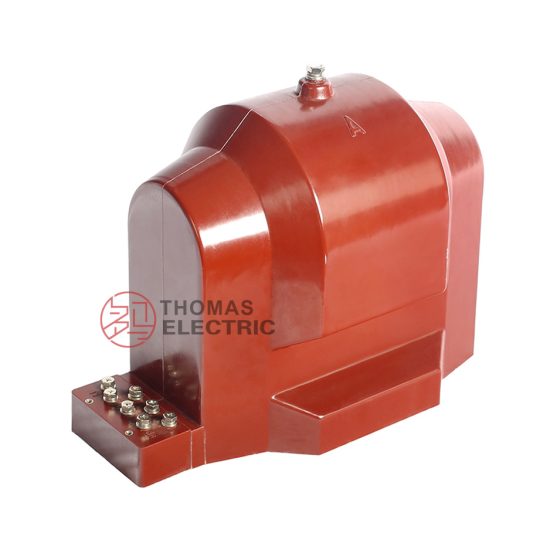
The VA-50H is a single-phase, indoor-type cast-resin voltage transformer (VT) engineered for high-accuracy voltage measurement and dependable protective relaying in 11 kV medium-voltage power systems. While designated under Chinese GB/T standards for nominal 10 kV systems, its design aligns with international IEC practice where the system voltage is rated at 11 kV (Um = 12 kV). This dual compliance ensures seamless integration into both domestic and global infrastructure projects.
Cast-Resin Insulation Technology
The VA-50H employs vacuum pressure impregnation (VPI) epoxy resin encapsulation, which fully embeds the primary and secondary windings along with the magnetic core in a solid dielectric matrix. This process eliminates air voids and moisture ingress pathways, significantly enhancing partial discharge resistance—typically below 10 pC at 1.2 × Um/√3. Unlike oil-filled counterparts, cast-resin VTs require no maintenance related to fluid levels or gas monitoring, making them ideal for confined indoor environments such as ring main units (RMUs), metal-clad switchgear, and prefabricated substations. The resin’s thermal class is F (155°C), supporting continuous operation under load without degradation over decades.
Advantages Over Oil-Immersed Designs
Compared to traditional oil-immersed VTs, the VA-50H offers superior fire safety (non-flammable construction), reduced footprint, and immunity to leakage risks. Its solid insulation withstands mechanical stress from short-circuit forces and seismic activity up to 0.3g without performance loss. Additionally, the absence of oil eliminates environmental hazards during failure scenarios, satisfying stringent regulations in urban and industrial zones. The unit’s lightweight design (approximately 28 kg) simplifies handling and mounting, while its smooth external surface resists dust accumulation and facilitates cleaning in polluted atmospheres.
Typical Application Scope
The VA-50H is primarily deployed in 11 kV distribution networks for secondary metering (Class 0.2 or 0.5) and protection (Class 3P or 6P) circuits. It interfaces with digital protective relays, revenue-grade energy meters, and SCADA systems in utility substations, commercial complexes, and industrial plants. Its compact form factor allows direct mounting on busbars or support insulators within switchgear compartments rated up to IP4X. The transformer supports both single and three-phase configurations when used in banks, enabling accurate phase-to-ground and phase-to-phase voltage monitoring.
Technical Specifications
The VA-50H adheres to precise electrical and mechanical parameters defined by IEC 61869-3 and GB/T 20840.3, ensuring interoperability and long-term reliability.
| Parameter | Value |
|---|---|
| System Voltage (IEC) | 11 kV (Um = 12 kV) |
| Domestic System Voltage | 10 kV (GB/T nominal) |
| Primary Voltage | 11,000 / √3 V (phase-to-ground) |
| Secondary Voltage | 100 / √3 V or 100 V (user-selectable) |
| Voltage Ratio | 11,000/√3 : 100/√3 V or 11,000/√3 : 100 V |
| Accuracy Class (Metering) | 0.2, 0.5 |
| Accuracy Class (Protection) | 3P, 6P |
| Rated Output (per burden) | 25 VA, 50 VA, 100 VA (at specified accuracy class) |
| Insulation Level (LI/AC) | 75 kV / 28 kV (1 min, 50 Hz) |
| Partial Discharge | <10 pC at 1.2 × Um/√3 |
| Core Material | Grain-Oriented Electrical Steel (GOES), 0.27 mm thickness |
| Frequency | 50 Hz (±0.5 Hz) |
| Ambient Temperature Range | –25°C to +40°C |
| Altitude Limit | ≤1,000 m above sea level (derating required above) |
| Relative Humidity | ≤95% (non-condensing) |
Electrical Performance Parameters
The VA-50H maintains voltage error within ±0.2% and phase displacement under ±10 minutes for Class 0.2 at 25–100% of rated burden. For protection applications (Class 3P), composite error remains below 3% at 5% to 100% of rated voltage under specified burden conditions. The transformer’s magnetizing current is minimized through optimized GOES core lamination stacking, reducing no-load losses to ≤8 W. Thermal stability is ensured via uniform resin distribution, allowing continuous operation at 1.2 × rated voltage for up to 8 hours without exceeding temperature rise limits (≤60 K for windings).
Environmental and Mechanical Ratings
Designed for indoor use, the VA-50H meets IP00 enclosure requirements but is typically installed within IP42-rated switchgear. Its creepage distance exceeds 25 mm/kV (pollution degree 3 per IEC 60664), suitable for moderately polluted industrial atmospheres. Mechanical terminals are M10 stainless steel studs rated for 25 N·m torque, compatible with standard copper or aluminum connectors. The unit withstands vibration per IEC 60068-2-6 (5–500 Hz, 0.7 g) and shock per IEC 60068-2-27 (30 g, 11 ms), ensuring integrity during transport and seismic events.
Typical Applications
The VA-50H serves critical roles across diverse power infrastructure segments requiring precise voltage transformation.
Substation Secondary Metering
In 11 kV primary substations, the VA-50H provides scaled-down voltages to revenue-class energy meters (e.g., IEC 62053-22 compliant devices). With Class 0.2 accuracy, it ensures billing precision within ±0.2% over a 1:4 load range. The low phase displacement (<5 arcmin) prevents reactive energy errors in three-phase systems. Installed adjacent to circuit breakers in metal-enclosed switchgear, it enables real-time voltage monitoring for load profiling and tariff analysis.
Industrial Power Distribution
Large manufacturing facilities utilize the VA-50H for motor protection, capacitor bank control, and harmonic monitoring. Its robust insulation withstands transient overvoltages from switching operations (e.g., vacuum breaker reignition). When connected to multifunction relays (e.g., IEC 61850-compliant IEDs), it supports undervoltage tripping, overvoltage alarming, and vector group verification. The 50 VA output rating accommodates multiple burdens simultaneously—meter, relay, and oscillograph—without accuracy degradation.
Renewable Energy Integration
Solar PV and wind farms employ the VA-50H at the point of interconnection (POI) to grid-tie inverters. It supplies synchronization signals and grid-code compliance data (e.g., ENTSO-E frequency response). The transformer’s fast saturation recovery after fault clearance ensures rapid reconnection post-disturbance. In microgrids, it enables islanding detection via rate-of-change-of-frequency (ROCOF) schemes, leveraging its stable secondary waveform even under distorted primary conditions.
Rural and Suburban Distribution Networks
Utility-owned pole-mounted or pad-mounted RMUs integrate the VA-50H for remote voltage regulation and outage detection. Its maintenance-free design reduces operational expenditure in hard-to-access locations. Coupled with RTUs, it transmits real-time voltage data to distribution management systems (DMS), facilitating dynamic tap changer coordination and voltage optimization. The unit’s tolerance to daily thermal cycling (–10°C to +50°C ambient swings) ensures decades of service in temperate climates.
Compliance with International Standards
The VA-50H is certified to both global and national standards, ensuring universal acceptance and performance predictability.
IEC 61869-3 Certification Details
Per IEC 61869-3:2011, the VA-50H undergoes type tests including temperature rise (Clause 6.3), short-circuit withstand (Clause 6.4), and electromagnetic compatibility (Clause 6.9). Its accuracy classes are validated per Annex A using reference standards traceable to national metrology institutes. The standard mandates that protection-class VTs maintain specified error limits at 5% of rated voltage—a critical requirement for sensitive earth-fault detection—which the VA-50H satisfies with margin (composite error <2.5% at 5% Vn for Class 3P).
Alignment with GB/T 20840.3
Under Chinese standard GB/T 20840.3-2013 (equivalent to IEC 61869-3), the VA-50H is rated for 10 kV nominal systems but tested at 12 kV (Um) insulation levels. Key differences include slightly tighter phase displacement limits in GB/T for Class 0.2 (±8 minutes vs. IEC’s ±10). However, the VA-50H’s design exceeds both, achieving ±6 minutes due to precision-wound secondary coils and low-reluctance core joints. All materials comply with RoHS and REACH directives, verified through third-party material declarations.
Testing and Certification Protocols
Certification involves routine tests (100% production): polarity check, turns ratio verification (±0.25% tolerance), and power frequency withstand (28 kV, 1 min). Type tests (per batch) include impulse voltage (75 kV BIL), partial discharge mapping, and thermal stability. The unit carries CE marking and CQC certification, with test reports available per IEC 61869-1 Clause 8. Documentation includes calibration certificates with uncertainty budgets (k=2, ≤0.05% for ratio).
On-Site Testing Procedures
Post-installation verification ensures the VA-50H performs within specification before energization.
Insulation Resistance Test
Using a 2,500 V DC megohmmeter, measure insulation resistance between primary winding and ground, and between windings. Acceptance criterion: ≥1,000 MΩ at 20°C. Correct for temperature using RT = R20 × 2(20–T)/10. Low readings indicate moisture ingress or resin cracking—requiring drying or replacement. Perform before and after AC withstand testing to detect insulation damage.
Turns Ratio Test
Apply 100–200 V AC to the primary and measure secondary voltage with a calibrated voltmeter (accuracy class 0.1). Calculate ratio: Vp/Vs. Tolerance: ±0.25% of nominal ratio. For 11,000/√3 : 100/√3 VT, expected secondary = 100 V at 11,000 V primary. Deviations >0.5% suggest turn-to-turn shorts or incorrect tapping—warranting factory return.
Polarity Test
Connect a 6–12 V battery momentarily between primary terminals (H1+, H2–). Observe secondary voltage polarity with a DC voltmeter across X1 and X2. A positive kick confirms subtractive (reducing) polarity—standard for IEC VTs. Incorrect polarity causes metering sign errors and relay misoperation. Verify per IEC 61869-1 Figure 103.
Power Frequency Withstand Voltage Test
Apply 28 kV RMS, 50 Hz for 1 minute between primary and grounded secondary/core. Leakage current must remain <10 mA. Gradually ramp voltage (≤1 kV/s) to avoid transient overstress. Failure indicates insulation breakdown—often due to casting voids or terminal contamination. Conduct only after insulation resistance validation.
Open-Circuit Characteristic Test
With secondary open, apply 20–120% of rated primary voltage in 20% steps. Record excitation current and secondary voltage. Plot Vs vs. Iexc. Knee point should exceed 1.5 × rated voltage. Excessive magnetizing current (>5% of rated) suggests core saturation or lamination defects. This test validates core quality and detects interlamination shorts.
Preventive Maintenance Guide
Although cast-resin VTs are maintenance-free, periodic checks extend service life and prevent unexpected failures.
Annual Visual and Electrical Inspection
Inspect for surface cracks, tracking, or discoloration on the resin housing—indicative of partial discharge or UV degradation (if exposed). Clean terminals with isopropyl alcohol to remove oxidation. Re-torque connections to 25 N·m. Perform insulation resistance and ratio tests annually in critical installations (e.g., hospitals, data centers). Document trends; a 20% drop in insulation resistance over two years warrants investigation.
Five-Year Comprehensive Assessment
Every 60 months, conduct partial discharge measurement using IEC 60270 methods. Acceptable: <15 pC at operating voltage. Also verify burden compatibility—added meters or relays may overload the VT. Recalibrate if accuracy drift exceeds half the class limit (e.g., >0.1% for Class 0.2). Replace if core losses increase by >30% from baseline (measured via no-load test).
Maintenance Intervals and Fault Diagnosis
| Interval | Action | Fault Indicator |
|---|---|---|
| Annually | Visual inspection, IR test, ratio check | Cracks, IR <500 MΩ, ratio error >0.3% |
| 5 Years | PD test, burden audit, recalibration | PD >20 pC, burden >110% rated |
| After Fault | Full suite: IR, ratio, PD, withstand | Any parameter out of spec |
Common faults include secondary winding opens (infinite IR secondary-to-ground) and core saturation (high excitation current). Never operate with secondary shorted—this can cause thermal runaway and resin delamination.
Conclusion
The VA-50H 11kV cast-resin voltage transformer represents a convergence of precision engineering, material science, and international standardization. By leveraging GOES cores and VPI epoxy resin technology, it achieves Class 0.2 metering accuracy and robust 3P protection performance in a compact, maintenance-free package. Its dual compliance with IEC 61869-3 and GB/T 20840.3 ensures global deployability—from urban substations in Europe to industrial parks in Southeast Asia. Rigorous factory testing and straightforward field verification protocols guarantee reliability from commissioning through decades of service. With an expected operational lifespan of 25–30 years under standard conditions, the VA-50H minimizes lifecycle costs while maximizing measurement integrity. Its immunity to fire, explosion, and environmental leakage makes it the preferred choice for modern medium-voltage infrastructure where safety, accuracy, and longevity are non-negotiable. Engineers specifying this VT gain not only a compliant component but a foundational element for resilient, future-ready power systems.