Article Content
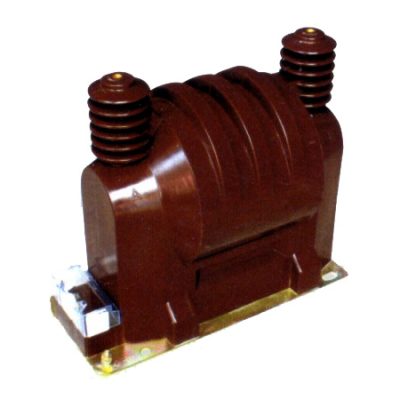
21kV Cast-Resin Voltage Transformer UNKNOWN for Metering and Protection – IEC 61869-3 Standard
Introduction to the UNKNOWN Voltage Transformer
The UNKNOWN voltage transformer is a single-phase, cast-resin insulated instrument transformer designed for accurate voltage transformation in medium-voltage networks operating at a system voltage of 24 kV, with a rated primary voltage of 21 kV per IEC 61869-3. This device serves critical roles in revenue metering, protective relaying, and power quality monitoring across utility substations, industrial facilities, and renewable energy interconnection points. Its construction leverages advanced vacuum pressure impregnation (VPI) epoxy resin technology, ensuring superior dielectric strength, environmental resilience, and long-term operational stability.
Operating Principle of Cast-Resin Insulation
Cast-resin insulation in the UNKNOWN VT involves encapsulating the magnetic core and windings within a homogeneous matrix of cycloaliphatic epoxy resin under vacuum and pressure. This process eliminates air voids and moisture ingress pathways, which are primary contributors to partial discharge and insulation degradation in traditional oil-filled or dry-type designs. The resin system cures into a rigid, thermoset structure with high tracking resistance (CTI > 600 V), excellent thermal conductivity (~0.8 W/m·K), and low coefficient of thermal expansion (~60 × 10⁻⁶/K). These properties enable stable performance across ambient temperatures from –40°C to +40°C and altitudes up to 1,000 m above sea level without derating. The absence of liquid insulation also eliminates fire hazards and environmental contamination risks, making it suitable for indoor switchgear and environmentally sensitive installations.
Advantages Over Oil-Immersed Designs
Compared to conventional oil-immersed voltage transformers, the UNKNOWN cast-resin VT offers significant operational and safety advantages. It requires no oil containment systems, periodic oil sampling, or gas monitoring, reducing lifecycle maintenance costs by up to 40%. The solid insulation provides higher impulse withstand capability—typically 170 kV peak for 21 kV class—and better resistance to seismic loads due to its monolithic structure. Additionally, the compact footprint (approximately 30% smaller than equivalent oil units) facilitates integration into space-constrained ring main units (RMUs) and metal-enclosed switchgear. The design inherently suppresses ferroresonance through optimized core saturation characteristics and optional damping resistors, enhancing grid reliability during single-phase switching events.
Typical Applications Overview
The UNKNOWN VT is deployed in applications demanding Class 0.2 or 0.5 accuracy for revenue-grade metering and Class 3P or 6P for protection functions. Common use cases include 20/21 kV distribution substations feeding commercial complexes, mining operations requiring explosion-proof instrumentation, and solar photovoltaic plants interfacing with utility grids via 21 kV collection systems. Its robust construction supports both indoor and outdoor mounting, with IP54-rated terminal boxes protecting secondary connections from dust and water ingress. In smart grid deployments, the transformer’s stable ratio error (< ±0.1% at 80–120% of rated voltage) ensures compatibility with digital metering systems compliant with IEC 61850-9-2 LE.
Technical Specifications
The UNKNOWN voltage transformer adheres to stringent electrical and mechanical parameters defined by IEC 61869-3 and GB/T 20840.3. Below is a comprehensive specification table followed by service condition details.
| Parameter | Value |
|---|---|
| Model | UNKNOWN |
| Primary Voltage (IEC) | 21 kV |
| Primary Voltage (Domestic) | 20 kV |
| Secondary Voltage(s) | 100 V, 100/√3 V, or 110 V (configurable) |
| Voltage Ratio | 21,000 / 100 V (standard) |
| Accuracy Class (Metering) | 0.2, 0.5 |
| Accuracy Class (Protection) | 3P, 6P |
| Rated Output (per burden) | 10–100 VA (metering), 50–200 VA (protection) |
| Insulation Level (Um) | 24 kV |
| Power Frequency Withstand Voltage | 50 kV rms, 1 min |
| Lightning Impulse Withstand Voltage | 170 kV peak |
| Core Material | Grain-oriented (GOES) silicon steel, 0.27 mm thickness |
| Insulation System | VPI cycloaliphatic epoxy resin, UL 94 V-0 rated |
| Operating Temperature Range | –40°C to +40°C |
| Maximum Altitude | 1,000 m (derating required above) |
| Polarity | Reducing polarity (standard) |
Standard Service Conditions
The UNKNOWN VT is rated for continuous operation under standard service conditions as defined in IEC 61869-3 Clause 5. Ambient temperature must not exceed +40°C (24-hour average ≤ +35°C), with minimum operating temperature of –40°C. Relative humidity may reach 100% at +25°C, provided condensation does not occur on external surfaces. Installation altitude is limited to 1,000 m; for sites between 1,000–2,000 m, the power frequency withstand voltage must be reduced by 1% per 100 m above 1,000 m. The transformer assumes a symmetrical three-phase system with balanced loading and harmonic distortion ≤ 5% THD. Operation in DC-biased systems (e.g., near HVDC converters) requires special core design considerations not covered in standard models.
Electrical Performance Tolerances
Per IEC 61869-3, the UNKNOWN VT maintains strict error limits under defined burdens. For Class 0.2 metering, voltage error must not exceed ±0.2% and phase displacement ≤ ±10 minutes at 25–100% of rated voltage and 25–100% of rated burden. Protection classes 3P and 6P permit ±3% and ±6% voltage error, respectively, at 5%–100% of rated voltage under specified burdens. Ratio error stability over 10 years is guaranteed within ±0.05% due to stress-relieved GOES core annealing and resin encapsulation preventing winding creep. Thermal rise under continuous full-load operation is limited to 60 K above ambient for windings, verified via hot-spot temperature measurement during type testing.
Typical Applications
The UNKNOWN 21kV cast-resin voltage transformer is engineered for diverse medium-voltage infrastructure where precision, safety, and longevity are paramount.
Substation Secondary Metering
In 20/21 kV distribution substations, the UNKNOWN VT provides the reference voltage signal for kWh meters used in utility billing. Installed on the busbar or feeder incomer, it supplies 100 V or 100/√3 V to Class 0.2S static meters compliant with IEC 62053-22. The transformer’s low phase displacement error (< ±5 minutes at 100% load) ensures accurate reactive energy measurement, critical for power factor correction billing. Its compact size allows retrofitting into legacy switchgear without structural modifications. In urban substations with high harmonic content from nonlinear loads, the GOES core minimizes additional losses, maintaining accuracy even with 3rd and 5th harmonic voltages up to 3% each.
Industrial Power Distribution
Heavy industries such as steel mills, chemical plants, and data centers utilize the UNKNOWN VT for both metering and motor protection schemes. In arc furnace installations, where voltage sags and transients are frequent, the 170 kV lightning impulse rating protects against switching surges. The VT feeds inputs to multifunction relays (e.g., ANSI 27/59) that detect undervoltage or overvoltage conditions, triggering load shedding to prevent equipment damage. The resin housing resists corrosive atmospheres (e.g., chlorine in water treatment plants), eliminating the need for protective enclosures required by oil-filled units.
Renewable Energy Integration
Solar and wind farms connecting to 21 kV distribution networks rely on the UNKNOWN VT for grid compliance monitoring. It supplies voltage signals to synchrophasor measurement units (PMUs) and SCADA systems that verify adherence to grid codes (e.g., ENTSO-E P1/P2 requirements). During islanding events, the VT’s fast response time (< 20 ms) enables anti-islanding relays to disconnect distributed generation within mandated timeframes. The transformer’s linear behavior up to 1.9 × Un supports ride-through capability during voltage swells, a key requirement in modern interconnection agreements.
Rural and Suburban Distribution Networks
In remote areas with limited maintenance access, the UNKNOWN VT’s maintenance-free design ensures decades of reliable service. Mounted on pole-top platforms or pad-mounted switchgear, it withstands UV exposure, salt spray (coastal zones), and temperature cycling without degradation. The IP54 terminal box prevents insect or rodent intrusion, a common cause of secondary short circuits in rural installations. Utilities deploy these units in automated feeder reconfiguration schemes, where accurate voltage feedback enables optimal sectionalizer coordination during fault isolation.
Compliance with International Standards
The UNKNOWN voltage transformer is fully compliant with IEC 61869-3:2011 (Instrument transformers – Part 3: Additional requirements for inductive voltage transformers) and harmonized with China’s GB/T 20840.3-2013 standard.
IEC 61869-3 Compliance Details
IEC 61869-3 defines performance, testing, and marking requirements for inductive VTs rated above 1 kV. The UNKNOWN model meets all mandatory clauses, including accuracy verification under sinusoidal conditions (Clause 7), temperature rise limits (Clause 10), and short-circuit withstand capability (Clause 12). Type tests performed include power frequency withstand (50 kV rms for 1 min), partial discharge measurement (< 10 pC at 1.2 × Um/√3), and ferroresonance assessment per Annex C. Routine tests on every unit include ratio check (±0.1% tolerance), polarity verification, and insulation resistance (> 1,000 MΩ at 2,500 V DC). The nameplate includes IEC-mandated markings: primary/secondary voltages, accuracy classes, rated outputs, and manufacturer identification.
GB/T 20840.3 Alignment
GB/T 20840.3 aligns closely with IEC 61869-3 but includes supplementary requirements for the Chinese market. Key additions include stricter partial discharge limits (< 5 pC at 1.2 × Um/√3 for indoor units) and mandatory seismic testing for regions in Zone 8 or higher per GB 50260. The UNKNOWN VT incorporates reinforced core clamping and resin anchoring to meet 0.3g horizontal acceleration requirements. Domestic labeling uses 20 kV as the nominal system voltage (vs. IEC’s 21 kV), though the insulation level (Um = 24 kV) remains identical. Burden designation follows GB practice (e.g., “100/3 V” instead of “100/√3 V”), but internal winding ratios are calibrated to international standards to ensure global interoperability.
Key Differences Between IEC and Domestic Standards
While IEC 61869-3 emphasizes functional performance, GB/T 20840.3 places greater emphasis on environmental durability and local grid characteristics. For instance, GB requires extended thermal stability testing at 1.1 × Un for 8 hours, whereas IEC mandates only 1 hour. Additionally, GB specifies mandatory short-time thermal current withstand (e.g., 25 kA for 1 s) for VTs installed in networks with high prospective fault levels—a scenario less emphasized in IEC due to typical VT fuse protection. The UNKNOWN model bridges both regimes by exceeding minimum requirements: its thermal short-circuit current rating is 31.5 kA/1s, and it undergoes 24-hour thermal cycling during type approval.
On-Site Testing Procedures
Post-installation verification ensures the UNKNOWN VT performs within specifications before energization. All tests follow IEC 61869-3 Annex D and IEEE C57.13 guidelines.
Insulation Resistance Test
Using a 2,500 V DC megohmmeter, measure insulation resistance between primary winding and ground, secondary windings and ground, and primary-to-secondary. Acceptance criteria: ≥ 1,000 MΩ at 20°C. Correct for temperature using R₂₀ = Rₜ × 1.5(t–20)/10. Low readings indicate moisture ingress or resin cracking—requiring drying or replacement. Perform before and after power frequency withstand tests to detect insulation damage.
Turns Ratio Test
Apply 100–200 V AC to the primary and measure secondary voltage with a calibrated voltmeter (accuracy class 0.1 or better). Calculate actual ratio: Vp/Vs. Compare to nameplate ratio; deviation must be ≤ ±0.1%. Use a dedicated ratio tester (e.g., Omicron CT Analyzer) for automated comparison across multiple taps. Significant errors suggest winding shorts or incorrect tap selection.
Polarity Test
Verify reducing polarity per IEC 61869-3 Figure 102. Connect a 6–12 V battery across primary terminals (H1+, H2–). Momentarily close the circuit while monitoring secondary with a DC millivoltmeter (X1+, X2–). A positive kick confirms correct polarity. Incorrect polarity causes 180° phase shift, leading to metering errors or relay misoperation. Document results for commissioning records.
Power Frequency Withstand Voltage Test
Apply 50 kV rms at 50 Hz between primary and grounded tank/secondary for 1 minute. Use a calibrated test transformer with overcurrent trip (≤ 1 A). Gradually ramp voltage (≤ 2 kV/s) to avoid transient overstress. No flashover or sustained discharge constitutes pass. Reduce voltage to zero before disconnecting. This test validates insulation integrity after transport-induced mechanical stress.
Open-Circuit Characteristic Test
With secondary open, apply 10–120% of rated primary voltage in 10% increments. Record excitation current and secondary voltage. Plot Vs vs. Iexc; knee point should exceed 1.5 × Un. Excessive excitation current at low voltages indicates core lamination damage. This test also verifies absence of inter-turn shorts, which would flatten the curve prematurely.
Preventive Maintenance Guide
Although cast-resin VTs are largely maintenance-free, periodic inspections extend service life beyond 30 years.
Periodic Inspection Protocol
Conduct annual visual and electrical checks. Inspect for surface tracking, cracks, or discoloration on the resin housing—indicative of UV degradation or partial discharge. Clean with non-abrasive detergent if contaminated by salt or dust. Verify terminal tightness (torque: 2.5 N·m for M6 studs) and corrosion on copper connectors. Measure insulation resistance annually; a 50% drop from baseline warrants further investigation. In coastal or industrial zones, increase frequency to semi-annual.
Maintenance Intervals and Fault Diagnosis
Follow this schedule:
| Interval | Action |
|---|---|
| Annually | Visual inspection, IR scan (hot spots > 10 K above ambient indicate winding issues), insulation resistance |
| Every 5 Years | Full ratio and polarity retest, partial discharge measurement (if portable PD detector available) |
| After Major Fault | Repeat all on-site tests; compare to commissioning data |
Common faults include secondary winding opens (causing infinite ratio error) or core saturation due to ferroresonance. Diagnose by comparing excitation curves to factory data. Resin cracks require immediate replacement—field repair is not feasible.
Conclusion
The UNKNOWN 21kV cast-resin voltage transformer represents a benchmark in medium-voltage instrumentation, combining IEC 61869-3 and GB/T 20840.3 compliance with field-proven reliability. Its VPI epoxy resin encapsulation eliminates the fire, leakage, and maintenance liabilities associated with oil-filled alternatives, while grain-oriented silicon steel cores ensure metrological stability over decades of service. With accuracy classes down to 0.2 for revenue metering and robust insulation levels (Um = 24 kV, LI = 170 kV), it meets the stringent demands of modern distribution networks—from urban substations to remote renewable sites. The transformer’s design inherently mitigates ferroresonance risks and supports seamless integration with digital protection and metering systems. When installed and maintained per guidelines, the UNKNOWN VT delivers a service life of 25–30 years, providing utilities and industrial operators with a low-total-cost-of-ownership solution for critical voltage sensing. Its adherence to international standards ensures global interoperability, while domestic adaptations satisfy regional regulatory requirements without compromising performance. As grids evolve toward smarter, more resilient architectures, the UNKNOWN VT remains a foundational component for accurate, safe, and dependable voltage transformation.