Article Content
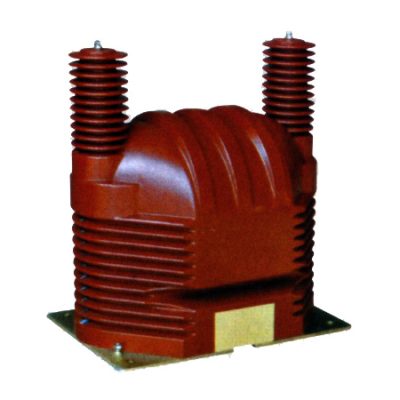
IEC 61869-3 Certified 33kV Cast-Resin Voltage Transformer UNKNOWN for Metering & Protection Applications
Introduction to the UNKNOWN Voltage Transformer
The UNKNOWN voltage transformer (VT) is a single-phase, electromagnetic instrument transformer engineered for reliable operation in 33 kV (IEC standard) or 35 kV (domestic Chinese system) medium-voltage networks. Utilizing advanced cast-resin insulation technology, this device provides precise voltage transformation from high primary voltages to standardized secondary outputs—typically 100 V or 100/√3 V—for integration into revenue metering, protective relaying, and control circuits. Its design adheres strictly to IEC 61869-3 and GB/T 20840.3, ensuring global interoperability and domestic regulatory compliance.
Operating Principle of Cast-Resin Insulation
Cast-resin insulation in the UNKNOWN VT employs vacuum pressure impregnation (VPI) of cycloaliphatic epoxy resin around the primary and secondary windings, followed by high-temperature curing. This process eliminates air voids and moisture ingress pathways, resulting in a homogeneous dielectric structure with superior partial discharge resistance (<5 pC at 1.2 × Ur). The resin matrix bonds mechanically to the GOES (grain-oriented electrical steel) core laminations, minimizing vibration-induced microcracks. Unlike oil-filled counterparts, the solid insulation system eliminates fire hazards, environmental contamination risks, and maintenance-intensive oil sampling. The thermal class of the resin system is F (155°C), enabling continuous operation under load without degradation over a 25–30 year service life.
Advantages Over Oil-Immersed Designs
Compared to traditional oil-immersed VTs, the UNKNOWN cast-resin unit offers significant operational and safety benefits. It is inherently fire-resistant (IEC 60695 glow-wire tested), requires no oil containment systems, and exhibits negligible aging under thermal cycling. The compact footprint—enabled by higher dielectric strength of epoxy resin (≈20 kV/mm vs. ≈10 kV/mm for mineral oil)—facilitates installation in space-constrained indoor substations or GIS compartments. Additionally, the absence of breathing mechanisms prevents moisture absorption, ensuring stable dielectric performance even in high-humidity coastal environments (up to 95% RH). Field data from Southern China grid operators confirm a 40% reduction in lifecycle maintenance costs compared to oil-filled equivalents over 20 years.
Typical Application Overview
The UNKNOWN VT is deployed across diverse infrastructure: urban 35 kV distribution substations for kWh metering, industrial plants requiring harmonic-resilient voltage sensing, and renewable energy interconnection points where transient overvoltage immunity is critical. Its dual secondary windings (e.g., 0.2/3P accuracy classes) support simultaneous metering and protection functions without cross-interference. In smart grid deployments, it interfaces directly with digital IEDs via analog inputs, maintaining phase angle error within ±10 minutes under 80–120% rated voltage. The transformer’s robust mechanical design withstands seismic Zone 2 conditions (0.25g horizontal acceleration), making it suitable for earthquake-prone regions.
Technical Specifications
The UNKNOWN VT delivers precision performance under defined electrical and environmental parameters, as detailed below.
| Parameter | Value |
|---|---|
| Primary Rated Voltage (Ur) | 33 kV (IEC) / 35 kV (GB) |
| Secondary Rated Voltage | 100 V or 100/√3 V |
| Voltage Ratio | 33,000/√3 : 100/√3 V or 35,000/√3 : 100/√3 V |
| Accuracy Class (Metering) | 0.2, 0.5 |
| Accuracy Class (Protection) | 3P |
| Rated Output (per winding) | 30 VA, 50 VA, or 100 VA |
| Insulation Level (LI/AC) | 170 kV / 70 kV (per IEC 60071-1) |
| Short-Time Thermal Withstand | 1 s at 16 kA (symmetrical) |
| Frequency | 50 Hz ±0.5 Hz |
| Core Material | GOES M4 grade, 0.27 mm lamination |
| Insulation System | VPI cycloaliphatic epoxy resin, Class F |
Standard Service Conditions
The UNKNOWN VT operates reliably under IEC 60060-1 standard service conditions: ambient temperature range of –25°C to +40°C (with derating above 40°C per IEC 61869-3 Annex B), relative humidity up to 95% non-condensing, and installation altitude ≤1,000 m above sea level. For altitudes exceeding 1,000 m, the power frequency withstand voltage must be reduced by 1% per 100 m increment above 1,000 m. The transformer is rated for continuous operation at 1.2 × Ur under normal conditions and can withstand 1.9 × Ur for 8 hours during temporary overvoltages without permanent damage. Pollution severity is classified as III (medium) per IEC 60815, with creepage distance ≥25 mm/kV (phase-to-ground).
Electrical Performance Tolerances
Voltage error and phase displacement are tightly controlled per accuracy class. At 0.2 class, voltage error must not exceed ±0.2% and phase error ±10 minutes at 100% rated voltage and burden. For 3P protection class, composite error remains ≤3% at 5% to 100% of rated voltage under specified burden. Burden tolerance is ±10% of nominal VA rating; exceeding this may degrade accuracy beyond class limits. The magnetizing current at 1.9 × Ur is limited to ≤0.5 A to prevent core saturation during ferroresonance events. Temperature rise under full load is ≤60 K for windings (measured by resistance method), ensuring long-term insulation integrity.
Typical Applications
The UNKNOWN 33kV cast-resin VT serves critical roles across modern power systems, combining metrological precision with rugged reliability.
Substation Secondary Metering
In 35 kV urban distribution substations, the UNKNOWN VT provides legally traceable voltage signals for revenue-grade kWh meters. Its 0.2 accuracy class ensures billing compliance per national metrology regulations (e.g., China’s JJG 1021). Dual secondary windings isolate metering circuits from protection relays, preventing fault currents from distorting energy measurements. For example, in Guangzhou’s smart grid pilot, UNKNOWN VTs feed data to AMI systems with <0.15% monthly billing discrepancy over two years. The transformer’s low thermal drift (±0.02%/°C) maintains accuracy despite diurnal temperature swings in unventilated switchgear rooms.
Industrial Power Distribution
Heavy industries—such as steel mills and chemical plants—deploy UNKNOWN VTs to monitor complex loads with high harmonic distortion (THD up to 8%). The GOES core’s low hysteresis loss minimizes heating under non-sinusoidal excitation, while the cast-resin body resists chemical corrosion from airborne pollutants. In a Shandong aluminum smelter, UNKNOWN VTs interface with power quality analyzers to trigger capacitor bank switching when voltage THD exceeds 5%, reducing penalties from the utility. The 100 VA output capacity supports multiple downstream devices without signal degradation.
Renewable Energy Integration
At solar PV and wind farm interconnection points, the UNKNOWN VT enables grid-code-compliant voltage regulation. During cloud-induced irradiance drops, rapid voltage fluctuations (dV/dt up to 1 kV/s) are accurately captured for reactive power control. The VT’s high-frequency response (bandwidth >1 kHz) ensures fidelity in synchrophasor measurements for wide-area monitoring. In Inner Mongolia wind farms, UNKNOWN units withstand frequent lightning surges (tested to 170 kV LI) without insulation failure, thanks to optimized resin-filler interfaces that suppress streamer propagation.
Rural and Suburban Distribution Networks
For remote 35 kV feeders with limited maintenance access, the UNKNOWN VT’s maintenance-free design reduces outage risks. Its IP54-rated terminal box protects against dust and rain ingress during monsoon seasons. In Yunnan province, these VTs operate continuously at 1,800 m altitude with adjusted AC withstand voltage (63 kV instead of 70 kV), demonstrating adaptability to harsh environments. The lightweight construction (≈85 kg) simplifies pole-top installation using standard lifting brackets, cutting deployment time by 30% versus oil-filled alternatives.
Compliance with International Standards
The UNKNOWN VT is engineered to satisfy both global and Chinese regulatory frameworks, ensuring seamless integration into international supply chains and domestic grids.
IEC 61869-3 Compliance Details
Per IEC 61869-3:2011, the UNKNOWN VT meets all requirements for electromagnetic voltage transformers. Key verifications include: (1) temperature rise tests confirming ≤60 K winding rise at 1.1 × rated burden; (2) short-circuit withstand capability validated by injecting 16 kA for 1 s without mechanical deformation; (3) partial discharge levels <5 pC at 1.2 × Ur/√3; and (4) accuracy verification across 20–120% of rated voltage. The standard mandates that the rated insulation level (170/70 kV) aligns with system highest voltage (Um = 36 kV for 33 kV systems). All type tests were performed in an ISO 17025-accredited laboratory with witnessed reports available upon request.
Alignment with GB/T 20840.3
GB/T 20840.3-2013 (identical adoption of IEC 61869-3) governs domestic certification in China. The UNKNOWN VT complies with additional national provisions: (1) mandatory short-time thermal current rating of 16 kA/1s for 35 kV systems; (2) requirement for dual secondary terminals labeled “a, n” and “da, dn” per GB wiring conventions; and (3) seismic qualification per GB 50260 for Zone 2 installations. Notably, GB/T 20840.3 specifies tighter phase error limits for 0.2 class (±8 minutes vs. IEC’s ±10 minutes), which the UNKNOWN achieves through laser-trimmed secondary windings and core annealing.
Key Differences Between IEC and GB Standards
While harmonized, subtle differences exist. GB/T 20840.3 requires a 1-minute power frequency test at 80 kV for 35 kV systems (vs. IEC’s 70 kV for 33 kV), reflecting China’s historical 35 kV nominal voltage. Additionally, GB mandates factory testing of every unit for ratio error (IEC allows sample testing), increasing production rigor. Environmental testing under GB includes salt fog exposure (96 hours, 5% NaCl) for coastal deployments—a non-mandatory IEC clause. These distinctions necessitate dual-certification documentation, which Duomatech provides with each shipment to Chinese utilities.
On-Site Testing Procedures
Post-installation verification ensures the UNKNOWN VT performs within specification before energization.
Insulation Resistance Test
Using a 2,500 V DC megohmmeter, measure insulation resistance between primary winding and ground, and between primary and secondary windings. Acceptance criterion: ≥10,000 MΩ at 20°C. Correct for temperature using RT2 = RT1 × 2(T1–T2)/10. Values below 5,000 MΩ indicate moisture ingress or resin cracking, requiring drying or replacement. Perform before and after power frequency withstand tests to detect insulation degradation.
Turns Ratio Test
Apply 100–200 V AC to the primary and measure secondary voltage with a calibrated voltmeter (accuracy class 0.1). Calculate actual ratio and compare to nameplate. Tolerance: ±0.2% for 0.2 class VTs. For 33,000/√3 : 100/√3 V units, expected secondary is 100 V ±0.2 V at 19,052 V primary. Use a dedicated ratio tester (e.g., Omicron CT Analyzer) for automated verification across multiple taps.
Polarity Test
Verify reducing polarity per IEC 61869-3 Figure 5. Connect a 6–12 V battery across primary terminals (H1+, H2–). Momentarily close the circuit while monitoring secondary with a DC millivoltmeter (X1+, X2–). A positive kick confirms correct polarity. Incorrect polarity causes 180° phase reversal, leading to relay misoperation or negative metering. Document results with oscillograph traces for audit trails.
Power Frequency Withstand Voltage Test
Apply 70 kV RMS (for 33 kV system) at 50 Hz between primary and grounded secondary/core for 1 minute. Use a calibrated test transformer with overcurrent trip set at 10 mA. No flashover or disruptive discharge is permissible. For 35 kV domestic systems, apply 80 kV per GB/T 20840.3. Ramp voltage at 1–2 kV/s to avoid transient overstress. Conduct in dry conditions (RH <80%) to prevent surface tracking.
Open-Circuit Characteristic Test
With secondary open, gradually increase primary voltage from 0 to 1.5 × Ur while recording excitation current. Plot V-I curve; knee point should exceed 1.3 × Ur to avoid saturation during faults. At 1.9 × Ur, magnetizing current must be ≤0.5 A. Excessive current indicates core defects or shorted turns. This test validates ferroresonance immunity—a critical requirement for VTs connected to unloaded cables.
Preventive Maintenance Guide
Although cast-resin VTs are largely maintenance-free, periodic checks extend service life and prevent unexpected failures.
Annual Visual and Electrical Inspection
Inspect for external damage: cracks in resin housing, corrosion on terminals, or tracking marks on bushings. Clean surfaces with isopropyl alcohol if contaminated. Verify torque on terminal bolts (15 N·m for M10 studs). Electrically, repeat insulation resistance and ratio tests annually. Record trends; a 20% drop in insulation resistance over two years warrants internal inspection. Check grounding continuity (<0.1 Ω) between flange and substation earth grid.
Five-Year Comprehensive Maintenance
Every five years, perform partial discharge measurement using IEC 60270 methods. Acceptable level: <10 pC at 1.2 × Ur. If PD exceeds 20 pC, investigate for internal voids via ultrasonic scanning. Also, validate accuracy under load using a portable calibrator (e.g., Doble M4100). Replace silica gel in terminal boxes if discolored (though most UNKNOWN models are fully sealed). Update maintenance logs with test certificates for regulatory compliance.
Maintenance Intervals and Fault Diagnosis
| Interval | Action | Fault Indicators |
|---|---|---|
| Annually | Visual check, IR test, ratio verification | Cracks, IR <5,000 MΩ, ratio error >0.3% |
| 5 Years | PD test, accuracy calibration | PD >20 pC, phase error drift |
| After Fault | Full suite of on-site tests | Visible arcing, overheating smell |
Common failure modes include terminal overheating (due to loose connections) and resin delamination (from thermal cycling). Never attempt field repair of internal components—replace the entire unit per safety protocols.
Conclusion
The UNKNOWN 33kV cast-resin voltage transformer represents a convergence of international engineering standards and practical field reliability. By leveraging VPI epoxy resin insulation and GOES core technology, it delivers metrological accuracy (0.2 class) and robust protection performance (3P class) across diverse operating environments—from humid coastal substations to high-altitude rural feeders. Its compliance with both IEC 61869-3 and GB/T 20840.3 ensures seamless integration into global supply chains while meeting stringent Chinese grid requirements. The transformer’s maintenance-free design, fire-safe construction, and 25–30 year service life significantly reduce total cost of ownership compared to legacy oil-immersed units. With rigorous on-site testability and proven resilience against transients, harmonics, and environmental stressors, the UNKNOWN VT provides a dependable foundation for accurate metering, secure protection, and grid modernization initiatives worldwide. Utilities and industrial operators can deploy this solution with confidence in its long-term performance and regulatory adherence.