Article Content
High-Performance 11kV Cast-Resin Voltage Transformer JDZW-10R for Metering & Protection per IEC 61869-3
Introduction to the JDZW-10R Voltage Transformer
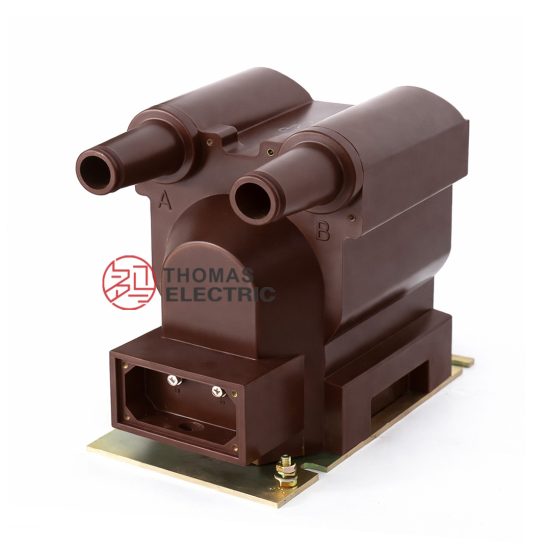
The JDZW-10R is a single-phase, outdoor-rated, cast-resin insulated voltage transformer (VT) engineered for high-accuracy voltage measurement and reliable protective relaying in 11 kV medium-voltage distribution networks. Designed for operation in both IEC-standard 11 kV systems and domestic 10 kV networks, this instrument transformer leverages advanced vacuum pressure impregnation (VPI) epoxy resin technology to ensure long-term dielectric integrity, environmental resilience, and minimal maintenance requirements. Unlike traditional oil-immersed VTs, the JDZW-10R eliminates fire hazards, oil leakage risks, and complex sealing mechanisms, making it ideal for urban substations, industrial facilities, and renewable energy interconnection points where safety and reliability are paramount.
Operating Principle of Cast-Resin Insulation
Cast-resin insulation in the JDZW-10R employs a two-component cycloaliphatic epoxy system cured under vacuum and pressure to fully encapsulate the primary and secondary windings along with the magnetic core. This process eliminates air voids and moisture ingress pathways, resulting in a homogeneous dielectric structure with high partial discharge inception voltage (>20 kV at 1.2 Um/√3). The resin matrix provides excellent tracking resistance (CTI > 600 V), UV stability for outdoor exposure, and thermal class F (155°C) endurance. The core is constructed from grain-oriented electrical steel (GOES), typically 0.27 mm thick M4 or equivalent, laminated to minimize eddy current losses and hysteresis distortion—critical for maintaining 0.2S accuracy under varying load and temperature conditions.
Advantages Over Oil-Immersed Designs
Compared to oil-filled VTs, the JDZW-10R offers significant operational and safety benefits. It is inherently non-flammable, eliminating fire codes restrictions in indoor or densely populated areas. The solid insulation requires no periodic oil sampling, degassing, or level checks, reducing lifecycle costs by up to 40% over a 25-year service life. Its compact footprint (typically 30–40% smaller than equivalent oil units) simplifies mounting on poles, switchgear, or transformer platforms. Additionally, the absence of liquid insulation prevents environmental contamination during failure events. Thermal performance is enhanced through direct conduction cooling via the resin body, enabling stable accuracy even under sustained 1.2× rated voltage conditions.
Typical Applications Overview
The JDZW-10R is deployed across diverse power infrastructure segments requiring precise voltage transformation for metering, revenue billing, and protective relaying. Primary use cases include 11 kV/10 kV outdoor substations serving commercial districts, industrial plants with sensitive process loads, solar PV and wind farm collector systems, and rural distribution feeders. Its 0.2S accuracy class ensures compliance with Class 0.2 revenue metering requirements per IEC 62053-22, while its robust insulation withstands switching surges and temporary overvoltages common in ungrounded or high-impedance grounded networks. The unit supports dual secondary windings—one for metering (e.g., 100/√3 V) and one for protection (e.g., 100/3 V)—enabling simultaneous high-precision measurement and fault detection.
Technical Specifications
The JDZW-10R adheres to stringent electrical and mechanical parameters defined by IEC 61869-3 and GB/T 20840.3, ensuring interoperability and performance consistency across global markets. Below is a detailed specification table followed by environmental and operational constraints.
| Parameter | Value |
|---|---|
| Model | JDZW-10R |
| System Voltage (IEC) | 11 kV (Um = 12 kV) |
| Domestic System Voltage | 10 kV |
| Primary Voltage | 11/√3 kV or 10/√3 kV (selectable) |
| Secondary Voltages | 100/√3 V (metering), 100/3 V (protection) |
| Voltage Ratio | (11,000/√3) / (100/√3) : (100/3) V |
| Accuracy Class | 0.2S (metering), 3P (protection) |
| Rated Output (per winding) | 30 VA (0.2S), 100 VA (3P) |
| Insulation Level (LI/AC) | 75 kV / 28 kV (1 min, 50 Hz) |
| Partial Discharge | <10 pC at 1.2 × Um/√3 |
| Thermal Class | F (155°C) |
| Creepage Distance | ≥25 mm/kV (minimum 300 mm for 11 kV) |
| Polarity | Reducing (standard) |
| Weight | Approx. 45 kg |
Standard Service Conditions
The JDZW-10R is rated for outdoor installation under IEC 60060-1 standard atmospheric conditions: ambient temperature range of –25°C to +40°C, relative humidity up to 100% (condensation permissible), and altitude ≤1000 m above sea level. For installations above 1000 m, derating applies per IEC 60071-2: insulation withstand voltage must be reduced by 1% per 100 m above 1000 m. The unit features hydrophobic silicone rubber sheds with anti-fog design to maintain flashover performance in coastal or industrial pollution zones (Class III per IEC 60815). Terminal boxes are IP54 rated, with brass or tinned copper terminals sized for 6–50 mm² conductors.
Electrical Performance Tolerances
Voltage error at 0.2S class must remain within ±0.2% and phase displacement within ±10 minutes at 100% rated voltage and 25–100% of rated burden. At 1% of rated voltage, error tolerance widens to ±0.75%, enabling accurate measurement during low-load conditions. The 3P protection winding maintains voltage error ≤±3% and phase error ≤±120 minutes from 2% to 100% of rated voltage under specified burden. Frequency response is flat within ±0.1% from 48 Hz to 52 Hz, critical for grid synchronization in variable-frequency environments such as microgrids or inverter-based resources.
Typical Applications
Substation Secondary Metering
In 11 kV outdoor substations, the JDZW-10R provides the reference voltage signal for revenue-grade kWh meters, demand recorders, and power quality analyzers. Its 0.2S accuracy ensures compliance with utility billing standards, minimizing revenue leakage due to measurement drift. The dual-winding configuration allows isolation between metering and protection circuits, preventing relay operations from influencing billing data. For example, in a ring-main unit (RMU) feeding a commercial complex, the metering secondary connects to a Class 0.2S static meter, while the protection secondary feeds an overvoltage relay set to trip at 1.2× nominal during ferroresonance events.
Industrial Power Distribution
Heavy industries—such as steel mills, chemical plants, and data centers—rely on the JDZW-10R for precise voltage monitoring to protect sensitive equipment like variable frequency drives (VFDs) and uninterruptible power supplies (UPS). In a typical 10 kV plant distribution system, the VT supplies signals to motor protection relays that detect undervoltage (e.g., <0.85 pu for 0.5 s) or overvoltage (>1.1 pu) conditions. The cast-resin construction resists chemical vapors and particulate contamination common in industrial atmospheres, unlike oil-filled units that degrade seals over time.
Renewable Energy Integration
Solar photovoltaic (PV) farms and onshore wind installations frequently use the JDZW-10R on the medium-voltage collector side (11 kV or 10 kV) to interface with SCADA systems and anti-islanding protection schemes. During cloud transients or wind gusts, rapid voltage fluctuations occur; the low phase error of the 0.2S winding ensures accurate real-time power factor calculation for reactive power compensation. Moreover, the VT’s high saturation margin (>2.0× rated voltage) prevents core saturation during grid faults, maintaining signal fidelity for synchrophasor measurements.
Rural and Suburban Distribution Networks
In rural electrification projects, the JDZW-10R is mounted on pole-top transformers or sectionalizing switches to enable remote voltage monitoring via distribution automation (DA) systems. Its maintenance-free design is crucial in areas with limited technician access. For instance, in a 10 kV overhead line serving agricultural communities, the VT feeds a remote terminal unit (RTU) that reports voltage sags during irrigation pump startups. The unit’s extended creepage distance mitigates flashovers during monsoon seasons or dust storms.
Hybrid Microgrid Systems
Emerging microgrids combining diesel generators, battery storage, and renewables require highly linear VTs to manage islanding transitions. The JDZW-10R’s low harmonic distortion (<0.5% THD at rated load) ensures accurate RMS voltage measurement during non-sinusoidal conditions. Its fast transient response (rise time <5 µs) supports high-speed transfer schemes that switch between grid-connected and islanded modes within 20 ms, maintaining critical load continuity.
Compliance with International Standards
IEC 61869-3 Compliance Details
IEC 61869-3 specifies performance, testing, and marking requirements for inductive voltage transformers. The JDZW-10R meets all clauses, including accuracy verification under defined burdens, temperature rise limits (≤55 K for windings), and short-circuit withstand capability (withstanding 10× rated current for 1 s without damage). Dielectric tests include 1-minute AC withstand at 28 kV and lightning impulse at 75 kV (1.2/50 µs wave). Markings include rated voltage factor (1.2 continuous, 1.5 for 30 s), accuracy classes, and vector group (single-phase, no phase shift).
GB/T 20840.3 Alignment
China’s national standard GB/T 20840.3 aligns closely with IEC 61869-3 but includes additional requirements for seismic performance (Zone 8 per GB 50260) and pollution severity in inland regions. The JDZW-10R incorporates reinforced core clamping and resin anchoring to survive 0.3g horizontal acceleration. Domestic models often feature 10 kV primary rating with 100 V secondaries (non-√3), though export variants default to 11 kV/100/√3 V. Both versions undergo identical type tests at accredited labs like CESI or KEMA.
Key Differences Between IEC and Domestic Standards
While IEC emphasizes global harmonization, GB standards prioritize local grid characteristics. For example, GB/T 20840.3 mandates higher creepage distances (≥31 mm/kV) for Class IV pollution versus IEC’s 25 mm/kV baseline. Additionally, Chinese utilities often require 0.2 accuracy (not 0.2S) for billing, though 0.2S offers superior low-load performance. The JDZW-10R is configurable to meet either requirement via secondary winding tap selection. Certification documentation includes bilingual test reports and CCC marking for domestic sales.
On-Site Testing Procedures
Insulation Resistance Test
Perform using a 2500 V DC megohmmeter between primary-to-ground, secondary-to-ground, and primary-to-secondary. Minimum acceptable values: ≥10,000 MΩ at 20°C. Correct for temperature using RT2 = RT1 × 2((T1–T2)/10). Low readings indicate moisture ingress or resin cracking. Re-test after 24-hour drying if values are borderline. Always discharge windings post-test to prevent residual charge hazards.
Turns Ratio Test
Apply 100–200 V AC to the primary and measure secondary voltages with a calibrated ratio bridge (e.g., Omicron CT Analyzer). Tolerance: ±0.2% for 0.2S winding, ±0.5% for 3P. Verify both ratios simultaneously if dual secondaries exist. Deviations beyond tolerance suggest inter-turn shorts or incorrect tap connections. Use low test voltage to avoid core saturation during measurement.
Polarity Test
Confirm reducing polarity using the DC kick method: connect a 6–12 V battery momentarily across primary terminals (H1+, H2–). A DC voltmeter on secondary (X1+, X2–) should show a positive deflection. Incorrect polarity causes 180° phase reversal, leading to false tripping in directional relays or negative energy accumulation in meters. Document results with oscillograph traces if available.
Power Frequency Withstand Voltage Test
Apply 28 kV RMS at 50 Hz for 1 minute between primary and grounded tank/secondary. Monitor for flashover, excessive current (>10 mA), or audible discharge. Conduct only after insulation resistance exceeds 5000 MΩ. Use a calibrated test transformer with overcurrent trip. This test validates factory dielectric integrity after transport stresses.
Open-Circuit Characteristic Test
Gradually increase primary voltage from 0 to 1.5× rated (16.5 kV) while measuring excitation current and secondary voltage. Plot V vs. I curve; knee point should exceed 1.8× rated voltage. Excessive magnetizing current at 1.0× rated indicates core lamination damage. This test detects manufacturing defects missed by ratio checks and ensures adequate saturation margin for protection applications.
Preventive Maintenance Guide
Periodic Inspection Protocol
Annual visual inspections should verify: (1) absence of surface cracks or UV degradation on resin housing, (2) tightness of terminal bolts (torque: 15 N·m for M8), (3) integrity of grounding conductor (≤0.1 Ω resistance), and (4) cleanliness of sheds (wash with deionized water if salt/dust accumulation exceeds 0.1 mg/cm²). Use UV corona cameras to detect partial discharge activity during night patrols. Record infrared thermograms to identify abnormal heating at connections.
Maintenance Intervals and Fault Diagnosis
| Interval | Action | Acceptance Criteria |
|---|---|---|
| 1 year | Visual + IR scan | ΔT ≤ 10°C vs. ambient |
| 5 years | Insulation resistance + ratio test | R ≥ 5000 MΩ; ratio error ≤ spec |
| 10 years | Full dielectric + open-circuit test | No flashover; knee point >1.8 pu |
Common faults include moisture-induced partial discharge (evidenced by white powder on terminals), loose secondary connections causing metering errors, and core delamination from mechanical shock. If ratio error exceeds 0.5%, replace the unit—field repair of cast-resin VTs is not feasible due to irreversible encapsulation.
Conclusion
The JDZW-10R 11kV cast-resin voltage transformer represents a benchmark in medium-voltage instrumentation, combining IEC 61869-3-certified accuracy, rugged outdoor durability, and maintenance-free operation. Its 0.2S metering class ensures revenue-grade precision across 1–120% load ranges, while the 3P protection winding delivers dependable fault detection under transient overvoltages. The VPI epoxy resin encapsulation eliminates fire risks and environmental liabilities associated with oil-filled alternatives, and the GOES core minimizes losses and phase errors critical for modern digital relaying and smart metering. Compliant with both international (IEC) and Chinese (GB) standards, the JDZW-10R is adaptable to diverse grid architectures—from dense urban substations to remote renewable sites. With a design life exceeding 30 years under standard service conditions, it offers exceptional total cost of ownership through reduced testing frequency, zero fluid management, and immunity to pollution-related flashovers. For engineers specifying instrumentation in 10/11 kV networks, the JDZW-10R provides a technically rigorous, future-proof solution aligned with global best practices in power system measurement and protection.