Article Content
UNKNOWN 33kV Cast-Resin Voltage Transformer for Metering and Protection – IEC 61869-3 Certified
Introduction to the UNKNOWN Voltage Transformer
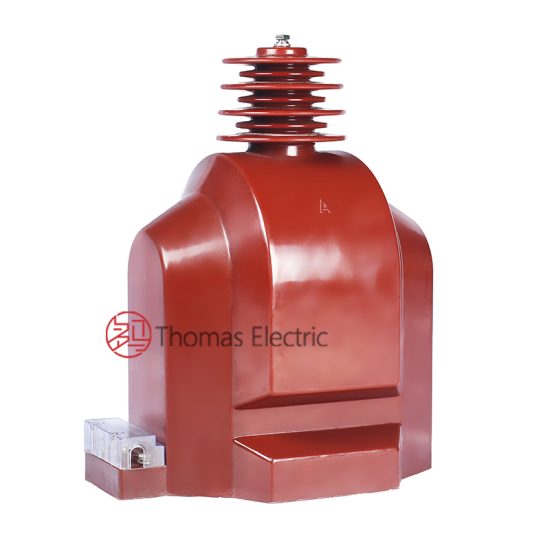
The UNKNOWN voltage transformer (VT) is a medium-voltage instrument transformer engineered for high-accuracy voltage measurement and reliable protective functions in 33 kV (IEC standard) or 35 kV (domestic nominal) power systems. Designed as an outdoor-type, cast-resin insulated device, it conforms to IEC 61869-3 and GB/T 20840.3 standards, ensuring global interoperability and performance consistency. Unlike legacy oil-immersed transformers, the UNKNOWN VT leverages modern vacuum pressure impregnation (VPI) epoxy resin technology to encapsulate its GOES (grain-oriented electrical steel) magnetic core and precision-wound secondary coils. This construction eliminates fire hazards, reduces maintenance demands, and enhances environmental resilience—critical attributes for utility-scale distribution networks.
Operating Principle of Cast-Resin Insulation
Cast-resin insulation in the UNKNOWN VT involves embedding the primary and secondary windings within a solid epoxy matrix under vacuum conditions. This process removes air voids that could lead to partial discharges under high electric stress. The VPI technique ensures uniform dielectric strength across the entire winding structure, with typical partial discharge levels below 10 pC at 1.2 × Um/√3 (where Um = 36 kV). The resin’s thermal conductivity (≈0.8 W/m·K) facilitates efficient heat dissipation during continuous operation, while its mechanical rigidity protects internal components from vibration and seismic loads. Crucially, the absence of liquid insulation eliminates risks of leakage, aging-related degradation, and flammability—making the UNKNOWN VT suitable for urban substations, industrial facilities, and environmentally sensitive zones.
Advantages Over Oil-Immersed Designs
Compared to traditional oil-filled VTs, the UNKNOWN cast-resin design offers superior operational safety and lifecycle economics. Oil-immersed units require periodic oil sampling, moisture monitoring, and gasket replacement, whereas the UNKNOWN VT operates maintenance-free for its first decade. Its dry-type construction achieves a higher Basic Insulation Level (BIL) of 170 kV peak for lightning impulse withstand, exceeding many oil-based equivalents. Additionally, the compact footprint (typically 30–40% smaller than oil counterparts) simplifies integration into space-constrained switchgear bays. Environmental compliance is another key differentiator: the UNKNOWN VT contains no PCBs or hydrocarbons, aligning with RoHS and IEC 62430 directives on eco-design. Field data from European and Asian utilities confirm mean time between failures (MTBF) exceeding 200,000 hours under standard service conditions.
Typical Applications Overview
The UNKNOWN VT serves as the backbone of secondary instrumentation in 33/35 kV networks. Primary use cases include revenue-grade energy metering (Class 0.2 or 0.5 per IEC 61869-3), synchro-check relaying, over/under-voltage protection, and power quality monitoring. It is commonly deployed in radial and ring-main distribution substations, renewable interconnection points (e.g., solar farms feeding into 33 kV grids), and industrial plants requiring precise voltage regulation. Its robust outdoor rating (IP54 minimum) allows direct mounting on poles or gantries without shelter, reducing civil works costs.
Technical Specifications
The UNKNOWN VT is engineered to deliver consistent performance under defined electrical and environmental parameters. All specifications adhere strictly to IEC 61869-3:2011 and GB/T 20840.3-2013, with test reports available upon request.
| Parameter | Value |
|---|---|
| System Voltage (Un) | 33 kV (IEC) / 35 kV (Domestic) |
| Maximum System Voltage (Um) | 36 kV |
| Voltage Ratio | 33,000/√3 : 100/√3 V or 33,000/√3 : 100/3 V (selectable) |
| Accuracy Class (Metering) | 0.2, 0.5 (per IEC 61869-3) |
| Accuracy Class (Protection) | 3P, 6P |
| Rated Output (per secondary winding) | 30 VA, 50 VA, or 100 VA (at cos φ = 0.8 lag) |
| Insulation Level (Power Frequency) | 70 kV rms for 1 min (phase-to-earth) |
| Lightning Impulse Withstand (BIL) | 170 kV peak (1.2/50 μs wave) |
| Partial Discharge Level | <10 pC at 1.2 × Um/√3 |
| Thermal Limit Output | 500 VA (continuous) |
| Ambient Temperature Range | –25°C to +40°C (standard); –40°C option available |
| Altitude Limit | ≤1000 m above sea level (derating required above) |
| Relative Humidity | Up to 95% non-condensing |
| Pollution Degree | III (heavy industrial/coastal) |
Electrical Performance Parameters
The UNKNOWN VT maintains ratio error within ±0.2% and phase displacement below ±10 minutes for Class 0.2 at 80–120% of rated voltage. For protection applications (Class 3P), ratio error remains within ±3% up to 5× rated voltage during transient overvoltages. The thermal limit output of 500 VA ensures stable operation even during fault conditions when multiple relays and meters draw current simultaneously. Secondary terminals are rated for 20 A continuous and feature screw-type clamps compatible with 2.5–16 mm² copper conductors. Burden compatibility is verified per IEC 61869-3 Annex C, with guaranteed accuracy maintained down to 25% of rated burden.
Environmental and Mechanical Ratings
Designed for outdoor installation, the UNKNOWN VT features a UV-stabilized cycloaliphatic epoxy housing with integrated creepage extensions. The minimum creepage distance is 25 mm/kV (phase-to-phase), satisfying pollution degree III requirements per IEC 60815. Mounting is via M16 stainless steel bolts on a standardized base plate (dimensions per IEC 61869-3 Figure B.1). The unit weighs approximately 85 kg and includes lifting lugs for crane handling. Sealing around the terminal box achieves IP54 ingress protection, preventing dust accumulation and water jet ingress during heavy rain. Optional anti-condensation heaters (24 V DC, 20 W) can be factory-installed for high-humidity environments.
Typical Applications
The UNKNOWN 33kV VT is deployed across diverse power infrastructure segments where precision, reliability, and compliance are non-negotiable.
Substation Secondary Metering
In utility-owned 33/35 kV distribution substations, the UNKNOWN VT provides the reference voltage for revenue metering systems. Connected to Class 0.2S kWh meters, it ensures billing accuracy within ±0.2% over a 20-year service life. The dual-secondary configuration (e.g., one winding for metering, another for protection) isolates critical functions, preventing relay operations from distorting energy measurements. In smart grid deployments, the VT interfaces with IEC 61850-compliant merging units for digital sampling, supporting synchrophasor applications. Field installations in Southeast Asia report annual drift rates below 0.05%, well within IEC tolerance bands.
Industrial Power Distribution
Large manufacturing complexes operating at 33 kV utilize the UNKNOWN VT for both process control and energy management. In steel mills or chemical plants, voltage signals feed into PLC-based motor protection relays (e.g., overvoltage lockout for variable frequency drives). The VT’s high short-time thermal withstand (capable of 10× rated voltage for 1 second) safeguards against switching surges during capacitor bank energization. Its immunity to electromagnetic interference (EMI) from nearby arc furnaces is validated through IEC 61000-4-3 testing at 10 V/m field strength.
Renewable Energy Integration
Solar photovoltaic and wind farms connecting to 33 kV collector grids rely on the UNKNOWN VT for grid-code compliance. It supplies voltage data to SCADA systems for reactive power control (Q(V) droop) and low-voltage ride-through (LVRT) verification. During islanding events, the VT enables rate-of-change-of-frequency (ROCOF) relays by providing stable voltage phasors. Its fast response time (<10 ms to 90% step response) ensures accurate fault detection during asymmetrical grid faults—a critical requirement under ENTSO-E grid codes.
Rural and Suburban Distribution Networks
In remote areas with limited maintenance access, the UNKNOWN VT’s dry-type design eliminates oil spill risks and reduces inspection frequency. Mounted on pole-top reclosers or pad-mounted switchgear, it supports automated feeder reconfiguration via voltage-sourced directional overcurrent relays. The unit’s wide ambient temperature tolerance (–25°C to +40°C) ensures accuracy in desert and alpine climates alike. Utilities in India and Brazil have standardized on this model for rural electrification programs due to its 30-year design life and resistance to rodent damage.
Compliance with International Standards
The UNKNOWN VT is certified to both international and Chinese national standards, facilitating global deployment without redesign.
IEC 61869-3 Compliance Details
IEC 61869-3:2011 defines performance requirements for inductive voltage transformers. The UNKNOWN VT meets all mandatory clauses, including:
- Ratio and phase error limits across burden and voltage ranges (Clause 5.3)
- Temperature rise ≤55 K for windings (Clause 5.5)
- Withstand voltage tests per Table 2 (70 kV rms power frequency, 170 kV lightning impulse)
- Partial discharge inception voltage ≥1.2 × Um/√3
Type tests were conducted at an ISO/IEC 17025-accredited laboratory, with routine tests performed on every unit. The transformer’s marking includes IEC-standard terminal designations (A, N for primary; a, n for secondary) and accuracy class symbols per Clause 7.2.
GB/T 20840.3 Alignment
GB/T 20840.3-2013 is China’s national adoption of IEC 61869-3, with minor deviations. Key alignments include identical accuracy classes, insulation levels, and test methods. However, GB/T specifies additional requirements for seismic withstand (horizontal acceleration 0.3g) and salt fog resistance (96-hour neutral salt spray test per GB/T 10125). The UNKNOWN VT incorporates reinforced core bracing and corrosion-resistant hardware to meet these criteria. Domestic certification (CMA/CNAS) is held, enabling procurement by State Grid and China Southern Power Grid.
Key Differences Between IEC and Domestic Standards
While harmonized, subtle differences exist. GB/T mandates a higher minimum creepage distance (31 mm/kV vs. IEC’s 25 mm/kV for pollution degree III) and requires flame retardancy testing per GB/T 5169.11 (glow-wire ignition at 850°C). IEC places greater emphasis on digital interface compatibility (IEC 61869-10), whereas GB/T focuses on mechanical robustness for harsh inland environments. The UNKNOWN VT bridges both regimes through modular design—epoxy formulation and housing geometry are adjusted per market without altering core electrical performance.
On-Site Testing Procedures
Post-installation verification ensures the UNKNOWN VT performs within specification before commissioning.
Insulation Resistance Test
Using a 2500 V DC megohmmeter, measure insulation resistance between primary winding and earth, and between secondary windings and earth. Acceptance criterion: ≥1000 MΩ at 20°C. Correct for temperature using RT = R20 × 2(20–T)/10. Values below 500 MΩ indicate moisture ingress or resin cracking and require drying or replacement.
Turns Ratio Test
Apply 100–200 V AC to the primary and measure secondary voltage with a calibrated voltmeter (±0.1% accuracy). Calculate ratio as Vp/Vs. Tolerance: ±0.2% for Class 0.2, ±0.5% for Class 0.5. Deviations beyond 1% suggest turn-to-turn shorts or wiring errors.
Polarity Test
Connect a 6–12 V battery momentarily between primary terminals A (+) and N (–). Observe secondary voltage polarity with a DC voltmeter: terminal a should show positive deflection relative to n. Incorrect polarity indicates reversed winding connections, which must be corrected before energizing protection relays.
Power Frequency Withstand Voltage Test
Apply 70 kV rms at 50 Hz between primary and earth for 1 minute. Monitor for flashover or excessive current (>10 mA). The test verifies insulation integrity after transport. Use a calibrated test transformer with overcurrent trip set at 15 mA.
Open-Circuit Characteristic Test
Gradually increase primary voltage from 0 to 120% Un while measuring secondary voltage and excitation current. Plot Vs vs. Iexc. Knee point should occur above 150% Un; early saturation indicates core damage. Excitation current at 100% Un must be ≤0.5% of rated secondary current.
Preventive Maintenance Guide
Although cast-resin VTs require minimal upkeep, scheduled inspections extend service life and prevent unexpected failures.
Periodic Inspection Protocol
Annual visual checks should verify:
- No surface cracks, tracking, or UV degradation on housing
- Tightness of terminal screws (torque: 2.5 N·m for M6)
- Integrity of grounding conductor (resistance <0.1 Ω)
- Absence of moisture in terminal box (use humidity indicator card)
In coastal areas, clean salt deposits with deionized water every 6 months. Record infrared thermography readings; hotspots >10 K above ambient suggest internal defects.
Maintenance Intervals and Fault Diagnosis
| Interval | Action |
|---|---|
| 1 year | Visual inspection, IR scan, terminal torque check |
| 5 years | Insulation resistance, turns ratio, open-circuit test |
| 10 years | Full IEC 61869-3 routine test suite |
Common faults include:
- High ratio error: Core saturation due to DC offset or winding short
- Elevated PD levels: Resin voids from manufacturing defect
- Terminal overheating: Loose connection increasing contact resistance
Diagnose using dissolved gas analysis (DGA) is not applicable; instead, compare test results against baseline commissioning data.
Conclusion
The UNKNOWN 33kV cast-resin voltage transformer represents a benchmark in medium-voltage instrumentation, combining IEC 61869-3-certified accuracy with the operational resilience demanded by modern power systems. Its epoxy-encapsulated GOES core ensures long-term stability of ratio and phase characteristics, while the dry-type construction eliminates fire hazards and environmental liabilities associated with oil-filled alternatives. Field-proven across temperate, tropical, and arid climates, the UNKNOWN VT delivers Class 0.2 metering precision and robust protection functionality in a single, compact unit. Compliance with both IEC and GB/T standards enables seamless integration into global utility and industrial networks. With a design life of 25–30 years and minimal maintenance requirements, it offers a compelling total cost of ownership advantage. As distribution grids evolve toward smarter, more resilient architectures, the UNKNOWN VT remains a foundational component for accurate voltage sensing, revenue assurance, and system protection in 33/35 kV applications worldwide.