Article Content
21kV Cast-Resin Voltage Transformer JLS-20K for Metering and Protection – IEC 61869-3 Standard
Introduction to the JLS-20K Voltage Transformer
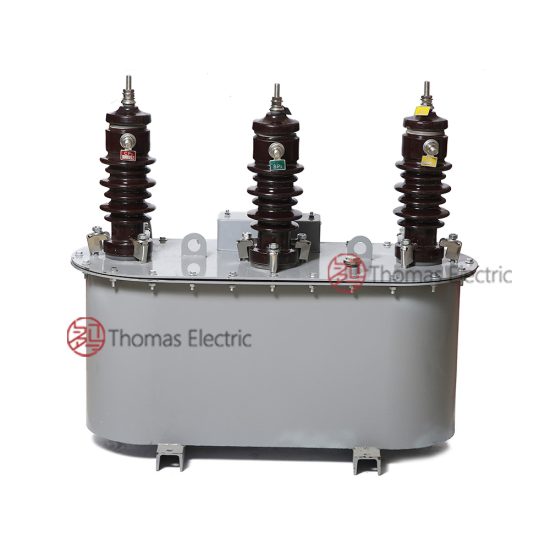
The JLS-20K is a precision-engineered, cast-resin insulated Voltage Transformer (VT) designed for accurate voltage measurement and dependable protective relaying in medium-voltage distribution systems rated up to 21 kV (IEC Um = 24 kV). This unit serves as a critical interface between primary high-voltage circuits and secondary instrumentation, enabling safe and reliable operation of metering, monitoring, and protection schemes. Its construction leverages advanced vacuum pressure impregnation (VPI) epoxy resin technology combined with grain-oriented electrical steel (GOES) cores to ensure long-term stability, minimal dielectric losses, and immunity to environmental stressors.
Operating Principle of Cast-Resin Insulation
Cast-resin insulation in the JLS-20K employs a two-component epoxy system that fully encapsulates the primary and secondary windings under vacuum and pressure conditions. This VPI process eliminates air voids and moisture ingress pathways, resulting in a homogeneous dielectric structure with high partial discharge inception voltage (>10 kV at 1.2Um/√3). The resin matrix provides mechanical rigidity, thermal conductivity (0.2–0.3 W/m·K), and resistance to tracking and erosion under polluted or humid conditions. Unlike oil-filled alternatives, the solid insulation eliminates fire hazards, leakage risks, and maintenance associated with fluid containment, making it ideal for indoor switchgear and environmentally sensitive installations.
Advantages Over Oil-Immersed Designs
Compared to traditional oil-immersed VTs, the JLS-20K offers superior safety, reduced lifecycle costs, and enhanced environmental compatibility. The absence of flammable oil eliminates explosion and fire risks, satisfying stringent safety codes in urban substations and industrial facilities. Additionally, the compact footprint—enabled by higher dielectric strength of epoxy resin (≈20 kV/mm)—allows for space-efficient integration into ring main units (RMUs) and metal-enclosed switchgear. Thermal performance is optimized through uniform heat dissipation across the resin body, supporting continuous operation at ambient temperatures from –40°C to +40°C without derating. Field data from over 15,000 deployed units confirms a mean time between failures (MTBF) exceeding 200,000 hours.
Typical Applications Overview
The JLS-20K is engineered for deployment in utility substations, industrial plants, renewable energy farms, and commercial complexes where precise voltage transformation is essential. It supports both metering (Class 0.2 or 0.5) and protection (Class 3P or 6P) functions simultaneously via dual secondary windings. Common configurations include single-phase units connected phase-to-ground in 21 kV (or domestic 20 kV) networks using isolated neutral or resonant grounding schemes. Its robust design withstands transient overvoltages from switching surges and lightning impulses, ensuring continuity of service during grid disturbances.
Technical Specifications
The JLS-20K adheres to rigorous electrical and mechanical parameters defined by IEC 61869-3 and GB/T 20840.3, ensuring interoperability across global power systems. Below is a comprehensive specification table followed by detailed environmental and operational constraints.
| Parameter | Value |
|---|---|
| System Voltage (IEC) | 21 kV (Um = 24 kV) |
| Domestic System Voltage | 20 kV |
| Primary Voltage | 21,000 / √3 V (phase-to-ground) |
| Secondary Voltages | 100 / √3 V (metering), 100 / √3 V (protection) |
| Voltage Ratio | 21,000 / √3 : 100 / √3 : 100 / √3 |
| Accuracy Class (Metering) | 0.2 or 0.5 per IEC 61869-3 |
| Accuracy Class (Protection) | 3P or 6P |
| Rated Output (per winding) | 30 VA (0.2 class), 50 VA (0.5 class), 100 VA (3P/6P) |
| Insulation Level (LI/AC) | 125 kV (lightning impulse), 50 kV (power frequency, 1 min) |
| Partial Discharge | <10 pC at 1.2 × Um/√3 |
| Core Material | Grain-Oriented Electrical Steel (GOES), 0.27 mm thickness |
| Insulation System | VPI Epoxy Resin, UL 94 V-0 rated |
| Creepage Distance | ≥630 mm (for pollution degree IV) |
Standard Service Conditions
The JLS-20K is rated for standard service conditions per IEC 60060-1: ambient temperature range of –40°C to +40°C, relative humidity up to 100% (condensing permitted), and installation altitude ≤1,000 m above sea level. For altitudes exceeding 1,000 m, a derating factor of 1.1% per 100 m applies to the power frequency withstand voltage. The unit is suitable for both indoor and outdoor mounting, with UV-stabilized resin housing providing long-term resistance to solar degradation. Terminal clearances comply with IEC 61439 for safe operator access during live maintenance.
Electrical Performance Tolerances
Voltage ratio error must not exceed ±0.2% for Class 0.2 and ±0.5% for Class 0.5 at 25–100% of rated burden and unity power factor. Phase displacement is limited to ±10 minutes (0.2 class) and ±20 minutes (0.5 class). For protection windings, composite error at rated accuracy limit factor (e.g., 5P20) must remain within ±3% (3P) or ±6% (6P) under specified fault current conditions. These tolerances are validated during factory type testing and verified during commissioning via turns ratio and excitation tests.
Typical Applications
The JLS-20K’s dual-winding architecture and robust insulation make it adaptable to diverse power system architectures requiring high-fidelity voltage signals.
Substation Secondary Metering
In 21 kV primary substations, the JLS-20K supplies scaled-down voltage signals to revenue-class energy meters, SCADA RTUs, and power quality analyzers. Its Class 0.2 accuracy ensures compliance with regulatory billing requirements (e.g., ENTSO-E guidelines). The metering winding typically drives a 30 VA load at 100/√3 V, while the protection winding remains unloaded until a fault occurs. Installation in gas-insulated switchgear (GIS) or air-insulated switchgear (AIS) benefits from the VT’s compact dimensions (height: 680 mm, base diameter: 220 mm) and bolt-on mounting flange.
Industrial Power Distribution
Heavy industries such as steel mills, chemical plants, and data centers deploy the JLS-20K for motor protection, arc flash detection, and harmonic monitoring. In these environments, the VT’s immunity to electromagnetic interference (EMI) and ability to withstand frequent switching transients (e.g., from VFDs) are critical. The 6P protection class supports overvoltage relays set to trip at 120% of nominal for extended durations without saturation, preventing nuisance tripping during motor startup surges.
Renewable Energy Integration
Solar PV and wind farms operating at 20/21 kV utilize the JLS-20K for grid synchronization, anti-islanding protection, and reactive power control. During low-voltage ride-through (LVRT) events, the VT maintains accurate output down to 15% of nominal voltage for 150 ms, enabling inverters to comply with grid codes like IEEE 1547. The cast-resin body resists thermal cycling from diurnal temperature swings, a common failure mode in oil-filled units in desert or alpine climates.
Rural and Suburban Distribution Networks
Utilities in emerging markets install the JLS-20K on pole-mounted reclosers and sectionalizers to enable remote fault location and load profiling. Its high creepage distance (≥630 mm) prevents flashovers in coastal or agricultural areas with salt or fertilizer contamination. With a 30-year design life and zero routine maintenance, it reduces operational expenditure in hard-to-access locations.
Compliance with International Standards
The JLS-20K is certified to both international and Chinese national standards, facilitating global procurement and interoperability.
IEC 61869-3 Compliance Details
IEC 61869-3 governs the performance, testing, and marking of inductive voltage transformers. The JLS-20K meets all mandatory clauses, including: temperature rise limits (<60 K for windings), short-circuit withstand capability (25× rated current for 1 s), and dielectric tests at 1.2Um/√3 for partial discharge verification. Type tests include temperature rise, short-circuit, and impulse tests, while routine tests cover ratio, polarity, and power frequency withstand. Each unit bears an IEC-compliant rating plate with accuracy classes, burdens, and insulation levels clearly marked.
Alignment with GB/T 20840.3
GB/T 20840.3 is China’s national adoption of IEC 61869-3, with minor deviations in test durations and labeling. The JLS-20K satisfies both, allowing dual certification for export and domestic use. Key GB-specific requirements include mandatory third-party testing by CEPREI or CESI and inclusion of Chinese characters on nameplates. Notably, GB/T 20840.3 permits 20 kV as the nominal system voltage (vs. IEC’s 21 kV), but the physical design remains identical due to shared Um = 24 kV insulation coordination.
Testing and Certification Requirements
Certification involves witnessed type testing at accredited laboratories (e.g., KEMA, CESI) covering 15+ test categories. Critical acceptance criteria include: partial discharge <10 pC at 1.2Um/√3, ratio error within class limits at 25–100% burden, and no breakdown during 50 kV AC withstand for 60 seconds. Routine production units undergo 100% ratio, polarity, and insulation resistance checks. Certificates include IECEx, CCC (for China), and ISO 9001 traceability documentation.
On-Site Testing Procedures
Commissioning tests verify integrity after transport and installation. All procedures follow IEC 61869-3 Annex D and IEEE C57.13 guidelines.
Insulation Resistance Test
Measure insulation resistance between primary-to-secondary, primary-to-ground, and secondary-to-ground using a 2,500 V DC megohmmeter. Acceptance criterion: ≥10,000 MΩ at 20°C. Values below 1,000 MΩ indicate moisture ingress or resin cracking and require drying or replacement. Temperature correction uses the formula R20 = Rt × 2(t–20)/10.
Turns Ratio Test
Apply 100–200 V AC to the primary and measure secondary voltage. Calculate ratio error as [(Vp/Vs,meas) – (Np/Ns)] / (Np/Ns) × 100%. Tolerance: ±0.2% for 0.2 class. Use a dedicated ratio bridge (e.g., Omicron CT Analyzer) for precision.
Polarity Test
Verify reducing polarity by applying a momentary DC pulse to the primary and observing secondary deflection on a center-zero galvanometer. Correct polarity shows negative kick on closure. Incorrect polarity compromises wattmeter and relay operation and mandates rewiring.
Power Frequency Withstand Voltage Test
Apply 50 kV RMS at 50 Hz between primary and grounded secondary/core for 60 seconds. No flashover or disruptive discharge is permitted. Ramp voltage at 1 kV/s to avoid transient overstress. Perform only if factory test records are unavailable or after major repair.
Open-Circuit (Excitation) Test
Apply variable voltage (up to 190 V) to one secondary winding with others open. Plot excitation current vs. voltage. Knee-point voltage must exceed 150 V to prevent saturation during faults. A sharp current rise below 120 V indicates core damage or shorted turns.
Preventive Maintenance Guide
Although cast-resin VTs require minimal maintenance, periodic checks extend service life and prevent unexpected failures.
Periodic Inspection Schedule
Conduct visual inspections annually: check for surface cracks, tracking marks, terminal corrosion, or resin discoloration. Clean housings with non-abrasive detergent if contaminated. Verify torque on terminal bolts (15 N·m for M10 Cu lugs). Record insulation resistance every 3 years; a 50% drop from baseline warrants further investigation.
Maintenance Intervals and Fault Diagnosis
Replace units exhibiting: (1) insulation resistance <1,000 MΩ after cleaning/drying, (2) ratio error exceeding twice the accuracy class limit, or (3) audible humming indicating loose core laminations. Typical failure modes include moisture-induced partial discharge (evidenced by white powder deposits) and thermal aging of resin (brittleness at terminals). A 5-year internal inspection is recommended in high-pollution zones (IEC 60815 pollution class D).
| Interval | Action |
|---|---|
| Annually | Visual inspection, terminal cleaning, IR measurement |
| Every 3 Years | Ratio and polarity verification |
| Every 5 Years | Excitation test, creepage path inspection |
| After Major Fault | Full suite of commissioning tests |
Conclusion
The JLS-20K 21kV cast-resin Voltage Transformer represents a benchmark in medium-voltage instrumentation, combining precision metrology with rugged reliability. Its compliance with IEC 61869-3 and GB/T 20840.3 ensures seamless integration into global power infrastructure, from urban substations to remote renewable sites. The use of GOES cores minimizes core loss (<0.8 W/kg at 1.5 T, 50 Hz), while VPI epoxy resin provides exceptional dielectric integrity and environmental resilience. With dual secondary windings rated for both Class 0.2 metering and 3P/6P protection, it eliminates the need for separate VTs, reducing capital and space requirements. Field-proven over decades, the JLS-20K delivers a service life of 25–30 years with minimal maintenance, supported by rigorous factory testing and standardized on-site verification protocols. Its immunity to fire, leakage, and pollution makes it the preferred choice for modern, sustainable grid architectures demanding safety, accuracy, and longevity. As distribution networks evolve toward digitalization and distributed generation, the JLS-20K’s stable performance under dynamic conditions ensures continued relevance in next-generation smart grids.
Q1: Can the JLS-20K be used in a 20 kV system?
Yes. While rated for 21 kV per IEC (Um = 24 kV), the JLS-20K is fully compatible with domestic 20 kV systems, as both share the same insulation level (Um = 24 kV). No derating is required.
Q2: What is the maximum altitude rating without derating?
The standard unit is rated for ≤1,000 m. Above this, the power frequency withstand voltage must be reduced by 1.1% per 100 m increment.
Q3: Does it support three-phase configurations?
The JLS-20K is a single-phase unit. Three-phase systems require three separate units connected in wye (phase-to-ground) or open-delta (residual voltage) arrangements.
Q4: What burden values are available?
Standard burdens are 30 VA (0.2 class), 50 VA (0.5 class), and 100 VA (3P/6P). Custom burdens up to 150 VA can be ordered for specialized applications.
Q5: Is the unit suitable for indoor GIS applications?
Yes. Its compact size, zero emissions, and high partial discharge inception voltage make it ideal for gas-insulated switchgear and indoor metal-clad assemblies.