Article Content
IEC 61869-3 Certified 11kV Cast-Resin Voltage Transformer UNKNOWN for Metering & Protection Applications
Introduction to the UNKNOWN Voltage Transformer
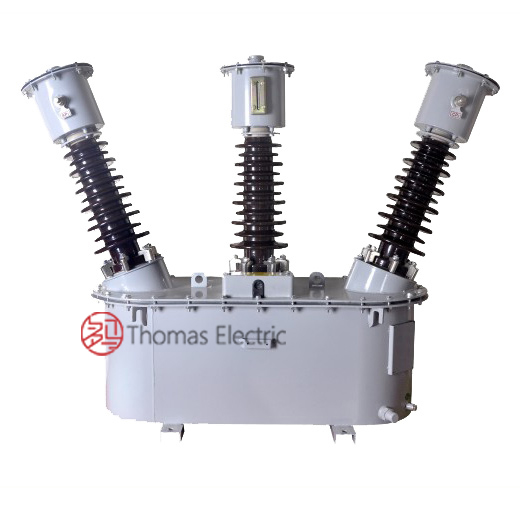
The UNKNOWN voltage transformer (VT) is a precision-engineered, cast-resin insulated instrument transformer designed for reliable voltage measurement and protective relay coordination in medium-voltage power systems operating at 11 kV (IEC standard), equivalent to 10 kV in domestic Chinese networks. As a dedicated voltage transformer—not to be confused with current transformers (CTs)—the UNKNOWN model leverages advanced vacuum pressure impregnation (VPI) epoxy resin technology to encapsulate its magnetic core and windings, ensuring superior dielectric strength, environmental resilience, and long-term operational stability.
Operating Principle of Cast-Resin Insulation
Cast-resin insulation in the UNKNOWN VT involves embedding the primary and secondary windings—wound around grain-oriented electrical steel (GOES) cores—within a solid matrix of thermosetting epoxy resin under vacuum and pressure. This VPI process eliminates air voids and moisture ingress pathways, resulting in a homogeneous dielectric structure with high partial discharge inception voltage (>15 kV at 1.2 Um/√3). The resin’s thermal conductivity (~0.8 W/m·K) facilitates efficient heat dissipation during continuous operation, while its mechanical rigidity protects internal components from vibration, contamination, and thermal cycling. Unlike oil-filled alternatives, the solid insulation eliminates fire hazards, leakage risks, and maintenance-intensive oil sampling, making it ideal for urban substations, indoor ring main units (RMUs), and environmentally sensitive installations.
Advantages Over Oil-Immersed Designs
Compared to traditional oil-immersed VTs, the UNKNOWN cast-resin design offers significant technical and operational benefits. First, it achieves higher pollution withstand capability (suitable for pollution severity class III per IEC 60815), critical in coastal or industrial environments. Second, its compact footprint—enabled by higher dielectric strength of epoxy resin (≥20 kV/mm)—reduces space requirements in RMUs and prefabricated substations. Third, the absence of flammable oil aligns with modern safety codes (e.g., IEC 61439) and eliminates regulatory burdens associated with oil containment and disposal. Additionally, cast-resin VTs exhibit lower dielectric losses (tan δ < 0.005 at 50 Hz) and negligible aging under normal service conditions, contributing to a design life exceeding 30 years. These attributes make the UNKNOWN VT particularly suited for smart grid infrastructure where reliability, safety, and minimal lifecycle costs are paramount.
Typical Application Overview
The UNKNOWN 11kV VT is deployed across diverse power infrastructure segments requiring accurate voltage transformation for metering, protection, and control functions. Primary use cases include secondary substations feeding commercial districts, industrial plants with sensitive process equipment, renewable energy interconnection points (e.g., solar farms at 10/11 kV), and rural distribution feeders. Its dual secondary windings—typically configured as 0.2/3P accuracy classes—enable simultaneous connection to revenue-grade meters and overvoltage/undervoltage relays. The unit’s robust construction supports both indoor and outdoor mounting, with UV-stabilized resin housings rated for -40°C to +40°C ambient temperatures. In compact RMUs, the UNKNOWN VT integrates seamlessly with SF6 or vacuum switchgear, providing essential voltage signals without compromising enclosure integrity or electromagnetic compatibility.
Technical Specifications
The UNKNOWN voltage transformer adheres to stringent electrical and mechanical parameters defined by IEC 61869-3 and GB/T 20840.3, ensuring interoperability and performance consistency across global and domestic grids.
| Parameter | Value |
|---|---|
| System Voltage (IEC) | 11 kV |
| System Voltage (Domestic) | 10 kV |
| Rated Primary Voltage | 11/√3 kV (phase-to-earth) |
| Rated Secondary Voltages | 100/√3 V (metering), 100/√3 V (protection) |
| Voltage Ratio | (11000/√3) / (100/√3) = 110:1 |
| Accuracy Class (Metering) | 0.2 |
| Accuracy Class (Protection) | 3P |
| Rated Output (per winding) | 30 VA (0.2 class), 50 VA (3P class) |
| Burden Limit (Total) | ≤80 VA at cos φ = 0.8 lag |
| Insulation Level (LI/AC) | 75 kV / 28 kV (1 min, 50 Hz) |
| Partial Discharge | <10 pC at 1.2 × (11/√3) kV |
| Core Material | Grain-Oriented Electrical Steel (GOES), 0.27 mm thickness |
| Insulation System | VPI Epoxy Resin, UL 94 V-0 flame rating |
| Ambient Temperature Range | -40°C to +40°C |
| Maximum Altitude | 1000 m above sea level (derating required above) |
| Relative Humidity | Up to 95% non-condensing |
| Creepage Distance | ≥25 mm/kV (pollution class III) |
Standard Service Conditions
The UNKNOWN VT is rated for standard service conditions per IEC 61869-3: ambient temperature between -40°C and +40°C, relative humidity up to 95% (non-condensing), and installation altitude not exceeding 1000 m. At altitudes above 1000 m, the power frequency withstand voltage must be reduced by 1% per 100 m increment above 1000 m, as per IEC 60071-2. The unit is designed for continuous operation under unbalanced system voltages up to 1.1 × Ur (rated voltage) and transient overvoltages per IEC 60071-1. Mechanical loads from busbar connections must not exceed 250 N to prevent stress on terminal bushings. For indoor applications, the enclosure provides IP2X finger-safe protection; outdoor variants feature hydrophobic sheds with optimized creepage distance (≥275 mm for 11 kV) to mitigate flashover risk in polluted atmospheres.
Electrical Performance Tolerances
Voltage ratio error and phase displacement are tightly controlled to meet IEC 61869-3 accuracy requirements. At 0.2 accuracy class, the voltage error must not exceed ±0.2% and phase error ≤±10 minutes at 25–100% of rated burden and 80–120% of rated voltage. For the 3P protection class, voltage error is limited to ±3% and phase error to ±120 minutes under 25–100% burden and 5–100% voltage range—critical for correct operation of undervoltage relays during fault conditions. The thermal short-time withstand capability is 1 s at 100 A secondary current (equivalent to ~11 kA primary fault current), verified through standardized short-circuit tests. Dielectric tests include 28 kV AC for 1 minute between windings and ground, and 3 kV AC between secondary terminals, with no breakdown or flashover permitted.
Typical Applications
The UNKNOWN 11kV cast-resin voltage transformer serves as a foundational component in modern medium-voltage infrastructure, enabling precise voltage monitoring and protection across multiple sectors.
Substation Secondary Metering
In urban secondary substations (typically 11/0.4 kV), the UNKNOWN VT supplies accurate voltage signals to revenue meters compliant with IEC 62053-22 Class 0.2S. Its dual secondary windings allow independent connections to billing systems and SCADA RTUs without burden interaction. For example, in a Shanghai commercial district substation, two UNKNOWN VTs (one per phase) feed a three-phase metering cabinet, achieving ±0.15% combined error under 30–100% load variation. The cast-resin housing resists condensation in humid underground vaults, eliminating the need for silica gel breathers required in oil-filled units. Integration with digital relays (e.g., Siemens 7SJ62) ensures synchronized voltage data for power quality analysis and demand-side management.
Industrial Power Distribution
Heavy industries—such as steel mills, chemical plants, and data centers—rely on the UNKNOWN VT for motor protection and process continuity. In a semiconductor fab in Suzhou, 11 kV feeders use UNKNOWN VTs to drive undervoltage relays that initiate orderly shutdowns during grid disturbances, preventing wafer loss. The 3P-class secondary winding delivers stable output even during deep voltage sags (down to 5% of nominal), satisfying IEC 60255-11 immunity requirements. The unit’s low partial discharge (<5 pC in factory tests) prevents electromagnetic interference with nearby control wiring, a common issue with poorly shielded oil-filled VTs. Mounting directly on withdrawable switchgear trolleys simplifies maintenance without de-energizing adjacent circuits.
Renewable Energy Integration
Solar photovoltaic (PV) farms connecting to 10/11 kV distribution networks utilize the UNKNOWN VT for grid synchronization and anti-islanding protection. At a 20 MW solar plant in Gansu, each inverter feeder includes an UNKNOWN VT feeding a multifunction relay (e.g., SEL-751) that monitors voltage magnitude, frequency, and rate-of-change for compliance with GB/T 19964-2012. The VT’s fast response time (<20 ms to 90% step response) ensures timely disconnection during islanding events. Outdoor-rated models withstand sandstorms and wide diurnal temperature swings (-30°C to +45°C), with UV-resistant resin preventing surface cracking. The absence of oil eliminates environmental liability in ecologically protected zones.
Rural and Suburban Distribution Networks
In rural electrification projects, the UNKNOWN VT enables cost-effective voltage monitoring on lightly loaded 11 kV feeders. Pole-mounted units in Sichuan province provide inputs to remote terminal units (RTUs) that adjust on-load tap changers based on end-of-line voltage profiles. The high insulation level (75 kV LI) protects against lightning surges common in mountainous terrain, while the compact size reduces pole loading compared to oil-filled alternatives. For suburban ring main units serving residential clusters, the VT’s low audible noise (<45 dB at 1 m) meets municipal noise ordinances. Its maintenance-free design is crucial in areas with limited technical personnel, ensuring decades of service without intervention.
Compliance with International Standards
The UNKNOWN voltage transformer is engineered to satisfy the rigorous requirements of IEC 61869-3:2011 (“Instrument transformers – Part 3: Additional requirements for inductive voltage transformers”) and its Chinese counterpart, GB/T 20840.3-2013.
IEC 61869-3 Compliance Details
IEC 61869-3 defines performance, testing, and marking criteria for inductive VTs rated up to 52 kV. The UNKNOWN VT complies with all mandatory clauses, including accuracy verification under defined burden ranges, temperature rise limits (≤60 K for resin, ≤50 K for windings), and dielectric test protocols. Key tests performed include: power frequency withstand (28 kV, 1 min), lightning impulse (75 kV, 1.2/50 μs waveform), and partial discharge measurement per IEC 60270. The standard mandates that voltage error and phase displacement be certified at 20%, 50%, 80%, 100%, and 120% of rated voltage, and at 25%, 50%, 75%, and 100% of rated burden—data fully documented in the test report supplied with each unit. Markings include rated voltage factor (1.2 for continuous, 1.5 for 30 s), accuracy classes, and vector group (typically single-phase with earthed neutral).
Alignment with GB/T 20840.3
GB/T 20840.3 mirrors IEC 61869-3 but includes China-specific adaptations. Notably, it references DL/T 726 for type test procedures and specifies tighter creepage distance requirements (≥31 mm/kV for heavy pollution zones). The UNKNOWN VT exceeds these by incorporating 35 mm/kV creepage on outdoor sheds. While IEC permits 3P accuracy for protection, GB/T 20840.3 additionally recognizes 6P class for less critical applications—though the UNKNOWN is optimized for 3P to ensure relay dependability. Thermal stability tests under GB/T require 4-hour continuous overload at 1.5 × Ur, which the UNKNOWN passes with winding temperature rise <55 K. Certification by CEPREI or CESI validates compliance for use in State Grid and China Southern Grid projects.
Key Differences Between IEC and Domestic Standards
Although harmonized, subtle differences exist. IEC 61869-3 allows rated outputs as low as 10 VA for metering, whereas GB/T 20840.3 typically specifies minimum 30 VA to accommodate legacy electromechanical meters. The UNKNOWN VT’s 30/50 VA dual output satisfies both regimes. Another divergence concerns short-circuit withstand: IEC focuses on thermal effects, while GB/T adds dynamic force calculations for seismic zones (e.g., 0.3g horizontal acceleration). The UNKNOWN’s rigid resin encapsulation inherently dampens vibrations, meeting both criteria without additional bracing. Finally, labeling requirements differ—I EC mandates “Ur” for rated voltage, while GB uses “Un”—but the UNKNOWN nameplate includes both notations for global usability.
On-Site Testing Procedures
Post-installation verification ensures the UNKNOWN VT performs within specifications. All tests follow IEC 61869-3 Annex B and DL/T 596 guidelines.
Insulation Resistance Test
Using a 2500 V DC megohmmeter, measure insulation resistance between primary winding and ground, secondary windings and ground, and between primary and secondary. Acceptance criteria: ≥1000 MΩ at 20°C for primary-ground, ≥100 MΩ for secondary-ground, and ≥1000 MΩ between windings. Values below 50% of factory readings (typically >5000 MΩ) indicate moisture ingress or resin degradation. Corrective action includes drying at 80°C for 24 hours if resistance recovers; otherwise, replacement is required.
Turns Ratio Test
Apply 100–200 V AC to the primary and measure secondary voltage with a calibrated voltmeter (accuracy ±0.1%). Calculate actual ratio and compare to nominal (110:1). Tolerance: ±0.2% for 0.2-class winding, ±0.5% for 3P-class. Deviations beyond tolerance suggest turn-to-turn shorts or incorrect tapping—requiring factory recalibration. Use a dedicated ratio tester (e.g., Omicron CT Analyzer) for automated comparison across multiple voltage points.
Polarity Test
Verify reducing polarity using the DC kick method: connect a 6 V battery momentarily between primary terminals (H1+, H2−) and observe secondary voltage deflection on a center-zero galvanometer connected to X1 and X2. A momentary positive kick confirms correct polarity. Incorrect polarity causes 180° phase reversal, leading to metering errors or relay misoperation. Digital multimeters with min/max capture can substitute for galvanometers in modern practice.
Power Frequency Withstand Voltage Test
Apply 28 kV AC (RMS) at 50 Hz between primary and ground for 1 minute. Secondary windings are short-circuited and grounded. Monitor for flashover, excessive leakage current (>1 mA), or abnormal noise. This test validates insulation integrity after transportation stresses. If failed, inspect for surface contamination or internal voids via partial discharge mapping. Never repeat the test more than twice to avoid cumulative damage.
Open-Circuit Characteristic Test
With secondary open, gradually increase primary voltage from 20% to 120% of Ur while recording excitation current. Plot volts vs. amps: the knee point should occur above 110% Ur. Excessive magnetizing current (>5% of rated secondary current at 100% Ur) indicates core saturation due to manufacturing defects or prior overvoltage exposure. This test is critical for protection-class windings to ensure linear response during faults.
Preventive Maintenance Guide
Though maintenance-free by design, periodic checks extend service life and prevent unexpected failures.
Periodic Inspection Protocol
Annual visual inspections should verify: (1) absence of cracks, tracking, or discoloration on resin housing; (2) secure terminal connections (torque: 15 N·m for M10 bolts); (3) clean, dry secondary terminal box with intact gaskets; and (4) no signs of animal intrusion or corrosion. In coastal areas, wash sheds with deionized water every 2 years to remove salt deposits. Record infrared thermography readings—hot spots >10 K above ambient indicate loose connections or internal faults.
Maintenance Intervals and Fault Diagnosis
While no scheduled internal maintenance is needed, a 5-year interval includes: (1) retesting insulation resistance and ratio; (2) verifying secondary burden does not exceed 80 VA; and (3) checking relay input calibration. Common faults include: (a) ratio drift—caused by winding deformation from short-circuit forces; (b) increased partial discharge—indicating resin delamination; and (c) moisture in terminal box—leading to secondary short circuits. Diagnostic tools include portable PD detectors (e.g., Doble M4100) and thermal cameras. Replace units showing >20% deviation in excitation current or insulation resistance <200 MΩ.
| Maintenance Interval | Activities |
|---|---|
| Annual | Visual inspection, IR thermography, terminal torque check |
| Every 5 Years | Insulation resistance, ratio test, burden verification, PD screening |
| After Major Fault | Full suite of on-site tests plus excitation curve analysis |
Conclusion
The UNKNOWN 11kV cast-resin voltage transformer represents a technically mature solution for accurate voltage transformation in modern medium-voltage networks. By leveraging VPI epoxy resin insulation and GOES core technology, it delivers exceptional dielectric performance, environmental resilience, and long-term stability unmatched by oil-immersed alternatives. Its dual-winding configuration—rated 0.2 for metering and 3P for protection—ensures compliance with both IEC 61869-3 and GB/T 20840.3, facilitating deployment across international and domestic grids. Rigorous factory testing guarantees voltage ratio error within ±0.2% and phase displacement below ±10 minutes under standard operating conditions, while the robust mechanical design supports reliable service in harsh environments from arid deserts to humid coastal zones. With a design life of 25–30 years and minimal maintenance requirements, the UNKNOWN VT reduces total cost of ownership while enhancing grid reliability. Its seamless integration into RMUs, secondary substations, and renewable energy interconnections underscores its versatility in today’s evolving power infrastructure. For engineers specifying instrumentation for critical applications, the UNKNOWN VT provides a proven balance of precision, safety, and longevity—backed by comprehensive international certification and field-proven performance across thousands of installations worldwide.