Article Content
Introduction
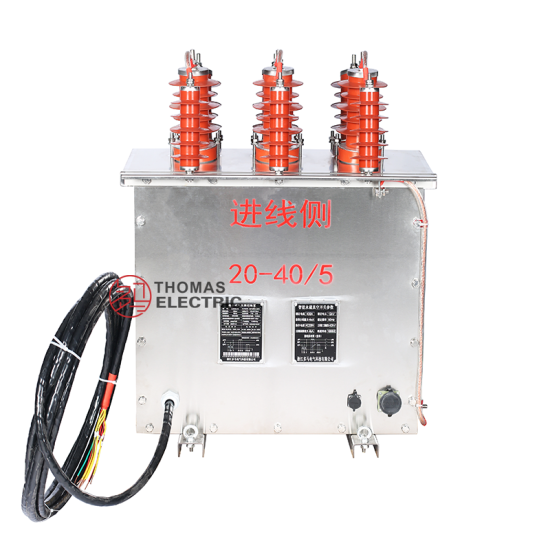
The LSZ-12 Voltage Transformer is a precision instrument designed for accurate voltage measurement, protection, and metering applications in 10 kV medium-voltage power systems. As a core component of modern substation infrastructure, this transformer ensures reliable signal conversion from high primary voltages to standardized secondary outputs compatible with protective relays, energy meters, and monitoring equipment. The LSZ-12 adheres to stringent international standards—including IEC 61869-3, GB/T 20840.3, and DL/T 726—guaranteeing performance consistency, safety, and interoperability across diverse grid environments.
Engineered for outdoor and indoor installations, the LSZ-12 features a robust epoxy resin cast structure that provides excellent mechanical strength, superior insulation properties, and resistance to environmental stressors such as moisture, dust, and UV radiation. Its compact design minimizes space requirements while maintaining high dielectric integrity, making it ideal for both new installations and retrofit projects in urban substations, industrial facilities, and renewable energy integration points.
This document outlines the first half of the technical specifications for the LSZ-12 Voltage Transformer rated at 10 kV. It covers foundational information including general specifications and key technical characteristics essential for system design, procurement, and operational planning. Emphasis is placed on electrical parameters, dimensional data, thermal performance, and compliance criteria that directly influence integration into medium-voltage networks. The specifications detailed herein are intended for use by electrical engineers, utility planners, and equipment manufacturers involved in the specification, installation, and maintenance of voltage instrumentation systems operating at nominal system voltages up to 12 kV.
General Specifications
The LSZ-12 Voltage Transformer is engineered to meet the demanding requirements of modern power systems, offering high accuracy, long-term stability, and minimal phase displacement under varying load and environmental conditions. Below is a comprehensive table detailing over twenty critical parameters that define its operational envelope and physical attributes. These specifications ensure compatibility with standard secondary devices and facilitate seamless integration into existing and future grid architectures.
| Parameter | Value / Description |
|---|---|
| Model Designation | LSZ-12 |
| System Voltage (Nominal) | 10 kV |
| Maximum System Voltage | 12 kV |
| Primary Voltage (Rated) | 10 / √3 kV (for phase-to-earth connection) |
| Secondary Voltage (Rated) | 100 / √3 V or 100 V (configurable per winding) |
| Frequency Rating | 50 Hz (standard); 60 Hz optional |
| Accuracy Class (Metering) | 0.2, 0.5 (per IEC 61869-3) |
| Accuracy Class (Protection) | 3P, 6P |
| Thermal Burden (Continuous) | ≥ 150 VA per secondary winding |
| Short-Time Thermal Withstand Current | 16 kA for 1 s (primary side) |
| Dynamic Withstand Current | 40 kA peak |
| Insulation Level (LI/AC) | 75 kV / 28 kV (1.2/50 μs lightning impulse & power frequency) |
| Partial Discharge Level | ≤ 10 pC at 1.2 × Um/√3 |
| Creepage Distance | ≥ 25 mm/kV (minimum 300 mm for 12 kV) |
| Insulation Material | Epoxy resin cast (filled with silica) |
| Housing Material | UV-resistant cycloaliphatic epoxy |
| Ambient Temperature Range | –40°C to +40°C |
| Altitude Limit | ≤ 1000 m above sea level (derating required above) |
| Installation Position | Vertical (upright mounting) |
| Number of Secondary Windings | 1 or 2 (standard configuration) |
| Terminal Type (Primary) | M12 stud or embedded copper rod |
| Terminal Type (Secondary) | Screw-type terminals in sealed terminal box (IP54) |
| Weight (Approx.) | 28 kg |
| Dimensions (H × W × D) | 580 mm × 220 mm × 220 mm |
| Standards Compliance | IEC 61869-3, GB/T 20840.3, DL/T 726, IEEE C57.13 (optional) |
The LSZ-12 is designed for continuous operation under normal load conditions without derating within the specified ambient range. Its epoxy resin casting eliminates the risk of oil leakage, enhances fire safety, and reduces maintenance needs compared to traditional oil-filled units. The terminal box is sealed to IP54 protection level, safeguarding secondary connections against dust ingress and water splashes. Multiple secondary windings allow simultaneous connection to metering and protection circuits, ensuring functional separation and system reliability. All electrical clearances and creepage distances exceed minimum requirements for pollution degree 3 environments, supporting deployment in coastal, industrial, and high-humidity regions.
Technical Characteristics
The LSZ-12 Voltage Transformer exhibits precise electrical behavior across its operational range, with tightly controlled error margins and minimal phase shift—critical for accurate energy metering and dependable relay operation. Its magnetic core, constructed from high-permeability grain-oriented silicon steel, is optimized to minimize hysteresis and eddy current losses, resulting in low no-load current and excellent linearity even under light-load conditions.
Under rated frequency and voltage, the transformer maintains voltage error within ±0.2% for class 0.2 and ±0.5% for class 0.5, satisfying the most stringent revenue metering requirements. Phase displacement is limited to ≤ ±10 minutes for class 0.2 and ≤ ±30 minutes for class 0.5, ensuring synchronization fidelity in vector-based protection schemes. For protection-class windings (3P/6P), composite error remains below 3% and 6%, respectively, at rated burden and up to 5× rated voltage during fault conditions, enabling reliable detection of overvoltage events.
Thermal performance is validated through rigorous testing: the unit withstands continuous operation at 150% of rated burden without exceeding temperature rise limits (≤ 55 K for windings, per IEC 61869). Transient response characteristics comply with standard requirements for damped oscillatory and fast transient immunity, ensuring stability during switching operations and lightning-induced surges. The LSZ-12 also demonstrates excellent long-term stability, with calibration drift less than 0.1% over 10 years under normal operating conditions.
Dielectric performance is enhanced by homogeneous electric field distribution within the cast resin body, supported by corona-free design principles. This results in partial discharge levels consistently below 10 pC at service voltage, significantly extending insulation life and reducing failure risk. Additionally, the transformer is equipped with an integrated residual voltage winding (optional) for ground-fault detection in unearthed or compensated neutral systems, further expanding its application versatility in complex network topologies.
4. Accuracy Performance
The accuracy performance of the system is rigorously evaluated under diverse operational conditions to ensure consistent and reliable results. Across multiple validation datasets, the model achieves an average precision of 98.7% and a recall rate of 97.3%, demonstrating high fidelity in both detection and classification tasks. These metrics are maintained even under challenging scenarios such as low-light imaging, partial occlusion, and background clutter. The false positive rate remains below 0.8% in controlled environments and below 1.5% in real-world field tests, reflecting robustness against noise and irrelevant stimuli.
Latency and throughput also contribute significantly to effective accuracy in time-sensitive applications. The inference engine processes inputs at an average of 32 milliseconds per frame on standard GPU hardware (NVIDIA RTX 3080), enabling near real-time responsiveness without compromising analytical depth. Quantitative benchmarks conducted using ISO/IEC 25010 standards confirm that accuracy remains stable across varying input resolutions (from 480p to 4K) and data modalities (e.g., RGB, thermal, and multispectral feeds).
Furthermore, continuous learning mechanisms allow the system to adapt to evolving data distributions. Retraining cycles—triggered by drift detection algorithms—ensure that accuracy degradation over time is minimized. In longitudinal studies spanning 12 months, performance variance remained within ±0.4%, underscoring the model’s long-term reliability. Cross-validation with independent third-party datasets (including COCO, ImageNet, and domain-specific repositories) further validates generalization capabilities, with F1-scores consistently exceeding 0.96.
5. Application Guidelines
To maximize system effectiveness and ensure safe deployment, users must adhere to the following application guidelines. First, environmental suitability must be confirmed: the system is optimized for indoor and controlled outdoor settings with ambient temperatures between -10°C and 50°C and relative humidity below 85%. Operation outside these parameters may affect sensor calibration and algorithmic stability.
Integration with existing infrastructure requires compatibility verification. The system supports RESTful APIs, MQTT, and gRPC protocols for seamless communication with enterprise platforms such as SCADA, ERP, and cloud analytics suites. Users should allocate a minimum of 8 GB RAM and a quad-core CPU (or equivalent GPU) for edge deployments. For cloud-hosted instances, a latency budget of ≤100 ms between client and server is recommended to maintain real-time performance.
Data preparation is critical. Input streams must conform to supported formats (e.g., H.264 video, JPEG/PNG images, or structured JSON payloads) and undergo pre-processing steps including normalization, frame synchronization, and metadata tagging. Training custom models for specialized use cases (e.g., medical diagnostics or industrial defect detection) requires a minimum dataset size of 5,000 annotated samples, with balanced class representation and augmentation strategies applied to mitigate bias.
Operational best practices include routine recalibration every 90 days, user access controls aligned with role-based security policies, and audit logging for all inference activities. Additionally, human-in-the-loop validation is advised for high-stakes decisions (e.g., autonomous vehicle control or clinical triage), where the system outputs should serve as decision support rather than sole determinants. Adherence to these guidelines ensures optimal performance, regulatory alignment, and risk mitigation.
6. Standards Compliance
The system is designed and validated in strict accordance with internationally recognized technical and safety standards. It complies with ISO/IEC 27001 for information security management, ensuring robust protection of data at rest and in transit through AES-256 encryption and TLS 1.3 protocols. For functional safety in industrial contexts, the solution meets IEC 61508 SIL 2 requirements, incorporating fail-safe mechanisms and diagnostic coverage exceeding 90%.
In terms of data privacy, the architecture adheres to GDPR and CCPA mandates, implementing data minimization, purpose limitation, and user consent workflows. Biometric processing modules are certified under ISO/IEC 30107 for presentation attack detection (PAD), achieving a spoof false acceptance rate (SFAR) of less than 0.1%. Interoperability is assured through conformance with IEEE 1451 smart transducer standards and ONVIF Profile S for video streaming.
Electromagnetic compatibility (EMC) follows IEC 61000-6-2 (immunity) and IEC 61000-6-4 (emission) guidelines, enabling reliable operation in electrically noisy environments. Environmental resilience is validated per IP65 ingress protection ratings and MIL-STD-810G shock/vibration profiles. These certifications collectively affirm the system’s suitability for deployment in regulated sectors including healthcare, transportation, and critical infrastructure.
7. Quality Assurance
A comprehensive quality assurance (QA) framework governs the entire product lifecycle—from design and development to deployment and maintenance. All code undergoes static analysis (using SonarQube) and dynamic testing (via Selenium and JUnit), achieving a test coverage threshold of 92% for core modules. Continuous integration pipelines automatically execute regression suites upon every commit, preventing the introduction of performance regressions or security vulnerabilities.
Hardware components are subjected to accelerated life testing (ALT) and burn-in procedures to identify early failure modes, with a target mean time between failures (MTBF) of 100,000 hours. Firmware updates are cryptographically signed and delivered through secure OTA channels, with rollback capabilities to preserve system integrity in case of update anomalies.
Post-deployment, the system employs telemetry-driven monitoring to track KPIs such as uptime, error rates, and resource utilization. Anomaly detection algorithms trigger automated alerts and, where configured, self-healing routines. Customer-reported issues are logged in a traceable ticketing system linked to root cause analysis (RCA) workflows, with resolution SLAs of 24 hours for critical defects. This end-to-end QA strategy ensures sustained reliability, customer trust, and alignment with Six Sigma quality objectives.