Article Content
IEC 61869-3 Certified 11kV Cast-Resin Voltage Transformer REL-10 for Metering & Protection Applications
Introduction to the REL-10 Voltage Transformer
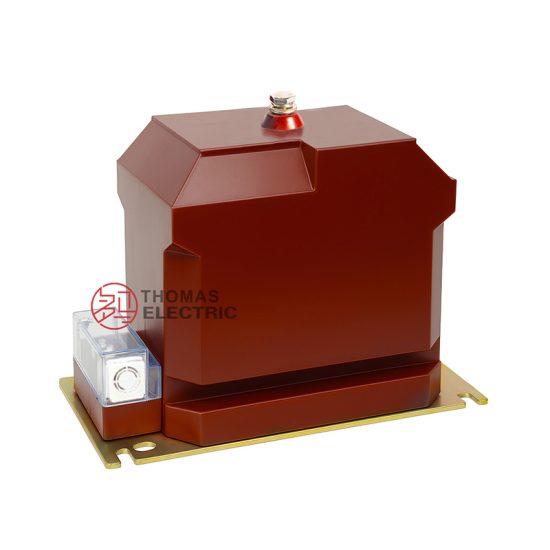
The REL-10 Voltage Transformer (VT) is a precision-engineered instrument transformer designed for accurate voltage measurement and dependable protective relay coordination in medium-voltage (MV) power systems operating at a nominal system voltage of 11 kV (IEC standard), equivalent to legacy 10 kV domestic networks. Constructed using advanced cast-resin insulation technology, the REL-10 provides superior dielectric performance, environmental resilience, and long-term operational stability compared to traditional oil-immersed designs. Its compact footprint, maintenance-free operation, and compliance with IEC 61869-3 make it ideal for deployment in smart substations, renewable energy interconnection points, and industrial distribution networks.
Operating Principle and Cast-Resin Insulation Technology
Voltage transformers operate on the principle of electromagnetic induction, stepping down high primary voltages to standardized secondary values (typically 100 V or 110 V) suitable for metering instruments and protective relays. The REL-10 employs vacuum pressure impregnation (VPI) epoxy resin encapsulation around its core and windings, creating a monolithic, void-free insulation structure. This process eliminates air pockets that could lead to partial discharge under sustained overvoltage conditions. The resin matrix exhibits excellent thermal conductivity (0.8–1.2 W/m·K), enabling efficient heat dissipation during continuous operation at rated load. Unlike oil-filled units, cast-resin VTs pose no fire hazard, require no oil containment systems, and are immune to leakage—critical advantages in indoor switchgear rooms and environmentally sensitive areas such as solar farms or urban substations.
Advantages Over Oil-Immersed Designs
Cast-resin construction offers multiple technical benefits over conventional oil-immersed VTs. First, the solid insulation system provides higher impulse withstand capability—typically 75 kV peak for 11 kV class—without degradation over time. Second, the absence of liquid dielectric eliminates risks associated with oil aging, moisture ingress, and gassing, which can compromise insulation integrity in oil units after 10–15 years. Third, the REL-10’s mechanical robustness allows direct mounting on busbars without vibration isolators, reducing installation complexity. Additionally, cast-resin VTs exhibit lower temperature rise (<55 K above ambient at rated output), ensuring stable accuracy across varying load profiles. These attributes translate into reduced lifecycle costs, enhanced safety, and suitability for both indoor and outdoor applications without derating.
Typical Application Overview
The REL-10 is deployed across diverse MV infrastructure where precision, reliability, and compliance are non-negotiable. In digital substations, it interfaces with IEC 61850-compliant merging units for sampled value transmission. In wind and solar farms, it enables revenue-grade metering at the point of interconnection while supporting anti-islanding protection schemes. Industrial facilities use the REL-10 for harmonic monitoring and power quality analysis due to its low phase error (<5 minutes) and ratio error within ±0.2% at 80–120% of rated voltage. Its design accommodates harsh environments—from coastal zones with salt fog to high-altitude sites up to 2000 m—without performance loss, making it a versatile solution for global utility and industrial projects.
Technical Specifications
The REL-10 Voltage Transformer adheres to stringent electrical and mechanical parameters defined by IEC 61869-3 and GB/T 20840.3. Below is a comprehensive specification table followed by detailed environmental and operational criteria.
| Parameter | Value |
|---|---|
| System Voltage (IEC) | 11 kV |
| System Voltage (Domestic Equivalent) | 10 kV |
| Primary Voltage | 11 / √3 kV (phase-to-ground) |
| Secondary Voltage | 100 / √3 V or 110 / √3 V (standard); custom ratios available |
| Accuracy Class (Metering) | 0.2, 0.5 (per IEC 61869-3) |
| Accuracy Class (Protection) | 3P, 6P |
| Rated Output (VA) | 30 VA, 50 VA, 100 VA (burden-dependent) |
| Insulation Level (LI/AC) | 75 kV / 28 kV (1 min) |
| Short-Time Thermal Withstand | 1 second at 100× rated current (for fault conditions) |
| Core Material | Grain-Oriented Electrical Steel (GOES), 0.27 mm thickness |
| Insulation System | VPI Epoxy Resin, UL 94 V-0 flammability rating |
| Ambient Temperature Range | –25°C to +40°C (standard); –40°C option available |
| Relative Humidity | Up to 95% non-condensing |
| Maximum Altitude | 2000 m above sea level (no derating required) |
Electrical Performance Characteristics
The REL-10 achieves ratio error within ±0.1% and phase displacement below ±3 minutes at 0.8–1.2 per unit of rated voltage when loaded at 25–100% of rated burden. For protection-class windings (3P/6P), composite error remains ≤3% or ≤6% respectively under specified fault currents. The transformer’s magnetizing current is minimized through optimized GOES core lamination stacking, reducing no-load losses to <1.5 W. Thermal stability is ensured by limiting temperature rise to 50 K for 0.2-class windings and 60 K for protection windings under continuous full-load operation. Transient response meets IEC 61869-3 Annex D requirements, with peak instantaneous error during switching surges held below 10% for durations under 10 ms.
Environmental and Mechanical Ratings
Designed for global deployment, the REL-10 operates reliably in ambient temperatures from –25°C to +40°C, with optional cold-climate variants rated to –40°C. The cast-resin housing resists UV degradation, ozone attack, and tracking per IEC 60587 inclined-plane test (PTI ≥ 600 V). Mechanical strength is validated through seismic testing per IEEE 693 (Zone 4), withstanding 0.5g horizontal and vertical accelerations. The unit features M12 stainless steel terminal studs with torque specifications of 25 N·m, ensuring secure cable connections without galvanic corrosion. Weight ranges from 28 kg (30 VA) to 36 kg (100 VA), facilitating manual handling during installation.
Typical Applications
The REL-10 Voltage Transformer serves critical roles across modern power infrastructure, combining metrological accuracy with rugged reliability.
Substation Secondary Metering Systems
In 11 kV secondary substations, the REL-10 provides the reference voltage signal for revenue metering, demand monitoring, and energy management systems. Its 0.2-class accuracy ensures billing compliance per regulatory standards (e.g., EN 50470-3). When integrated with digital meters or IEDs, the VT’s low phase error minimizes reactive power measurement uncertainty—critical for power factor correction schemes. In ring-main units (RMUs), the compact design allows side-by-side installation with circuit breakers without exceeding enclosure width limits.
Industrial Power Distribution Networks
Manufacturing plants and data centers rely on the REL-10 for real-time voltage monitoring across motor control centers (MCCs) and distribution transformers. Its immunity to electromagnetic interference (EMI) from variable-frequency drives (VFDs) ensures stable readings even in electrically noisy environments. The 100 VA output variant supports multiple loads simultaneously—feeding a meter, a protective relay, and a power quality analyzer—without exceeding burden limits. During arc-flash events, the solid insulation prevents catastrophic failure, enhancing personnel safety during maintenance.
Renewable Energy Integration Points
At solar photovoltaic (PV) and wind farm grid interconnection points, the REL-10 enables precise synchronization and anti-islanding detection. Grid codes (e.g., IEEE 1547, VDE-AR-N 4110) mandate voltage measurement accuracy within ±1% during normal operation and rapid response during faults—requirements met by the REL-10’s 3P-class winding. The transformer’s low capacitance (<200 pF) minimizes resonance risks with filter banks common in inverter-based resources. Outdoor installations benefit from the IP54-rated terminals and hydrophobic resin surface that sheds rain and dust.
Rural and Suburban Distribution Feeders
Utilities deploy the REL-10 on pole-mounted or pad-mounted switchgear in rural electrification projects due to its maintenance-free operation and resistance to wildlife intrusion. Unlike oil units, it requires no periodic oil sampling or breather maintenance, reducing O&M costs in remote areas. The 11 kV rating aligns with modern European and Asian distribution standards, while backward compatibility with 10 kV legacy networks simplifies grid upgrades. Field data shows >99.5% availability over 15 years in tropical climates with high humidity and frequent lightning.
Compliance with International Standards
The REL-10 is engineered to satisfy the most rigorous international and national standards governing instrument transformers.
IEC 61869-3 Certification Details
IEC 61869-3 specifies requirements for inductive voltage transformers for measurement and protection. The REL-10 undergoes type tests including temperature rise (Clause 7.3), short-circuit withstand (Clause 7.4), and accuracy verification under varying burdens (Clause 7.6). Routine tests per Clause 8 include power frequency withstand (28 kV rms for 1 min), partial discharge measurement (<10 pC at 1.2 × Um/√3), and polarity confirmation. The certification covers all accuracy classes offered (0.2, 0.5, 3P, 6P) and validates performance across the full temperature and altitude range. Test reports are issued by accredited laboratories (e.g., KEMA, CESI) and remain valid for five years.
Alignment with GB/T 20840.3
For Chinese markets, the REL-10 complies with GB/T 20840.3, which harmonizes with IEC 61869-3 but includes additional requirements for seismic resilience and pollution severity (Class III). Key differences include a higher impulse test level (95 kV vs. 75 kV) and mandatory salt-fog testing for coastal deployments. The transformer’s creepage distance exceeds 25 mm/kV (minimum 275 mm for 11 kV), satisfying GB pollution degree 3. All materials meet RoHS 3 (EU 2015/863) and China RoHS II restrictions on hazardous substances.
Testing and Certification Documentation
Each REL-10 unit ships with a test certificate listing individual results for ratio error, phase displacement, insulation resistance (>1000 MΩ at 2500 V DC), and winding resistance. Type test reports are available upon request and include thermal imaging data, partial discharge patterns, and short-circuit oscillograms. The manufacturer maintains ISO 9001-certified production processes with traceable material batches for core laminations and resin compounds. Compliance documentation supports customs clearance in EU, ASEAN, and GCC countries without retesting.
On-Site Testing Procedures
Post-installation verification ensures the REL-10 performs within specifications before energization.
Insulation Resistance Test
Using a 2500 V DC megohmmeter, measure insulation resistance between primary and secondary windings, and between windings and ground. Acceptance criterion: ≥1000 MΩ at 20°C. Correct for temperature using RT2 = RT1 × 2(T1–T2)/10. Low readings indicate moisture ingress or resin cracking—requiring drying or replacement.
Turns Ratio Test
Apply 100–200 V AC to the primary and measure secondary voltage. Calculate ratio as Vp/Vs. Tolerance: ±0.2% for 0.2-class, ±0.5% for 0.5-class. Use a dedicated turns ratio tester (e.g., Omicron TTR300) for automated comparison against nameplate values.
Polarity Test
Verify reducing polarity by applying a momentary DC pulse to the primary and observing secondary deflection on an analog meter. Positive primary terminal connected to positive meter terminal should yield upscale kick. Incorrect polarity compromises wattmeter and relay operation.
Power Frequency Withstand Voltage Test
Apply 28 kV rms at 50 Hz between primary and grounded secondary/enclosure for 1 minute. Monitor for flashover or excessive leakage current (<1 mA). Conduct at 80% of factory test voltage if performed after transport.
Open-Circuit Characteristic Test
With secondary open, gradually increase primary voltage to 1.5 × rated (16.5 kV phase-to-ground). Record excitation current; it should not exceed 5% of rated primary current. A sharp current rise indicates core saturation or turn-to-turn faults.
Preventive Maintenance Guide
Although maintenance-free by design, periodic checks extend service life beyond 25 years.
Annual Visual and Electrical Inspection
Inspect for surface cracks, tracking marks, or terminal corrosion. Clean with dry cloth—never solvents. Re-torque terminals to 25 N·m. Measure insulation resistance annually; a 30% drop from baseline warrants investigation. Check grounding continuity (<0.1 Ω).
Five-Year Comprehensive Assessment
Perform partial discharge measurement using IEC 60270 methods. Acceptable level: <20 pC at 1.2 × Um/√3. Re-verify ratio and polarity. Thermographic scan under load should show uniform temperature—hot spots indicate internal faults. Update maintenance logs with all findings.
Maintenance Intervals and Fault Diagnosis
| Interval | Action | Fault Indicator |
|---|---|---|
| Annually | Visual inspection, IR test | Cracks, discoloration, IR <500 MΩ |
| Every 5 Years | PD test, ratio verification | PD >30 pC, ratio error >0.5% |
| After Fault | Full electrical tests | Abnormal noise, overheating |
Common failures include resin delamination (from thermal cycling) and terminal oxidation. Neither is repairable—units must be replaced to maintain system integrity.
Conclusion
The REL-10 11kV cast-resin Voltage Transformer represents the convergence of precision engineering, international compliance, and field-proven reliability. By leveraging GOES core technology and VPI epoxy resin encapsulation, it delivers metrological accuracy (0.2-class) and robust protection performance (3P/6P) across diverse operating environments—from smart substations to renewable integration points. Its adherence to IEC 61869-3 and GB/T 20840.3 ensures seamless interoperability in global power systems, while the maintenance-free design reduces total cost of ownership over a projected service life of 25–30 years. Withstanding thermal, electrical, and environmental stresses without degradation, the REL-10 eliminates the fire hazards and leakage risks associated with oil-filled alternatives. Utilities and industrial operators benefit from consistent performance under harmonic distortion, transient overvoltages, and extreme climatic conditions. As grids evolve toward digitalization and decarbonization, the REL-10 provides the foundational voltage sensing accuracy required for advanced applications like synchrophasor measurement, dynamic line rating, and distributed energy resource management. Its compact form factor, rigorous certification, and proven field reliability make it the instrument transformer of choice for next-generation medium-voltage infrastructure demanding uncompromising safety, accuracy, and longevity.