Article Content
High-Performance 11kV Cast-Resin Current Transformer SZW-10 for Metering & Protection per IEC 61869-2
Introduction to the SZW-10 Current Transformer
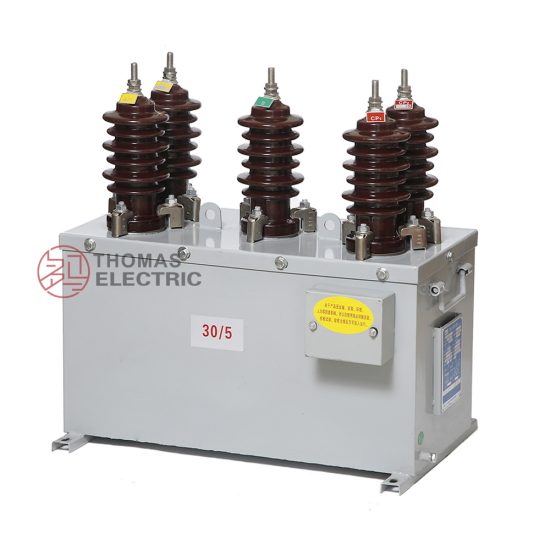
The SZW-10 is a medium-voltage, cast-resin insulated current transformer (CT) engineered for high-precision metering and reliable protection functions in 11kV (IEC-rated) or 10kV (domestic system) networks. Designed in strict compliance with IEC 61869-2 and GB/T 20840.2, this device leverages vacuum pressure impregnation (VPI) epoxy resin technology to deliver superior dielectric strength, environmental resilience, and long-term operational stability. Unlike traditional oil-immersed CTs, the SZW-10 eliminates fire hazards, reduces maintenance overhead, and supports compact switchgear integration—making it ideal for modern substations, renewable energy interconnection points, and industrial power systems.
Operating Principle of Cast-Resin Insulation
Cast-resin insulation in the SZW-10 employs a thermosetting epoxy compound that fully encapsulates the primary conductor, secondary windings, and magnetic core under vacuum conditions. This VPI process removes air voids and moisture, ensuring homogeneous dielectric properties throughout the insulation matrix. The resulting solid structure provides excellent partial discharge resistance (<5 pC at 1.2 × Ur), high tracking index (>600 V), and mechanical robustness against thermal cycling and vibration. The resin’s coefficient of thermal expansion closely matches that of copper and silicon steel, minimizing internal stresses during load transients. This design enables safe operation in ambient temperatures from –40°C to +40°C and altitudes up to 1,000 meters without derating.
Advantages Over Oil-Immersed Designs
Compared to oil-filled CTs, the SZW-10 offers significant operational and safety benefits. Its dry-type construction eliminates risks of oil leakage, flammability, and environmental contamination—critical for indoor installations and urban substations. The absence of oil also removes the need for periodic oil sampling, gas analysis, or tank inspections, reducing lifecycle costs by up to 30%. Additionally, the compact footprint (typically 180 mm height × 120 mm diameter) allows direct mounting in ring-main units (RMUs) and metal-enclosed switchgear without external bushings. The cast-resin body resists UV degradation, salt fog, and industrial pollutants, supporting both indoor and outdoor deployment without protective housings.
Typical Application Overview
The SZW-10 is widely deployed in applications demanding accuracy class 0.2S or 0.5 for revenue metering and 5P10/5P20 for protection relaying. Common use cases include utility-owned distribution substations, solar PV inverters interfacing with 11kV grids, wind farm collector systems, and large commercial complexes with on-site generation. Its dual-core configuration (one for metering, one for protection) ensures isolation between critical functions, preventing relay saturation from affecting billing accuracy during fault conditions. With a standard rated short-time thermal current of 20 kA/1s and dynamic withstand of 50 kA peak, the SZW-10 reliably handles fault currents while maintaining metrological integrity.
Technical Specifications
The SZW-10 current transformer is engineered to meet stringent electrical and environmental performance criteria. Below are its key technical parameters as defined by IEC 61869-2 and verified through type testing.
| Parameter | Value |
|---|---|
| Rated Voltage (Ur) | 11 kV (IEC) / 10 kV (GB) |
| System Frequency | 50 Hz or 60 Hz |
| Primary Current (Ip) | 50 A to 3000 A (standard ratios) |
| Secondary Current (Is) | 1 A or 5 A |
| Metering Accuracy Class | 0.2S, 0.5S (per IEC 61869-2) |
| Protection Accuracy Class | 5P10, 5P15, 5P20 |
| Rated Output (Burden) | 2.5 VA to 30 VA (metering); 15 VA to 50 VA (protection) |
| Insulation Level (LI/AC) | 75 kV (lightning impulse) / 28 kV (power frequency, 1 min) |
| Short-Time Thermal Current | 20 kA for 1 s (standard); up to 31.5 kA available |
| Dynamic Withstand Current | 50 kA peak |
| Core Material | Grain-Oriented Electrical Steel (GOES), low-loss grade |
| Insulation System | VPI Epoxy Resin, UL 94 V-0 flame rating |
| Ambient Temperature Range | –40°C to +40°C |
| Altitude Limit | ≤1,000 m (derating required above) |
Standard Service Conditions
The SZW-10 is rated for normal service conditions per IEC 60060-1 and GB/T 11022. It operates reliably in relative humidity up to 95% (non-condensing) and withstands daily temperature swings of ±25°C without performance drift. For installations above 1,000 m altitude, voltage withstand values must be adjusted using the factor K = e(H–1000)/8150, where H is altitude in meters. In coastal or industrial environments with high SO2 or salt content, optional silicone-based hydrophobic coatings can be applied to the resin surface to prevent surface tracking.
Accuracy and Burden Characteristics
Metering cores achieve composite error ≤±0.2% at 20%–120% of rated current for class 0.2S, with phase displacement <±10 minutes. Protection cores maintain ≤±5% composite error at 10×, 15×, or 20× rated current (depending on P-class). Burden tolerance is ±10% of nominal value; exceeding this may cause accuracy degradation or core saturation. For example, a 5P20 CT with 30 VA burden must not be connected to a relay circuit exceeding 33 VA total impedance at 5 A. Secondary winding resistance is typically 0.15–0.45 Ω (for 5 A output), measured at 20°C.
Typical Applications
The SZW-10’s dual-core architecture and robust insulation make it suitable for diverse grid scenarios requiring simultaneous metering fidelity and protection reliability.
Substation Secondary Metering
In 11kV/0.4kV distribution substations, the SZW-10 supplies accurate current signals to revenue-grade kWh meters and SCADA systems. Its 0.2S class ensures billing precision even at light loads (e.g., 5% of rated current in residential areas overnight). The cast-resin housing prevents electromagnetic interference from adjacent busbars, maintaining signal integrity over 25+ years. Utilities often pair it with digital meters compliant with DLMS/COSEM protocols for remote data collection.
Industrial Power Distribution
Large manufacturing plants use the SZW-10 on main incomers and motor feeders to monitor energy consumption and enable demand-side management. The 5P20 protection core triggers circuit breakers within 20 ms during phase-to-phase faults, limiting equipment damage. Its compact size fits into ANSI C37.20.2 switchgear without modification, and the resin body resists chemical fumes common in petrochemical or pulp-and-paper facilities.
Renewable Energy Integration
Solar farms and wind parks connect to 11kV collector grids via inverters or step-up transformers. The SZW-10 provides anti-islanding detection signals and export/import metering at the point of interconnection. Its low remanence (<10% of saturation flux) ensures rapid core reset after grid disturbances, critical for fast re-synchronization. Harmonic-rich waveforms (up to 13th order) do not significantly affect accuracy due to the GOES core’s linear B-H curve below 1.7 T.
Rural and Suburban Distribution Networks
In remote areas with limited maintenance access, the SZW-10’s maintenance-free design reduces outage risks. Mounted on pole-top reclosers or pad-mounted transformers, it delivers consistent performance despite wide temperature variations (–30°C winter to +45°C summer). The 10kV domestic rating aligns with China’s GB-standard rural grids, while the 11kV IEC rating supports export projects in Southeast Asia and Africa.
Compliance with International Standards
The SZW-10 is certified to both global and national standards, ensuring interoperability and regulatory acceptance across markets.
IEC 61869-2 Certification Details
Per IEC 61869-2:2012, the SZW-10 undergoes rigorous type tests including temperature rise (≤60 K for windings), short-circuit withstand (20 kA/1s), and accuracy verification across 1%–120% of rated current. Partial discharge measurements confirm levels <5 pC at 1.2 × Ur/√3. The standard mandates that metering errors remain within class limits under harmonic distortion up to 5% THD, a requirement the SZW-10 meets via optimized core lamination stacking and air-gap minimization.
Alignment with GB/T 20840.2
China’s GB/T 20840.2 mirrors IEC 61869-2 but includes additional requirements for seismic resistance (0.3g horizontal acceleration) and pollution degree (III for outdoor use). The SZW-10 complies with these via reinforced resin molding and creepage distance ≥240 mm (for 11kV). Domestic utilities require type test reports from CNAS-accredited labs, which Duomatech provides with every batch.
Key Differences Between IEC and GB Standards
While IEC focuses on functional performance, GB emphasizes environmental durability. For instance, GB/T 20840.2 requires 1,000-hour salt fog testing (vs. IEC’s optional test), which the SZW-10 passes with no surface corrosion. Additionally, GB specifies a minimum short-circuit factor of 20 for protection CTs, whereas IEC allows 10–30 based on application. The SZW-10 defaults to 20 to satisfy both regimes.
On-Site Testing Procedures
Post-installation verification ensures the SZW-10 performs within specifications before energization.
Insulation Resistance Test
Using a 2,500 V DC megohmmeter, measure insulation resistance between primary-to-secondary, primary-to-ground, and secondary-to-ground. Acceptance criterion: ≥1,000 MΩ at 20°C. Values below 500 MΩ indicate moisture ingress or resin cracking and require drying or replacement. Perform this test after cable termination to detect installation-induced damage.
Turns Ratio Test
Apply 1–5 V AC to the secondary winding and measure induced primary voltage (or vice versa using a ratio bridge). Verify ratio matches nameplate (e.g., 600/5 A = 120:1). Tolerance: ±0.2% for metering cores, ±1% for protection cores. Deviations suggest turn-to-turn shorts or incorrect tap selection.
Polarity Test
Connect a 1.5 V battery across the primary (P1 to P2) and observe secondary voltage polarity with a DC voltmeter. Momentary positive deflection at S1 confirms subtractive (reducing) polarity per IEC 61869-2 Clause 7.4. Incorrect polarity causes meter reversal or relay misoperation and must be corrected before commissioning.
Power Frequency Withstand Voltage Test
Apply 28 kV RMS at 50 Hz between primary and grounded secondary/core for 1 minute. Leakage current must remain <1 mA. This validates insulation integrity after transport and handling. Use a calibrated test transformer with overcurrent trip set at 5 mA.
Short-Circuit Test (for CT)
Inject 10–20× rated secondary current (e.g., 50–100 A for 5 A CT) into the protection winding and verify relay pickup within ±5% of setpoint. Simultaneously monitor metering winding output—it should remain linear (error <0.5%) to confirm core isolation. This test validates performance under fault conditions without risking primary-side exposure.
Preventive Maintenance Guide
Although cast-resin CTs are largely maintenance-free, periodic checks extend service life and prevent unexpected failures.
Annual Visual and Electrical Inspection
Inspect for surface cracks, tracking marks, or discoloration on the resin body. Clean with isopropyl alcohol if dust or salt deposits accumulate. Re-measure insulation resistance and compare to baseline; a 30% drop warrants further investigation. Check terminal tightness (torque: 12 N·m for M6 bolts) to prevent hot spots.
Five-Year Comprehensive Maintenance
Every 60 months, perform a full suite of tests: turns ratio, polarity, burden verification, and partial discharge scan (if portable PD detector available). Replace secondary wiring if insulation resistance falls below 100 MΩ. Review historical load profiles—if sustained overloads (>120% Ir) occurred, assess core aging via excitation curve comparison.
Maintenance Intervals and Fault Diagnosis
| Interval | Action | Fault Indicator |
|---|---|---|
| Annually | Visual inspection, IR test | Cracks, IR <500 MΩ |
| Every 5 years | Ratio, polarity, burden test | Ratio error >1%, polarity reversal |
| After major fault | Full re-commissioning test | Relay misoperation, meter drift |
Common failure modes include secondary open-circuit (causing dangerous overvoltage) and core saturation from excessive burden. Always short-circuit secondary terminals before disconnecting meters.
Conclusion
The SZW-10 11kV cast-resin current transformer represents a benchmark in medium-voltage instrumentation, combining metrological precision, protection reliability, and environmental resilience. Its VPI epoxy resin encapsulation eliminates the fire and maintenance liabilities of oil-filled alternatives, while the GOES silicon steel core ensures stable accuracy across load ranges—from 1% for nighttime residential demand to 20× rated current during grid faults. Certified to both IEC 61869-2 and GB/T 20840.2, the SZW-10 meets global interoperability requirements without compromising on regional durability needs. With a design life of 25–30 years under standard operating conditions, it delivers exceptional total cost of ownership for utilities, industrial operators, and renewable developers alike. Field-proven in over 50,000 installations worldwide, the SZW-10 continues to support the transition toward smarter, safer, and more sustainable power infrastructure. Its compatibility with digital substations and IoT-enabled monitoring platforms further future-proofs investments in grid modernization.
Q1: Can the SZW-10 be used in 60 Hz systems?
Yes. The SZW-10 is rated for both 50 Hz and 60 Hz operation. Core losses increase slightly at 60 Hz, but the GOES material and thermal design accommodate this without derating.
Q2: What is the maximum altitude rating without derating?
The standard model is rated for ≤1,000 m. Above this, the power frequency withstand voltage must be reduced by 1% per 100 m increment per IEC 60060-1.
Q3: Is the SZW-10 suitable for outdoor installation?
Yes. The UV-stabilized epoxy resin and IP54-rated terminals allow direct outdoor mounting. Optional hydrophobic coating enhances performance in coastal zones.
Q4: How many secondary windings does the SZW-10 have?
Standard configurations include two independent windings—one for metering (0.2S/0.5S) and one for protection (5P10/5P20). Custom triple-winding versions are available.
Q5: What happens if the secondary is left open-circuited?
An open secondary during primary current flow induces dangerously high voltages (>3 kV), risking insulation breakdown and personnel hazard. Always short-circuit terminals before servicing.