Article Content
Outdoor/Indoor 11kV Cast-Resin Current Transformer UNKNOWN – IEC 61869-2 Compliant
Introduction to the UNKNOWN Current Transformer
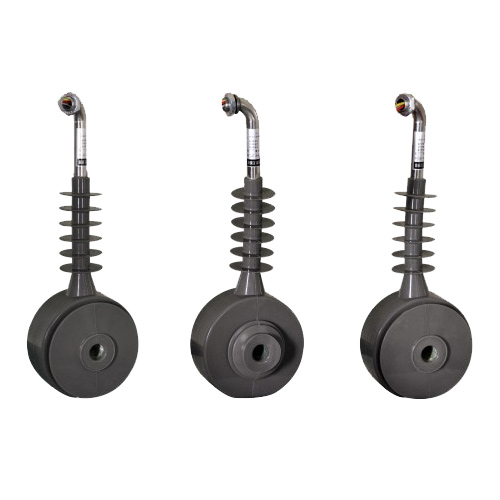
The UNKNOWN current transformer (CT) is a medium-voltage instrument transformer engineered for accurate current measurement and system protection in 11kV (IEC-rated) or 10kV (domestic nominal) power distribution networks. Utilizing advanced cast-resin insulation technology, this device provides robust dielectric performance, environmental resilience, and long-term operational stability in both indoor switchgear and outdoor substation environments. As a critical interface between high-current primary circuits and low-energy secondary instrumentation, the UNKNOWN CT ensures precise transformation of primary currents—ranging from hundreds to thousands of amperes—into standardized secondary signals (typically 1A or 5A) compatible with protective relays, revenue meters, SCADA systems, and fault recorders.
Operating Principle of Cast-Resin Insulation
Cast-resin insulation in the UNKNOWN CT employs vacuum pressure impregnation (VPI) of cycloaliphatic epoxy resin around the primary conductor and secondary windings. This process eliminates air voids and moisture ingress pathways, resulting in homogeneous dielectric strength and superior partial discharge resistance (<5 pC at 1.2 × Um/√3). The resin matrix fully encapsulates the magnetic core—fabricated from grain-oriented electrical steel (GOES)—and copper windings, providing mechanical support while preventing corona formation under continuous operating voltage (11kV RMS) and transient overvoltages. Unlike oil-filled alternatives, the solid insulation system eliminates fire hazards, leakage risks, and maintenance-intensive fluid monitoring, making it ideal for urban substations, commercial buildings, and environmentally sensitive installations.
Advantages Over Oil-Immersed Designs
Compared to traditional oil-immersed CTs, the UNKNOWN cast-resin design offers significant technical and operational benefits. First, its solid insulation enables compact dimensions and lighter weight—critical for retrofitting into existing ring main units (RMUs) or pad-mounted switchgear. Second, the absence of flammable oil enhances safety compliance with IEC 61439 and local fire codes, particularly in confined spaces like underground vaults or high-rise building electrical rooms. Third, the hydrophobic resin surface resists pollution accumulation and UV degradation, ensuring stable creepage performance (≥25 mm/kV for outdoor use per IEC 60815) even in coastal or industrial atmospheres. Finally, the sealed construction eliminates breathing mechanisms that introduce moisture, thereby maintaining consistent insulation resistance (>10 GΩ at 20°C) over decades of service without drying or reconditioning.
Typical Applications Overview
The UNKNOWN CT is deployed across diverse 10/11kV infrastructure where reliability, accuracy, and minimal maintenance are paramount. Primary applications include feeder metering in utility-owned substations, differential protection of transformers and cables, ground-fault detection in resistance-grounded systems, and harmonic current monitoring in industrial facilities with nonlinear loads. Its dual indoor/outdoor rating allows seamless integration into gas-insulated switchgear (GIS), air-insulated switchboards (AIS), and overhead line reclosers. Notably, the transformer’s thermal stability (rated up to 40°C ambient with 1000 m altitude correction) supports operation in tropical climates and high-altitude regions without derating, provided standard service conditions per IEC 61869-2 are maintained.
Technical Specifications
The UNKNOWN current transformer is engineered to meet stringent electrical and environmental performance criteria defined by international standards. Below is a comprehensive specification table followed by detailed subsections addressing key parameters.
| Parameter | Value |
|---|---|
| Rated Voltage (Ur) | 11 kV (IEC) / 10 kV (GB) |
| Maximum System Voltage (Um) | 12 kV |
| Primary Current Ratings | 50 A to 3000 A (standard); custom up to 4000 A |
| Secondary Current | 1 A or 5 A (selectable at ordering) |
| Current Ratio Tolerance | ±0.2% for metering class; ±1.0% for protection class |
| Accuracy Classes | Metering: 0.2S, 0.5S; Protection: 5P10, 5P20, 10P10 |
| Rated Burden | 2.5 VA to 30 VA (depending on class and ratio) |
| Short-Time Thermal Current | 20 kA for 1 s (Ith) |
| Dynamic Withstand Current | 50 kA peak (Idyn) |
| Power Frequency Withstand Voltage | 28 kV RMS, 1 min (phase-to-earth) |
| Lightning Impulse Withstand | 75 kV peak (1.2/50 μs) |
| Insulation Resistance | >10 GΩ at 20°C (500 V DC test) |
| Ambient Temperature Range | -40°C to +40°C |
| Relative Humidity | Up to 95% non-condensing |
| Altitude Limit | ≤1000 m (derating required above) |
Electrical Performance Parameters
The UNKNOWN CT delivers high fidelity across its operational envelope due to precision-wound secondary coils and low-loss GOES cores with flux density optimized below 1.6 T at rated current. For metering applications (class 0.2S), composite error remains within ±0.2% at 1% to 120% of rated current, enabling accurate billing even under light-load conditions common in residential feeders. Protection-class windings (e.g., 5P20) maintain ≤5% error at 20× rated current, ensuring reliable relay operation during severe faults. Rated burden values are specified at 50 Hz; for 60 Hz systems, burden must be reduced by 20% to avoid saturation. All ratios undergo factory calibration traceable to national standards, with test certificates available upon request.
Environmental and Mechanical Ratings
Designed for global deployment, the UNKNOWN CT operates reliably under IEC 60068-1 standard service conditions: ambient temperature from -40°C to +40°C, daily average relative humidity ≤95%, and installation altitude ≤1000 m above sea level. For altitudes exceeding 1000 m, the power frequency withstand voltage must be adjusted using the factor K = e(H-1000)/8150, where H is altitude in meters. The housing features UV-stabilized cycloaliphatic resin with tracking resistance ≥600 V (IEC 60112), and optional hydrophobic coatings are available for heavy-pollution zones (Class III per IEC 60815). Mounting options include flange (M12 bolts), bracket, or direct busbar insertion, with IP54 protection for the secondary terminal box.
Typical Applications
The UNKNOWN 11kV cast-resin current transformer serves as a foundational component in modern medium-voltage infrastructure, supporting both legacy and smart-grid architectures.
Substation Secondary Metering
In utility-owned 10/11kV substations, the UNKNOWN CT provides revenue-grade metering for feeders supplying commercial districts or industrial parks. Installed on outgoing cable terminations or bus ducts, its 0.2S accuracy class ensures compliance with EN 50470-3 and ANSI C12.20 requirements for billing accuracy. The transformer interfaces directly with digital energy meters via shielded twisted-pair cables (max 100 m length for 2.5 VA burden), minimizing signal degradation. In ring-main configurations, dual-ratio models allow one CT to serve both tariff metering (low ratio) and load profiling (high ratio), reducing equipment count and installation costs.
Industrial Power Distribution Protection
Within manufacturing plants, data centers, and mining operations, the UNKNOWN CT enables selective coordination of overcurrent and earth-fault protection schemes. For example, in a 10kV motor control center, 5P20-class CTs feed numerical relays that detect phase imbalances or ground faults within 20 ms. The high dynamic withstand (50 kA) ensures mechanical integrity during bolted faults, while the cast-resin body resists chemical vapors and dust prevalent in harsh industrial environments. Integration with arc-flash mitigation systems is facilitated by fast-saturating cores that limit secondary voltage during extreme transients.
Renewable Energy Integration
Solar farms and wind parks connecting to 10kV distribution grids rely on the UNKNOWN CT for grid-code-compliant monitoring. During cloud-induced irradiance fluctuations or wind gusts, the CT accurately captures rapid current changes (di/dt up to 100 A/ms) without distortion, enabling anti-islanding protection and reactive power control. Its low remanence (<10% of saturation flux) prevents false tripping after fault clearance—a critical feature for inverters requiring rapid reconnection. Additionally, harmonic-rich waveforms (up to 50th order) are faithfully reproduced due to the linear B-H curve of the GOES core.
Rural and Suburban Distribution Networks
In remote or semi-urban areas with limited maintenance access, the UNKNOWN CT’s maintenance-free design ensures decades of uninterrupted service. Mounted on pole-top reclosers or underground pad-mounted transformers, it supports automated sectionalizing and outage management via SCADA. The wide operating temperature range accommodates desert heatwaves (+45°C ambient with solar loading) and arctic winters (-40°C), while the hydrophobic surface sheds rain and snow without flashover. For cost-sensitive deployments, single-ratio 5A models reduce secondary wiring expenses compared to 1A systems.
Compliance with International Standards
The UNKNOWN current transformer is certified to IEC 61869-2:2012 (Instrument transformers – Part 2: Additional requirements for current transformers) and aligns with China’s GB/T 20840.2-2014 standard, ensuring global interoperability and regulatory acceptance.
IEC 61869-2 Certification Requirements
Compliance with IEC 61869-2 mandates rigorous type testing, including temperature rise (≤60 K for windings), short-circuit withstand (20 kA/1s), and accuracy verification across extended current ranges. The UNKNOWN CT undergoes all mandatory tests at accredited laboratories, with results documented in a Type Test Report. Key performance markers include: composite error ≤0.2% for 0.2S class at 1% In; knee-point voltage ≥100 V for 5P20 class; and partial discharge magnitude <5 pC at 1.2 × (12/√3) kV. The standard also requires clear marking of polarity (P1/P2 and S1/S2), rated burden, and accuracy class on a durable nameplate.
Alignment with GB/T 20840.2
While GB/T 20840.2 closely mirrors IEC 61869-2, minor differences exist in test procedures and labeling. For instance, GB standards specify a 1-minute power frequency test at 32 kV (vs. 28 kV in IEC) for 10kV systems, reflecting China’s higher insulation coordination margins. Additionally, GB requires Chinese-language markings alongside English. The UNKNOWN CT meets both sets of requirements through dual-certification, allowing seamless deployment in domestic Chinese projects and export markets. Harmonization efforts under the IEC-CASCO framework ensure that test data from either standard is mutually recognized.
Key Differences Between IEC and Domestic Standards
Practitioners must note three critical distinctions: (1) Voltage designation—I EC uses 11kV (Ur) for 10kV nominal systems, while GB uses 10kV directly; (2) Burden definition—IEC specifies apparent power (VA) at cosφ=0.8, whereas older GB versions used impedance (Ω); (3) Environmental testing—GB includes additional salt fog and sand-dust tests for inland/northern regions. The UNKNOWN CT’s design accommodates these variances via modular terminal blocks and optional environmental shielding, ensuring compliance without performance compromise.
On-Site Testing Procedures
Post-installation and periodic field testing validate the UNKNOWN CT’s integrity and performance per IEC 61869-2 Annex D.
Insulation Resistance Test
Using a 500 V DC megohmmeter, measure insulation resistance between primary winding and secondary/core/ground. Acceptance criterion: >10 GΩ at 20°C. If readings fall below 1 GΩ, investigate moisture ingress or surface contamination. Clean terminals with isopropyl alcohol and retest. For temperatures outside 20±5°C, apply correction factor per IEEE 43: Rcorr = Rmeas × 2(40-T)/10.
Turns Ratio Test
Apply 1–5 A AC at 50 Hz to the primary and measure secondary current. Calculate actual ratio = Ip/Is. Tolerance: ±0.2% for metering, ±1.0% for protection classes. Use a calibrated current comparator or ratio bridge for accuracy. Deviations beyond tolerance indicate winding shorts or incorrect tap selection.
Polarity Verification
Connect a 6–12 V DC source momentarily between P1 and P2. Observe secondary voltage polarity with a digital multimeter across S1–S2. A positive deflection confirms subtractive (reducing) polarity, standard for IEC CTs. Incorrect polarity causes relay misoperation and must be corrected by swapping S1/S2 leads.
Power Frequency Withstand Voltage Test
Apply 28 kV RMS (for 11kV class) at 50 Hz between primary and grounded secondary/core for 1 minute. Leakage current must remain <10 mA. Partial discharge activity should not exceed 10 pC. This test is typically performed only during commissioning or after major repairs due to stress on insulation.
Excitation (Knee-Point) Test
For protection-class CTs, perform excitation curve measurement by applying increasing AC voltage to secondary while primary is open. Plot Iexc vs. Vsec. Knee-point voltage (where slope drops 45°) must meet datasheet minimum (e.g., ≥100 V for 5P20). Low knee-point indicates core saturation risk during faults.
Preventive Maintenance Guide
Although cast-resin CTs require minimal maintenance, scheduled inspections extend service life beyond 30 years.
Annual Visual and Electrical Inspection
Inspect for cracks, tracking marks, or discoloration on the resin housing. Check terminal tightness (torque: 2.5 N·m for M6 screws) and corrosion on contacts. Measure insulation resistance and compare to baseline. Verify secondary circuit continuity and grounding integrity (resistance <0.1 Ω). Document all findings in a maintenance log for trend analysis.
Five-Year Comprehensive Maintenance
Every 60 months, perform turns ratio, polarity, and excitation tests regardless of operational history. Clean the housing with mild detergent if pollution buildup exceeds 0.1 mg/cm² (per IEC 60815). Re-torque all mechanical fasteners to manufacturer specs. Replace gaskets on terminal boxes if hardened or cracked. Update test records in the asset management system.
Fault Diagnosis and Troubleshooting
Common failure modes include: (1) Open secondary circuit—causes dangerous overvoltage; always short CT secondaries before disconnecting instruments; (2) Core saturation—evidenced by distorted waveform or relay misoperation; verify burden does not exceed rating; (3) Moisture ingress—indicated by low insulation resistance; may require replacement if internal condensation is confirmed. Never operate with secondary open-circuited.
| Maintenance Interval | Activities |
|---|---|
| Annually | Visual inspection, IR test, terminal check |
| Every 5 Years | Full electrical tests, cleaning, gasket replacement |
| After Fault Events | Ratio/polarity verification, excitation test |
| End of Life (25–30 yrs) | Dielectric spectroscopy, core loss measurement |
Conclusion
The UNKNOWN 11kV cast-resin current transformer represents a benchmark in medium-voltage instrumentation, combining IEC 61869-2 compliance, robust VPI epoxy insulation, and precision GOES core technology to deliver decades of maintenance-free operation. Its dual indoor/outdoor rating, wide accuracy class portfolio (0.2S to 10P10), and rigorous short-circuit withstand capability make it suitable for the most demanding utility, industrial, and renewable energy applications. By eliminating the fire risk, leakage potential, and fluid maintenance associated with oil-filled designs, the UNKNOWN CT reduces total cost of ownership while enhancing grid reliability. With a design life exceeding 30 years under standard service conditions—and proven performance in extreme climates from deserts to arctic zones—this transformer ensures accurate metering and dependable protection throughout its lifecycle. Engineers specifying the UNKNOWN model benefit from global certification alignment (IEC and GB), comprehensive test documentation, and compatibility with modern digital substation architectures.
Frequently Asked Questions (FAQ)
Q1: Can the UNKNOWN CT be used in 60 Hz systems?
A: Yes, but rated burden must be reduced by 20% to prevent core saturation due to lower reactance at 60 Hz versus 50 Hz.
Q2: What is the maximum allowable secondary burden for a 0.2S class CT?
A: Typically 5 VA for ratios ≤600/5A; consult the specific datasheet as burden varies with ratio and core size.
Q3: Is it safe to leave the secondary open during maintenance?
A: No. Always short-circuit the secondary terminals with a dedicated shorting link before disconnecting any load to prevent hazardous overvoltages.
Q4: How often should insulation resistance be tested?
A: Annually as part of preventive maintenance, and immediately after exposure to flooding or severe contamination.
Q5: Does the UNKNOWN CT require drying after prolonged storage?
A: No. The hermetically sealed cast-resin construction prevents moisture absorption, eliminating the need for pre-commissioning drying.
Q6: Can multiple secondary windings share the same core?
A: Yes. Multi-core models are available with independent windings for metering (0.2S) and protection (5P20) on a single primary conductor.