Article Content
Introduction to the UTF-8 Voltage Transformer
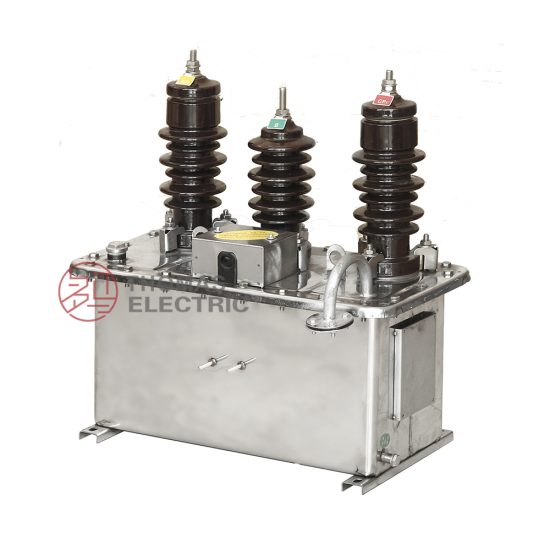
The UTF-8 is a single-phase, indoor/outdoor-rated cast-resin voltage transformer (VT) engineered for accurate metering and reliable protection in medium-voltage distribution systems operating at 11kV (IEC standard) or 10kV (domestic Chinese system). Designed in strict accordance with IEC 61869-3 and GB/T 20840.3, this instrument transformer leverages advanced vacuum pressure impregnation (VPI) epoxy resin technology to encapsulate its magnetic core and windings, eliminating the fire hazards and environmental risks associated with traditional oil-filled units.
Cast-resin insulation provides superior dielectric strength, mechanical robustness, and resistance to thermal cycling. The resin matrix fully embeds the primary and secondary windings along with the grain-oriented electrical steel (GOES) core, preventing moisture ingress, partial discharge activity, and contamination—critical for long-term reliability in harsh environments. Unlike oil-immersed VTs, the UTF-8 requires no oil sampling, tank monitoring, or containment structures, significantly reducing lifecycle maintenance costs and simplifying installation in confined spaces such as ring main units (RMUs) or compact substations.
Typical deployment scenarios include utility-owned 11kV/0.4kV distribution substations, industrial plant switchyards, solar farm collector substations, and rural electrification networks where safety, accuracy, and minimal maintenance are paramount.
Operating Principle and Core Construction
The UTF-8 functions on the principle of electromagnetic induction. A high-voltage primary winding (rated 11kV/√3 for phase-to-ground connection in three-phase systems) induces a proportional voltage in the secondary winding through a laminated GOES core. The core’s low hysteresis loss and high permeability ensure minimal excitation current and excellent linearity across the operating range (20%–120% of rated voltage). The VPI process ensures complete resin penetration into inter-laminar gaps and winding turns, suppressing partial discharges below 10 pC at 1.2 × Ur, as mandated by IEC 61869-3.
Advantages Over Oil-Immersed Designs
Cast-resin VTs like the UTF-8 eliminate flammable insulating media, making them ideal for indoor installations near personnel or sensitive equipment. They exhibit negligible aging under normal service conditions due to the chemical inertness of epoxy resin. Thermal stability is enhanced by the resin’s high thermal conductivity (≈0.8 W/m·K), which efficiently dissipates heat from copper losses. Additionally, the monolithic structure resists vibration and seismic loads up to 0.5g, satisfying IEC 60068-2-6 requirements. No oil degradation means no need for periodic dielectric testing of insulating fluid or replacement due to sludge formation.
Application Scope and System Integration
The UTF-8 is commonly connected in grounded-wye configurations for three-phase systems, providing 100/√3 V or 110/√3 V secondary outputs for metering (accuracy class 0.2 or 0.5) and protection (3P or 6P). It interfaces directly with revenue meters, protective relays (e.g., overvoltage, undervoltage, directional elements), and SCADA voltage transducers. Its compact footprint (typically ≤350 mm height) allows integration into SF6-insulated switchgear or air-insulated bus ducts without auxiliary supports. In renewable applications, it enables precise power quality monitoring at the point of interconnection per IEEE 1547 requirements.
Technical Specifications
The UTF-8 voltage transformer is engineered to deliver precision and durability under defined electrical and environmental parameters. All ratings comply with IEC 61869-3:2011 and GB/T 20840.3-2013, ensuring interoperability across global and domestic grids.
| Parameter | Value |
|---|---|
| Primary Voltage (Ur) | 11 kV / √3 (phase-to-ground) |
| Secondary Voltage | 100/√3 V or 110/√3 V (standard); 100 V or 110 V (line-to-line optional) |
| Voltage Ratio | 11000/√3 : 100/√3 = 110:1 (typical) |
| Accuracy Class (Metering) | 0.2, 0.5 (per IEC 61869-3 Table 102) |
| Accuracy Class (Protection) | 3P, 6P (composite error ≤3% or ≤6% at 5× rated voltage) |
| Rated Output (Burden) | 25 VA, 50 VA, 100 VA (at cos φ = 0.8 lagging) |
| Insulation Level (LI/AC) | 75 kV lightning impulse / 28 kV power frequency (1 min) |
| Short-Time Withstand Current | Not applicable (VTs are not designed for fault current conduction) |
| Core Material | Grain-Oriented Electrical Steel (GOES), 0.27 mm thickness |
| Insulation System | Vacuum Pressure Impregnated (VPI) epoxy resin, UL 94 V-0 rated |
| Ambient Temperature Range | –25°C to +40°C (indoor); –40°C to +45°C (outdoor with UV-stable housing) |
| Relative Humidity | ≤95% non-condensing |
| Maximum Altitude | 1000 m above sea level (derating required >1000 m per IEC 60071-2) |
Electrical Performance Parameters
The UTF-8 maintains ratio error within ±0.2% and phase displacement ≤10 minutes for class 0.2 under burdens from 25% to 100% of rated VA. At 120% of rated voltage, temperature rise remains below 60 K for windings (measured by resistance method per IEC 60076-2). The magnetizing current at rated voltage is typically <0.5 mA, ensuring minimal loading on the primary circuit. Partial discharge inception voltage exceeds 1.5 × Ur, with extinction voltage >1.1 × Ur, guaranteeing stable operation even during transient overvoltages.
Environmental and Mechanical Ratings
Housed in a UV-resistant cycloaliphatic epoxy casing, the UTF-8 withstands salt fog (IEC 60068-2-11), dust ingress (IP54 rating), and thermal shock (–40°C to +70°C cycling). Terminal blocks are made of tin-plated copper with M8 or M10 studs, rated for 130°C continuous operation. Creepage distance exceeds 25 mm/kV (medium pollution, IEC 60815-1), ensuring flashover resistance in coastal or industrial atmospheres. Weight ranges from 18 kg (25 VA) to 26 kg (100 VA), facilitating manual handling during installation.
Typical Applications
The UTF-8 cast-resin voltage transformer serves critical roles across diverse power infrastructure segments, delivering metrological traceability and protection coordination fidelity.
Substation Secondary Metering
In 11kV/0.4kV distribution substations, the UTF-8 supplies scaled-down voltages to revenue-class kWh meters (e.g., IEC 62053-22 compliant). Its class 0.2 accuracy ensures billing precision within ±0.2% over a 20-year calibration interval. The transformer’s low burden requirement (as low as 2.5 VA at 0.2 class) prevents metering errors caused by excessive voltage drop in secondary cabling. Utilities deploy these VTs in pad-mounted transformers and kiosk substations where space constraints preclude oil-filled alternatives.
Industrial Power Distribution Systems
Large manufacturing facilities use the UTF-8 to feed multifunction power quality analyzers and motor protection relays. For example, in a steel mill’s 11kV bus, the VT enables detection of voltage sags below 90% for >10 cycles, triggering automatic transfer schemes. Its immunity to electromagnetic interference (EMI) from nearby arc furnaces ensures stable relay operation. The 100 VA output option supports multiple parallel-connected devices without exceeding thermal limits.
Renewable Energy Integration
Solar photovoltaic (PV) plants employ the UTF-8 at the 11kV collector bus to monitor grid voltage for anti-islanding protection per IEC 62116. During cloud transients, the VT’s fast response (<20 ms settling time) allows inverters to maintain ride-through capability. In wind farms, it provides inputs to vector surge relays that detect loss-of-mains conditions by monitoring rate-of-change of voltage (dV/dt).
Rural and Suburban Distribution Networks
In remote areas with limited maintenance access, the UTF-8’s maintenance-free design reduces operational expenditure. Installed on pole-top platforms or underground vaults, it supports AMI (Advanced Metering Infrastructure) by feeding data concentrators with accurate RMS voltage values. Its tolerance to wide ambient swings (–40°C to +45°C) ensures reliability in desert or alpine climates.
Harmonics Monitoring and Power Quality
With a flat frequency response from 45 Hz to 65 Hz and THD measurement capability up to the 50th harmonic, the UTF-8 is suitable for power quality audits. When paired with class A PQ analyzers (IEC 61000-4-30), it enables compliance verification with EN 50160 voltage distortion limits. The low capacitive coupling between windings minimizes resonance risks with power factor correction banks.
Compliance with International Standards
The UTF-8 voltage transformer is certified to IEC 61869-3:2011 (“Instrument transformers – Part 3: Additional requirements for inductive voltage transformers”) and harmonized with China’s GB/T 20840.3-2013 standard, ensuring global acceptance and regulatory compliance.
IEC 61869-3 Certification Requirements
IEC 61869-3 mandates rigorous type tests including temperature rise (Clause 7.3), short-circuit withstand (not applicable for VTs), insulation coordination (Clause 7.5), and accuracy verification under varying burden and frequency (Clause 7.6). The UTF-8 undergoes routine tests per Clause 8: power frequency withstand (28 kV rms for 1 min), partial discharge (<10 pC at 1.2 × Ur), and polarity check. Type test reports must be issued by an ISO/IEC 17025-accredited laboratory, with certification valid for five years unless design changes occur.
Alignment with GB/T 20840.3
GB/T 20840.3 mirrors IEC 61869-3 but includes supplementary clauses for Chinese grid conditions. Notably, it specifies a 10kV system voltage (vs. 11kV IEC) and requires creepage distance ≥20 mm/kV for light pollution zones. The UTF-8 meets both by offering dual-rating nameplates (10kV/11kV) and extended sheds for coastal regions. Domestic certification (e.g., CQC mark) requires additional seismic testing per GB/T 13540.
Key Differences Between IEC and Domestic Standards
While IEC 61869-3 uses 11kV as the nominal system voltage (Um = 12 kV), GB/T 20840.3 references 10kV (Um = 11.5 kV). This affects insulation coordination: the IEC LI/AC is 75/28 kV, whereas GB may accept 70/24 kV for 10kV systems. However, the UTF-8 is overdesigned to meet the stricter IEC levels, ensuring backward compatibility. Accuracy classes are identical, but GB mandates factory calibration certificates traceable to NIM (National Institute of Metrology, China).
On-Site Testing Procedures
Field commissioning of the UTF-8 requires standardized tests to verify integrity after transport and installation. All procedures follow IEC 60060-1 (high-voltage testing) and IEC 61869-3 Annex B.
Insulation Resistance Test
Using a 2500 V DC megohmmeter, measure insulation resistance between primary winding and ground, and between secondary windings and ground. Acceptance criterion: ≥1000 MΩ at 20°C. Correct for temperature using R₂₀ = Rₜ × 1.25^(20–t)/10. Low readings indicate moisture ingress or resin cracking. Perform before and after power frequency withstand tests to detect insulation degradation.
Turns Ratio Test
Apply a low AC voltage (50–100 V) to the primary and measure secondary output with a calibrated voltmeter. Calculate actual ratio = V_primary_measured / V_secondary_measured. Tolerance: ±0.2% for class 0.2, ±0.5% for class 0.5. Use a dedicated ratio tester (e.g., Omicron CT Analyzer) for automated comparison against nameplate values. Deviations >1% suggest turn-to-turn shorts or incorrect tap selection.
Polarity Verification
Confirm reducing polarity (IEC standard) using the DC kick method: connect a 6 V battery to primary terminals (H1+, H2–) and observe momentary deflection of a center-zero galvanometer on secondary (X1 to +, X2 to –). Positive kick indicates correct polarity. Incorrect polarity causes 180° phase reversal, leading to metering errors or relay misoperation in differential or directional schemes.
Power Frequency Withstand Voltage Test
Apply 28 kV rms (for 11kV system) at 50 Hz between primary and grounded secondary/core for 60 seconds. Use a test transformer with current-limiting resistor (≤1 A fuse). Failure criteria: flashover, sustained arcing, or current surge >10 mA. This test validates insulation integrity post-installation. Never perform if ambient humidity >80% or surface is wet.
Open-Circuit Characteristic Test
Gradually increase primary voltage from 0 to 120% Ur while measuring secondary voltage and excitation current. Plot V_secondary vs. I_excitation. The knee point should exceed 150% Ur. Excessive magnetizing current (>1 mA at 100% Ur) indicates core saturation due to mechanical stress during shipping. This test is critical for protection-class VTs to ensure linear response during overvoltage faults.
Preventive Maintenance Guide
Although cast-resin VTs are largely maintenance-free, periodic inspections extend service life beyond 30 years and prevent unexpected failures.
Annual Visual and Functional Inspection
Inspect for surface cracks, UV degradation (chalking), terminal corrosion, or tracking marks. Clean with isopropyl alcohol; never use abrasive cleaners. Verify secondary wiring tightness (torque: 12 Nm for M8). Measure secondary voltage under load; deviation >±1% from expected value warrants further testing. Check grounding continuity (<0.1 Ω resistance).
Five-Year Diagnostic Testing Schedule
Every 60 months, repeat insulation resistance, turns ratio, and open-circuit tests. Additionally, perform partial discharge measurement using IEC 60270 methods if available. PD levels >20 pC at 1.2 × Ur indicate internal voids requiring replacement. Record all results in asset management software for trend analysis.
Maintenance Intervals and Fault Diagnosis
| Interval | Action | Fault Indicator |
|---|---|---|
| Annually | Visual inspection, IR thermography | Hot spots >10 K above ambient |
| 5 Years | Full electrical tests (IR, ratio, PD) | Ratio error drift >0.3% |
| 10 Years | Secondary burden verification | Voltage drop >3% at max load |
| As needed | Terminal re-torquing | Loose connections causing arcing |
Common failure modes include resin delamination (from thermal cycling), secondary winding open-circuit (due to vibration fatigue), and moisture-induced surface leakage. Replace unit if any test fails acceptance criteria.
Conclusion
The UTF-8 11kV cast-resin voltage transformer represents a benchmark in reliability, accuracy, and safety for modern medium-voltage networks. By leveraging VPI epoxy resin encapsulation and GOES core technology, it eliminates the operational hazards and maintenance burdens inherent in oil-filled designs while delivering metrological performance compliant with IEC 61869-3 and GB/T 20840.3. Its robust construction ensures stable operation across extreme temperatures, humidity, and pollution levels, making it equally suited for urban substations, industrial complexes, and remote renewable sites. With a design life exceeding 30 years under standard service conditions, the UTF-8 minimizes total cost of ownership through decades of maintenance-free service. Field-proven testing protocols—ranging from basic insulation resistance checks to advanced partial discharge diagnostics—enable utilities to validate performance throughout its lifecycle. As grids evolve toward digitalization and distributed generation, the UTF-8’s precise voltage scaling and immunity to electromagnetic interference position it as a foundational component for smart metering, protection automation, and power quality management. Engineers can confidently specify this transformer knowing it meets the most stringent international standards while adapting seamlessly to both 11kV IEC and 10kV domestic system requirements.
Frequently Asked Questions (FAQ)
Q1: Can the UTF-8 be used on a 10kV system?
Yes. While rated for 11kV per IEC standards, the UTF-8 is compatible with 10kV domestic systems (Um = 11.5 kV). Its insulation level (75/28 kV) exceeds GB/T 20840.3 requirements for 10kV, ensuring safe operation.
Q2: What is the maximum allowable secondary burden?
The burden must not exceed the rated output (e.g., 50 VA) at power factor 0.8 lagging. Exceeding this causes increased ratio error and phase displacement. Always verify total connected load (meters + relays + cable impedance).
Q3: Is partial discharge testing required during commissioning?
Not mandatory per IEC 61869-3 routine tests, but recommended for critical applications. Acceptable level: <10 pC at 1.2 × Ur. Portable PD detectors (e.g., DDX 9101) can perform this on-site.
Q4: How do I verify polarity in a three-phase bank?
Test each phase individually using the DC kick method. All units must show reducing polarity. In wye-connected banks, incorrect polarity on one phase causes unbalanced secondary voltages and metering errors.
Q5: Can the UTF-8 be installed indoors without ventilation?
Yes. Cast-resin VTs generate minimal heat (winding rise <60 K). Indoor installation requires only IP2X protection against finger contact. No forced cooling or oil containment is needed.
Q6: What causes ratio error drift over time?
Primary causes include core aging from thermal cycling, mechanical shock during transport, or moisture ingress at terminals. Annual ratio checks detect drift early; replacement is advised if error exceeds 0.3% for class 0.2 units.