Article Content
Outdoor/Indoor 11kV Cast-Resin Current Transformer LAJ-10Q – IEC 61869-2 Compliant
Introduction to the LAJ-10Q Current Transformer
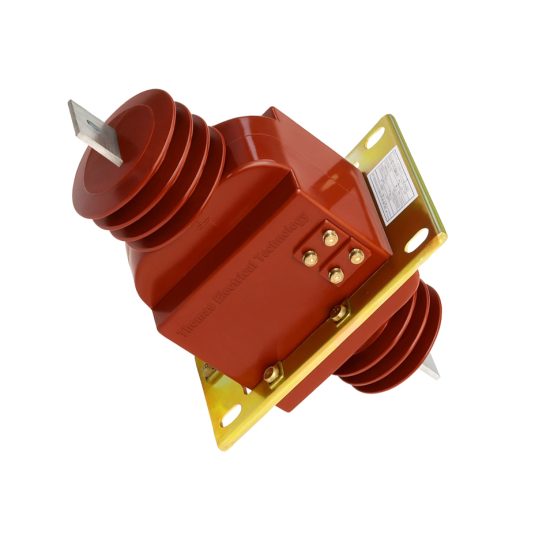
The LAJ-10Q is a high-reliability, cast-resin insulated current transformer (CT) engineered for accurate current measurement and robust protective relay coordination in medium-voltage power systems operating at 11kV (IEC standard) or 10kV (domestic Chinese system voltage). Designed for both indoor switchgear and outdoor substation environments, this device leverages vacuum pressure impregnation (VPI) epoxy resin technology to encapsulate its magnetic core and secondary windings, ensuring long-term dielectric integrity and mechanical stability under thermal and electrical stress.
Operating Principle of Cast-Resin Insulation
The LAJ-10Q employs a fully cast-resin construction where the primary conductor—typically a solid copper or aluminum busbar passing through the center—and the precision-wound secondary coil are embedded within a homogeneous matrix of cycloaliphatic epoxy resin. This resin is processed under vacuum and pressure (VPI method) to eliminate voids, moisture, and air pockets that could lead to partial discharges or insulation degradation. The resulting monolithic structure provides excellent tracking resistance (compliant with IEC 60587), high thermal conductivity for heat dissipation, and superior resistance to environmental contaminants such as dust, salt fog, and industrial pollutants. Unlike oil-filled alternatives, the cast-resin design eliminates fire hazards, leakage risks, and maintenance-intensive oil sampling, making it ideal for urban substations and confined indoor installations.
Advantages Over Oil-Immersed Designs
Compared to traditional oil-immersed CTs, the LAJ-10Q offers significant operational and safety benefits. Its dry-type, non-flammable construction meets stringent fire safety codes (e.g., IEC 61034 for smoke emission and IEC 60695 for flammability), enabling deployment in buildings, tunnels, and densely populated areas without containment basins. The absence of liquid insulation eliminates concerns about oil aging, moisture ingress, and gasket failure. Furthermore, the rigid epoxy housing provides mechanical robustness against vibration and short-circuit forces, while the low thermal expansion coefficient ensures dimensional stability across the full service temperature range (-40°C to +40°C). These attributes translate into reduced lifecycle costs, extended service intervals, and compliance with modern green infrastructure mandates.
Typical Applications Overview
The LAJ-10Q is widely deployed in utility distribution networks, industrial plants, commercial complexes, and renewable energy interconnection points. It supports dual functionality: Class 0.2S or 0.5S accuracy windings for revenue-grade metering, and 5P10 or 5P20 protection-class windings for overcurrent, earth-fault, and differential relaying. Its compact footprint and standardized mounting dimensions (per IEC 61869-2 Annex B) facilitate retrofitting into existing 11kV metal-clad switchgear. Common use cases include feeder monitoring in ring-main units (RMUs), generator output metering in solar farms, and motor protection in mining operations—scenarios demanding high reliability, minimal maintenance, and immunity to harsh ambient conditions.
Technical Specifications
The LAJ-10Q adheres strictly to IEC 61869-2 and GB/T 20840.2, with verified performance parameters validated through type, routine, and special tests per clause 7 of the standards.
Rated Electrical Parameters
Key electrical ratings include: Primary voltage: 11kV (system voltage Um = 12kV); Primary current: 50A to 3000A (standard ratios include 100/5, 200/1, 600/5, etc.); Secondary current: 1A or 5A; Rated frequency: 50Hz or 60Hz; Accuracy classes: Metering – 0.2S, 0.5S; Protection – 5P10, 5P20; Rated burden: 2.5VA to 30VA (depending on class and ratio); Short-time thermal current: 20kA/1s or 25kA/1s; Dynamic withstand current: 50kA peak. The insulation level corresponds to LI 75kV / AC 28kV (1min), satisfying the 11kV system requirement per IEC 60071-1. All windings exhibit a maximum ratio error of ±0.2% at 100% rated current for 0.2S class, with phase displacement ≤ ±10 minutes.
Environmental and Mechanical Ratings
The LAJ-10Q is rated for service under normal environmental conditions as defined in IEC 61869-1: ambient temperature range -40°C to +40°C (24-hour average ≤ +35°C); relative humidity up to 95% non-condensing; altitude ≤ 1000m above sea level (derating applies above 1000m per IEC 60071-2); pollution degree 3 (creepage distance ≥ 20mm/kV). The housing is UV-stabilized for outdoor exposure and features IP54 ingress protection when mounted vertically. Mounting is via M10 or M12 threaded studs on a standardized flange (dimensions per IEC 61869-2 Figure B.1), allowing secure integration into switchgear panels or standalone support structures.
Core and Winding Construction
The magnetic circuit utilizes grain-oriented electrical steel (GOES) with low core loss (<0.8W/kg at 1.7T, 50Hz) and high permeability to minimize magnetizing current and ensure linearity under fault conditions. Secondary windings are wound with oxygen-free copper wire (minimum 0.5mm² cross-section) and fully encapsulated in the resin matrix to prevent movement during short circuits. Multiple secondary windings can be provided (e.g., one 0.2S for metering, one 5P20 for protection), each independently insulated and labeled per IEC 61869-2 clause 5.3. Terminal blocks are made of flame-retardant PBT with screw-type connectors rated for 600V and 10A continuous current.
Typical Applications
Substation Secondary Metering
In 11kV distribution substations, the LAJ-10Q provides high-accuracy current signals to revenue meters, SCADA RTUs, and power quality analyzers. Its 0.2S class winding ensures compliance with regulatory requirements for billing accuracy (e.g., EN 50163, DL/T 448 in China), maintaining error within ±0.2% from 20% to 120% of rated current. The cast-resin body resists electromagnetic interference from adjacent switchgear, ensuring stable readings even during switching transients. For example, in a European urban substation feeding residential loads, LAJ-10Q units with 400/5A ratio and 5VA burden supply data to AMI systems with <0.1% daily drift over five years.
Industrial Power Distribution
Heavy industries such as steel mills, chemical plants, and data centers rely on the LAJ-10Q for both energy management and motor protection. In a 10kV motor control center (MCC), a 600/1A LAJ-10Q with 5P20 class supplies inputs to a multifunction relay (e.g., Siemens 7SJ62) for instantaneous and time-overcurrent tripping. The CT’s high saturation point (≥20× rated current for 5P20) prevents maloperation during motor inrush (typically 6–8× In). Its compact size allows installation in space-constrained MCC buckets, while the resin housing withstands corrosive atmospheres containing H2S or chlorine.
Renewable Energy Integration
Solar photovoltaic (PV) and wind farms require precise CTs for grid synchronization, anti-islanding detection, and export metering. At a 20MW solar plant connected to an 11kV utility feeder, LAJ-10Q units (800/5A, 0.5S/5P10) monitor inverter output. The dual-core design separates metering (to satisfy grid code accuracy) from protection (for rapid disconnection during faults). The CT’s low remanence (<10% of saturation flux) ensures fast reset after fault clearance, critical for inverters with limited fault ride-through capability. Outdoor-rated models endure desert temperatures (+55°C ambient) and coastal salt spray without performance degradation.
Rural and Suburban Distribution Networks
In rural electrification projects across Asia and Africa, the LAJ-10Q enables cost-effective, low-maintenance monitoring of pole-mounted transformers and sectionalizers. Mounted directly on 11kV overhead lines, its IP54 rating protects against rain and dust, while the absence of oil eliminates theft and spill risks. A typical 200/5A unit with 2.5VA burden feeds a simple electromechanical kWh meter, providing reliable billing data even with fluctuating loads (e.g., agricultural pumps cycling daily). The 25-year design life reduces replacement frequency in remote locations with limited access.
Harmonics-Rich Environments
In facilities with nonlinear loads (e.g., variable frequency drives, UPS systems), the LAJ-10Q’s low-loss GOES core minimizes heating from harmonic currents (up to 13th order). Unlike air-core CTs, its iron core maintains accuracy under distorted waveforms due to controlled saturation characteristics. For instance, in a semiconductor fab with 15% THD, a 1000/1A LAJ-10Q delivers <0.5% additional error compared to sinusoidal conditions—critical for power factor correction and harmonic filtering systems.
Compliance with International Standards
IEC 61869-2 Certification Requirements
The LAJ-10Q is fully compliant with IEC 61869-2:2012 (“Instrument transformers – Part 2: Additional requirements for current transformers”) and its amendments. This includes mandatory type tests: temperature rise (≤60K for windings), short-circuit withstand (thermal and dynamic), impulse voltage (75kV peak, 1.2/50μs), power-frequency wet test (28kV rms for 1 min), and accuracy verification across 1%–120% In. Routine tests performed on every unit include polarity check, turns ratio, insulation resistance (>1000MΩ at 2500V DC), and power-frequency dry withstand (32kV rms for 1 min). Special tests like partial discharge (<10pC at 1.2Um/√3) and capacitance/tanδ measurements confirm resin integrity.
Alignment with GB/T 20840.2
For the Chinese market, the LAJ-10Q meets GB/T 20840.2-2014, which largely harmonizes with IEC 61869-2 but includes localized requirements. Key differences include: higher creepage distance (25mm/kV vs. 20mm/kV for IEC in polluted areas), mandatory seismic testing (0.3g horizontal acceleration), and specific labeling in Chinese. The domestic 10kV system voltage (vs. IEC 11kV) necessitates identical insulation levels (LI 75kV / AC 28kV) since Um remains 12kV. All test reports are issued by CNAS-accredited laboratories, and the product carries CQC certification for grid procurement.
Testing and Certification Documentation
Each LAJ-10Q unit ships with a test certificate listing individual results for ratio error, phase displacement, insulation resistance, and withstand voltage. Type test reports (valid for 8 years) are available upon request and include data from third-party labs like KEMA or CESI. Compliance is further evidenced by CE marking (for EU) and CCC marking (for China). The manufacturer maintains ISO 9001-certified production processes with traceable material batches (resin, GOES, copper), ensuring consistency across global deployments.
On-Site Testing Procedures
Insulation Resistance Test
Conducted using a 2500V DC megohmmeter between all windings shorted together and the grounded case. Acceptance criterion: ≥1000MΩ at 20°C. Temperature correction per IEEE 43: Rcorr = Rmeas × 2(40−T)/10. Low values indicate moisture ingress or resin cracking. For new installations, perform before and after power-frequency withstand test to detect damage during handling.
Turns Ratio Test
Using a dedicated CT analyzer (e.g., Omicron CT Analyzer), inject 1A–5A at 50Hz into the secondary and measure primary current. Verify ratio error within ±0.1% of nameplate for metering class, ±0.5% for protection class. Tolerance bands per IEC 61869-2 Table 3: e.g., 0.2S class allows ±0.2% at 100% In, ±0.35% at 20% In. Deviations >1% suggest turn-to-turn shorts or incorrect tap selection.
Polarity Verification
Apply a 3–6V DC pulse to the primary (P1 to P2) and observe secondary voltage polarity with an analog voltmeter. For reducing polarity (standard per IEC 61869-2 clause 5.4), the secondary terminal S1 should go positive when P1 is positive. Incorrect polarity causes meter reversal or relay misoperation. Confirm with a phase-angle meter during commissioning: phase displacement must match nameplate (e.g., ≤±10’ for 0.2S).
Power Frequency Withstand Voltage Test
Apply 28kV rms (50Hz) for 1 minute between windings and ground, and between independent secondaries. Use a calibrated test transformer with overcurrent trip (≤100mA). No flashover or disruptive discharge permitted. For field testing, reduce to 80% (22.4kV) if the unit has been in service. Always discharge windings through a grounding stick post-test to dissipate capacitive charge.
Short-Circuit Withstand Verification
While full short-circuit testing isn’t feasible on-site, verify thermal integrity by measuring winding resistance pre- and post-routine tests. ΔR/R < 2% indicates no deformation. Additionally, inspect for physical damage (cracks, discoloration) after nearby fault events. For critical applications, perform a dynamic check using a high-current generator (e.g., 10× In for 1s) while monitoring secondary waveform for distortion—saturation should not occur below the rated accuracy limit factor (e.g., 20 for 5P20).
Preventive Maintenance Guide
Periodic Visual and Electrical Inspection
Annual inspections include: checking for surface cracks, tracking marks, or UV degradation on the resin housing; verifying terminal tightness (torque: 2.5Nm for M6 screws); cleaning with dry cloth or mild detergent (no solvents); and re-measuring insulation resistance. In coastal or industrial zones, inspect every 6 months for salt/corrosion buildup. Record secondary burden impedance annually—values outside ±10% of design may indicate wiring faults or meter changes affecting accuracy.
Maintenance Intervals and Diagnostic Schedule
| Interval | Activities |
|---|---|
| 1 year | Visual inspection, IR thermography (hot spots >10K above ambient warrant investigation), insulation resistance |
| 5 years | Full accuracy test (ratio, polarity, burden), partial discharge scan (<20pC acceptable), torque verification |
| 10+ years | Dielectric frequency response (DFR) analysis to assess resin aging, core lamination integrity check |
After any system fault exceeding 50% of rated short-circuit current, perform immediate post-event diagnostics per IEC 60270.
Fault Diagnosis and Remediation
Common issues include: open secondary circuit (causes dangerous overvoltage—always short before disconnecting); core saturation (evidenced by distorted secondary waveform during faults—verify burden and ALF); moisture ingress (low IR, high tanδ—requires replacement); and terminal corrosion (clean with contact enhancer, re-torque). Never attempt field repair of cast-resin units—replace if housing is compromised. Maintain spare units with matched ratio and accuracy class for rapid swap-out.
Conclusion
The LAJ-10Q 11kV cast-resin current transformer represents a benchmark in medium-voltage instrumentation, combining IEC 61869-2 and GB/T 20840.2 compliance with field-proven reliability across diverse operational environments. Its VPI epoxy resin encapsulation eliminates the fire, leakage, and maintenance liabilities associated with oil-filled designs, while the GOES silicon steel core ensures metrological precision from light-load metering to high-magnitude fault conditions. With dual windings supporting simultaneous revenue metering (0.2S/0.5S) and protection (5P10/5P20), the LAJ-10Q delivers exceptional value in applications ranging from urban substations to remote renewable sites. Rigorous factory testing—including partial discharge, thermal rise, and impulse withstand—guarantees performance consistency, while the robust IP54-rated housing withstands extreme temperatures, humidity, and pollution. Adherence to a structured preventive maintenance program, featuring annual visual checks and quinquennial accuracy validation, ensures optimal service life of 25–30 years. As power systems evolve toward smarter, more resilient architectures, the LAJ-10Q’s combination of technical excellence, regulatory alignment, and lifecycle economy positions it as a cornerstone component for modern 11kV/10kV infrastructure worldwide.