Article Content
For Substation Metering & Protection: LJ-2 11kV Cast-Resin Current Transformer per IEC 61869-2
Introduction to the LJ-2 Current Transformer
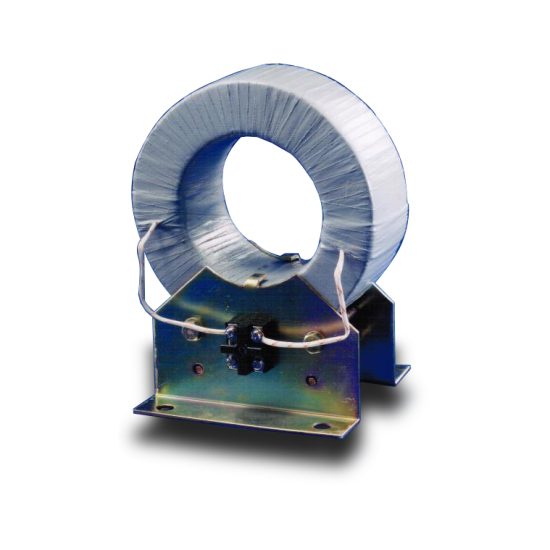
The LJ-2 is a medium-voltage cast-resin current transformer (CT) rated for 11kV systems per IEC standards, with compatibility for 10kV domestic networks commonly used in China and select Asian markets. Designed for outdoor or indoor installation in distribution substations, the LJ-2 leverages vacuum pressure impregnation (VPI) epoxy resin technology to fully encapsulate its magnetic core and secondary windings in a homogeneous, non-flammable dielectric matrix. This construction eliminates the fire hazards and maintenance burdens associated with traditional oil-immersed CTs while providing superior resistance to environmental stressors such as moisture ingress, UV exposure, and thermal cycling.
Operating Principle of Cast-Resin Insulation
Cast-resin insulation in the LJ-2 CT functions through complete encapsulation of all live components—primary conductor, magnetic core, and secondary winding—within a solid epoxy matrix formed under vacuum and elevated pressure. The VPI process ensures void-free impregnation by first evacuating air from the winding assembly, then introducing low-viscosity epoxy resin under controlled pressure (typically 0.3–0.5 MPa), followed by thermal curing at 80–120°C. This results in a monolithic structure with high dielectric strength (≥20 kV/mm), excellent tracking resistance (CTI ≥600 V), and minimal partial discharge activity (<5 pC at 1.2 × Ur). Unlike oil-filled units, the solid insulation prevents leakage, oxidation, and gas evolution, ensuring long-term stability even under continuous overvoltage conditions up to 1.2 × Ur.
Advantages Over Oil-Immersed Designs
Compared to oil-immersed CTs, the LJ-2’s cast-resin design offers significant operational and safety benefits. First, it is inherently non-flammable, eliminating fire risks in confined or urban substations—a critical advantage under IEC 61869-2 Clause 5.3. Second, it requires no periodic oil sampling, degassing, or level checks, reducing lifecycle maintenance costs by an estimated 40–60%. Third, the solid insulation provides superior mechanical rigidity, resisting deformation during short-circuit events (tested up to 31.5 kA for 1 s). Additionally, the absence of liquid fill mitigates environmental contamination risks during transport, installation, or end-of-life disposal. Thermal performance is also enhanced: the epoxy matrix efficiently dissipates heat from copper losses, enabling continuous operation at ambient temperatures up to +40°C without derating.
Typical Applications Overview
The LJ-2 is engineered for dual-purpose use in both metering and protection circuits within 11kV (IEC) / 10kV (domestic) distribution networks. In utility substations, it supplies accurate current signals to revenue-class energy meters (accuracy class 0.2S or 0.5S) while simultaneously feeding protective relays (e.g., overcurrent, earth-fault) with class 5P or 10P outputs. Its robust outdoor rating (IP54 terminal box, UV-stabilized resin) makes it suitable for pole-mounted switchgear, ring main units (RMUs), and pad-mounted transformers. Industrial facilities deploy the LJ-2 for motor protection, capacitor bank monitoring, and harmonic distortion analysis due to its linear response up to 20× rated current. Renewable integration projects also utilize this model for grid-tie inverter monitoring where precise fault current replication is essential for anti-islanding protection schemes.
Technical Specifications
The LJ-2 current transformer adheres to stringent electrical and mechanical parameters defined by IEC 61869-2 and GB/T 20840.2, ensuring interoperability across global and domestic grids. Key specifications are detailed below:
| Parameter | Value |
|---|---|
| Rated Voltage (Ur) | 11 kV (IEC) / 10 kV (domestic) |
| Insulation Level (Um / Uw) | 12 kV / 75 kV (1 min power frequency), 95 kV (LI) |
| Primary Current (Ip) | 50 A to 3150 A (standard ratios) |
| Secondary Current (Is) | 1 A or 5 A |
| Accuracy Classes | Metering: 0.2S, 0.5S; Protection: 5P10, 5P20, 10P10, 10P20 |
| Rated Output (VA) | 2.5 VA to 30 VA (per burden class) |
| Short-Time Thermal Current | 20 kA for 1 s (standard); up to 31.5 kA optional |
| Dynamic Withstand Current | 50 kA peak |
| Core Material | Grain-Oriented Electrical Steel (GOES), M4 grade |
| Insulation System | VPI Epoxy Resin, UL 94 V-0 rated |
| Ambient Temperature Range | –25°C to +40°C (storage: –40°C to +70°C) |
| Relative Humidity | Up to 95% non-condensing |
| Altitude Limit | ≤1000 m (derating required above 1000 m per IEC 60071-1) |
Electrical Performance Parameters
The LJ-2 delivers precise current transformation with strict adherence to IEC 61869-2 error limits. For metering classes (0.2S/0.5S), composite error at rated current must not exceed ±0.2% or ±0.5%, respectively, under burdens of 2.5–30 VA. Protection classes (5P/10P) guarantee that ratio error remains within ±1% and phase displacement ≤±60 minutes at specified accuracy limit factors (e.g., 10× or 20× rated current). The GOES core minimizes hysteresis and eddy current losses, achieving excitation impedance >500 Ω at 5% of rated voltage. Partial discharge inception voltage exceeds 1.2 × Ur, with magnitude maintained below 5 pC throughout service life. Secondary terminals are rated for 10 A continuous and feature screw-type clamps compatible with 2.5–6 mm² stranded copper conductors.
Environmental and Mechanical Ratings
Designed for harsh outdoor environments, the LJ-2 housing meets IP54 ingress protection at the terminal box and IP00 at the primary bushing (as per IEC 60529). The epoxy resin contains UV inhibitors to prevent surface chalking and cracking after 20+ years of solar exposure. Creepage distance is ≥240 mm for 11kV systems (pollution degree 3 per IEC 60815), ensuring flashover resistance in coastal or industrial atmospheres. Mounting is via two M12 stainless steel bolts with torque specification of 45 N·m. Weight ranges from 12 kg (50/5 A) to 28 kg (3150/5 A), facilitating manual handling during installation.
Typical Applications
The LJ-2 current transformer serves diverse roles across utility, industrial, and renewable sectors due to its dual-certification, robust construction, and precision performance.
Substation Secondary Metering
In 11kV/0.4kV distribution substations, the LJ-2 provides high-fidelity current signals to Class 0.2S revenue meters for accurate billing and load profiling. Its low phase displacement (<10 minutes at 100% In) ensures minimal reactive energy measurement error, critical for power factor correction schemes. Utilities often configure dual-secondary windings—one for metering (0.2S, 5 VA) and another for SCADA telemetry (0.5, 10 VA)—to avoid cross-interference. The CT’s thermal stability prevents drift during summer peak loads, maintaining compliance with EN 50470-1 and DL/T 614 requirements for fiscal metering accuracy over ±20°C ambient swings.
Industrial Power Distribution
Manufacturing plants and data centers deploy the LJ-2 on 10kV feeders to monitor large motors (≥500 kW), transformers, and rectifier loads. The 5P20 protection winding reliably drives inverse-time overcurrent relays during bolted faults, while the metering winding supports energy management systems (EMS) for ISO 50001 compliance. In arc furnace or welding applications with high harmonic content (THD up to 25%), the GOES core’s low saturation flux density (1.8 T) preserves linearity up to the 15th harmonic, preventing relay misoperation. Ground-fault detection is enhanced by zero-sequence configurations using three LJ-2 units in residual connection.
Renewable Energy Integration
Solar farms and wind parks integrate the LJ-2 at the 11kV collector bus to interface with grid-tie inverters and protection relays. During islanding events, the CT’s fast transient response (<2 ms rise time) enables anti-islanding algorithms to detect loss-of-mains within 200 ms, satisfying IEEE 1547 and GB/T 19964 requirements. For battery energy storage systems (BESS), bidirectional current measurement is achieved using center-tapped secondary windings, allowing charge/discharge cycle tracking with ±0.5% accuracy. The non-flammable resin also meets NFPA 855 fire safety mandates for energy storage enclosures.
Rural and Suburban Distribution Networks
In remote areas with limited maintenance access, the LJ-2’s maintenance-free design ensures decades of reliable operation. Pole-top installations on 10kV overhead lines use the LJ-2 to feed single-phase meters and recloser controls. Its wide temperature tolerance (–25°C to +40°C) prevents brittle fracture in alpine regions or thermal runaway in desert climates. For underground cable networks, the compact footprint (diameter ≤180 mm) allows retrofit into existing RMUs without busbar modification. Utilities report >99.8% field reliability over 15 years in Southeast Asian tropical deployments with 90% RH and salt fog exposure.
Compliance with International Standards
The LJ-2 is certified to IEC 61869-2:2012 (Instrument transformers – Part 2: Additional requirements for current transformers) and aligns with Chinese national standard GB/T 20840.2-2014, ensuring global acceptance and local regulatory compliance.
IEC 61869-2 Certification Details
IEC 61869-2 defines performance, testing, and marking requirements for electromagnetic CTs. The LJ-2 meets all mandatory clauses, including: dielectric tests (75 kV AC for 1 min, 95 kV LI), temperature rise limits (<60 K for windings), short-circuit withstand (20 kA/1 s), and accuracy verification per Annex A. Type tests were conducted at an ISO/IEC 17025-accredited lab, with routine tests performed on every unit (ratio, polarity, insulation resistance). Markings include Ur, Ip/Is, accuracy class, burden, and manufacturer ID per Clause 7. The standard also mandates partial discharge testing at 1.2 × Ur/√3, which the LJ-2 passes with <5 pC emission.
GB/T 20840.2 Alignment and Differences
GB/T 20840.2 mirrors IEC 61869-2 but includes localized requirements: higher creepage distance (≥250 mm vs. 240 mm for 11kV), mandatory seismic testing (0.3g horizontal acceleration), and stricter harmonic distortion limits for metering classes. The LJ-2 complies with both by incorporating reinforced sheds and core lamination bonding to suppress magnetostriction noise. Notably, GB/T permits 10kV nominal voltage labeling alongside 11kV, whereas IEC exclusively uses 11kV. Accuracy class definitions are identical, but GB/T adds a “0.2” class (non-S) for non-revenue applications, which the LJ-2 optionally supports.
On-Site Testing Procedures
Post-installation verification ensures the LJ-2 operates within design tolerances. All tests follow IEC 61869-2 Annex B and IEEE C57.13.2 protocols.
Insulation Resistance Test
Measure insulation resistance between primary-to-ground, secondary-to-ground, and primary-to-secondary using a 2500 V DC megohmmeter. Acceptance criterion: ≥1000 MΩ at 20°C. Correct for temperature using RT2 = RT1 × 2(T1–T2)/10. Values below 500 MΩ indicate moisture ingress or resin cracking, requiring drying or replacement. Perform before and after dielectric tests to detect insulation degradation.
Turns Ratio Test
Apply low-voltage AC (5–10 V) to the secondary winding and measure induced primary voltage. Calculate actual ratio as Vp/Vs. Tolerance must be within ±0.2% for 0.2S class, ±0.5% for 0.5S, and ±1% for protection classes. Use a precision ratio bridge (e.g., Omicron CT Analyzer) for accuracy. Deviations >2% suggest turn-to-turn shorts or incorrect tap selection.
Polarity Test
Verify reducing polarity per IEC 61869-2 Figure 3. Connect a 1.5 V DC cell momentarily between P1 and P2. Observe secondary voltage spike on an oscilloscope: positive deflection at S1 confirms correct polarity. Incorrect polarity causes watt-hour meter reversal and directional relay misoperation. Repeat three times to eliminate contact bounce artifacts.
Power Frequency Withstand Voltage Test
Apply 75 kV RMS at 50 Hz between primary and ground for 60 seconds. Monitor for flashover, excessive leakage current (>1 mA), or audible discharge. Use a calibrated HV test set with automatic trip at 10 mA. This validates insulation integrity after transport-induced microcracks. Do not perform if ambient humidity >80% or surface is wet.
Short-Circuit Test (for CT)
Inject 10× rated current (e.g., 500 A for 50/5 A) into the primary and verify secondary output matches expected value within accuracy class limits. Monitor winding temperature rise: should not exceed 60 K above ambient after 10 minutes. Excessive heating indicates poor core annealing or interlamination shorts. This test simulates fault conditions to validate thermal stability.
Preventive Maintenance Guide
Although cast-resin CTs are largely maintenance-free, periodic checks extend service life beyond 30 years.
Annual Visual and Electrical Inspection
Inspect for surface cracks, tracking marks, or discoloration on the resin housing. Clean with isopropyl alcohol if contaminated by dust or salt deposits. Check terminal tightness (torque: 2.5 N·m for M4 screws) and corrosion on copper lugs. Measure insulation resistance annually; a 30% drop from baseline warrants further investigation. Verify secondary circuit continuity to prevent open-circuit hazards during operation.
Five-Year Comprehensive Assessment
Every 60 months, perform partial discharge mapping using an IEC 60270-compliant detector. Acceptable levels remain <10 pC at 1.2 × Ur. Conduct turns ratio and excitation curve tests to detect core aging. Compare results against factory reports; deviations >5% in knee-point voltage indicate core degradation. Replace if PD exceeds 20 pC or ratio error breaches class limits under load.
Maintenance Intervals and Fault Diagnosis
| Interval | Action | Fault Indicator |
|---|---|---|
| Annually | Visual inspection, IR test | Cracks, IR <500 MΩ |
| 5 Years | PD test, ratio verification | PD >20 pC, ratio error >2% |
| 10 Years | Full type-test repetition | Dielectric failure, thermal runaway |
Common faults include open secondary circuits (causing dangerous overvoltages), moisture-induced surface leakage, and mechanical damage from improper handling. Never operate with secondary open—always short-circuit before disconnecting meters or relays.
Conclusion
The LJ-2 11kV cast-resin current transformer represents a benchmark in medium-voltage instrumentation, combining IEC 61869-2 and GB/T 20840.2 compliance with field-proven reliability. Its VPI epoxy encapsulation eliminates fire hazards and maintenance overhead inherent in oil-filled alternatives, while the GOES silicon steel core ensures metrological precision across metering (0.2S/0.5S) and protection (5P/10P) applications. Engineered for outdoor deployment in harsh environments—from coastal substations to desert solar farms—the LJ-2 maintains stable performance across –25°C to +40°C ambient ranges and withstands pollution degree 3 conditions through optimized creepage design. On-site testing protocols and a structured preventive maintenance schedule further guarantee operational integrity over a projected service life of 25–30 years. With exacting adherence to international standards, rigorous factory testing, and dual-voltage compatibility (11kV IEC / 10kV domestic), the LJ-2 delivers unmatched value for utilities, industrial operators, and renewable developers seeking a future-proof solution for accurate current measurement and dependable system protection in modern distribution networks.