Article Content
Outdoor/Indoor 11kV Cast-Resin Current Transformer UNKNOWN – IEC 61869-2 Compliant
Introduction to the UNKNOWN Current Transformer
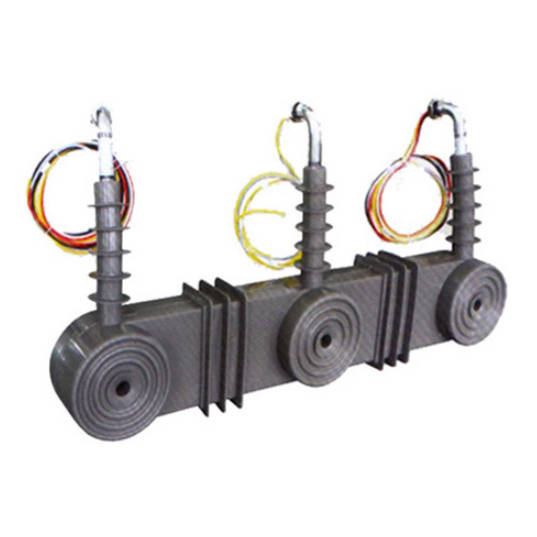
The UNKNOWN current transformer (CT) is a medium-voltage instrument transformer engineered for accurate current measurement and system protection in 11kV (IEC-rated) or 10kV (domestic nominal) power distribution networks. Utilizing advanced cast-resin insulation technology, this device transforms high primary currents—ranging from hundreds to thousands of amperes—into standardized secondary currents of 1A or 5A, enabling safe interfacing with protective relays, revenue meters, and SCADA systems. The design adheres strictly to IEC 61869-2 and GB/T 20840.2 standards, ensuring global interoperability and reliability under diverse environmental conditions.
Operating Principle of Cast-Resin Insulation
Cast-resin insulation in the UNKNOWN CT employs vacuum pressure impregnation (VPI) of cycloaliphatic epoxy resin around the primary conductor and secondary windings. This process eliminates air voids, preventing partial discharge inception even under continuous 12kV operational stress. The resin matrix provides dielectric strength exceeding 20 kV/mm and thermal class F (155°C) endurance. Unlike oil-filled alternatives, the solid dielectric offers no risk of leakage, fire, or environmental contamination. The monolithic structure also resists tracking and erosion from UV exposure, salt fog, and industrial pollutants—critical for outdoor installations. Thermal expansion coefficients are closely matched between the resin, copper windings, and GOES (grain-oriented electrical steel) core, minimizing mechanical stress during thermal cycling from –40°C to +55°C ambient extremes.
Advantages Over Oil-Immersed Designs
Compared to traditional oil-immersed CTs, the UNKNOWN cast-resin model delivers superior safety, lower lifecycle costs, and reduced maintenance. The absence of flammable insulating oil eliminates fire hazards in confined substations or urban switchgear rooms. Maintenance intervals extend from annual (oil CTs) to five-year inspections due to the hermetic seal of the epoxy housing. Weight is reduced by 30–40%, simplifying handling and mounting on busbars or support structures. Additionally, cast-resin CTs exhibit faster response to fault currents due to lower magnetic reluctance in the compact core geometry, enhancing protection coordination accuracy. Partial discharge levels remain below 10 pC at 1.2 × Um/√3 (9.55 kV), well within IEC 61869-2 limits for Class A insulation systems.
Typical Applications Overview
The UNKNOWN CT serves critical roles across utility and industrial infrastructure. In primary substations, it enables revenue-grade metering (accuracy class 0.2S or 0.5S) and feeder protection (class 5P or 10P). Industrial plants use it for motor protection, load monitoring, and harmonic analysis in 10kV distribution boards. Renewable integration points—such as solar farm step-up transformers or wind turbine collector systems—rely on its stable ratio error (< ±0.5% at 100% In) under distorted waveforms. Rural electrification projects benefit from its IP54-rated enclosure, which withstands dust ingress and light rain without degradation. Its dual indoor/outdoor rating (per IEC 60076-11) allows deployment on pole-mounted reclosers or within metal-enclosed switchgear without redesign.
Technical Specifications
The UNKNOWN 11kV cast-resin current transformer is engineered to precise electrical and environmental parameters, ensuring consistent performance across global grid applications. All specifications comply with IEC 61869-2:2012 and GB/T 20840.2-2014.
| Parameter | Value |
|---|---|
| Rated Voltage (Um) | 12 kV (system voltage 11 kV IEC / 10 kV domestic) |
| Primary Current (Ip) | 50 A to 3150 A (standard ratios: e.g., 400/5, 600/1, 1200/5) |
| Secondary Current (Is) | 1 A or 5 A (user-selectable at ordering) |
| Accuracy Classes | Metering: 0.2S, 0.5S; Protection: 5P10, 5P20, 10P10, 10P20 |
| Rated Burden | 2.5 VA to 30 VA (at cos φ = 0.8 lagging) |
| Short-Time Thermal Current | 25 kA for 1 s (Ith), 40 kA peak (Idyn) |
| Insulation Level | Power Frequency Withstand: 28 kV rms, 1 min Lightning Impulse Withstand: 75 kV peak (1.2/50 μs) |
| Partial Discharge | < 10 pC at 1.2 × Um/√3 (9.55 kV) |
| Ambient Temperature | –40°C to +55°C (outdoor); –5°C to +40°C (indoor) |
| Altitude | ≤ 1000 m (derating required above 1000 m per IEC 60071-2) |
| Humidity | Relative humidity ≤ 95% (non-condensing) |
| Ingress Protection | IP54 (outdoor), IP2X (indoor terminal box) |
| Core Material | GOES (Grain-Oriented Electrical Steel), M4 grade, 0.3 mm lamination |
| Insulation System | VPI cycloaliphatic epoxy resin, UL 94 V-0 flame rating |
Electrical Performance Parameters
The UNKNOWN CT maintains strict adherence to ratio and phase error limits defined in IEC 61869-2. For metering class 0.2S, ratio error must not exceed ±0.2% and phase displacement ≤ ±10 minutes at 20–120% of rated primary current (In). Protection class 5P10 guarantees composite error ≤ 5% at 10×In with rated burden. Core saturation is prevented up to 20×In for 10P classes, verified via knee-point voltage testing (> 150 V for 5 A secondary). Burden compatibility is validated across standard loads: 2.5 VA (digital meters), 5 VA (electromechanical relays), and 15–30 VA (multi-function IEDs). Secondary winding resistance is typically 0.05–0.3 Ω, minimizing voltage drop under fault conditions.
Environmental and Mechanical Ratings
Designed for harsh service environments, the UNKNOWN CT operates reliably from –40°C (Arctic substations) to +55°C (desert installations). The cast-resin housing exhibits UV stability per ISO 4892-2, with no surface cracking after 5,000 hours of accelerated weathering. At altitudes above 1000 m, the power frequency withstand voltage is derated by 1% per 100 m increment (e.g., 25.2 kV at 2000 m). Mounting options include base plate (M12 bolts), through-bolt (for busbar integration), or flange mount (ANSI C57.13 compatible). Creepage distance exceeds 240 mm/kV (medium pollution), satisfying IEC 60815 for coastal or industrial zones. Vibration resistance meets IEC 60068-2-6 (5–500 Hz, 0.7 g acceleration).
Typical Applications
The UNKNOWN 11kV cast-resin current transformer is deployed across diverse power infrastructure scenarios where precision, reliability, and environmental resilience are paramount.
Substation Secondary Metering
In transmission and distribution substations, the UNKNOWN CT provides revenue-grade current signals to kWh meters and data concentrators. Installed on 10kV outgoing feeders, it supports time-of-use billing with 0.2S accuracy class, ensuring compliance with regulatory requirements (e.g., EN 50470-3). Its low phase error (< ±5 minutes at 100% In) minimizes reactive energy measurement inaccuracies. The compact footprint allows retrofitting into legacy switchgear without busbar modifications. For smart grid deployments, the 1A secondary option reduces copper losses over long cable runs to remote metering cabinets, maintaining signal integrity over distances up to 500 meters with 2.5 mm² conductors.
Industrial Power Distribution
Manufacturing facilities utilize the UNKNOWN CT for motor protection, load profiling, and power quality monitoring. On 10kV motor control centers (MCCs), 5P20-class units coordinate with thermal overload relays to isolate faults within 50 ms. The high dynamic current rating (40 kA peak) withstands inrush currents from large induction motors (e.g., 2 MW pumps). In arc furnace or welding plant environments, the GOES core’s low hysteresis loss ensures stable operation under severe harmonic distortion (THD > 15%). Integration with PLC-based energy management systems enables real-time demand-side optimization, reducing peak demand charges.
Renewable Energy Integration
Solar photovoltaic (PV) farms and wind turbine arrays employ the UNKNOWN CT at collector substation interfaces. Its immunity to DC offset—critical during PV inverter fault ride-through events—prevents core saturation and measurement drift. For wind applications, the –40°C cold-start capability ensures reliable operation in Nordic or alpine regions. The CT’s fast transient response (< 10 ms rise time) captures asymmetrical fault currents during grid disturbances, supporting grid-code compliance (e.g., IEEE 1547, IEC 61400-21). Dual-ratio models (e.g., 800/1/5) allow flexible configuration for both generation metering and anti-islanding protection.
Rural and Suburban Distribution Networks
Pole-mounted reclosers and ring main units (RMUs) in rural grids leverage the UNKNOWN CT’s outdoor durability. The IP54-rated housing resists dust accumulation and rain ingress, eliminating the need for protective canopies. In suburban pad-mounted transformers, it enables AMI (Advanced Metering Infrastructure) rollout with minimal field calibration. The lightweight design (typically 12–18 kg) simplifies installation by line crews using standard hot-stick tools. For islanded microgrids, its stable ratio under variable load conditions (20–120% In) supports accurate net-metering of distributed generation.
Compliance with International Standards
The UNKNOWN current transformer is certified to IEC 61869-2:2012 (“Instrument transformers – Part 2: Additional requirements for current transformers”) and aligned with China’s GB/T 20840.2-2014 standard, ensuring global acceptance and interoperability.
IEC 61869-2 Certification Requirements
IEC 61869-2 mandates rigorous type, routine, and special tests. Type tests include temperature rise (ΔT ≤ 60 K for windings), short-circuit withstand (25 kA/1s), and impulse voltage (75 kV peak). Routine tests—performed on every unit—cover power frequency withstand (28 kV/1 min), partial discharge (< 10 pC at 9.55 kV), and accuracy verification at 5%, 20%, 100%, and 120% In. Special tests like seismic qualification (IEC 60068-3-3) or chopped impulse (IEC 60060-1) are available upon request. Certification is issued by accredited bodies (e.g., KEMA, CESI) with traceable calibration to national standards (NIST, PTB).
Alignment with GB/T 20840.2
GB/T 20840.2 mirrors IEC 61869-2 but includes China-specific provisions. Notably, GB requires additional salt fog testing (IEC 60068-2-11, 96 hours) for coastal deployments and stricter creepage distance (≥ 25 mm/kV). The UNKNOWN CT exceeds these with 28 mm/kV design. Domestic voltage labeling uses 10kV (vs. IEC’s 11kV), though insulation levels remain identical (Um = 12 kV). Accuracy class definitions are harmonized, but GB permits ±0.3% ratio error for 0.2S class at 1% In—stricter than IEC’s ±0.75%. All production batches undergo third-party verification by CEPREI or SGCC-accredited labs.
Key Differences Between IEC and Domestic Standards
While IEC 61869-2 focuses on functional performance, GB/T 20840.2 emphasizes environmental robustness for China’s diverse climate zones. IEC allows optional pollution severity classification (I–IV), whereas GB mandates Class III (heavy industrial) as default. Short-circuit testing in GB requires 30 kA/1s for 10kV systems—higher than IEC’s 25 kA baseline. However, the UNKNOWN CT’s 25 kA rating satisfies both, as Chinese utilities often specify IEC-aligned equipment for export-linked projects. Documentation must include bilingual (EN/CN) test reports and QR-coded traceability for SGCC procurement.
On-Site Testing Procedures
Post-installation and periodic field testing ensure the UNKNOWN CT maintains specified performance throughout its service life. All procedures follow IEC 61869-2 Annex D and IEEE C57.13.2 guidelines.
Insulation Resistance Test
Measure insulation resistance between primary-to-secondary, primary-to-ground, and secondary-to-ground using a 2500 V DC megohmmeter. Acceptance criteria: ≥ 1000 MΩ at 20°C. Correct for temperature using RT2 = RT1 × 2(T1–T2)/10. Values below 500 MΩ indicate moisture ingress or resin degradation. Perform before and after power frequency withstand tests to detect latent defects. Ensure all secondary terminals are shorted and grounded during primary-side measurement to avoid core magnetization.
Turns Ratio Test
Apply a low-voltage AC source (5–50 V) to the secondary winding and measure induced primary voltage. Calculate ratio as Vp/Vs; compare to nameplate (e.g., 400/5 = 80:1). Tolerance: ±0.2% for 0.2S class, ±1% for 5P class. Use a dedicated ratio tester (e.g., Omicron CT Analyzer) for automated comparison across multiple taps. Deviations >2% suggest inter-turn shorts or incorrect tap selection. Always demagnetize the core post-test using a decaying AC waveform to prevent remanence errors.
Polarity Test
Verify reducing polarity per IEC 61869-2 Figure D.3. Apply a 6–12 V DC pulse to P1–P2; observe momentary deflection on a center-zero galvanometer connected to S1–S2. Positive kick at S1 confirms correct polarity. Incorrect polarity causes 180° phase shift, leading to relay misoperation or meter reversal. For multi-ratio CTs, test each secondary tap independently. Document results with oscillograph traces for audit trails in protection-critical applications.
Power Frequency Withstand Voltage Test
Apply 28 kV rms (50/60 Hz) between primary and grounded secondary/enclosure for 60 seconds. Ramp voltage at 2 kV/s to avoid transient overstress. Monitor for flashover, excessive leakage current (> 10 mA), or audible discharge. Post-test insulation resistance must not drop >20% from pre-test value. For refurbished units, reduce test voltage to 80% (22.4 kV) per IEEE C57.13.2. Never perform this test with secondary circuits open—always short and ground S1–S2 to prevent dangerous overvoltages.
Short-Circuit Test (for CTs)
Unlike VTs, CTs require short-circuit validation. Inject 10–20× rated primary current (e.g., 8 kA for 400 A CT) for 1 second using a portable test set. Verify secondary current proportionality within accuracy class limits and check for mechanical deformation or overheating. Post-test, measure winding resistance; increases >5% indicate conductor damage. This test validates thermal and electrodynamic withstand capability, critical after nearby fault events. Record oscillograms of primary/secondary waveforms to assess saturation behavior.
Preventive Maintenance Guide
Proactive maintenance extends the UNKNOWN CT’s service life to 25–30 years while ensuring measurement integrity and system safety.
Periodic Inspection Protocol
Conduct annual visual and thermographic inspections. Check for: (1) Resin surface cracks or tracking marks (use UV flashlight for corona detection); (2) Terminal corrosion or loose connections (torque to 15 N·m for M8 bolts); (3) Abnormal heating at joints (>10 K above ambient via IR camera); (4) Moisture in terminal boxes (silica gel color change). Clean housing with non-abrasive detergent; avoid solvents that degrade epoxy. Verify grounding continuity (< 0.1 Ω resistance). Document findings in asset management systems with timestamped photos.
Maintenance Intervals and Fault Diagnosis
Adhere to the following schedule:
| Interval | Action |
|---|---|
| 1 year | Visual inspection, IR scan, connection torque check |
| 5 years | Full electrical tests (insulation resistance, ratio, polarity) |
| 10 years | Partial discharge measurement (if test equipment available) |
| After major fault | Short-circuit test, winding resistance comparison |
Common faults include: (1) Ratio drift from core aging—diagnosed via turns ratio test; (2) Insulation failure from UV degradation—detected by PD > 20 pC; (3) Open secondary circuit—evidenced by arcing at terminals. Replace units exhibiting >3% ratio error or insulation resistance < 200 MΩ.
Conclusion
The UNKNOWN 11kV cast-resin current transformer represents a benchmark in medium-voltage instrumentation, combining IEC 61869-2-certified accuracy with rugged environmental resilience. Its VPI epoxy resin insulation eliminates fire risks and maintenance burdens associated with oil-filled alternatives, while the GOES silicon steel core ensures stable performance under harmonic distortion and DC offset conditions prevalent in modern grids. With dual indoor/outdoor ratings, the UNKNOWN CT seamlessly integrates into substations, industrial plants, renewable farms, and rural distribution networks—delivering metering accuracy to 0.2S class and protection reliability to 10P20. Rigorous compliance with both international (IEC) and domestic (GB) standards guarantees interoperability across global markets. When maintained per the prescribed 5-year testing cycle, the transformer achieves a service life of 25–30 years, providing exceptional lifecycle value. Its robust design withstands 25 kA short-circuit currents, –40°C cold starts, and coastal pollution, making it a future-proof choice for evolving grid architectures. For engineers specifying instrumentation in 10kV/11kV systems, the UNKNOWN CT delivers uncompromised technical performance, safety, and longevity.
Frequently Asked Questions (FAQ)
Q1: Can the UNKNOWN CT be used with both 1A and 5A secondary devices?
No—the secondary current (1A or 5A) is fixed at manufacture based on the ordered model. Mixing burdens designed for different secondary currents causes measurement errors. Always verify nameplate markings before connecting meters or relays.
Q2: What is the maximum cable length for secondary wiring?
For 5A systems, limit to 200 meters with 4 mm² Cu to keep burden ≤ 2.5 VA. For 1A systems, extend to 500 meters with 2.5 mm² Cu. Calculate total burden as I²(Rwire + Rdevice) and ensure it does not exceed the CT’s rated VA.
Q3: How do I demagnetize the UNKNOWN CT after testing?
Apply an AC current at 50–100% of rated primary, then slowly reduce to zero over 10–15 seconds. Commercial CT analyzers automate this. Never leave the core magnetized—it causes ratio errors at low currents.
Q4: Is the UNKNOWN CT suitable for DC systems?
No—current transformers only operate on AC. For DC measurement, use Hall-effect sensors or shunt resistors. The UNKNOWN CT’s core will saturate instantly under DC, producing no output.
Q5: What happens if the secondary circuit is left open during operation?
Dangerous overvoltages (> 10 kV) can develop across open terminals, risking insulation failure and personnel hazard. Always short-circuit secondary terminals with a link before disconnecting devices.
Q6: Can I install the UNKNOWN CT indoors if it’s rated for outdoor use?
Yes—outdoor-rated CTs are fully compatible with indoor installations. The reverse is not true: indoor-only units lack UV and moisture protection for external exposure.