Article Content
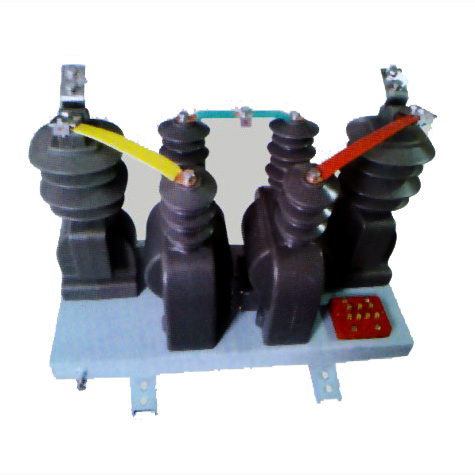
For Substation Metering & Protection: AGE-1232 11kV Cast-Resin Voltage Transformer per IEC 61869-3
Introduction to the AGE-1232 Voltage Transformer
The AGE-1232 is a single-phase, indoor-type cast-resin Voltage Transformer (VT) engineered for high-accuracy voltage measurement and protective relaying in 11kV medium-voltage distribution systems. While commonly referenced as an 11kV device under IEC standards, it is fully compatible with domestic 10kV networks due to its rated primary voltage of 11/√3 kV (phase-to-earth). The unit employs vacuum pressure impregnation (VPI) epoxy resin encapsulation technology, which fully embeds the magnetic core and windings in a solid dielectric matrix, eliminating air voids and moisture ingress pathways.
Operating Principle of Cast-Resin Insulation
Cast-resin insulation in the AGE-1232 utilizes a thermosetting epoxy system cured under controlled vacuum and pressure. This process ensures complete penetration into the GOES (grain-oriented electrical steel) core laminations and copper windings, resulting in a monolithic structure with superior partial discharge resistance (<5 pC at 1.2 × Um/√3). Unlike oil-filled designs, the solid dielectric provides inherent fire safety (non-flammable), zero maintenance fluid handling, and immunity to environmental contaminants. The thermal class is F (155°C), enabling continuous operation under load without degradation.
Advantages Over Oil-Immersed Designs
Compared to traditional oil-immersed VTs, the AGE-1232 eliminates risks associated with oil leakage, flammability, and periodic oil testing. Its compact footprint allows direct mounting in metal-enclosed switchgear without additional containment. The absence of breathing mechanisms prevents moisture absorption, ensuring long-term dielectric stability. Additionally, the mechanical rigidity of the cast-resin body enhances seismic resilience (tested to 0.5g horizontal acceleration per IEC 60068-2-6), making it suitable for industrial and urban substations where space and safety are critical constraints.
Typical Applications Overview
The AGE-1232 is primarily deployed in secondary metering circuits, overvoltage/undervoltage protection schemes, and synchro-check relaying within 11kV (or 10kV) distribution networks. Its standardized secondary output (100 V or 110 V) interfaces directly with revenue-class meters, digital relays, and SCADA RTUs. Common installations include ring main units (RMUs), pad-mounted transformers, and indoor switchgear bays in commercial complexes, manufacturing plants, and utility-owned substations.
Technical Specifications
The AGE-1232 adheres to stringent electrical and environmental parameters defined by IEC 61869-3 and GB/T 20840.3. Key specifications ensure reliable performance across diverse operating conditions while maintaining metrological integrity for both metering and protection functions.
| Parameter | Value |
|---|---|
| Rated Primary Voltage (IEC) | 11/√3 kV (phase-to-earth) |
| Rated Primary Voltage (Domestic) | 10/√3 kV |
| Rated Secondary Voltage | 100 V or 110 V (per customer specification) |
| Voltage Ratio | (11,000/√3) : 100 V or (11,000/√3) : 110 V |
| Accuracy Class (Metering) | 0.2 or 0.5 (per IEC 61869-3) |
| Accuracy Class (Protection) | 3P or 6P |
| Rated Output (Burden) | 25 VA, 50 VA, or 100 VA (at specified accuracy class) |
| Insulation Level (Um) | 12 kV |
| Lightning Impulse Withstand | 75 kV peak (1.2/50 μs) |
| Power Frequency Withstand | 28 kV rms for 1 min (dry), 24 kV rms for 1 min (wet) |
| Thermal Class | F (155°C) |
| Ambient Temperature Range | –25°C to +40°C |
| Altitude Limit | ≤ 1000 m above sea level (derating required above) |
| Relative Humidity | ≤ 95% (non-condensing) |
Standard Service Conditions
The AGE-1232 is rated for standard service conditions per IEC 60071-1: ambient temperature from –25°C to +40°C, relative humidity up to 95% without condensation, and installation altitude not exceeding 1000 m. At altitudes between 1000 m and 2000 m, the power frequency withstand voltage must be reduced by 1% per 100 m increment. Operation in chemically aggressive or dusty environments requires enclosure integration compliant with IP4X or higher ingress protection.
Core and Winding Construction
The magnetic circuit employs high-permeability GOES laminations (M4 grade, 0.27 mm thickness) stacked in a wound-core configuration to minimize no-load losses (<15 W at rated voltage). Primary and secondary windings use electrolytic tough-pitch (ETP) copper, insulated with Class F enamel. The secondary winding includes electrostatic shielding between layers to suppress capacitive coupling and enhance transient response. All terminations are brought out via tinned copper studs rated for 63 A continuous current.
Typical Applications
The AGE-1232 serves as a foundational component in modern medium-voltage infrastructure, providing accurate and isolated voltage signals for critical operational functions.
Substation Secondary Metering
In utility-owned 11kV/0.4kV distribution substations, the AGE-1232 supplies voltage inputs to Class 0.2S revenue meters for billing purposes. Its low phase error (<10 minutes at 0.2 accuracy class) ensures compliance with regulatory metering requirements. The VT is typically installed on the busbar side of the incoming feeder breaker, with secondary leads routed through shielded cables to prevent electromagnetic interference from adjacent conductors. Proper burden matching (e.g., 25 VA for digital meters) is essential to maintain declared accuracy.
Industrial Power Distribution Systems
Within manufacturing facilities, the AGE-1232 enables real-time monitoring of line-to-neutral voltages for motor control centers and process automation systems. It interfaces with multifunction protection relays (e.g., overvoltage ANSI 59, undervoltage ANSI 27) to safeguard sensitive equipment. In arc flash mitigation schemes, precise voltage data supports zone-selective interlocking logic. The cast-resin construction resists vibration from nearby rotating machinery and eliminates fire hazards in confined electrical rooms.
Renewable Energy Integration
Solar photovoltaic (PV) and wind farms utilize the AGE-1232 at the point of interconnection (POI) to provide grid-synchronization signals. During islanding detection, the VT’s fast transient response (<5 ms rise time) ensures timely disconnection per IEEE 1547 requirements. Its robust insulation withstands switching surges from inverter-based resources, while the non-saturating core maintains accuracy during voltage sags or swells common in renewable-rich grids.
Rural and Suburban Distribution Networks
In remote or lightly loaded feeders, the AGE-1232 supports automatic voltage regulation (AVR) systems by feeding data to capacitor bank controllers. Its low excitation current (<0.5% of rated primary current at 1.9 × Un) minimizes loading on weak sources. The maintenance-free design reduces operational costs in areas with limited technical personnel. Compatibility with both 10kV and 11kV nominal systems simplifies inventory management for distribution utilities serving mixed-voltage territories.
Switchgear Monitoring and Diagnostics
Integrated into modern RMUs or gas-insulated switchgear (GIS), the AGE-1232 enables condition-based monitoring via IoT-enabled relays. Secondary voltage waveforms are analyzed for harmonic distortion, DC offset, or ferroresonance precursors. The solid insulation prevents partial discharge activity that could mask incipient faults in adjacent components, enhancing overall system reliability.
Compliance with International Standards
The AGE-1232 is certified to both international and Chinese national standards, ensuring global interoperability and regulatory acceptance.
IEC 61869-3 Compliance Details
Per IEC 61869-3:2011 (Instrument transformers – Part 3: Additional requirements for inductive voltage transformers), the AGE-1232 undergoes rigorous type, routine, and special tests. Key compliance aspects include: voltage error ≤ ±0.2% and phase displacement ≤ ±10′ for 0.2 accuracy class at 25–100% of rated voltage; thermal stability verified at 1.2 × Un for 8 hours; and short-circuit withstand capability demonstrated via simulated ferroresonance events. The standard mandates partial discharge levels below 10 pC at 1.2 × Um/√3, which the AGE-1232 achieves at <5 pC due to its void-free resin matrix.
GB/T 20840.3 Alignment
The Chinese standard GB/T 20840.3-2013 aligns closely with IEC 61869-3 but includes additional requirements for domestic grid compatibility. Notably, GB/T specifies a 10kV system basis (vs. 11kV in IEC), though the AGE-1232’s design accommodates both by using 11/√3 kV as the rated primary voltage—effectively covering the 10kV ±10% operational band. GB/T also mandates stricter impulse test waveforms (±75 kV with 1.2/50 μs front/time) and requires verification of performance at 45 Hz and 55 Hz to address grid frequency deviations in certain regions.
Testing and Certification Requirements
Certification involves third-party laboratory validation per IEC 61869-1 general requirements. Type tests include temperature rise (Δθ ≤ 60 K for windings), short-circuit behavior, and dynamic stress under fault conditions. Routine tests performed on every unit include polarity check, turns ratio verification (±0.1% tolerance), and power frequency withstand. Special tests—such as chopped impulse and capacitance/tanδ measurements—are conducted upon customer request. Full test reports are traceable to national metrology institutes (e.g., PTB, NIM).
On-Site Testing Procedures
Post-installation and periodic field testing ensures the AGE-1232 operates within specified tolerances and maintains system integrity.
Insulation Resistance Test
Measure insulation resistance between primary winding and ground, and between secondary winding and ground, using a 2500 V DC megohmmeter. Acceptance criterion: ≥1000 MΩ at 20°C. Correct for temperature using RT2 = RT1 × 2((T1–T2)/10). Low readings indicate moisture ingress or resin cracking. Perform before and after cleaning terminal surfaces to eliminate surface leakage errors.
Turns Ratio Test
Apply a low-voltage AC source (50–100 V) to the primary and measure secondary voltage with a calibrated true-RMS voltmeter. Calculate actual ratio: Vp/Vs. Compare to nameplate value; deviation must not exceed ±0.1% for metering classes or ±0.3% for protection classes. Use a dedicated ratio tester (e.g., Omicron CT Analyzer) for automated comparison and phase error logging.
Polarity Test
Verify reducing polarity using the DC kick method: momentarily connect a 6–12 V battery across primary terminals (H1 to positive, H2 to negative). Observe secondary voltage deflection on an analog voltmeter connected to X1 (positive) and X2 (negative). A momentary positive kick confirms correct polarity. Incorrect polarity compromises directional relay operation and metering summation.
Power Frequency Withstand Voltage Test
Apply 28 kV rms (for 12 kV Um class) at 50 Hz between primary and grounded secondary/core for 1 minute. Use a calibrated HV test set with overcurrent trip (≤100 mA). No flashover or disruptive discharge is permitted. For in-service units, apply 80% of factory test voltage (22.4 kV) if aged >5 years. Always isolate secondary circuits and ground unused taps.
Open-Circuit Characteristic Test
With secondary open, gradually increase primary voltage from 20% to 190% of rated (Un = 11/√3 kV). Record excitation current at each 20% increment. Plot Iexc vs. Vp. A sharp current rise above 120% Un indicates core saturation or turn-to-turn faults. Compare to baseline curve; deviation >15% warrants further investigation. This test is critical for detecting degraded insulation or core lamination damage.
Preventive Maintenance Guide
Although cast-resin VTs require minimal maintenance, scheduled inspections extend service life and prevent unexpected failures.
Periodic Inspection Protocol
Conduct annual visual and electrical checks: inspect for surface tracking, cracks, or discoloration on the resin housing; verify terminal tightness (torque: 15 N·m for M8 studs); clean dust/debris with dry, oil-free compressed air (<3 bar); and perform insulation resistance and ratio tests. Document all readings in a maintenance log for trend analysis. Immediate replacement is required if partial discharge exceeds 20 pC (measured via HFCT sensors).
Maintenance Intervals and Fault Diagnosis
Adhere to the following schedule:
| Interval | Action |
|---|---|
| Annual | Visual inspection, IR scan, insulation resistance, ratio test |
| 5 Years | Full suite of on-site tests (including open-circuit characteristic) |
| 10 Years | Partial discharge measurement (if available) |
| After Major Fault | Complete retesting regardless of schedule |
Common faults include secondary winding opens (indicated by infinite resistance), core saturation (abnormal excitation current), and terminal corrosion (high contact resistance). Ferroresonance-induced overheating may manifest as localized resin discoloration near the core window.
Conclusion
The AGE-1232 11kV cast-resin Voltage Transformer represents a benchmark in reliability, accuracy, and safety for medium-voltage applications. Its solid epoxy insulation eliminates the operational hazards and maintenance burdens associated with liquid-filled alternatives, while delivering metrological performance that meets stringent IEC 61869-3 and GB/T 20840.3 requirements. With a design life of 25–30 years under standard service conditions, the AGE-1232 ensures long-term stability in voltage measurement for both revenue metering and critical protection functions. The use of GOES core material minimizes energy losses and enhances transient fidelity, supporting modern grid demands such as renewable integration and digital substation architectures. Field-proven in diverse environments—from dense urban switchgear rooms to remote rural feeders—the AGE-1232’s robust construction withstands thermal cycling, pollution, and mechanical stress without degradation. When coupled with disciplined on-site testing and preventive maintenance, this VT delivers decades of trouble-free service, making it a technically and economically sound choice for utilities and industrial operators worldwide.
Frequently Asked Questions (FAQ)
Q1: Can the AGE-1232 be used on a 10kV system even though it’s rated 11kV?
A: Yes. The 11kV rating (11/√3 kV phase-to-earth) is the IEC standard nominal voltage, which encompasses the 10kV ±10% operational range (9–11 kV). The AGE-1232 maintains accuracy and insulation integrity across this entire band.
Q2: What is the maximum allowable burden for maintaining 0.2 accuracy class?
A: The rated burden (e.g., 25 VA, 50 VA) specified on the nameplate is the maximum load at which the declared accuracy applies. Exceeding this burden increases voltage error beyond ±0.2%. Always verify connected device burdens sum to ≤ nameplate value.
Q3: Is a power frequency withstand test required during routine maintenance?
A: Not routinely. Apply only during commissioning or after suspected insulation damage. For in-service units, insulation resistance and partial discharge tests are preferred as non-destructive alternatives.
Q4: How do I detect ferroresonance in an AGE-1232 installation?
A: Monitor secondary voltage for sustained overvoltage (>1.5 × Un) or distorted waveforms during single-pole switching. Install damping resistors (typically 100–500 Ω, 500 W) across the secondary to suppress resonant conditions.
Q5: Can the secondary terminals be paralleled with another VT?
A: Only if both VTs have identical ratio, polarity, and phase angle error. Mismatched units cause circulating currents, leading to overheating and accuracy loss. Prefer dedicated VTs per function.
Q6: What torque should be used on secondary terminal studs?
A: Apply 12 N·m for M6 studs and 15 N·m for M8 studs using a calibrated torque wrench. Under-torquing causes arcing; over-torquing risks thread stripping or resin cracking.