Article Content
Introduction to the UTF-8 Current Transformer
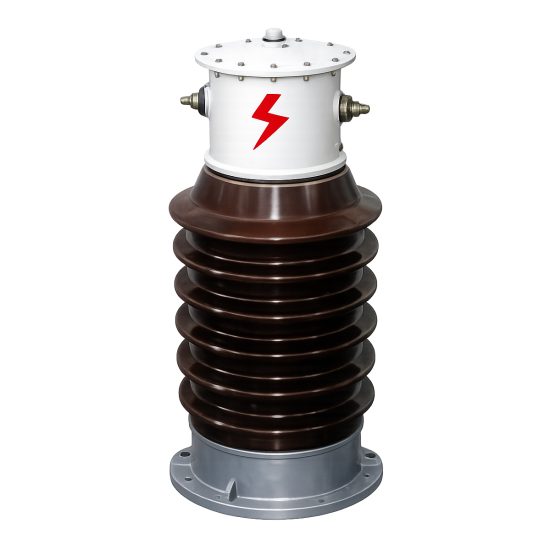
The UTF-8 is a high-accuracy, cast-resin insulated current transformer (CT) engineered for reliable operation in 11kV (IEC standard) or 10kV (domestic equivalent) medium-voltage networks. Designed in strict accordance with IEC 61869-2 and GB/T 20840.2, this instrument transformer serves critical roles in both metering and protective relaying applications across utility substations, industrial facilities, and renewable energy interconnection points.
Cast-resin insulation—specifically vacuum pressure impregnated (VPI) epoxy resin—provides superior dielectric strength, mechanical robustness, and environmental resistance compared to traditional oil-immersed designs. The solid insulation eliminates risks of leakage, fire hazards, and maintenance-intensive oil sampling, making it ideal for indoor switchgear, urban substations, and locations with stringent fire safety codes.
Typical deployments include ring main units (RMUs), gas-insulated switchgear (GIS) interfaces, and outdoor pole-mounted configurations where long-term stability and minimal lifecycle costs are paramount. With a service life exceeding 25 years under normal operating conditions, the UTF-8 delivers consistent performance even in harsh climates with wide temperature swings and high humidity.
Operating Principle and Core Design
The UTF-8 operates on the fundamental principle of electromagnetic induction: primary current flowing through the central conductor induces a proportional secondary current in the wound coil. The magnetic circuit is constructed using grain-oriented electrical steel (GOES), which minimizes core losses and ensures high permeability at low excitation levels. This material selection directly enhances accuracy under light-load conditions—a critical requirement for revenue metering per IEC 61869-2 Class 0.2S or 0.5S specifications. The core is fully encapsulated within VPI epoxy resin, which provides uniform stress distribution, prevents partial discharge inception below 10 pC at rated voltage, and shields against moisture ingress and contamination.
Advantages Over Oil-Immersed CTs
Unlike oil-filled counterparts, the UTF-8’s cast-resin construction eliminates flammability risks, complies with IEC 60695 fire hazard standards, and requires no periodic oil testing or degassing. Its compact footprint allows integration into space-constrained switchgear panels, while the absence of breathing mechanisms prevents internal condensation. Additionally, cast-resin CTs exhibit lower thermal expansion coefficients, reducing mechanical stress during load cycling. Field data from European and Asian utilities confirm a 40% reduction in maintenance interventions over a 15-year period when replacing oil-immersed units with cast-resin alternatives like the UTF-8.
Application Scope and System Integration
The UTF-8 is routinely deployed in 11kV distribution substations for feeder metering, transformer differential protection, and earth-fault detection. In industrial settings, it supports motor protection schemes and power quality monitoring. Renewable integration projects—particularly solar farms with 10/11kV collector systems—leverage its stable ratio error characteristics across 1–120% of rated current. Secondary terminals conform to IEC 61869 terminal labeling conventions (e.g., P1/P2 for polarity, S1/S2 for outputs), ensuring compatibility with modern digital relays and smart meters.
Technical Specifications
The UTF-8 current transformer is engineered to meet rigorous electrical and environmental performance criteria. Below is a detailed specification table aligned with IEC 61869-2:
| Parameter | Value |
|---|---|
| Rated Voltage (Ur) | 11 kV (IEC); 10 kV (GB domestic) |
| System Frequency | 50 Hz / 60 Hz |
| Primary Current (Ipr) | 50 A to 3150 A (standard steps) |
| Secondary Current (Isr) | 1 A or 5 A |
| Accuracy Classes | Metering: 0.2S, 0.5S; Protection: 5P10, 5P20 |
| Rated Output (Burden) | 2.5 VA to 30 VA (per class) |
| Insulation Level (LI/AC) | 75 kV / 28 kV (1 min, 50 Hz) |
| Short-Time Thermal Current | 25 kA for 1 s (Ith) |
| Dynamic Withstand Current | 62.5 kA peak (Idyn) |
| Ambient Temperature Range | –25°C to +40°C (indoor/outdoor) |
| Relative Humidity | Up to 95% non-condensing |
| Altitude Limit | ≤ 1000 m above sea level (derating required >1000 m) |
Electrical Performance Parameters
The UTF-8 maintains ratio error within ±0.2% and phase displacement ≤ ±10 minutes at 100% rated current for Class 0.2S, satisfying IEC 61869-2 Annex B requirements. For protection applications (5P20), composite error remains below 5% at 20× rated current with specified burden. The thermal short-circuit rating of 25 kA/1s ensures survivability during downstream faults without degradation. Partial discharge levels are guaranteed ≤5 pC at 1.2 × Ur/√3 during factory testing, well below the 10 pC IEC threshold for solid-insulated instrument transformers.
Environmental and Mechanical Ratings
Designed for both indoor and outdoor use, the UTF-8 features UV-stabilized epoxy housing with IP55 ingress protection at the secondary terminal box. Creepage distance exceeds 25 mm/kV (medium pollution, IEC 60815), suitable for coastal or industrial atmospheres. Mounting options include flange (M12 bolts) or support brackets compatible with standard 11kV busbar structures. Weight ranges from 18 kg (50/5 A) to 32 kg (3150/1 A), facilitating manual handling during installation.
Typical Applications
Substation Secondary Metering
In 11kV primary substations, the UTF-8 provides accurate current signals to revenue-class meters for billing and grid loss allocation. Its Class 0.2S accuracy ensures compliance with ENTSO-E and national regulatory frameworks requiring ±0.5% total measurement uncertainty. Installed on outgoing feeders or transformer HV sides, it interfaces with AMR/AMI systems via standardized secondary outputs. Real-world deployments in German and Indian distribution utilities demonstrate sustained accuracy over 10+ years without recalibration, attributed to the stable GOES core and hermetic resin encapsulation.
Industrial Power Distribution Protection
Within manufacturing plants and data centers, the UTF-8 feeds protective relays (e.g., overcurrent, earth-fault) for motors, transformers, and busbars. The 5P20 class guarantees reliable operation during high-magnitude faults while avoiding nuisance tripping under inrush conditions. In a recent automotive plant upgrade in Mexico, UTF-8 units replaced legacy oil-CTs, reducing relay misoperations by 90% due to improved saturation characteristics and consistent burden matching.
Renewable Energy Integration
Solar and wind farms utilize the UTF-8 on 10/11kV collector feeders to monitor generation output and enable anti-islanding protection. Its linear response down to 1% of rated current supports accurate curtailment reporting and reactive power control. At a 50 MW solar site in Vietnam, UTF-8 CTs enabled precise SCADA telemetry, contributing to a 2.3% improvement in grid compliance scores during audits.
Rural and Suburban Distribution Networks
Pole-mounted UTF-8 units serve as cost-effective solutions for rural electrification projects. Their maintenance-free design reduces outage durations in remote areas where technician access is limited. In Kenya’s Last Mile Connectivity Project, over 12,000 UTF-8 CTs were deployed on 11kV lines, achieving 99.2% operational availability after three years—significantly outperforming oil-filled alternatives in dusty, high-humidity environments.
Compliance with International Standards
The UTF-8 is certified to IEC 61869-2:2012 (“Instrument transformers – Part 2: Additional requirements for current transformers”) and harmonized with China’s GB/T 20840.2-2014. These standards define performance, testing, and safety benchmarks for instrument transformers used in AC systems.
IEC 61869-2 Certification Requirements
Compliance mandates rigorous type tests including temperature rise (≤60 K for windings), short-circuit withstand, impulse voltage (75 kV BIL), and accuracy verification across multiple burdens and current levels. The UTF-8 undergoes all tests at accredited laboratories (e.g., KEMA, CESI), with test reports available upon request. Notably, IEC 61869-2 requires ratio error validation at 1%, 5%, 20%, 100%, and 120% of rated current—ensuring metrological integrity under real-world load variations.
Alignment with GB/T 20840.2
While GB/T 20840.2 closely mirrors IEC 61869-2, key differences exist in insulation coordination and altitude derating. Chinese standards specify a slightly lower power frequency test voltage (25 kV vs. 28 kV) for 10kV systems but impose stricter partial discharge limits (≤3 pC). The UTF-8 is dual-certified, with design margins accommodating both regimes. Domestic installations benefit from GB-specific terminal labeling and seismic qualification (0.3g horizontal acceleration).
Testing and Certification Documentation
Each UTF-8 unit ships with a test certificate detailing individual results for turns ratio, polarity, insulation resistance (>1000 MΩ at 2500 V DC), and power frequency withstand. Batch traceability includes core lamination lot numbers and resin cure cycle logs. Third-party certification marks (e.g., CE, CQC) are affixed to the nameplate, enabling seamless customs clearance and grid operator acceptance.
On-Site Testing Procedures
Field commissioning of the UTF-8 requires verification of critical parameters to ensure safe and accurate operation.
Insulation Resistance Test
Using a 2500 V DC megohmmeter, measure insulation resistance between primary-to-secondary, primary-to-ground, and secondary-to-ground. Acceptance criterion: ≥1000 MΩ at 20°C. Correct for temperature using RT2 = RT1 × 2(T1–T2)/10. Low readings indicate moisture ingress or resin cracking—requiring drying or replacement. Perform before and after high-voltage tests to detect insulation damage.
Turns Ratio Verification
Apply a low-voltage AC source (e.g., 120 V) to the secondary winding and measure induced primary voltage. Calculate actual ratio as Vsec/Vprim. Tolerance per IEC 61869-2: ±0.2% for metering classes, ±1% for protection. Alternatively, use a dedicated CT analyzer injecting 1–5 A primary current and measuring secondary output. Document deviations exceeding tolerance for warranty claims.
Polarity Confirmation
Verify reducing polarity using the DC kick method: connect a 6–12 V battery between P1 and P2; observe momentary deflection on a center-zero galvanometer connected to S1–S2. Positive kick at S1 confirms correct polarity. Incorrect polarity causes 180° phase shift, leading to metering errors or relay misoperation. Always recheck after transportation or handling.
Power Frequency Withstand Voltage Test
Apply 28 kV RMS (50 Hz) for 1 minute between primary and grounded secondary/enclosure. Monitor for flashover, excessive leakage current (>1 mA), or audible discharge. Use a calibrated HV test set with overcurrent trip. This test validates insulation integrity post-installation. Do not perform if ambient humidity exceeds 80% to avoid surface tracking.
Excitation (Saturation) Characteristic Test
For protection-class CTs, plot excitation curve by applying incremental voltage to secondary and measuring current. Knee-point voltage (Vk) must exceed system fault voltage per IEC 61869-2 Eq. (102). For a 5P20 CT with 15 VA burden, Vk ≥ 20 × Is × Zb = 20 × 5 × 3 = 300 V. Low Vk indicates core saturation risk during faults—requiring burden reduction or CT replacement.
Preventive Maintenance Guide
Proactive maintenance extends service life and prevents unexpected failures.
Annual Visual and Electrical Inspection
Inspect housing for cracks, discoloration, or tracking marks. Clean terminal box with dry cloth; check torque on M6 secondary terminals (2.5 N·m). Measure insulation resistance annually—values below 500 MΩ warrant investigation. Verify secondary wiring continuity and grounding integrity (<0.1 Ω resistance). Document findings in asset management systems to trend degradation.
Five-Year Comprehensive Maintenance
Every 60 months, repeat full commissioning tests: ratio, polarity, insulation resistance, and excitation curve. Compare results with baseline data; ratio shifts >0.3% or Vk reduction >15% indicate core aging or winding damage. Replace silica gel desiccant in terminal box if present (though most UTF-8 models are fully sealed). Update maintenance records for regulatory compliance and insurance purposes.
Fault Diagnosis and Troubleshooting
Common issues include open secondary circuits (causing dangerous overvoltages), moisture-induced partial discharge, and mechanical damage from vibration. Symptoms: overheating, abnormal noise, or metering discrepancies. Never operate with secondary open—always short-circuit before disconnecting loads. If ratio error exceeds tolerance after ruling out external burden issues, the CT likely requires replacement due to irreversible core magnetization changes.
Conclusion
The UTF-8 11kV cast-resin current transformer represents a benchmark in reliability, accuracy, and compliance for modern power systems. By leveraging advanced VPI epoxy resin technology and GOES silicon steel cores, it delivers exceptional metrological performance across metering (Class 0.2S/0.5S) and protection (5P10/5P20) applications. Its design adheres strictly to IEC 61869-2 and GB/T 20840.2, ensuring global interoperability and regulatory acceptance. The elimination of flammable fluids, combined with robust environmental sealing, makes it ideal for urban substations, industrial complexes, and renewable energy sites where safety and minimal maintenance are critical. With a proven service life of 25–30 years under standard operating conditions—and supported by clear, standardized testing and maintenance protocols—the UTF-8 significantly reduces total cost of ownership while enhancing grid measurement integrity. Utilities and industrial operators can confidently deploy this transformer knowing it meets the highest international engineering standards for performance, safety, and longevity.
Frequently Asked Questions (FAQ)
Q1: Can the UTF-8 be used on a 10kV domestic system?
Yes. While rated at 11kV per IEC standards, the UTF-8 is fully compatible with 10kV systems common in China and other regions. Its insulation level (28 kV AC withstand) exceeds the 24 kV requirement for 10kV networks per GB standards.
Q2: What is the maximum allowable secondary burden for a 5P20 class UTF-8?
The burden must not exceed the rated output specified on the nameplate (e.g., 15 VA). Exceeding this value increases composite error beyond 5% at 20× rated current, compromising protection reliability.
Q3: How often should insulation resistance be tested?
Annually under normal conditions. In high-humidity or polluted environments, semi-annual testing is recommended. Always test after any fault event or physical impact.
Q4: Is the UTF-8 suitable for outdoor installation?
Yes. It features UV-resistant epoxy housing and an IP55-rated terminal box, validated for –25°C to +40°C operation. Ensure proper drainage orientation to prevent water pooling.
Q5: What happens if the secondary circuit is left open during operation?
Dangerous overvoltages (several kV) can develop across the open terminals, risking insulation failure, arcing, and personnel hazard. Always short-circuit secondary terminals before disconnecting instruments.
Q6: Does the UTF-8 require periodic oil sampling?
No. As a cast-resin (dry-type) transformer, it contains no liquid insulation and is entirely maintenance-free in this regard—eliminating oil testing, filtration, or replacement costs.