Article Content
Introduction to the UTF-8 Current Transformer
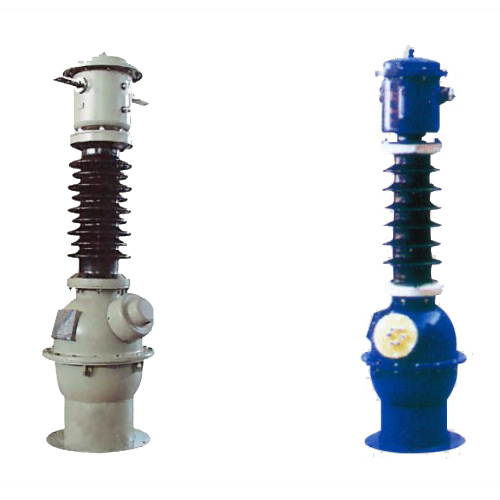
The UTF-8 is a 11kV (IEC-rated) cast-resin current transformer engineered for high-reliability metering and protection applications in medium-voltage power systems. Designed in strict compliance with IEC 61869-2 and GB/T 20840.2, it serves as a critical interface between primary conductors and secondary instrumentation, enabling accurate current measurement while ensuring galvanic isolation. The transformer operates on the principle of electromagnetic induction: alternating current in the primary winding induces a proportional current in the secondary winding, scaled according to the turns ratio. This fundamental mechanism allows protective relays, revenue meters, and monitoring systems to function safely without direct exposure to high-voltage circuits.
Cast-Resin Insulation Technology
The UTF-8 employs vacuum pressure impregnation (VPI) epoxy resin casting, which fully encapsulates the core and windings in a homogeneous, void-free dielectric matrix. This process eliminates air pockets that could lead to partial discharges under sustained electrical stress. The resin system—typically a cycloaliphatic epoxy formulation—offers superior tracking resistance (>600 V per IEC 60587), UV stability for outdoor use, and excellent thermal conductivity (0.2–0.3 W/m·K). Unlike oil-filled alternatives, cast-resin insulation is non-flammable (IEC 60695-11-10 glow-wire tested at 960°C), requires no containment basins, and exhibits negligible aging under normal operating conditions. The solid insulation also provides mechanical rigidity, reducing vibration-induced fatigue in seismic zones or near heavy industrial loads.
Advantages Over Oil-Immersed Designs
Compared to traditional oil-immersed CTs, the UTF-8’s cast-resin construction delivers significant operational and safety benefits. It eliminates fire hazards associated with mineral oil, making it suitable for indoor substations, urban switchgear rooms, and environmentally sensitive areas. Maintenance overhead is drastically reduced—no oil sampling, degassing, or leakage inspections are required. The compact footprint (typical height: 380 mm, diameter: 220 mm) facilitates retrofitting into existing switchgear bays originally designed for lower-voltage equipment. Furthermore, the absence of liquid insulation prevents moisture ingress-related degradation, ensuring stable dielectric performance across humidity ranges from 10% to 95% RH. Thermal cycling tests per IEC 61869-2 confirm no delamination or cracking after 1,000 cycles between -40°C and +70°C.
Typical Deployment Scenarios
The UTF-8 is commonly deployed in 11kV (or domestic 10kV) distribution networks where reliability, space efficiency, and long service life are paramount. Primary applications include ring main units (RMUs), pad-mounted switchgear, and outdoor pole-top installations in rural electrification projects. Its robust design supports both indoor and outdoor environments up to 1,000 m altitude without derating. In industrial settings, it interfaces with motor protection relays for large HVAC compressors or arc-furnace feeders, where harmonic distortion demands high saturation margins. Renewable integration points—such as solar farm collector substations—also leverage its linear response up to 20× rated current for fault detection during grid disturbances.
Technical Specifications
The UTF-8 current transformer is engineered to meet stringent electrical and environmental requirements defined by international standards. Below is a comprehensive specification table reflecting its nominal operating parameters under standard service conditions.
| Parameter | Value |
|---|---|
| Rated System Voltage (IEC) | 11 kV |
| Domestic System Voltage | 10 kV |
| Rated Primary Current (Ip) | 50 A to 3150 A (standard ratios) |
| Rated Secondary Current (Is) | 1 A or 5 A |
| Accuracy Class (Metering) | 0.2S, 0.5S per IEC 61869-2 |
| Accuracy Class (Protection) | 5P10, 5P20 |
| Rated Burden | 2.5 VA to 30 VA (user-selectable) |
| Short-Time Thermal Current (Ith) | 20 kA for 1 s (at 50 Hz) |
| Dynamic Withstand Current | 50 kA peak |
| Insulation Level (LI/AC) | 95 kV / 42 kV rms (1 min) |
| Creepage Distance | ≥25 mm/kV (minimum 275 mm for 11 kV) |
| Ambient Temperature Range | -40°C to +40°C |
| Relative Humidity | Up to 95% non-condensing |
| Altitude Limit | ≤1,000 m above sea level |
| Core Material | Grain-Oriented Electrical Steel (GOES), M4 grade |
| Insulation System | VPI Epoxy Resin, Class F (155°C) |
Electrical Performance Parameters
The UTF-8 achieves metrological precision through optimized magnetic circuit design using M4-grade grain-oriented electrical steel (GOES). This core material exhibits a maximum specific loss of 1.0 W/kg at 1.7 T and 50 Hz, minimizing excitation current and phase displacement errors. For metering classes 0.2S and 0.5S, composite error remains below ±0.2% and ±0.5%, respectively, at 20% to 120% of rated current. Protection accuracy class 5P20 ensures ≤5% composite error at 20× rated current with specified burden, critical for overcurrent relay coordination. The transformer maintains linearity up to 20× In, with knee-point voltage exceeding 300 V for 5 A secondary units—sufficient to avoid saturation during external faults.
Environmental and Mechanical Ratings
Designed for global deployment, the UTF-8 complies with IEC 60068-2 series for environmental testing. It withstands salt fog exposure per IEC 60068-2-11 (96 hours, severity level 2) without surface tracking, making it suitable for coastal installations. The housing features an IP54 rating when mounted vertically, protecting internal terminals from dust ingress and water splashes. Mounting options include flange (M12 bolts, 120 mm PCD) or bracket support, with a total mass of approximately 18 kg. Thermal stability is validated through temperature-rise tests: under continuous 1.2× In load, secondary winding temperature rise does not exceed 60 K above ambient, well within Class F insulation limits.
Typical Applications
The UTF-8 current transformer serves diverse roles across utility, industrial, and renewable energy sectors due to its dual-certification (IEC and GB), robust construction, and precision performance.
Substation Secondary Metering
In 11kV/10kV distribution substations, the UTF-8 provides revenue-grade current signals to kWh meters and SCADA RTUs. Its 0.2S accuracy class ensures billing compliance per IEC 62053-22, even under light-load conditions (as low as 1% In). For example, in a municipal utility substation feeding residential neighborhoods, UTF-8 units with 400/5 A ratio and 10 VA burden deliver consistent readings across daily load cycles ranging from 20 A (night) to 350 A (evening peak). The cast-resin body resists pollution accumulation on insulator sheds, maintaining dielectric integrity in urban environments with high particulate matter.
Industrial Power Distribution Protection
Heavy industries—such as cement plants, steel mills, and data centers—rely on UTF-8 CTs for motor and feeder protection. A typical 1,250 kVA transformer secondary feeder might use a 600/1 A UTF-8 with 5P20 class to drive a numerical overcurrent relay (e.g., SEL-751). During a downstream short circuit drawing 12 kA (20× 600 A), the CT delivers a proportional 20 A secondary current within ±5% error, enabling precise time-overcurrent tripping. The high dynamic withstand (50 kA peak) ensures mechanical survival during bolted faults, preventing catastrophic failure that could escalate outages.
Renewable Energy Integration
Solar and wind farms utilize UTF-8 CTs at collector substation incomers to monitor export power and detect islanding events. In a 20 MW solar plant, UTF-8 units (1000/5 A, 0.5S) interface with synchrophasors and anti-islanding relays. Their low phase error (<±10 minutes at 100% In) supports accurate vector measurements for grid code compliance (e.g., ENTSO-E). The absence of oil eliminates fire risk near photovoltaic arrays, while UV-stable resin prevents yellowing or embrittlement under prolonged solar exposure.
Rural and Suburban Distribution Networks
For utilities expanding grid access in remote areas, the UTF-8’s maintenance-free operation reduces lifecycle costs. Pole-mounted on 11kV lines feeding agricultural communities, it endures monsoon humidity and dust storms without performance drift. A common configuration uses 200/5 A ratio with 5 VA burden for basic kWh metering and earth-fault detection via residual current summation. Its compact size allows co-location with reclosers and sectionalizers on single-pole structures, minimizing right-of-way requirements.
Urban Ring Main Units (RMUs)
In compact SF6 or air-insulated RMUs serving commercial districts, space constraints favor the UTF-8’s cylindrical profile. Installed adjacent to load-break switches, it supplies signals to digital multifunction meters (e.g., Schneider PM5350) for real-time demand monitoring. The 25 mm/kV creepage distance exceeds IEC 61869-2 minimums, mitigating flashover risk in polluted downtown atmospheres. With a 30-year design life, it aligns with urban infrastructure renewal cycles, avoiding premature replacement costs.
Compliance with International Standards
The UTF-8 current transformer is certified to both IEC 61869-2 (Instrument transformers – Part 2: Additional requirements for current transformers) and GB/T 20840.2 (Chinese national standard equivalent). This dual compliance enables global deployment while meeting local regulatory mandates.
IEC 61869-2 Certification Requirements
IEC 61869-2 defines type, routine, and special tests for instrument transformers. The UTF-8 undergoes all mandatory type tests: temperature rise (Clause 7.3), short-circuit withstand (Clause 7.4), and accuracy verification (Clause 7.6). Critical to certification is the verification of rated accuracy limit factor (ALF)—for 5P20 class, the ALF must be ≥20 at specified burden. Dielectric tests include 1-minute power frequency withstand (42 kV rms) and lightning impulse (95 kV peak, 1.2/50 µs wave). Partial discharge levels are measured per IEC 60270 and must remain below 10 pC at 1.2 × Um/√3 during factory acceptance.
Alignment with GB/T 20840.2
GB/T 20840.2 mirrors IEC 61869-2 but includes supplementary clauses for Chinese grid conditions. Notably, it mandates higher creepage distances (≥31 mm/kV for heavy pollution zones) and stricter short-circuit duration (3 s vs. IEC’s 1–3 s). The UTF-8 meets these via extended shed profiles and reinforced core clamping. Additionally, GB/T requires thermal stability testing at 1.1 × In for 8 hours—exceeding IEC’s 1.2 × In for 1 hour—to simulate prolonged overload scenarios common in dense urban feeders. All test reports are issued by CNAS-accredited laboratories.
Key Differences Between IEC and Domestic Standards
While harmonized, subtle differences impact design choices. IEC 61869-2 permits 10kV as a “non-preferred” voltage, whereas GB/T treats 10kV as standard—hence the UTF-8’s dual labeling. Accuracy class definitions are identical, but GB/T enforces tighter tolerance bands for phase error in 0.2S class (±5′ vs. IEC’s ±10′). Environmental testing under GB/T includes simulated sand-dust exposure (GB/T 2423.37), absent in IEC. Crucially, Chinese utilities often specify 1 A secondary current to reduce copper losses over long cable runs—a configuration fully supported by the UTF-8’s low-burden design.
On-Site Testing Procedures
Post-installation and periodic field testing ensure the UTF-8 operates within design tolerances. All procedures follow IEC 61869-2 Annex D and IEEE C57.13.6 guidelines.
Insulation Resistance Test
Measure insulation resistance between primary-to-ground, secondary-to-ground, and primary-to-secondary using a 2,500 V DC megohmmeter. Acceptance criteria: ≥1,000 MΩ for new units; ≥500 MΩ for in-service units. Values below 100 MΩ indicate moisture ingress or resin degradation. Perform with secondary terminals shorted and grounded. Temperature correction per IEEE 43 is applied: R40°C = Rmeas × 2(40−T)/10. Low readings warrant immediate investigation—potential causes include cracked housing or contaminated terminal boxes.
Turns Ratio Verification
Apply a low-voltage AC source (5–10 V) to the secondary winding and measure induced primary voltage. Calculate actual ratio as Vs/Vp. Tolerance must be within ±0.2% for 0.2S class and ±0.5% for 0.5S/5P classes. Alternatively, use a dedicated CT analyzer (e.g., Omicron CT Analyzer) injecting 1–5 A primary current. Deviations >1% suggest inter-turn shorts or incorrect tap selection. Always verify against nameplate ratio—common errors include misreading 400/5 as 400/1.
Polarity Confirmation
Verify reducing polarity using the DC kick method: connect a 6 V battery momentarily between P1 and P2. Observe secondary voltage polarity with a DC voltmeter across S1 and S2. A positive deflection confirms correct polarity (S1 corresponds to P1). Incorrect polarity reverses directional relay operation—critical in differential or ground-fault schemes. Digital relays may auto-detect polarity, but manual verification remains best practice per NFPA 70B.
Power Frequency Withstand Test
Apply 28 kV rms (67% of factory test value) at 50 Hz for 1 minute between primary and grounded secondary/housing. Use a portable test set with current-limiting resistor (≤0.5 A). Leakage current must remain <1 mA. Excessive current indicates insulation breakdown. This test is typically performed only after major maintenance or suspected damage—not during routine checks due to stress on insulation.
Excitation (Saturation) Characteristic Test
For protection-class CTs, plot excitation curve by applying incremental voltage to secondary (primary open). Record current at each step. Knee-point voltage (where slope decreases by 45°) must exceed design value (e.g., 300 V for 5P20). A depressed curve indicates core saturation risk during faults. Compare with factory baseline—shifts >10% warrant core inspection. This test validates ALF compliance in situ, especially after nearby short circuits.
Preventive Maintenance Guide
Although cast-resin CTs require minimal maintenance, scheduled inspections extend service life and prevent unexpected failures.
Annual Visual and Functional Inspection
Conduct annually during substation outages. Inspect housing for cracks, UV discoloration, or tracking marks—especially near flange seals. Clean sheds with deionized water if pollution layer exceeds 0.1 mm thickness. Verify terminal tightness (torque: 2.5 N·m for M6 screws) and check for corrosion on copper lugs. Perform insulation resistance and ratio tests as baseline. Document results for trend analysis; a 20% year-on-year drop in IR may signal early degradation. Ensure secondary circuits remain shorted when disconnected to prevent dangerous open-circuit voltages.
Five-Year Comprehensive Maintenance
Every 60 months, execute advanced diagnostics: excitation curve comparison, partial discharge measurement (if portable PD detector available), and burden verification. Re-torque all mechanical fasteners to 110% of initial value to compensate for thermal cycling relaxation. Inspect mounting hardware for galvanic corrosion—replace stainless steel bolts if pitting exceeds 0.2 mm depth. Update maintenance logs with test data aligned to IEC 60480 reuse criteria. If the unit has endured a fault current >10× In, perform dynamic withstand validation via finite element analysis (FEA) simulation based on event recorder data.
Fault Diagnosis and Troubleshooting
Common issues include ratio drift (caused by core remanence after DC offset faults), secondary open-circuit arcing (leaving carbon tracks), and moisture-induced IR drop. For ratio errors, demagnetize the core using decaying AC current per IEEE C57.13.6. Persistent low IR after cleaning suggests internal voids—replace unit if PD exceeds 20 pC. Never operate with open secondary: install shorting links during meter replacement. Maintain a spare UTF-8 on-site for critical feeders to minimize outage duration.
| Maintenance Interval | Activities |
|---|---|
| Annual | Visual inspection, IR test, ratio check, terminal torque verification |
| 5-Year | Excitation curve, PD scan (if feasible), mechanical re-torque, burden audit |
| Post-Fault | Dynamic withstand assessment, demagnetization, insulation integrity review |
Conclusion
The UTF-8 11kV cast-resin current transformer represents a benchmark in medium-voltage instrumentation, combining IEC 61869-2 and GB/T 20840.2 compliance with field-proven reliability. Its VPI epoxy resin encapsulation eliminates fire risks and maintenance burdens inherent in oil-filled designs, while the GOES core ensures metrological precision across metering (0.2S/0.5S) and protection (5P10/5P20) applications. With a design life of 25–30 years under standard service conditions, it delivers exceptional lifecycle value for utilities and industrial operators. The transformer’s robustness against environmental stressors—humidity, pollution, thermal cycling—and its compatibility with modern digital relays make it ideal for smart grid deployments. Rigorous factory testing and straightforward field verification protocols further enhance confidence in long-term performance. As distribution networks evolve toward higher automation and renewable integration, the UTF-8’s accuracy, safety, and durability position it as a cornerstone component for resilient power infrastructure.
Frequently Asked Questions (FAQ)
Q1: Can the UTF-8 be used on a 10kV domestic system?
Yes. While rated at 11kV per IEC standards, the UTF-8 is fully compatible with 10kV systems commonly used in China and other regions. Its insulation level (95/42 kV) provides ample margin for 10kV operation.
Q2: What is the maximum allowable burden for a 5P20 class UTF-8?
The burden must not exceed the value specified on the nameplate—typically 15 VA or 30 VA. Exceeding this reduces the effective ALF below 20, risking saturation during faults. Always verify burden by summing relay input impedance, wire resistance, and connection losses.
Q3: How often should insulation resistance be tested?
Annually during scheduled outages. More frequent testing (e.g., quarterly) is recommended in high-humidity or coastal environments. Record trends—sudden drops often precede failures.
Q4: Is demagnetization required after every fault?
Only if the fault involved significant DC offset (e.g., close-in asymmetrical faults). Remanence can shift the excitation curve, causing ratio errors. Demagnetize using a commercial CT demag unit following IEEE C57.13.6 procedures.
Q5: Can secondary leads be extended beyond 100 meters?
Yes, but calculate total burden carefully. For 1 A secondary, 2.5 mm² copper wire adds ~0.35 Ω/km. At 150 m round-trip, wire resistance = 0.105 Ω, contributing 0.105 VA at 1 A—usually acceptable for 5 VA+ burdens.
Q6: What causes a “CT open circuit” alarm in relays?
Typically loose terminals, broken wires, or unshorted secondaries during maintenance. Always install shorting links before disconnecting meters. The UTF-8’s terminal box includes integrated shorting bars for safety.