Article Content
Introduction to the UTF-8 Voltage Transformer
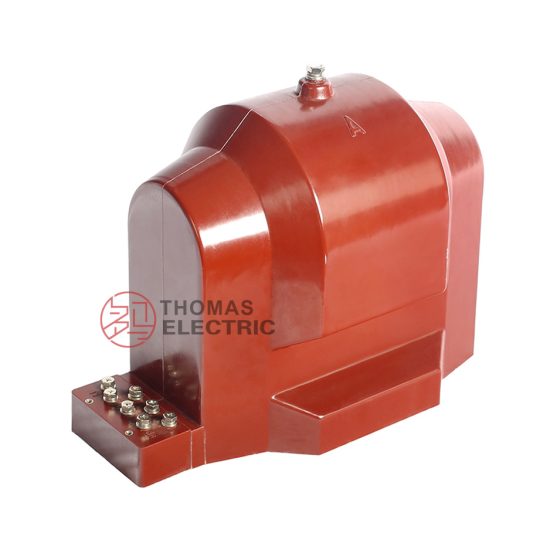
The UTF-8 is a single-phase, indoor/outdoor-rated cast-resin voltage transformer (VT) designed for accurate voltage measurement and protective relay interfacing in medium-voltage distribution systems operating at 11kV (IEC nominal) or 10kV (domestic system equivalent). Engineered in strict compliance with IEC 61869-3 and GB/T 20840.3, this instrument transformer leverages advanced vacuum pressure impregnation (VPI) epoxy resin technology to encapsulate its magnetic core and windings, ensuring long-term dielectric integrity and environmental resilience.
Operating Principle of Cast-Resin Insulation
Cast-resin insulation in the UTF-8 VT involves embedding the primary and secondary windings—wound around a grain-oriented electrical steel (GOES) core—within a solid epoxy matrix under vacuum and pressure. This VPI process eliminates air voids and moisture ingress pathways, resulting in a homogeneous dielectric structure with high partial discharge inception voltage (>20 kV peak). The resin’s thermal class (typically 130°C or higher) supports continuous operation under load while maintaining mechanical stability across thermal cycles from -40°C to +40°C ambient. Unlike oil-filled alternatives, the solid insulation eliminates fire hazards, leakage risks, and maintenance-intensive oil sampling, making it ideal for urban substations and indoor switchgear applications where safety and space constraints are critical.
Advantages Over Oil-Immersed Designs
Compared to traditional oil-immersed VTs, the UTF-8’s cast-resin construction offers superior operational safety, reduced lifecycle costs, and enhanced environmental compatibility. The absence of flammable insulating oil eliminates explosion and fire risks, satisfying stringent safety codes in commercial and industrial facilities. Additionally, the solid resin provides excellent resistance to pollution, salt fog, and humidity—critical for coastal or high-altitude installations up to 1,000 meters above sea level (with derating beyond). Mechanical robustness allows direct mounting on switchgear without vibration-damping supports, and the compact footprint enables retrofitting into legacy panels originally designed for oil units. Long-term reliability is further assured by minimal aging effects; accelerated life testing per IEC 61869-3 confirms stable ratio and phase error performance over 25–30 years of service.
Typical Applications Overview
The UTF-8 is deployed across utility substations, industrial plants, renewable energy farms, and municipal distribution networks where precise voltage transformation is required for metering, revenue billing, and protective relaying. Its standard accuracy classes (0.2, 0.5, 3P) support both fiscal metering and fault detection functions. In ring-main units (RMUs) and gas-insulated switchgear (GIS), the UTF-8 provides isolated secondary voltages (typically 100/√3 V or 110/√3 V) for digital relays and SCADA systems. Its design accommodates both grounded and ungrounded primary systems, with optional residual voltage windings available for ground-fault detection in resistance-grounded networks.
Technical Specifications
The UTF-8 voltage transformer is engineered to meet exacting performance criteria under defined service conditions. All parameters align with IEC 61869-3 and GB/T 20840.3, ensuring interoperability in global power systems.
| Parameter | Value |
|---|---|
| Primary Voltage (IEC) | 11 kV |
| Primary Voltage (Domestic) | 10 kV |
| Secondary Voltage | 100/√3 V, 110/√3 V (standard); 100 V, 110 V (optional) |
| Voltage Ratio | 11,000/√3 : 100/√3 V (e.g., 63.5:1) |
| Accuracy Class | Metering: 0.2, 0.5; Protection: 3P, 6P |
| Rated Output (per burden) | 10–100 VA (depending on accuracy class) |
| Insulation Level (LI/AC) | 75 kV / 28 kV (1.2/50 µs impulse & 1-min power frequency) |
| Short-Time Thermal Withstand | 1 second at 10× rated primary voltage |
| Core Material | Grain-Oriented Electrical Steel (GOES), CRGO grade |
| Insulation System | VPI Epoxy Resin, Class F (155°C) |
| Ambient Temperature Range | -40°C to +40°C |
| Relative Humidity | Up to 95% non-condensing |
| Altitude Limit | ≤1,000 m (derating required above) |
Rated Voltage and Ratio Tolerances
The UTF-8 is rated for a system voltage of 11 kV (IEC 60038), corresponding to a maximum operating voltage of 12 kV. The primary winding is designed for continuous operation at 1.1× rated voltage (12.1 kV) without exceeding thermal limits. Voltage ratio tolerance is ±0.2% for 0.2-class units and ±0.5% for 0.5-class under reference conditions (rated frequency, burden, and temperature). Phase displacement must not exceed ±10 minutes for 0.2 class and ±20 minutes for 0.5 class at 80–120% of rated voltage. These tight tolerances ensure compliance with revenue metering regulations and reliable operation of distance relays requiring precise impedance calculations.
Standard Service Conditions and Environmental Ratings
The UTF-8 is certified for both indoor and outdoor use, with an IP00 rating when mounted inside switchgear and IP23 when installed externally with appropriate terminal covers. It withstands daily thermal cycling without cracking due to matched coefficients of thermal expansion between copper windings, GOES core, and epoxy resin. At altitudes exceeding 1,000 m, the power frequency withstand voltage must be reduced by 1% per 100 m above sea level per IEC 60071-2. Humidity resistance is validated through 1,000-hour damp-heat testing (IEC 60068-2-78), confirming no degradation in insulation resistance or partial discharge levels. The transformer is suitable for seismic zones up to 0.3g horizontal acceleration when properly anchored.
Typical Applications
The UTF-8 voltage transformer serves diverse roles in modern power infrastructure, leveraging its accuracy, safety, and durability.
Substation Secondary Metering
In 11kV/0.4kV utility substations, the UTF-8 provides isolated secondary voltages to revenue-grade kWh meters and demand recorders. Its 0.2-class accuracy ensures billing precision within ±0.2% error across 20–120% of rated load, meeting regulatory requirements in most jurisdictions. The low burden requirement (as low as 10 VA) minimizes voltage drop in long secondary circuits, preserving metering fidelity even in distributed metering architectures. Integration with AMI (Advanced Metering Infrastructure) systems is seamless due to stable phase characteristics under harmonic distortion up to 5% THD.
Industrial Power Distribution
Within manufacturing plants and data centers, the UTF-8 interfaces with multifunction power quality analyzers and protective relays (e.g., overvoltage, undervoltage, and loss-of-potential schemes). Its 3P-class protection winding delivers linear output up to 190% of rated voltage during transient overvoltages, enabling reliable fault detection without saturation. The cast-resin body resists chemical vapors and dust common in industrial environments, eliminating the need for sealed enclosures. In arc-flash mitigation systems, the UTF-8’s fast response time (<20 ms) supports rapid tripping decisions.
Renewable Energy Integration
Solar PV and wind farms utilize the UTF-8 for grid synchronization and anti-islanding protection. During cloud transients or gust events, the VT maintains ratio stability despite rapid voltage fluctuations, ensuring inverters remain synchronized within IEEE 1547 limits. The transformer’s low capacitive coupling minimizes ferroresonance risk when switching capacitor banks—a common issue in weak rural grids hosting renewables. Its compact size facilitates integration into pad-mounted transformers and combiner boxes.
Rural and Suburban Distribution Networks
In overhead-line-fed rural feeders, the UTF-8 is pole-mounted or installed in underground vaults to supply voltage signals to recloser controls and sectionalizers. Its immunity to moisture ingress prevents insulation failure during monsoon seasons, while UV-stabilized resin resists degradation under prolonged sunlight exposure. For ungrounded systems, a tertiary delta-connected winding can be specified to detect ground faults via residual voltage measurement, enhancing outage management in remote areas.
Compliance with International Standards
The UTF-8 is rigorously tested and certified against globally recognized standards to guarantee interoperability and safety.
IEC 61869-3 Compliance Details
IEC 61869-3 specifies performance, testing, and marking requirements for inductive voltage transformers. The UTF-8 meets all mandatory clauses, including ratio error, phase displacement, temperature rise (<60 K for windings), and short-circuit withstand capability. Type tests include temperature rise, lightning impulse (75 kV peak), and partial discharge (<10 pC at 1.2 × Um/√3). Routine tests performed on every unit include turns ratio verification (±0.1% tolerance), polarity check, and power frequency withstand (28 kV rms for 1 minute). Markings include primary/secondary ratings, accuracy class, vector group (typically single-phase), and manufacturer data per Clause 10.
Alignment with GB/T 20840.3
GB/T 20840.3 is the Chinese national adoption of IEC 61869-3, with minor deviations in test durations and altitude corrections. The UTF-8 complies fully, including the requirement for a nameplate in Chinese characters and dual voltage labeling (10kV domestic / 11kV IEC). Burden designation follows GB conventions (e.g., “10VA” instead of “10 VA”), and insulation coordination aligns with DL/T 404 for Chinese switchgear. Third-party certification by CEPREI or CESI validates conformance for projects requiring domestic approvals.
Key Differences Between IEC and Domestic Standards
While technically harmonized, practical differences exist: GB/T 20840.3 mandates additional factory tests for partial discharge at 1.1 × Um/√3, whereas IEC 61869-3 requires it only at 1.2 × Um/√3. Altitude derating in GB standards begins at 1,000 m (same as IEC), but Chinese utilities often specify stricter thermal limits (55 K rise vs. 60 K). The UTF-8 is engineered to satisfy the more stringent requirement set, ensuring global deployability.
On-Site Testing Procedures
Post-installation and periodic field testing ensures the UTF-8 operates within specification throughout its service life.
Insulation Resistance Test
Measure insulation resistance between primary-to-secondary, primary-to-ground, and secondary-to-ground using a 2,500 V DC megohmmeter. Acceptance criterion: ≥1,000 MΩ at 20°C. Correct for temperature using the formula RT2 = RT1 × 2(T1−T2)/10. Values below 500 MΩ indicate moisture ingress or resin cracking and warrant further investigation via tan delta or partial discharge testing. Perform before and after any maintenance involving terminal access.
Turns Ratio Test
Apply a low-voltage AC source (50–100 V) to the primary and measure secondary voltage with a calibrated voltmeter or dedicated ratio tester. Calculate actual ratio and compare to nameplate. Tolerance: ±0.2% for 0.2-class, ±0.5% for 0.5-class. Deviations beyond tolerance suggest inter-turn shorts or winding deformation. Use a three-phase test set if verifying multiple VTs in a bank for vector group consistency.
Polarity Test
Verify reducing polarity (standard for IEC VTs) using the DC kick method: connect a 6–12 V battery momentarily across primary terminals (H1+, H2−). Observe secondary voltage spike on an analog voltmeter connected to X1 (positive) and X2 (negative). A momentary positive deflection confirms correct polarity. Incorrect polarity causes 180° phase reversal, leading to metering errors and relay misoperation. Digital testers automate this via phase angle measurement.
Power Frequency Withstand Voltage Test
Apply 28 kV rms (for 11kV class) at 50 Hz between primary and grounded secondary/core for 1 minute. Leakage current must remain below 10 mA. This test validates insulation integrity after transport or installation stress. Do not perform if partial discharge exceeds 20 pC during pre-test diagnostics. Use a test transformer with current-limiting resistor (1–5 kΩ) to prevent damage during flashover.
Open-Circuit Characteristic Test
With secondary open, gradually increase primary voltage from 20% to 120% of rated value while recording excitation current. Plot V vs. I curve; knee point should occur above 150% of rated voltage for protection-class windings. Excessive magnetizing current at rated voltage indicates core lamination damage or shorted turns. Compare results to factory baseline; >10% deviation warrants replacement. This test is critical after exposure to severe overvoltages or ferroresonance events.
Preventive Maintenance Guide
Proactive maintenance extends service life and prevents unexpected failures in critical infrastructure.
Periodic Inspection Protocol
Conduct visual and thermographic inspections annually. Check for surface tracking, cracks, or discoloration on the resin housing. Clean terminals with isopropyl alcohol to remove salt or carbon deposits. Use infrared imaging to detect hot spots (>10 K above ambient) at connections, indicating loose hardware or corrosion. Verify grounding continuity (<0.1 Ω resistance) between the VT frame and substation ground grid. Document findings in a condition assessment log for trend analysis.
Maintenance Intervals and Fault Diagnosis
Every 5 years, perform comprehensive electrical tests (insulation resistance, ratio, polarity) and compare to baseline data. Common failure modes include:
- Ratio drift: Caused by inter-turn shorts; confirmed via open-circuit test.
- Insulation breakdown: Indicated by low IR or high PD; often due to moisture ingress at terminal seals.
- Mechanical damage: Cracks from impact or thermal stress; visible on housing or detectable via ultrasonic testing.
Replace units exhibiting irreversible degradation. Maintain spare VTs with identical ratio and burden to ensure seamless replacement without recalibrating downstream devices.
| Maintenance Interval | Activities |
|---|---|
| Annual | Visual inspection, IR scan, terminal torque check, grounding verification |
| 5-Year | Full electrical testing (IR, ratio, polarity, open-circuit), comparison to baseline |
| After Fault Events | Immediate ratio and insulation tests post-switching surge or short circuit |
Conclusion
The UTF-8 11kV cast-resin voltage transformer represents a benchmark in reliability, accuracy, and safety for modern power systems. By integrating GOES core technology with VPI epoxy resin encapsulation, it delivers stable metrological performance across decades of service—typically 25 to 30 years under standard conditions. Its compliance with both IEC 61869-3 and GB/T 20840.3 ensures seamless deployment in international and domestic projects, while the elimination of flammable oil enhances safety in densely populated or environmentally sensitive areas. Field-proven in applications ranging from urban substations to remote renewable sites, the UTF-8 minimizes lifecycle costs through zero fluid maintenance, resistance to environmental stressors, and robust fault withstand capability. When paired with disciplined testing and preventive maintenance protocols, this VT provides unwavering support for accurate energy accounting and dependable protective relaying, forming a cornerstone of resilient grid infrastructure.
Frequently Asked Questions (FAQ)
Q1: Can the UTF-8 be used on a 10kV domestic system?
Yes. While rated for 11kV per IEC 60038, the UTF-8 is fully compatible with 10kV systems (Um = 12kV), which share the same insulation coordination (LI/AC = 75/28 kV). No derating is required.
Q2: What is the minimum burden for a 0.2-class UTF-8 VT?
The minimum recommended burden is 25% of rated output (e.g., 2.5 VA for a 10 VA unit) to maintain accuracy within class limits. Operating below this may increase ratio error beyond ±0.2%.
Q3: How often should insulation resistance be tested?
Annually during routine inspection, and additionally after any event involving overvoltage, physical impact, or environmental exposure (e.g., flooding).
Q4: Is the UTF-8 suitable for ungrounded systems?
Yes. It can be connected line-to-ground in ungrounded or high-resistance grounded systems. For ground-fault detection, specify a residual (tertiary) winding during ordering.
Q5: What causes ferroresonance in VTs, and how is the UTF-8 protected?
Ferroresonance occurs when VT magnetizing reactance resonates with system capacitance during single-pole switching. The UTF-8’s core design includes controlled saturation characteristics and optional damping resistors to suppress sustained oscillations.
Q6: Can the secondary be short-circuited?
No. Unlike current transformers, voltage transformers must never be short-circuited on the secondary, as this causes excessive current flow, overheating, and potential destruction. Always fuse secondary circuits per IEC 60282.