Article Content
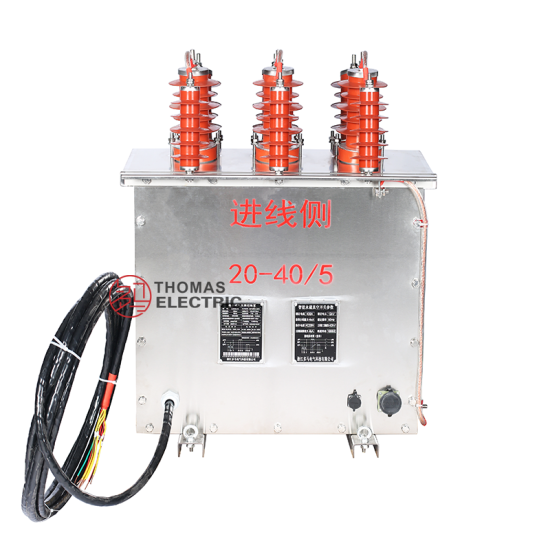
LSZ-12 11kV Cast-Resin Voltage Transformer for Substation Metering and Protection – IEC 61869-3 Certified
Introduction to the LSZ-12 Voltage Transformer
The LSZ-12 is a single-phase, indoor/outdoor-rated cast-resin voltage transformer (VT) engineered for reliable operation in 11kV (IEC nominal) or 10kV (domestic system) medium-voltage networks. As a critical interface between primary power systems and secondary instrumentation, it provides galvanically isolated, scaled-down voltage signals essential for accurate energy metering, protective relay coordination, and real-time monitoring. Its design adheres strictly to IEC 61869-3 and GB/T 20840.3, ensuring global interoperability and performance consistency.
Operating Principle of Cast-Resin Insulation
The LSZ-12 employs vacuum pressure impregnation (VPI) epoxy resin technology to fully encapsulate its high-voltage winding and magnetic core assembly. This process eliminates air voids and moisture ingress pathways by saturating the entire coil structure under controlled vacuum and pressure cycles. The resulting monolithic insulation system exhibits exceptional dielectric strength (≥70 kV/mm), thermal stability up to 130°C continuous operation, and resistance to partial discharge inception below 10 pC at rated voltage. Unlike oil-filled alternatives, the solid dielectric requires no maintenance fluid management and poses zero fire or environmental hazard—making it ideal for urban substations, indoor switchgear, and sensitive industrial environments where safety and space constraints are paramount.
Advantages Over Oil-Immersed Designs
Cast-resin construction delivers significant operational benefits compared to traditional oil-immersed VTs. First, the absence of flammable insulating oil eliminates explosion risks and simplifies compliance with fire codes in confined spaces. Second, the rigid epoxy matrix provides superior mechanical robustness against seismic loads (tested per IEC 60068-2-6) and short-circuit electromagnetic forces. Third, the hermetic seal prevents humidity absorption, ensuring stable accuracy over decades without drying-out or oil degradation concerns. Finally, the compact footprint—typically 30–40% smaller than equivalent oil units—reduces installation costs and enables retrofitting into legacy switchgear bays originally designed for lower-voltage equipment.
Typical Applications Overview
The LSZ-12 is predominantly deployed in utility distribution substations (33/11kV or 11/0.4kV), industrial plant switchyards, renewable energy collector stations (solar PV and wind farms), and commercial building service entrances. In these settings, it supplies standardized secondary voltages (commonly 100/√3 V or 110/√3 V) to revenue-class meters, distance relays, fault locators, and SCADA RTUs. Its high accuracy class (0.2 or 0.5 for metering; 3P or 6P for protection) ensures compliance with regulatory billing requirements while enabling precise fault detection during transient overvoltages or ground faults. The unit’s dual-winding configuration supports simultaneous connection to both metering and protection circuits without cross-interference.
Technical Specifications
The LSZ-12 is engineered to meet stringent electrical and environmental performance criteria defined by international standards. Below is a detailed specification table followed by contextual explanations of key parameters.
| Parameter | Value |
|---|---|
| Primary Rated Voltage (Up) | 11 kV (IEC), 10 kV (domestic) |
| Secondary Rated Voltage (Us) | 100/√3 V or 110/√3 V (standard); custom ratios available |
| Voltage Ratio | 11,000/√3 : 100/√3 V (i.e., 110:1) |
| Accuracy Class | Metering: 0.2, 0.5; Protection: 3P, 6P |
| Rated Output (per burden) | 10–100 VA (depending on class and ratio) |
| Insulation Level (LI/AC) | 75 kV / 28 kV (1.2/50 μs lightning impulse / 1-min power frequency) |
| Short-Time Thermal Withstand | 1 second at 10× rated voltage (for open-circuit conditions) |
| Core Material | Grain-Oriented Electrical Steel (GOES), 0.27 mm thickness |
| Insulation System | VPI Epoxy Resin, UL 94 V-0 flame rating |
| Ambient Temperature Range | –25°C to +40°C (extended –40°C option available) |
| Relative Humidity | ≤95% non-condensing |
| Maximum Altitude | 1,000 m above sea level (derating required >1,000 m) |
Rated Voltage and System Compatibility
Although marketed as an 11kV device per IEC 60038 standard voltages, the LSZ-12 is routinely installed on 10kV distribution networks common in China and other regions. This compatibility arises because the 11kV rating represents the highest system voltage for equipment (Um = 12 kV), which safely accommodates the 10kV nominal system voltage (Un = 10 kV) with adequate insulation margin. The transformer’s insulation coordination—specifically its 75 kV lightning impulse withstand—ensures resilience against switching surges and atmospheric overvoltages typical in overhead-line-fed networks.
Accuracy Classes and Burden Ratings
Accuracy class defines the maximum permissible error in voltage magnitude and phase angle under specified load (burden) conditions. For metering applications, class 0.2 guarantees ≤±0.2% ratio error and ≤±10 minutes phase displacement at 25–100% of rated burden. Protection class 3P limits errors to ±3% and ±120 minutes under fault conditions (up to 190% of rated voltage). The rated output (e.g., 30 VA for class 0.5) must not be exceeded; otherwise, accuracy degrades nonlinearly. Designers must sum all connected burdens (watt-hour meters, relays, lead resistance) and ensure total ≤80% of VT’s rated output to maintain compliance.
Environmental and Mechanical Ratings
The LSZ-12 is rated for both indoor and outdoor use, featuring UV-stabilized resin housing and IP54 ingress protection when mounted vertically. Its thermal design permits continuous operation at ambient temperatures up to +40°C with a 10K temperature rise above ambient under full load. At altitudes exceeding 1,000 m, the dielectric strength of air decreases by ~1% per 100 m, necessitating derating of external clearances or selection of higher insulation levels. The unit withstands mechanical vibration per IEC 60068-2-6 (frequency sweep 2–13.2 Hz, displacement 1 mm; 13.2–100 Hz, acceleration 0.7g).
Typical Applications
The LSZ-12’s versatility stems from its robust insulation, precision accuracy, and compact form factor, enabling deployment across diverse power infrastructure segments.
Substation Secondary Metering
In utility-owned 11kV/0.4kV distribution substations, the LSZ-12 feeds revenue-grade kWh meters and demand recorders. Its class 0.2 accuracy ensures billing compliance with national regulations (e.g., China’s DL/T 448). The VT is typically mounted on the 11kV busbar adjacent to circuit breakers, with secondary leads routed via shielded cables to the metering cabinet. Dual secondary windings allow one output for billing (isolated and sealed) and another for operational monitoring, preventing tampering while enabling real-time grid analytics.
Industrial Power Distribution Systems
Large manufacturing facilities often operate internal 10kV networks fed from utility tie-lines. Here, the LSZ-12 interfaces with multifunction protection relays (e.g., overvoltage, undervoltage, directional earth fault) and power quality analyzers. Its high saturation point (>2.5× rated voltage) prevents core distortion during motor starting transients or capacitor bank switching. The cast-resin body resists chemical fumes and dust prevalent in cement plants, steel mills, and chemical processing zones—environments where oil-filled VTs would require frequent maintenance or fail prematurely.
Renewable Energy Integration
Solar photovoltaic (PV) and wind farms utilize LSZ-12 units at the medium-voltage collector bus (typically 10–35kV). They provide synchronized voltage references for anti-islanding protection, reactive power control (Q(V) droop), and grid-code compliance monitoring (e.g., ENTSO-E requirements). The VT’s low phase error (<5 minutes for class 0.5) is critical for precise synchronization during grid reconnection after outages. Its maintenance-free design reduces O&M costs in remote or offshore installations where accessibility is limited.
Rural and Suburban Distribution Networks
In rural electrification projects, LSZ-12 transformers are pole-mounted or pad-mounted alongside reclosers and sectionalizers. Their immunity to oil leakage makes them suitable for environmentally sensitive areas (e.g., near waterways or agricultural land). The 11kV rating provides headroom for voltage fluctuations common in long, lightly loaded feeders. Utilities leverage their long service life (25+ years) to minimize replacement cycles in hard-to-reach locations, improving lifecycle economics.
Commercial Building Service Entrances
High-rise office complexes and data centers often receive 10kV service directly from the grid. The LSZ-12 enables accurate tenant submetering and backup generator synchronization. Its compact size fits within space-constrained switchrooms, while the non-flammable resin meets stringent fire safety codes (e.g., NFPA 70, IEC 60364). The unit’s low partial discharge activity (<5 pC at 1.2 Um/√3) ensures electromagnetic compatibility with sensitive IT equipment nearby.
Compliance with International Standards
The LSZ-12 is certified to IEC 61869-3:2011 (“Instrument transformers – Part 3: Particular requirements for inductive voltage transformers”) and aligns with China’s GB/T 20840.3-2013, which adopts IEC 61869-3 with minor national deviations.
IEC 61869-3 Certification Requirements
IEC 61869-3 mandates rigorous type, routine, and special tests. Type tests include temperature rise (≤60K for resin), short-circuit withstand (simulated by applying 10× rated voltage for 1s), and impulse voltage (75 kV peak, 1.2/50 μs waveform). Routine tests—performed on every unit—cover turns ratio verification (±0.25% tolerance), polarity check (reducing polarity confirmed), and power frequency withstand (28 kV rms for 1 min). The standard also specifies marking requirements: primary/secondary terminals, accuracy class, rated output, and manufacturer data must be permanently engraved on a stainless-steel nameplate.
GB/T 20840.3 Alignment and National Deviations
GB/T 20840.3 mirrors IEC 61869-3 but includes supplementary clauses for Chinese grid conditions. Notably, it requires enhanced pollution performance testing (creepage distance ≥25 mm/kV for light-pollution zones) and mandates a 1-minute induced overvoltage test at 2× rated frequency (e.g., 100 Hz for 50 Hz systems) to verify interturn insulation integrity. While IEC permits secondary voltages of 100 V or 110 V, GB/T strongly recommends 100/√3 V for new installations to harmonize with domestic metering standards. Both standards agree on accuracy definitions, but GB/T adds a requirement for residual voltage measurement capability in three-phase banks.
Testing and Certification Documentation
Each LSZ-12 unit ships with a test report traceable to ISO/IEC 17025-accredited laboratories. The report includes raw data for ratio error, phase displacement, insulation resistance (>10,000 MΩ at 2,500 V DC), and partial discharge magnitude. For export markets, additional certifications (e.g., KEMA, CESI) may be obtained. Compliance ensures seamless integration into smart grid architectures governed by IEC 61850, where sampled values (SV) from VTs feed digital relays via Ethernet.
On-Site Testing Procedures
Post-installation and periodic field testing validate the LSZ-12’s integrity and performance. All tests must follow IEC 60076-11 and IEEE C57.13 guidelines.
Insulation Resistance Test
Using a 2,500 V DC megohmmeter, measure resistance between primary winding and ground, and between primary and secondary windings. Acceptance criterion: ≥10,000 MΩ at 20°C. Correct for temperature using RT2 = RT1 × 2(T1–T2)/10. Low readings indicate moisture ingress or resin cracking. Perform before and after cleaning bushings with isopropyl alcohol to distinguish surface leakage from bulk insulation failure.
Turns Ratio Test
Apply a low-voltage AC signal (50–100 V) to the primary and measure secondary voltage with a calibrated voltmeter or dedicated ratio tester. Calculate actual ratio = Vp/Vs. Compare to nameplate ratio; tolerance must be within ±0.25% for metering classes and ±0.5% for protection classes. Example: For 11,000/100 V VT, measured ratio of 109.8 is acceptable (error = –0.18%).
Polarity Verification
Confirm reducing polarity (IEC standard) using the DC kick method: momentarily connect a 6–12 V battery across primary terminals (H1+, H2–). Observe secondary voltage spike on a DC voltmeter connected to X1+, X2–. A positive deflection confirms correct polarity. Incorrect polarity causes 180° phase reversal, leading to metering errors or relay misoperation in differential schemes.
Power Frequency Withstand Voltage Test
Apply 28 kV rms (50 Hz) between primary and grounded secondary/core for 1 minute. Use a calibrated test transformer with overcurrent trip set at 10 mA. No flashover or disruptive discharge should occur. This test verifies insulation integrity after transportation or exposure to overvoltages. Reduce voltage gradually post-test to avoid resonant overvoltages.
Open-Circuit Characteristic Test
With secondary open, apply 100%, 110%, and 120% of rated primary voltage. Record excitation current and secondary voltage. Plot Vs vs. Iexc. A sharp current rise above 120% indicates core saturation onset. For LSZ-12, excitation current at 120% Un should be ≤5% of rated secondary current. Excessive magnetizing current suggests core lamination damage or shorted turns.
Preventive Maintenance Guide
Cast-resin VTs like the LSZ-12 require minimal maintenance but benefit from scheduled inspections to ensure decades-long reliability.
Annual Visual and Functional Inspection
Inspect for physical damage (cracks, discoloration), terminal corrosion, and loose connections. Clean bushings with lint-free cloth and neutral detergent. Verify secondary wiring integrity—no frayed insulation or overheating signs at terminal blocks. Measure secondary voltage under load; deviation >±1% from expected value warrants further diagnostics. Check grounding continuity (<0.1 Ω resistance) between VT frame and substation grid.
Five-Year Dielectric and Accuracy Recalibration
Every 60 months, perform insulation resistance, ratio, and polarity tests as baseline. Additionally, conduct a full accuracy verification per IEC 61869-3 using a reference standard (e.g., Fluke 6105A). Compare results to factory test data; drift beyond ±0.1% in ratio error or ±5 minutes in phase displacement indicates aging or internal fault. Replace if accuracy falls outside class limits.
Maintenance Intervals and Fault Diagnosis Table
| Interval | Action | Fault Indicator |
|---|---|---|
| Annually | Visual inspection, cleaning, connection torque check | Discoloration, arcing marks, loose hardware |
| 5 Years | Full electrical tests (ratio, IR, accuracy) | Ratio error >0.5%, IR <1,000 MΩ |
| After Fault | Post-fault testing (withstand, open-circuit curve) | Abnormal noise, overheating, relay misoperation |
| 25+ Years | Consider replacement based on lifecycle assessment | Progressive accuracy drift, resin embrittlement |
Conclusion
The LSZ-12 11kV cast-resin voltage transformer represents a benchmark in medium-voltage instrumentation, combining IEC 61869-3-certified performance with the inherent safety and longevity of epoxy resin encapsulation. Its GOES silicon steel core ensures low losses and high linearity across metering and protection burdens, while the VPI insulation system delivers unmatched resistance to environmental stressors—from coastal humidity to industrial pollutants. By providing precise, phase-coherent voltage signals over a 25–30 year service life with minimal maintenance, the LSZ-12 enhances grid reliability, supports regulatory compliance, and reduces total cost of ownership. Its dual compatibility with 11kV (IEC) and 10kV (domestic) systems makes it a versatile solution for global utilities, industrial operators, and renewable developers seeking future-proof substation instrumentation. When integrated with modern digital relays and smart meters, the LSZ-12 forms a foundational element of resilient, data-driven power networks aligned with Industry 4.0 principles.
Frequently Asked Questions (FAQ)
Q1: Can the LSZ-12 be used on a 10kV system even though it’s rated 11kV?
A: Yes. The 11kV rating refers to the IEC standard highest voltage for equipment (Um = 12 kV), which safely covers 10kV nominal systems (Un = 10 kV) with adequate insulation margin per IEC 60038.
Q2: What is the maximum allowable burden for a class 0.5 LSZ-12?
A: The rated output is typically 30 VA or 50 VA (check nameplate). Total connected burden—including meter coils, relay inputs, and lead resistance—must not exceed this value. For accuracy assurance, operate at ≤80% of rated burden.
Q3: How often should insulation resistance be tested?
A: Annually during routine substation maintenance. Also test after any suspected overvoltage event (e.g., lightning strike) or physical impact during handling.
Q4: Is the LSZ-12 suitable for outdoor installation?
A: Yes. It features UV-resistant resin housing and IP54 protection when mounted vertically. Ensure drainage holes (if present) remain unobstructed to prevent water accumulation.
Q5: What causes ratio error drift over time?
A: Primary causes include core lamination degradation due to thermal cycling, partial discharge erosion in voids (rare in VPI resin), or mechanical stress on windings. Annual visual checks and 5-year recalibration detect early signs.
Q6: Can I parallel two LSZ-12 secondaries for higher burden capacity?
A: No. Voltage transformers must never be paralleled unless specifically designed for it (e.g., with matched impedance and polarity). Paralleling mismatched VTs causes circulating currents and inaccurate metering.