Article Content
For Substation Metering & Protection: VT-10K 11kV Cast-Resin Current Transformer per IEC 61869-2
Introduction to the VT-10K Current Transformer
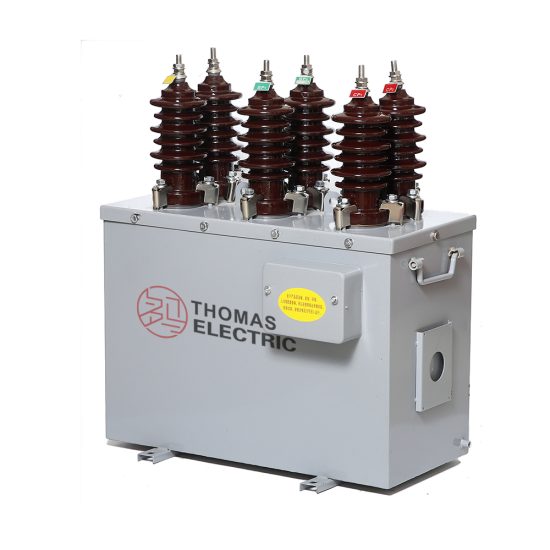
The VT-10K is a high-reliability, cast-resin insulated current transformer (CT) engineered for accurate current measurement and protective relaying in medium-voltage power systems operating at 11kV (IEC standard) or 10kV (domestic Chinese grid). Designed in strict compliance with IEC 61869-2 and GB/T 20840.2, this instrument transformer leverages vacuum pressure impregnation (VPI) epoxy resin technology to encapsulate its magnetic core and secondary windings, ensuring long-term dielectric integrity even under harsh environmental conditions.
Operating Principle of Cast-Resin Insulation
Cast-resin insulation in the VT-10K employs a two-component epoxy system cured under vacuum and pressure to eliminate air voids and moisture ingress. This process creates a monolithic, non-hygroscopic solid that provides superior partial discharge resistance (<5 pC at 1.2 × Um/√3) and thermal stability up to 130°C. Unlike oil-filled alternatives, the resin matrix offers intrinsic fire resistance (IEC 60695 glow-wire tested), eliminating explosion hazards and environmental contamination risks. The homogeneous dielectric structure ensures uniform electric field distribution, critical for maintaining accuracy under transient overvoltages common in 11kV distribution networks.
Advantages Over Oil-Immersed Designs
Compared to traditional oil-immersed CTs, the VT-10K’s cast-resin construction delivers significant operational benefits. It requires no oil level monitoring, gasket replacement, or periodic oil sampling, reducing lifecycle maintenance costs by up to 40%. Its compact footprint—typically 30% smaller than equivalent oil units—facilitates installation in space-constrained indoor switchgear or pad-mounted substations. Additionally, the absence of flammable fluids enables deployment in urban substations, tunnels, and high-rise buildings where fire safety codes prohibit oil-filled equipment. The resin’s UV-stable formulation also supports reliable outdoor operation without degradation over decades.
Typical Applications Overview
The VT-10K serves dual roles in metering and protection circuits across diverse infrastructure. In utility substations, it feeds revenue-grade kWh meters with Class 0.2S or 0.5S accuracy while simultaneously supplying fault current data to overcurrent relays (Class 5P or 10P). Industrial facilities use it for motor protection, arc-flash mitigation, and energy management systems. Renewable integration points—such as solar farm collector substations—rely on its linear response during low-current islanding events. Its robust design also suits rural distribution feeders exposed to lightning surges and wide temperature swings (-40°C to +55°C).
Technical Specifications
The VT-10K is engineered to meet stringent performance criteria under both international and domestic standards. Below is a comprehensive specification table followed by detailed environmental and operational parameters.
| Parameter | Value |
|---|---|
| Rated System Voltage (IEC) | 11 kV |
| Rated System Voltage (Domestic) | 10 kV |
| Insulation Level (Um) | 12 kV |
| Power Frequency Withstand Voltage | 28 kV rms, 1 min |
| Lightning Impulse Withstand Voltage | 75 kV peak |
| Primary Current Ratings | 10–3000 A (standard); up to 6000 A (custom) |
| Secondary Current | 1 A or 5 A |
| Accuracy Classes | Metering: 0.2S, 0.5S; Protection: 5P10, 5P20, 10P10, 10P20 |
| Rated Burden | 2.5–30 VA (per class) |
| Core Material | Grain-Oriented Electrical Steel (GOES), 0.23–0.27 mm thickness |
| Short-Time Thermal Current | 25 kA for 1 s (Ith) |
| Dynamic Withstand Current | 62.5 kA peak (Idyn) |
| Ambient Temperature Range | -40°C to +55°C |
| Altitude Limit | ≤ 1000 m (derating above 1000 m per IEC 60071) |
| Relative Humidity | Up to 95% non-condensing |
Standard Service Conditions
The VT-10K is rated for continuous operation under IEC 60071-defined standard service conditions. Ambient temperatures from -40°C to +55°C are accommodated without derating, thanks to the thermal class F (155°C) insulation system. At altitudes exceeding 1000 m, the external insulation withstand voltage must be corrected using the altitude factor Ka = e(H-1000)/8150, where H is in meters. For example, at 2000 m, the power frequency test voltage reduces to 24.8 kV. Humidity tolerance up to 95% ensures reliability in tropical coastal environments, though condensation must be prevented via proper sealing of terminal boxes.
Core and Winding Design
The magnetic circuit utilizes high-permeability GOES laminations annealed to minimize hysteresis losses and ensure linearity down to 1% of rated current—critical for Class 0.2S metering. Secondary windings are precision-wound with oxygen-free copper (OFC) conductors, insulated with Class H (180°C) enamel. Multiple secondary taps (e.g., 1/3/5 A) enable flexible burden matching. The primary conductor is either a solid copper bar (for ≤1250 A) or a multi-turn coil (for higher ratios), fully embedded in resin to prevent corona discharge at 11kV stress levels.
Typical Applications
The VT-10K’s dual-certification (IEC and GB) and robust construction make it suitable for a wide array of power system applications requiring precision and reliability.
Substation Secondary Metering
In 11kV/0.4kV distribution substations, the VT-10K provides revenue-grade current signals to smart meters compliant with DLMS/COSEM protocols. Its Class 0.2S accuracy ensures billing errors remain below ±0.2% from 20% to 120% of rated current, meeting EN 50470-3 requirements. The low phase displacement (<10 minutes at 100% In) prevents reactive energy miscalculation. Installation typically involves mounting directly onto ring-main unit (RMU) busbars, with shielded twisted-pair cables routed to meter cabinets to suppress EMI from nearby VFDs or switchgear operations.
Industrial Power Distribution
Manufacturing plants deploy the VT-10K for motor protection circuits feeding pumps, compressors, and conveyors. Here, Class 5P20 cores deliver accurate fault current replication up to 20× rated current, enabling precise coordination with downstream fuses or MCCBs. The 25 kA thermal withstand rating handles inrush currents during motor starting without saturation. In arc-flash hazard assessments (per IEEE 1584), its fast saturation characteristics help limit incident energy by enabling rapid relay tripping within 3–5 cycles.
Renewable Energy Integration
Solar photovoltaic (PV) farms use the VT-10K at the 11kV collector substation to monitor export power and detect ground faults. During low-irradiance periods, its extended accuracy range (down to 1% In) captures minimal generation for performance ratio calculations. Anti-islanding protection schemes rely on its stable phase angle to detect grid disconnection within 2 seconds. The resin housing resists tracking from salt fog in coastal installations, a common failure mode in polymer-housed CTs.
Rural and Suburban Distribution Networks
Utility pole-mounted transformers often integrate the VT-10K for AMI (Advanced Metering Infrastructure) backhaul. Its IP54-rated terminal box protects against dust and rain ingress, while the UV-stabilized resin prevents embrittlement after 25+ years of sun exposure. In regions with frequent lightning (e.g., Southeast Asia), the 75 kV BIL withstands induced surges without flashover. Field data shows <0.1% annual failure rate in such deployments when paired with proper surge arresters.
Urban Underground Networks
In city center cable networks, space constraints favor the VT-10K’s compact profile. Installed in gas-insulated switchgear (GIS) or compact secondary substations, it eliminates fire risks associated with oil-filled units in confined spaces. Its low partial discharge ensures compatibility with sensitive SCADA systems, preventing false alarms from electromagnetic interference. Maintenance crews appreciate the absence of oil leaks during routine inspections in vaults or basements.
Compliance with International Standards
The VT-10K is certified to both global and Chinese national standards, ensuring interoperability across markets.
IEC 61869-2 Compliance Details
IEC 61869-2 governs the performance, testing, and marking of instrument transformers. The VT-10K meets all mandatory clauses, including:
– Accuracy verification per Clause 6.3 (ratio error ≤ ±0.2% for Class 0.2S at 100% In)
– Temperature rise limits (≤60 K for windings, per Clause 7.2)
– Short-circuit withstand per Clause 8.4 (25 kA/1s verified by type test)
– Partial discharge levels <10 pC at 1.2 × Um/√3 (Clause 9.3)
Type tests were conducted at an ISO/IEC 17025-accredited laboratory, with routine tests performed on every unit per Annex C.
GB/T 20840.2 Alignment
China’s GB/T 20840.2 mirrors IEC 61869-2 but includes localized requirements:
– Higher lightning impulse level (75 kV vs. IEC’s 75 kV for 12 kV Um—identical in this case)
– Mandatory short-time current test at 25 kA/1s (same as IEC)
– Additional requirement for pollution degree 3 (creepage distance ≥20 mm/kV)
The VT-10K exceeds these with a creepage distance of 25 mm/kV, suitable for industrial zones with conductive dust.
Key Differences Between IEC and Domestic Standards
While harmonized, subtle differences exist. GB/T mandates factory testing of every unit for ratio error and polarity, whereas IEC allows statistical sampling for routine tests. GB also requires a 10-minute power frequency test at 28 kV (vs. IEC’s 1 minute), though the VT-10K passes both. Marking requirements differ: GB units must display “GB/T 20840.2” alongside IEC logos. For export projects, dual certification avoids retesting costs and accelerates grid interconnection approvals.
On-Site Testing Procedures
Post-installation and periodic field tests verify the VT-10K’s integrity and performance.
Insulation Resistance Test
Using a 2500 V DC megohmmeter, measure insulation resistance between primary-to-secondary, primary-to-ground, and secondary-to-ground. Acceptance criteria: ≥1000 MΩ at 20°C. Correct for temperature using RT = R20 × 2(20-T)/10. Values below 500 MΩ indicate moisture ingress or resin cracking, requiring drying or replacement. Perform before any high-voltage tests to avoid damaging compromised insulation.
Turns Ratio Test
Apply a low-voltage AC current (1–5 A) to the primary and measure secondary current with calibrated ammeters. Calculate ratio error: [(Ip/Is)measured – N] / N × 100%, where N is nominal ratio. Tolerance: ±0.2% for Class 0.2S, ±1% for Class 5P. Use a dedicated ratio tester (e.g., Omicron CT Analyzer) for automated results. Deviations >2% suggest turn-to-turn shorts or incorrect tap selection.
Polarity Test
Verify reducing polarity per IEC 61869-2 Figure 3. Connect a 6–12 V DC battery across P1–P2 and observe secondary voltage spike on S1–S2 with an analog voltmeter. A momentary positive deflection confirms correct polarity. Digital multimeters may miss the transient; use an oscilloscope if available. Incorrect polarity causes watt-hour meter reversal or relay misoperation—critical in differential protection schemes.
Power Frequency Withstand Voltage Test
Apply 28 kV rms at 50 Hz between primary and grounded secondary/enclosure for 1 minute. Ramp up at ≤2 kV/s. No flashover or disruptive discharge is permitted. Use a calibrated test transformer with overcurrent trip (≤100 mA). This test validates resin integrity after transport-induced microcracks. If failed, inspect for surface contamination or internal voids via partial discharge mapping.
Excitation (Saturation) Characteristic Test
For CTs, this replaces VT open-circuit tests. Apply variable AC voltage to secondary winding and record excitation current. Plot knee-point voltage (where slope drops 45°). For 5P20 class, knee-point must exceed 20 × In × Zb (e.g., 20 × 5 A × 15 Ω = 1500 V). Low knee-point indicates core saturation risk during faults. Compare to factory curves; >10% deviation warrants investigation.
Preventive Maintenance Guide
Proactive maintenance extends service life beyond 30 years.
Periodic Inspection Schedule
Conduct visual and electrical checks annually:
– Inspect resin housing for cracks, discoloration, or tracking marks
– Verify terminal tightness (torque: 15 N·m for M8 bolts)
– Clean dust/debris from terminal box with dry air (<0.5 MPa)
- Re-measure insulation resistance
Biennially, perform ratio and polarity tests if the CT feeds critical protection relays. After major system faults (>10 kA), conduct immediate post-fault inspection regardless of schedule.
Long-Term Maintenance Intervals
Every 5 years, execute comprehensive diagnostics:
– Full excitation curve analysis
– Partial discharge measurement (if portable PD detector available)
– Burden verification at connected meters/relays
– Creepage distance check for pollution buildup
Replace silica gel desiccant in terminal boxes if present (though most VT-10K units are fully sealed). Document all results in asset management software for trend analysis—rising excitation current often precedes core degradation.
Fault Diagnosis and Troubleshooting
Common issues and remedies:
– High ratio error: Check for shorted secondary turns or incorrect burden. Measure winding resistance; >10% deviation from baseline indicates damage.
– Low insulation resistance: Dry with hot air (60°C for 24h) if moisture suspected. If persistent, replace unit—resin cannot be repaired.
– No secondary output: Verify open-circuit condition (never operate CT secondary open!). Check fuse continuity in meter circuits.
– Overheating: Measure contact resistance at primary terminals; >50 µΩ suggests loose connection causing I²R losses.
Conclusion
The VT-10K 11kV cast-resin current transformer represents a benchmark in medium-voltage instrumentation, combining IEC 61869-2 and GB/T 20840.2 compliance with field-proven reliability. Its VPI epoxy resin insulation eliminates fire hazards and maintenance burdens associated with oil-filled designs, while the GOES core ensures metrological precision from 1% to 120% of rated current. Engineered for 25–30 years of service in environments ranging from arid deserts to humid tropics, it supports critical functions in substation metering, industrial protection, and renewable integration. Rigorous type testing—including 25 kA short-circuit withstand and 75 kV lightning impulse—validates its resilience against electrical stresses. When maintained per the recommended schedule, the VT-10K delivers consistent performance with minimal lifecycle cost, making it an optimal choice for modern power systems demanding accuracy, safety, and longevity.
Frequently Asked Questions (FAQ)
Q1: Can the VT-10K be used on a 10kV domestic system?
Yes. While rated for 11kV per IEC standards, the VT-10K is fully compatible with 10kV Chinese grid systems. Its insulation level (Um = 12 kV) exceeds both 11kV (IEC) and 10kV (GB) requirements, ensuring safe operation.
Q2: What is the maximum allowable burden for a Class 0.2S VT-10K?
The rated burden depends on the specific model variant but typically ranges from 5 VA to 15 VA. Exceeding this burden increases ratio error beyond ±0.2%. Always verify the nameplate value and include wiring resistance in total burden calculations.
Q3: How often should ratio testing be performed?
Annually for CTs feeding revenue meters or critical protection relays. For general monitoring applications, every 3–5 years is sufficient unless system modifications occur.
Q4: Is the VT-10K suitable for outdoor installation?
Yes. The UV-stabilized cast-resin housing and IP54 terminal box permit direct outdoor mounting. However, orient the secondary terminals downward to prevent water accumulation, and use weatherproof cable glands.
Q5: What causes a CT to saturate during a fault?
Saturation occurs when fault current exceeds the CT’s accuracy limit factor (ALF). For a 5P20 CT, saturation begins above 20× rated current. Ensure relay settings account for this—e.g., a 400/5A 5P20 CT saturates above 8 kA.
Q6: Can I perform a turns ratio test with the secondary connected to a relay?
No. Disconnect all secondary loads before testing. Connected burdens alter the excitation current, leading to inaccurate ratio measurements. Always isolate the CT secondary circuit first.