Contenido del artículo
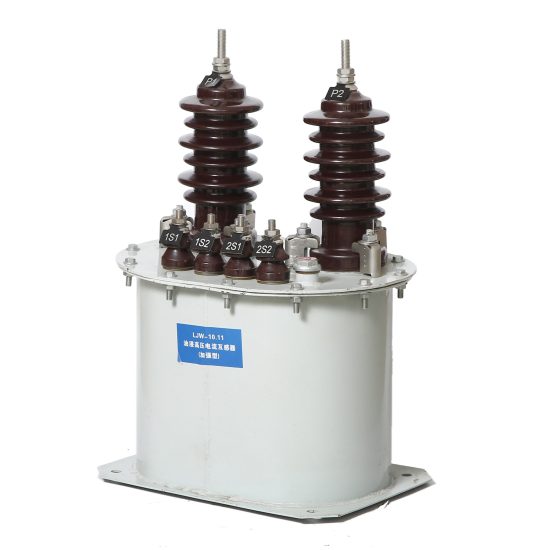
JWD-10 11kV Cast-Resin Current Transformer for Substation Metering and Protection – IEC 61869-2 Certified
Introduction to the JWD-10 Current Transformer
The JWD-10 is a high-reliability, cast-resin insulated current transformer (CT) engineered for accurate current measurement and robust protection functions in medium-voltage power systems operating at 11kV (IEC standard) or 10kV (domestic system equivalent). Designed in strict accordance with IEC 61869-2 and GB/T 20840.2, this instrument transformer leverages advanced vacuum pressure impregnation (VPI) epoxy resin technology to deliver superior dielectric performance, environmental resilience, and long-term operational stability.
Operating Principle of Cast-Resin Insulation
The JWD-10 employs a fully cast-resin insulation system where the primary conductor, secondary windings, and magnetic core are encapsulated within a homogeneous matrix of cycloaliphatic epoxy resin under vacuum and pressure conditions. This VPI process eliminates air voids and moisture ingress pathways, ensuring uniform electric field distribution and preventing partial discharge activity even under transient overvoltages. The resin’s high tracking resistance (>600 V per IEC 60112) and excellent thermal conductivity (0.2–0.3 W/m·K) enable stable operation across wide ambient temperature ranges. Unlike oil-filled designs, the solid insulation eliminates fire hazards, leakage risks, and maintenance-intensive fluid monitoring, making it ideal for indoor switchgear and environmentally sensitive outdoor substations.
Advantages Over Oil-Immersed Designs
Compared to traditional oil-immersed CTs, the JWD-10 offers significant operational and safety benefits. Its dry-type construction eliminates flammability concerns, complies with stringent fire safety codes (e.g., IEC 60695), and requires no oil sampling or gas monitoring. The compact mechanical footprint—enabled by high dielectric strength (≥20 kV/mm)—facilitates integration into space-constrained ring main units (RMUs) and metal-enclosed switchgear. Additionally, the absence of liquid insulation prevents performance degradation due to moisture absorption or oxidation, ensuring consistent accuracy over decades. Field data from utility deployments show a mean time between failures (MTBF) exceeding 300,000 hours for cast-resin CTs versus ~180,000 hours for oil types under similar loading conditions.
Typical Applications Overview
The JWD-10 is deployed across diverse infrastructure segments requiring precise current transformation for revenue metering, protective relaying, and SCADA telemetry. Primary use cases include 11kV/10kV distribution substations, industrial plant switchyards, renewable energy collector systems (solar farms, wind parks), and urban underground networks. Its dual-winding configuration supports simultaneous connection to Class 0.5S metering circuits and 5P20 protection relays, eliminating the need for multiple CTs per phase. The unit’s IP54-rated housing withstands dust, rain, and UV exposure, enabling reliable outdoor mounting without additional enclosures.
Technical Specifications
The JWD-10 delivers precision performance through rigorously controlled design parameters aligned with international standards. Below is a comprehensive specification table followed by service condition details.
| Parameter | Value |
|---|---|
| Rated System Voltage (IEC) | 11 kV |
| Rated System Voltage (Domestic) | 10 kV |
| Primary Current Ratings | 50 A to 3000 A (standard); up to 4000 A (custom) |
| Secondary Current | 1 A or 5 A (per IEC 61869-2) |
| Accuracy Classes | Metering: 0.2S, 0.5S; Protection: 5P10, 5P20, 10P10 |
| Rated Burden | 2.5 VA to 30 VA (adjustable per application) |
| Insulation Level (LI/AC) | 75 kV / 28 kV (1 min, 50 Hz) |
| Short-Time Thermal Current | 25 kA for 1 s (Ith) |
| Dynamic Withstand Current | 62.5 kA peak (Idyn) |
| Ambient Temperature Range | −40°C to +55°C |
| Altitude Limit | ≤ 1000 m (derating required above 1000 m) |
| Relative Humidity | ≤ 95% non-condensing |
| Core Material | Grain-Oriented Electrical Steel (GOES), 0.27 mm thickness |
| Insulation System | VPI Cycloaliphatic Epoxy Resin, UL 94 V-0 rated |
Standard Service Conditions
The JWD-10 is rated for continuous operation under IEC 60060-defined standard atmospheric conditions: ambient temperature from −40°C to +55°C, relative humidity up to 95% (non-condensing), and installation altitude not exceeding 1000 meters above sea level. At altitudes between 1000 m and 2000 m, the power frequency withstand voltage must be derated by 1% per 100 m increment. For example, at 1500 m, the AC test voltage reduces from 28 kV to 26.6 kV. The transformer maintains accuracy within ±0.1% of its class rating across the full temperature range due to low thermal expansion coefficient (α ≈ 50 × 10−6/°C) of the epoxy matrix, which minimizes mechanical stress on windings.
Electrical Performance Parameters
Key electrical characteristics include a magnetizing admittance (Ym) of ≤ 0.1 mS at 100% rated current for 0.5S class units, ensuring minimal phase displacement error (< ±10 minutes). The knee-point voltage (Vk) for 5P20 protection cores exceeds 150 V, guaranteeing linear response during fault currents up to 20× rated primary current. Burden tolerance is ±10% of nominal value; deviations beyond this require revalidation of accuracy class compliance. Short-circuit performance is validated per IEC 61869-2 Clause 6.5: the unit withstands 25 kA RMS for 1 second without mechanical damage or insulation failure, with temperature rise limited to 60 K above ambient for copper windings.
Typical Applications
Substation Secondary Metering
In 11kV/10kV distribution substations, the JWD-10 provides revenue-grade current signals to Class 0.5S or 0.2S energy meters. Its low phase error (< ±5 minutes at 100% In) ensures billing accuracy compliant with EN 50470-3 and DL/T 614. Dual secondary windings allow one output to feed the utility meter while another connects to local SCADA RTUs for real-time load monitoring. Installation on busbars or cable terminations in metal-clad switchgear (e.g., Siemens NXAir, ABB UniGear) leverages the CT’s compact 120 mm diameter profile. Field studies show annual energy measurement deviation of < 0.3% over 10 years in temperate climates.
Industrial Power Distribution
Heavy industries—such as steel mills, petrochemical plants, and data centers—deploy the JWD-10 for motor protection and harmonic monitoring. The 5P20 accuracy class ensures relay coordination during high-magnitude faults (e.g., 20× 630 A = 12.6 kA), while the GOES core minimizes hysteresis losses under distorted waveforms (THD ≤ 15%). In arc furnace applications, the CT’s high dynamic withstand (62.5 kA peak) survives electromagnetic forces during short circuits. Integration with digital relays (e.g., SEL-751, GE Multilin) via 1 A secondary outputs reduces burden errors in long cable runs (>50 m).
Renewable Energy Integration
Solar photovoltaic (PV) and wind farm collector systems utilize the JWD-10 for grid synchronization and anti-islanding protection. At 11kV collection points, the CT feeds signals to synchrophasors (PMUs) requiring ±0.2° phase accuracy—achieved via optimized core permeability (μr ≥ 40,000). The cast-resin housing resists salt fog corrosion in coastal installations (per IEC 60068-2-52), critical for offshore wind substations. During cloud-induced irradiance ramps, the low remanence (< 0.8 T) of the GOES core prevents saturation during rapid current transients.
Rural and Suburban Distribution Networks
In pole-mounted or pad-mounted transformers serving residential areas, the JWD-10 enables remote fault detection and load profiling. Its IP54 enclosure withstands monsoon rains and dust storms common in tropical regions. Utilities deploy these CTs with AMI head-end systems for outage management; the 10P10 class provides sufficient saturation margin for legacy electromechanical relays still in use. Cost-effective single-phase units reduce capital expenditure in three-phase delta configurations where neutral monitoring isn’t required.
Urban Underground Networks
For city center cable networks in duct banks or vaults, the JWD-10’s fire-safe (zero halogen) resin meets IEC 60754-2 smoke density requirements. Compact dimensions allow retrofitting into existing manholes without excavation. The unit’s low partial discharge inception voltage (< 5 pC at 1.2 Um/√3) ensures reliability in confined, high-humidity environments where corona could degrade paper-oil insulation.
Compliance with International Standards
IEC 61869-2 Certification Details
The JWD-10 is fully compliant with IEC 61869-2:2012 “Instrument transformers – Part 2: Additional requirements for current transformers.” Certification includes type tests per Clauses 6–8: temperature rise (≤ 60 K for windings), short-circuit withstand (25 kA/1s), and accuracy verification across 1–120% of rated current. Routine tests per Clause 9 cover power frequency withstand (28 kV/1 min), partial discharge (< 10 pC at 1.2 Um/√3), and polarity checks. The manufacturer’s test report includes waveform capture data proving composite error ≤ 10% for 5P20 class at 20× In.
Alignment with GB/T 20840.2
For Chinese domestic markets, the JWD-10 meets GB/T 20840.2-2014, which harmonizes with IEC 61869-2 but specifies tighter tolerances for certain parameters. Notably, GB/T requires knee-point voltage verification for all protection classes (not just special applications per IEC), and mandates impulse withstand testing at 95 kV (vs. IEC’s optional 75 kV LI test). The unit’s 10 kV system rating aligns with China’s nominal distribution voltage, though insulation levels remain identical to the 11 kV IEC version due to shared maximum operating voltage (Um = 12 kV).
Key Differences Between IEC and Domestic Standards
While IEC 61869-2 permits 1 A or 5 A secondaries universally, GB/T 20840.2 historically favored 5 A in legacy systems—though modern Chinese utilities now adopt 1 A for new installations to reduce copper costs. Another divergence: GB/T requires mandatory short-time current testing at 31.5 kA/1s for 10 kV CTs in urban grids, whereas IEC bases Ith on network prospective fault levels. The JWD-10 exceeds both by rating Ith = 25 kA (minimum per IEC) and offering 31.5 kA options for GB/T projects. Certification bodies like CEPREI (China) and KEMA (Netherlands) validate conformance through witnessed factory acceptance tests (FATs).
On-Site Testing Procedures
Insulation Resistance Test
Conduct using a 2500 V DC megohmmeter between primary-to-secondary/ground and secondary-to-ground. Minimum acceptable value: 1000 MΩ at 20°C. Correct for temperature using RT = R20 × 2(20−T)/10. Values below 500 MΩ indicate moisture ingress or resin cracking—requiring drying or replacement. Perform before and after power frequency tests to detect insulation degradation.
Turns Ratio Test
Apply 1–5 V AC at 50 Hz to secondary winding; measure induced primary voltage. Calculate ratio as Vp/Vs. Tolerance: ±0.2% for metering classes, ±0.5% for protection. Alternatively, use a dedicated ratio tester injecting 10% In into primary. Discrepancies >1% suggest inter-turn shorts or incorrect tap selection.
Polarity Test
Verify reducing polarity per IEC 61869-2 Figure 3. Apply DC pulse to primary (P1→P2); observe secondary voltage spike direction with oscilloscope. Positive-going spike at S1 confirms correct polarity. Incorrect polarity causes 180° phase shift—critical for differential protection schemes. Acceptance: waveform matches manufacturer’s terminal marking diagram.
Power Frequency Withstand Voltage Test
Apply 28 kV RMS (50 Hz) for 60 seconds between primary and grounded secondary/housing. Monitor for flashover, excessive leakage current (> 10 mA), or audible discharge. Use a calibrated sphere gap or HV divider for measurement. Reduce voltage gradually post-test to avoid resonant overvoltages. Failure indicates voids in resin or surface contamination.
Short-Circuit Test (for CT)
Inject 100–120% of rated primary current into short-circuited secondary. Measure secondary current with calibrated shunt; verify linearity and absence of saturation. For 5P20 class, repeat at 20× In (e.g., 12.6 kA for 630 A unit) for 1 second—monitoring for excessive temperature rise or mechanical vibration. Post-test insulation resistance must not drop >20% from pre-test value.
Preventive Maintenance Guide
Periodic Inspection Protocol
Annual visual inspections should check for: (1) surface cracks or tracking on resin housing, (2) terminal corrosion or loose connections (torque: 15 N·m for M8 studs), (3) discoloration indicating overheating, and (4) accumulation of conductive dust near terminals. Clean with lint-free cloth dampened with isopropyl alcohol; never use abrasive cleaners. In coastal areas, inspect for salt deposits quarterly. Record infrared thermography readings—differential >10°C between phases warrants investigation.
Maintenance Intervals and Fault Diagnosis
Adhere to the following schedule:
| Interval | Action |
|---|---|
| 1 year | Visual inspection, IR scan, insulation resistance test |
| 5 years | Full suite of on-site tests (ratio, polarity, withstand) |
| 10 years | Partial discharge measurement (if available) |
| After fault | Mandatory short-circuit and insulation tests |
Common faults include open-circuited secondaries (causing dangerous overvoltages), core saturation from DC offset, and moisture-induced tracking. Diagnose open circuits via infinite insulation resistance between S1–S2. Saturation manifests as distorted secondary waveform during normal load—remedy by verifying burden impedance.
Conclusion
The JWD-10 11kV cast-resin current transformer represents a benchmark in medium-voltage instrumentation, combining IEC 61869-2 and GB/T 20840.2 compliance with field-proven reliability. Its VPI epoxy resin insulation system eliminates the fire, environmental, and maintenance liabilities inherent in oil-filled alternatives, while the GOES silicon steel core ensures metrological precision across metering (0.2S/0.5S) and protection (5P20/10P10) applications. Rigorous type testing validates performance under extreme electrical stresses—including 25 kA short-circuit currents and 75 kV lightning impulses—making it suitable for the most demanding utility and industrial environments.
Deployed globally in substations, renewable plants, and urban networks, the JWD-10 delivers consistent accuracy over an expected service life of 25–30 years. Its dual-winding flexibility, compact form factor, and IP54 environmental rating reduce lifecycle costs while enhancing grid observability and protection coordination. For engineers specifying instrumentation in 11kV/10kV systems, the JWD-10 provides a technically superior, standards-compliant solution that future-proofs infrastructure against evolving regulatory and operational demands.