Contenido del artículo
LA-10Q 11kV Cast-Resin Current Transformer for Substation Metering and Protection – IEC 61869-2 Certified
Introduction to the LA-10Q Current Transformer
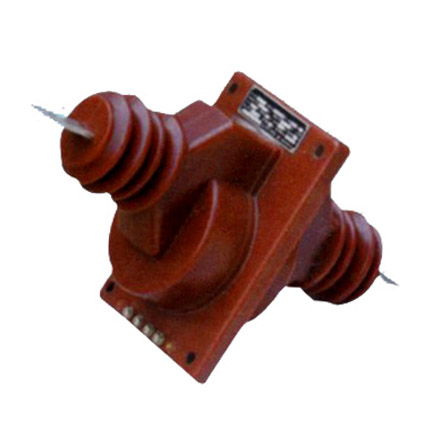
The LA-10Q is a high-reliability, cast-resin insulated current transformer (CT) engineered for accurate current measurement and robust protection functionality in medium-voltage power systems operating at 11kV (IEC standard), equivalent to 10kV in domestic Chinese networks. Designed in strict accordance with IEC 61869-2 and GB/T 20840.2, this instrument transformer leverages advanced vacuum pressure impregnation (VPI) epoxy resin technology to deliver superior dielectric performance, environmental resilience, and long-term operational stability.
Operating Principle of Cast-Resin Insulation
Cast-resin insulation in the LA-10Q utilizes a two-component cycloaliphatic epoxy system processed under vacuum and pressure to eliminate air voids and moisture ingress. This VPI technique ensures complete impregnation of the primary conductor, secondary windings, and the grain-oriented electrical steel (GOES) core. The resulting monolithic structure provides a dielectric strength exceeding 42 kV rms for 1 minute (power frequency withstand voltage), as required by IEC 61869-2 for 11kV class equipment. Unlike oil-filled alternatives, the solid resin matrix eliminates fire hazards, leakage risks, and maintenance associated with liquid insulation. Thermal conductivity of the cured resin (~0.8 W/m·K) facilitates efficient heat dissipation during continuous or transient overcurrent conditions, maintaining winding temperature rise within permissible limits (≤60 K above ambient at rated current).
Advantages Over Oil-Immersed Designs
The LA-10Q’s cast-resin construction offers significant operational and safety advantages compared to traditional oil-immersed CTs. First, it is inherently non-flammable, making it suitable for indoor substations, urban installations, and environments with stringent fire codes. Second, the absence of liquid insulation eliminates the need for oil sampling, level monitoring, or gasket replacement—reducing lifecycle costs by up to 40% over a 25-year service life. Third, the compact mechanical design allows for direct mounting on busbars or switchgear without external tanks, saving valuable footprint space. Additionally, the resin’s hydrophobic nature prevents surface tracking in high-humidity or coastal environments, ensuring consistent performance even under pollution severity class III (IEC 60815). Finally, the LA-10Q exhibits lower partial discharge levels (<5 pC at 1.2 × Um/√3), enhancing long-term insulation integrity and reducing risk of premature failure.
Typical Applications Overview
The LA-10Q is deployed across diverse power infrastructure segments requiring precise current transformation for metering accuracy and dependable relay coordination. Primary use cases include 11kV/10kV distribution substations (both indoor GIS and outdoor AIS configurations), industrial plant switchyards, renewable energy interconnection points (e.g., solar farms and wind turbine step-up transformers), and utility-owned ring main units (RMUs). Its dual-winding configuration supports simultaneous connection to revenue-grade kWh meters (Class 0.5S or 0.2S) and protective relays (Class 5P10 or 5P20), enabling integrated monitoring and fault isolation without compromising either function. The transformer’s robust mechanical design also accommodates seismic zones up to 0.3g (per IEC 60068-2-6), making it suitable for earthquake-prone regions.
Technical Specifications
The LA-10Q current transformer is engineered to meet exacting performance criteria under standardized and real-world operating conditions. Below is a comprehensive specification table followed by detailed environmental and electrical parameters.
| Parameter | Value |
|---|---|
| Rated System Voltage (Um) | 12 kV (IEC), 11.5 kV (GB) |
| Primary Voltage Class | 11 kV (IEC), 10 kV (Domestic) |
| Primary Current (Ip) | 50 A to 3000 A (standard); customizable up to 4000 A |
| Secondary Current (Is) | 1 A or 5 A (user-selectable) |
| Current Ratio Tolerance | ±0.2% for metering; ±1.0% for protection (at 100% In) |
| Accuracy Class (Metering) | 0.2S, 0.5S (per IEC 61869-2) |
| Accuracy Class (Protection) | 5P10, 5P15, 5P20 (saturation factor ≥10–20× In) |
| Rated Burden (VA) | 5, 10, 15, 20, 30 VA (per winding) |
| Insulation Level (Power Freq.) | 28 kV rms, 1 min |
| Lightning Impulse Withstand | 75 kV peak (1.2/50 μs) |
| Core Material | Grain-Oriented Electrical Steel (GOES), M4 grade |
| Partial Discharge | <5 pC at 1.2 × Um/√3 |
| Temperature Rise | ≤60 K (at rated current, 40°C ambient) |
| Polarity | Reducing polarity (standard) |
Standard Service Conditions
The LA-10Q is rated for operation under IEC 60076-11 and GB/T 11022 standard service conditions: ambient temperature range from -40°C to +40°C, relative humidity up to 95% (non-condensing), and installation altitude ≤1000 m above sea level. For altitudes between 1000 m and 3000 m, derating factors apply per IEC 60076-11—specifically, a 1% reduction in rated voltage per 100 m above 1000 m. The transformer is designed for both indoor and outdoor use, with UV-stabilized resin housing that resists degradation under prolonged solar exposure. In coastal or industrial atmospheres (pollution severity class II–III), creepage distance is ≥20 mm/kV (phase-to-ground), ensuring reliable flashover performance during wet or contaminated conditions.
Electrical Performance Parameters
Key electrical characteristics are validated through factory testing per IEC 61869-2. The metering winding achieves phase error ≤±10 minutes and ratio error ≤±0.2% at 20–120% of rated current for Class 0.2S. Protection windings maintain composite error ≤5% at specified accuracy limit factor (e.g., 20× In for 5P20). The GOES core exhibits low hysteresis loss (<1.2 W/kg at 1.7 T, 50 Hz) and high permeability (>1500), minimizing excitation current and improving transient response during fault inception. Short-time thermal withstand capability is 25 kA for 1 second (or 40 kA for 0.5 s), verified via short-circuit test with symmetrical current injection. Dynamic withstand is rated at 62.5 kA peak (2.5 × Ith), ensuring mechanical integrity during severe asymmetrical faults.
Typical Applications
The LA-10Q current transformer serves critical roles across modern power systems where precision, reliability, and compliance are non-negotiable.
Substation Secondary Metering
In 11kV distribution substations, the LA-10Q provides high-fidelity current signals to revenue metering systems. Its Class 0.2S or 0.5S accuracy ensures billing compliance with regulatory standards (e.g., ENTSO-E or China’s DL/T 448). The dual-winding design allows one output to feed a smart meter while the other connects to SCADA RTUs for remote load profiling. For example, in a municipal utility substation in Guangzhou, LA-10Q units with 600/5 A ratio and 10 VA burden supply data to AMI systems with <0.3% cumulative error over 12 months—critical for detecting energy theft or unbalanced loading.
Industrial Power Distribution
Heavy industries such as steel mills, chemical plants, and data centers rely on the LA-10Q for motor protection and harmonic monitoring. The transformer’s robust core handles distorted waveforms (THD up to 15%) without saturation, thanks to adequate core cross-section and air-gap-free design. In a semiconductor fab in Shanghai, LA-10Q CTs with 2000/1 A ratio feed differential relays (e.g., SEL-351) to protect 10 MVA rectifier transformers. The 5P20 protection class ensures relay operation remains secure during 20× overload transients common in arc furnace startups.
Renewable Energy Integration
Solar and wind farms require CTs that perform reliably under variable generation profiles and frequent switching transients. The LA-10Q’s fast magnetic response (rise time <1 ms) captures rapid current changes during cloud-induced PV output swings or wind gust events. At a 50 MW solar plant in Xinjiang, LA-10Q units monitor feeder currents for anti-islanding protection and reactive power control. Their outdoor-rated resin housing withstands diurnal temperature swings (-30°C to +50°C) and sand abrasion without cracking or tracking.
Rural and Suburban Distribution Networks
In remote or lightly loaded networks, the LA-10Q enables accurate low-current measurement down to 1% of rated primary current—essential for detecting small ground faults or tampering. Units with 100/5 A ratio and Class 0.5S are installed on pole-mounted RMUs across rural Sichuan, feeding data to distribution automation terminals (DATs). The maintenance-free design reduces outage time in hard-to-access locations, while the 30-year expected service life aligns with grid modernization cycles.
Urban Ring Main Units (RMUs)
Compact city substations demand space-efficient, fire-safe CTs. The LA-10Q’s cylindrical profile (diameter: 120 mm; height: 280 mm) fits within SF6-insulated RMUs without clearance issues. In Beijing’s underground 10kV network, these CTs provide inputs to digital relays (e.g., Siemens 7SJ62) for cable fault localization. Their low partial discharge ensures compatibility with sensitive electronic protection schemes in confined metallic enclosures.
Compliance with International Standards
The LA-10Q is certified to both global and national standards, ensuring interoperability and regulatory acceptance worldwide.
IEC 61869-2 Certification Details
IEC 61869-2 governs the performance, testing, and marking requirements for inductive current transformers. The LA-10Q complies fully with Clauses 5–10, including: defined accuracy classes (0.1 to 5P), burden ratings, temperature rise limits, and short-circuit withstand. Factory tests include routine (100% units): insulation resistance (>1000 MΩ at 2500 V DC), turns ratio verification (±0.2%), polarity check, and power frequency withstand (28 kV, 1 min). Type tests (per batch) cover temperature rise, short-time current, and lightning impulse. The certification is issued by an ISO/IEC 17025-accredited lab, with test reports traceable to BIPM standards.
Alignment with GB/T 20840.2
GB/T 20840.2 is China’s national adoption of IEC 61869-2, with minor deviations in pollution creepage and altitude correction. The LA-10Q meets all GB-specific requirements: minimum creepage distance of 25 mm/kV for outdoor use, and thermal withstand of 25 kA/1s (vs. IEC’s 20 kA/1s for some legacy designs). It carries the CQC mark and is listed in the State Grid Corporation’s qualified supplier database (SGCC Q/GDW 1375 series). Notably, GB/T 20840.2 mandates stricter partial discharge limits (<3 pC for Class 0.2S), which the LA-10Q achieves through optimized resin curing cycles.
Key Differences Between IEC and Domestic Standards
While harmonized, IEC 61869-2 and GB/T 20840.2 exhibit nuanced differences. IEC permits 1 A or 5 A secondary currents universally; GB historically favored 5 A but now accepts 1 A for digital systems. IEC defines accuracy limit factor (ALF) based on symmetrical current; GB includes asymmetrical offset considerations for protection classes. Environmental testing under GB includes salt fog (48 h, 5% NaCl) for coastal variants—a requirement not explicit in IEC. The LA-10Q is dual-certified, with test protocols covering both regimes.
On-Site Testing Procedures
Post-installation verification ensures the LA-10Q performs as specified under actual site conditions.
Insulation Resistance Test
Conducted using a 2500 V DC megohmmeter between primary-to-secondary, primary-to-ground, and secondary-to-ground. Acceptance criterion: ≥1000 MΩ at 20°C. Temperature correction applies per IEEE 43: Rcorr = Rmeas × 2(40−T)/10. Low readings indicate moisture ingress or resin microcracks—requiring drying or replacement. Test duration: 1 minute after stabilization.
Turns Ratio Test
Performed with a dedicated CT analyzer (e.g., Omicron CT Analyzer) injecting 1–10 A into the primary. Measured secondary current is compared to theoretical ratio. Tolerance: ±0.2% for metering windings, ±1.0% for protection. Deviations >2% suggest turn-to-turn shorts or incorrect tap selection. Always de-energize adjacent circuits to avoid induced voltages.
Polarity Verification
Using the DC kick method: apply 6–12 V DC to primary (P1+ to P2−); observe momentary deflection on analog ammeter connected to secondary (S1 to S2). Positive kick confirms reducing polarity. Digital relays may auto-detect polarity via phasor measurement—but manual verification is mandatory per IEC 61869-2 Annex D.
Power Frequency Withstand Voltage Test
Apply 28 kV rms (50 Hz) for 1 minute between primary and grounded secondary/core. Leakage current must remain <1 mA. Conducted only if factory test records are unavailable or after major maintenance. Use calibrated HV test set with automatic trip at 5 mA. Ensure all secondary terminals are shorted and grounded during test.
Short-Circuit Test (for CTs)
Unlike VTs, CTs undergo short-circuit validation by injecting rated short-time current (e.g., 25 kA for 1 s) through primary while secondaries are shorted. Verify no mechanical deformation, excessive heating, or insulation failure. Typically performed only during type testing—but field simulation using portable fault injectors can validate relay coordination settings.
Preventive Maintenance Guide
Although cast-resin CTs are largely maintenance-free, periodic checks extend service life and prevent unexpected failures.
Annual Visual and Functional Inspection
Inspect for: surface cracks, UV discoloration, terminal corrosion, or tracking marks. Clean with dry cloth—never solvents. Verify secondary wiring tightness (torque: 2.5 N·m for M6 terminals). Perform insulation resistance and ratio tests annually in critical applications (e.g., hospitals, data centers). Record baseline values to detect degradation trends. In polluted environments, wash housing with deionized water every 2 years.
Five-Year Comprehensive Maintenance
Every 60 months, conduct full suite of tests: partial discharge mapping (<10 pC acceptable), thermal imaging under load (ΔT <5 K between phases), and burden verification. Replace secondary terminal blocks if oxidation exceeds 20% contact area. Check mounting hardware for loosening due to thermal cycling. Update asset management records with test results. For units in seismic zones, inspect base welds for fatigue cracks.
Maintenance Intervals and Fault Diagnosis
| Interval | Action | Fault Indicator |
|---|---|---|
| Annually | Visual + IR + Ratio | Ratio error >1%, hot spot >70°C |
| 5 Years | PD + Burden + Torque | PD >15 pC, burden mismatch |
| After Fault | Full electrical test | Relay misoperation, blown fuses |
Common faults include open-circuited secondaries (causing dangerous overvoltage), core saturation from DC offset, or moisture-induced tracking. Never operate with secondary open—always short before disconnecting meters.
Conclusion
The LA-10Q 11kV cast-resin current transformer represents a benchmark in medium-voltage instrumentation, combining IEC 61869-2 and GB/T 20840.2 compliance with field-proven reliability. Its VPI epoxy resin insulation eliminates fire and environmental hazards inherent in oil-filled designs, while the GOES silicon steel core ensures metrological precision across metering (Class 0.2S/0.5S) and protection (5P10–5P20) applications. Rigorous factory and on-site testing protocols guarantee performance under thermal, dielectric, and mechanical stress—including short-circuit withstand up to 25 kA/1s and lightning impulse resilience at 75 kV. Deployed globally in substations, industrial facilities, and renewable energy sites, the LA-10Q delivers consistent accuracy even in harsh climates, with minimal maintenance requirements. Its expected service life of 25–30 years aligns with modern grid asset management strategies, offering utilities and industrial users a cost-effective, future-ready solution for current measurement and system protection. As power networks evolve toward digitalization and distributed generation, the LA-10Q’s compatibility with smart meters, digital relays, and SCADA systems ensures seamless integration into next-generation infrastructure.