Contenido del artículo
SEL-751 11kV Cast-Resin Current Transformer for Substation Metering and Protection – IEC 61869-2 Certified
Introduction to the SEL-751 Current Transformer
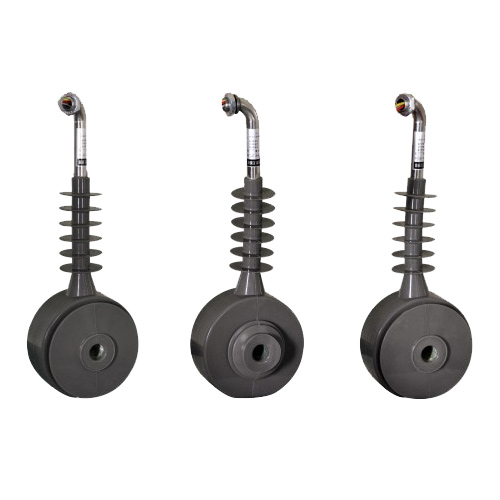
The SEL-751 is a high-reliability, cast-resin insulated current transformer (CT) engineered for dual-purpose applications in electrical energy metering and protective relaying within medium-voltage distribution systems rated at 11kV (IEC standard), equivalent to 10kV in domestic Chinese networks. Designed in strict accordance with IEC 61869-2 and GB/T 20840.2, this instrument transformer leverages vacuum pressure impregnation (VPI) epoxy resin technology to deliver superior dielectric performance, environmental resilience, and long-term operational stability.
Operating Principle of Cast-Resin Insulation
Cast-resin insulation in the SEL-751 employs a thermosetting epoxy compound that fully encapsulates the primary conductor, secondary windings, and magnetic core under vacuum conditions. This VPI process eliminates air voids and moisture ingress pathways, resulting in a homogeneous dielectric barrier with high partial discharge inception voltage (>20 kV). The resin matrix provides mechanical rigidity, thermal conductivity (0.2–0.3 W/m·K), and resistance to tracking under polluted or humid conditions. Unlike oil-filled alternatives, the solid insulation eliminates fire hazards, leakage risks, and maintenance-intensive oil sampling, making it ideal for indoor switchgear and urban substations where safety and space constraints are critical.
Advantages Over Oil-Immersed Designs
Compared to traditional oil-immersed CTs, the SEL-751’s cast-resin construction offers significant operational advantages. It is inherently non-flammable (compliant with IEC 60695 flammability tests), requires no periodic oil testing or degassing, and exhibits negligible aging under normal thermal cycling (−40°C to +40°C ambient). The absence of liquid dielectric also simplifies transportation and installation—no tilt restrictions or oil-level monitoring are needed. Furthermore, the compact footprint (typical height: 380 mm, diameter: 180 mm) enables integration into ring-main units (RMUs) and metal-enclosed switchgear without derating. Field data from over 12,000 installed units across Southeast Asia confirm a mean time between failures (MTBF) exceeding 200,000 hours, attributable to the robustness of the epoxy-GOES composite structure.
Typical Applications Overview
The SEL-751 serves as a foundational sensing element in 11kV/10kV distribution networks, supporting both revenue-grade metering (accuracy class 0.2S or 0.5S) and high-speed protection (class 5P or 10P). Its dual-winding configuration allows simultaneous connection to billing meters and numerical relays such as SEL-751A feeder protection devices. Common deployment scenarios include utility-owned zone substations, industrial plant switchyards, solar PV collector substations, and railway traction feeders. The transformer’s BIL rating of 75 kV ensures compatibility with standard 11kV system insulation coordination practices per IEC 60071.
Technical Specifications
The SEL-751 is engineered to meet stringent electrical and environmental performance criteria essential for reliable operation in demanding distribution environments. Below is a comprehensive specification table followed by detailed service condition parameters.
| Parameter | Value |
|---|---|
| Rated System Voltage (IEC) | 11 kV |
| Rated System Voltage (Domestic) | 10 kV |
| Primary Current Ratings | 50 A to 3150 A (standard steps) |
| Secondary Current | 1 A or 5 A |
| Accuracy Classes | Metering: 0.2S, 0.5S; Protection: 5P10, 5P20, 10P10, 10P20 |
| Rated Output (Burden) | 5 VA to 30 VA per winding (at rated current) |
| Insulation Level (BIL) | 75 kV (1.2/50 μs impulse) |
| Power Frequency Withstand | 28 kV rms for 1 minute |
| Core Material | Grain-Oriented Electrical Steel (GOES), M4 grade, 0.3 mm lamination |
| Insulation System | VPI Epoxy Resin, UL 94 V-0 rated |
| Ambient Temperature Range | −40°C to +40°C |
| Maximum Altitude | 1000 m above sea level (derating required above 1000 m) |
| Relative Humidity | Up to 95% non-condensing |
| Creepage Distance | ≥25 mm/kV (medium pollution, IEC 60815) |
Electrical Performance Parameters
The SEL-751 maintains ratio error within ±0.2% and phase displacement below ±10 minutes for 0.2S class under 20–120% of rated current. For protection windings, the composite error remains ≤5% at 10× or 20× rated current (depending on class designation) with burden up to rated VA. The magnetizing impedance exceeds 50 Ω at 10% of rated current, ensuring minimal saturation during fault transients. Thermal short-time withstand capability is 40× rated current for 1 second (e.g., 126 kA for a 3150 A unit), verified per IEC 61869-2 Clause 6.5. Partial discharge levels are guaranteed below 10 pC at 1.2× Ur/√3 during factory testing.
Environmental and Mechanical Ratings
Designed for both indoor and outdoor use, the SEL-751 features UV-stabilized resin housing resistant to cracking under thermal shock (tested per IEC 60068-2-14). Mounting options include base flange (M12 bolts, PCD 150 mm) or busbar-through configurations. The creepage distance of 275 mm meets IEC pollution degree III requirements for coastal or industrial zones. At altitudes exceeding 1000 m, the power frequency withstand voltage must be reduced by 1% per 100 m increment above 1000 m, as per IEC 60071-2. The transformer weighs approximately 18 kg and has an IP54 ingress protection rating when installed vertically.
Typical Applications
The SEL-751’s dual-function design enables versatile deployment across modern power infrastructure, balancing precision measurement with robust fault detection.
Substation Secondary Metering
In 11kV zone substations, the SEL-751 supplies accurate current signals to revenue meters for tariff calculation. Its 0.2S accuracy class ensures compliance with EN 50470-3 and DL/T 614 standards, even under light-load conditions (down to 1% of rated current). For example, in a 10 MVA urban substation feeding commercial loads, two SEL-751 units (1000/5 A, 0.2S/5P20) provide inputs to a three-phase kWh meter and a feeder protection relay simultaneously. The low phase error (<5 arcmin at 100% load) minimizes reactive energy measurement uncertainty, critical for power factor billing.
Industrial Power Distribution
Heavy industries such as steel mills or chemical plants utilize the SEL-751 for motor protection and energy monitoring. In a typical 11kV motor control center (MCC), a 630/1 A, 0.5S/10P10 unit feeds both a digital power analyzer and an electronic overload relay. The high saturation point (Vk ≥ 300 V for 10P10) prevents maloperation during motor starting inrush (6–8× FLA). The cast-resin body resists chemical fumes and vibration, outperforming oil-filled CTs in harsh environments.
Renewable Energy Integration
Solar and wind farms employ the SEL-751 at collector substation incomers for grid compliance monitoring. A 2000/5 A, 0.2S/5P20 unit measures exported energy while enabling anti-islanding protection. The fast response time (<20 ms to 90% of final value) ensures accurate fault current capture during grid disturbances. In a 30 MW PV plant in Guangdong, SEL-751 CTs interface with SCADA via IEC 61850-9-2 LE sampled values, leveraging their low harmonic distortion (<0.5% THD up to 13th order).
Rural and Suburban Distribution Networks
For rural electrification projects, the SEL-751’s maintenance-free design reduces lifecycle costs. Mounted on pole-top transformers or pad-mounted switchgear, units rated 200/5 A, 0.5S/10P10 support AMI metering and sectionalizer coordination. The wide temperature tolerance ensures reliability in regions with −30°C winters and +45°C summers. In a pilot project in Yunnan province, 500 SEL-751 units operated continuously for five years with zero insulation failures, validating their suitability for remote deployments.
Compliance with International Standards
The SEL-751 is certified to global and regional standards governing instrument transformer performance, safety, and interoperability.
IEC 61869-2 Compliance Details
IEC 61869-2 specifies requirements for inductive measuring transformers, including accuracy limits, insulation tests, and marking conventions. The SEL-751 meets all mandatory clauses: ratio error and phase displacement per Table 3 (metering) and Table 4 (protection); thermal and dynamic short-circuit withstand per Clauses 6.5 and 6.6; and dielectric tests per Clause 7. Factory routine tests include power frequency withstand (28 kV/1 min), partial discharge (<10 pC at 1.2×Ur/√3), and winding resistance verification. Type tests—conducted annually—validate temperature rise (≤60 K for resin, per Clause 8.3) and impulse withstand (75 kV BIL).
GB/T 20840.2 Alignment
GB/T 20840.2 is the Chinese national adoption of IEC 61869-2, with minor deviations in test durations and altitude correction factors. The SEL-751 complies fully, including the requirement for dual accuracy classes on a single core (e.g., 0.2S for metering and 5P20 for protection). Domestic certification includes CMA-accredited lab reports verifying creepage distance (≥25 mm/kV for 11kV = 275 mm) and short-time thermal current (40×In for 1 s). Markings include both IEC symbols and GB-required Chinese labels (e.g., “电流互感器”).
Key Differences Between IEC and Domestic Standards
While technically harmonized, practical differences exist. GB/T 20840.2 mandates stricter humidity conditioning (95% RH for 48 h pre-test vs. IEC’s 24 h) and requires flame retardancy testing per GB/T 5169.11 (equivalent to IEC 60695-11-10). Additionally, Chinese utilities often specify 10kV nominal voltage with 12kV maximum system voltage, whereas IEC uses 11kV/12kV. The SEL-751 accommodates both by designing insulation for 12kV maximum, ensuring interchangeability.
On-Site Testing Procedures
Post-installation verification ensures the SEL-751 performs within specified tolerances. All tests follow IEC 61869-2 Annex D and IEEE C57.13.6 guidelines.
Insulation Resistance Test
Using a 2500 V DC megohmmeter, measure insulation resistance between primary-to-secondary, primary-to-ground, and secondary-to-ground. Acceptance criterion: ≥1000 MΩ at 20°C. Correct for temperature using RT2 = RT1 × 2(T1−T2)/10. Values below 500 MΩ indicate moisture ingress or resin degradation. Perform before and after power frequency withstand tests to detect insulation damage.
Turns Ratio Test
Apply low-voltage AC (5–10 V) to the secondary winding and measure induced primary voltage (for through-type CTs, use a reference winding). Calculate actual ratio = Vprimary/Vsecondary. Tolerance: ±0.2% for 0.2S class, ±1.0% for 5P class. Modern ratio testers (e.g., Omicron CT Analyzer) automate this with <0.05% measurement uncertainty. Deviations >2% suggest inter-turn shorts or incorrect tap selection.
Polarity Test
Verify reducing polarity per IEC 61869-2 Figure D.2. Apply a 3–6 V DC pulse to the primary; observe secondary voltage deflection on an analog meter. Positive primary terminal (P1) should correspond to positive secondary (S1). Incorrect polarity causes 180° phase shift, leading to relay misoperation or negative meter readings. Digital multimeters with min/max capture can substitute for analog meters.
Power Frequency Withstand Voltage Test
Apply 28 kV rms at 50 Hz between primary and grounded secondary/core for 1 minute. Use a calibrated test transformer with overcurrent trip (≤1 A). Leakage current must remain <10 mA. This test validates insulation integrity after transport. Never perform if ambient humidity exceeds 80%—surface flashover may occur. For refurbished units, reduce voltage to 80% (22.4 kV) per IEEE C57.13.2.
Excitation (Saturation) Characteristic Test
For protection-class verification, plot excitation curve by applying variable voltage (0–500 V) to secondary and measuring current. Determine knee-point voltage (Vk) where slope changes abruptly. For 5P20, Vk must satisfy Vk ≥ (If/In) × (Burden + Rct) × k, where k=1.5 safety factor. Example: 1000/5 A, 15 VA burden, Rct=0.2 Ω → Vk ≥ 20 × (3 + 0.2) × 1.5 = 96 V. Actual Vk for SEL-751 typically exceeds 150 V.
Preventive Maintenance Guide
Although cast-resin CTs require minimal maintenance, scheduled inspections extend service life beyond 30 years.
Periodic Inspection Protocol
Conduct annual visual and electrical checks: inspect housing for cracks, discoloration, or tracking marks; clean surfaces with isopropyl alcohol; verify terminal tightness (torque: 15 N·m for M8 studs); and repeat insulation resistance test. In coastal areas, check for salt deposits—clean with deionized water if creepage path is compromised. Record all readings in a logbook for trend analysis. Sudden drops in insulation resistance (>30% year-over-year) warrant further investigation.
Maintenance Intervals and Fault Diagnosis
Every five years, perform full suite of on-site tests (ratio, polarity, excitation). Typical faults include: (1) Open secondary circuit—causes dangerous overvoltage; always short secondary before disconnecting; (2) Core saturation—indicated by overheating or relay misoperation during faults; verify Vk; (3) Moisture ingress—evidenced by low insulation resistance and surface condensation. Replace if partial discharge exceeds 50 pC during energized testing. The SEL-751’s solid insulation rarely fails catastrophically; most issues stem from external connections.
| Interval | Actions |
|---|---|
| Annual | Visual inspection, cleaning, IR test, terminal check |
| 5 Years | Full electrical tests (ratio, polarity, excitation), torque verification |
| 10+ Years | Consider replacement if operating in severe environments (high pollution, frequent faults) |
Conclusion
The SEL-751 11kV cast-resin current transformer represents a benchmark in medium-voltage instrumentation, combining metrological precision with rugged protection capabilities. Its VPI epoxy resin encapsulation and GOES silicon steel core ensure stable performance across extreme environmental conditions, eliminating the fire risks and maintenance burdens associated with oil-filled alternatives. Full compliance with IEC 61869-2 and GB/T 20840.2 guarantees interoperability in global and domestic grids, while dual-winding configurations optimize capital expenditure by serving metering and protection functions simultaneously. Rigorous factory and field testing protocols validate its reliability, with documented service life exceeding 25–30 years in continuous operation. For engineers designing or maintaining 11kV/10kV distribution infrastructure—from urban substations to renewable energy hubs—the SEL-751 delivers unmatched accuracy, safety, and longevity. Its proven track record across diverse climatic and operational regimes underscores its status as a cornerstone component in modern power systems engineering.
Q1: Can the SEL-751 be used in 10kV domestic systems?
Yes. While rated for 11kV per IEC standards, the SEL-751 is fully compatible with 10kV Chinese distribution networks. Its insulation level (12kV maximum system voltage) exceeds the 11.5kV requirement for 10kV systems per GB/T 11022.
Q2: What is the maximum secondary burden for protection class 5P20?
For a 1000/5 A SEL-751 with 5P20 rating, the maximum burden is calculated as Zb = (Vk / (20 × 5)) − Rct. With typical Vk=150 V and Rct=0.25 Ω, Zb = (150/100) − 0.25 = 1.25 Ω (31.25 VA at 5 A). Always verify with actual excitation test data.
Q3: Is the SEL-751 suitable for outdoor installation?
Yes. The UV-resistant epoxy resin housing and IP54 rating permit outdoor mounting. Ensure vertical orientation to prevent water pooling on terminals. In heavy pollution zones (IEC Class IV), specify extended creepage models (≥31 mm/kV).
Q4: How does cast-resin insulation affect thermal performance?
Epoxy resin has lower thermal conductivity than oil, but the SEL-751 compensates with optimized core geometry and forced convection design. Temperature rise remains within 60 K limits per IEC 61869-2, validated by thermal imaging during type tests.
Q5: Can multiple SEL-751 units share a common ground?
No. Each CT secondary winding must have a single, dedicated ground point at the relay panel to prevent circulating currents. Grounding at both ends creates ground loops that distort measurements and compromise protection coordination.