Contenido del artículo
IEC 61869-3 Certified 11kV Voltage Transformer RZL-10 for Metering & Protection Applications
Introduction to the RZL-10 Voltage Transformer
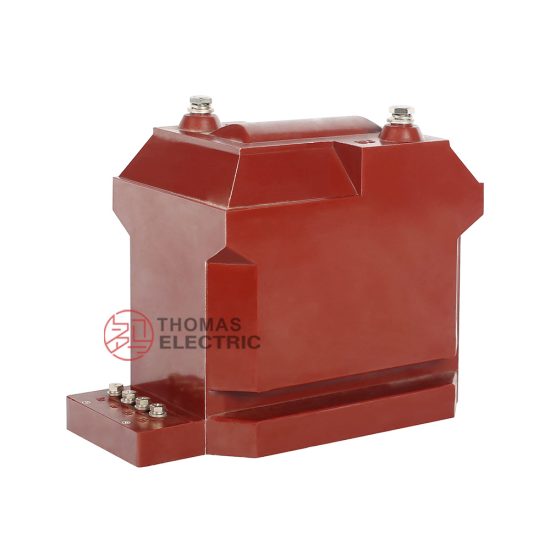
The RZL-10 is a single-phase, cast-resin insulated voltage transformer (VT) engineered for accurate voltage measurement and reliable protective relay operation in medium-voltage distribution systems rated at 11kV (IEC standard), corresponding to the 10kV domestic system voltage commonly used in China and select regional grids. Designed in strict accordance with IEC 61869-3 and GB/T 20840.3, this instrument transformer leverages advanced vacuum pressure impregnation (VPI) epoxy resin technology to deliver superior dielectric performance, environmental resilience, and long-term operational stability.
Operating Principle of Cast-Resin Insulation
Cast-resin insulation in the RZL-10 employs a thermosetting epoxy resin system that fully encapsulates the primary and secondary windings along with the magnetic core. During manufacturing, the assembly undergoes vacuum degassing followed by pressure impregnation to eliminate air voids and moisture—critical factors that compromise dielectric strength. The resulting monolithic structure provides uniform electric field distribution, high partial discharge inception voltage (>20 kV), and excellent tracking resistance (CTI >600). Unlike oil-filled units, the solid resin matrix eliminates fire hazards, leakage risks, and maintenance associated with liquid dielectrics. This makes the RZL-10 suitable for both indoor switchgear and outdoor substations without requiring containment basins or oil monitoring systems.
Advantages Over Oil-Immersed Designs
Compared to traditional oil-immersed voltage transformers, the RZL-10 offers significant technical and operational benefits. Its dry-type construction eliminates flammability concerns, enabling safe deployment in confined spaces such as urban substations, commercial buildings, and underground installations. The absence of oil also removes the need for periodic oil sampling, dielectric testing, or breather maintenance. Furthermore, the thermal stability of epoxy resin allows consistent performance across ambient temperatures from -40°C to +40°C, with minimal aging effects over decades of service. The compact footprint—typically 30% smaller than equivalent oil-filled units—facilitates integration into modern compact switchgear like RMU (Ring Main Units) and GIS (Gas-Insulated Switchgear) bays. Additionally, the RZL-10 exhibits lower susceptibility to moisture ingress due to its hermetically sealed resin body, ensuring stable accuracy even in high-humidity coastal or tropical environments.
Typical Applications Overview
The RZL-10 is primarily deployed in 11kV (10kV nominal) distribution networks where precise voltage transformation is required for revenue metering, power quality monitoring, and protective relaying. Common installations include utility-owned primary substations, industrial plant switchyards, renewable energy collector substations (e.g., solar farms and wind parks), and municipal distribution feeders. Its dual-winding configuration supports simultaneous connection to metering circuits (Class 0.2 or 0.5) and protection relays (Class 3P or 6P), eliminating the need for separate VTs. The transformer’s robust mechanical design withstands seismic loads up to 0.3g, making it suitable for earthquake-prone regions.
Technical Specifications
The RZL-10 voltage transformer is engineered to meet stringent electrical and environmental performance criteria. Below is a comprehensive specification table aligned with IEC 61869-3 and GB/T 20840.3 requirements.
| Parameter | Value |
|---|---|
| System Voltage (IEC) | 11 kV |
| Nominal System Voltage (Domestic) | 10 kV |
| Rated Primary Voltage | 11,000 / √3 V (for grounded systems) |
| Rated Secondary Voltage | 100 / √3 V or 100 V (configurable) |
| Voltage Ratio | 11,000/√3 : 100/√3 V or 11,000/√3 : 100 V |
| Accuracy Class (Metering) | 0.2, 0.5 |
| Accuracy Class (Protection) | 3P, 6P |
| Rated Output (per burden class) | 10–100 VA (metering), 50–200 VA (protection) |
| Insulation Level (LI/AC) | 75 kV / 28 kV (1 min) |
| Partial Discharge Level | <10 pC at 1.2 × Ur |
| Core Material | Grain-Oriented Electrical Steel (GOES), 0.27 mm thickness |
| Insulation System | VPI Epoxy Resin (Class F, 155°C) |
| Ambient Temperature Range | -40°C to +40°C |
| Altitude Limit | ≤1,000 m (derating required above) |
| Relative Humidity | Up to 95% non-condensing |
Standard Service Conditions
The RZL-10 is rated for standard service conditions per IEC 61869-3: ambient temperature between -40°C and +40°C, relative humidity up to 95% (non-condensing), and installation altitude not exceeding 1,000 meters above sea level. At altitudes above 1,000 m, the external insulation must be derated by 1% per 100 m increment for both lightning impulse (LI) and power frequency withstand (AC) tests. For example, at 2,000 m, the effective LI withstand drops from 75 kV to 67.5 kV. The transformer is designed for continuous operation under unbalanced system conditions and can tolerate temporary overvoltages up to 1.2 × Ur for 30 seconds without degradation. It is suitable for both indoor and outdoor mounting, with UV-stabilized resin formulation preventing surface cracking under prolonged solar exposure.
Electrical Performance Characteristics
Key electrical parameters ensure metrological integrity and protection reliability. The voltage error at rated burden and 0.8–1.2 × Ur must remain within ±0.2% for Class 0.2 and ±0.5% for Class 0.5. Phase displacement is limited to ±10 minutes for Class 0.2 and ±20 minutes for Class 0.5. For protection classes, composite error at rated accuracy limit factor (ALF) must not exceed 3% (3P) or 6% (6P). The RZL-10 typically features two independent secondary windings—one dedicated to metering (e.g., 0.2/10 VA) and another to protection (e.g., 3P/50 VA)—wired with reducing polarity (H1 and X1 terminals on the same side). Burden compatibility ranges from 2.5 VA to 200 VA, allowing flexible interfacing with digital meters, RTUs, and numerical relays.
Typical Applications
The RZL-10 voltage transformer serves critical roles across diverse power infrastructure segments, leveraging its dual-accuracy capability and environmental robustness.
Substation Secondary Metering
In 11kV primary substations, the RZL-10 provides the reference voltage signal for revenue-grade energy meters compliant with IEC 62053-22. Installed on outgoing feeders or bus sections, it enables accurate billing for industrial consumers and grid interconnection points. The Class 0.2 winding ensures measurement uncertainty below 0.2% under normal load conditions (25–100% of rated current), satisfying regulatory requirements in most jurisdictions. Its low phase displacement minimizes errors in reactive energy measurement, crucial for power factor correction schemes. Integration with AMI (Advanced Metering Infrastructure) systems is seamless due to standardized 100 V or 100/√3 V outputs compatible with modern smart meters.
Industrial Power Distribution
Within large manufacturing facilities, mining operations, or data centers, the RZL-10 monitors internal 10kV distribution networks. It supplies voltage inputs to multifunction power quality analyzers that track harmonics, voltage sags, and flicker per IEC 61000-4-30 Class A standards. Simultaneously, the protection-class winding feeds overvoltage, undervoltage, and directional earth-fault relays (e.g., IEC 61850-compliant IEDs). The transformer’s immunity to electromagnetic interference (EMI) from nearby VFDs or arc furnaces ensures stable relay operation. Its compact size allows retrofitting into legacy switchgear without panel modifications.
Renewable Energy Integration
Solar photovoltaic (PV) and wind farms utilize the RZL-10 at the point of common coupling (PCC) to meet grid code requirements for voltage regulation and fault ride-through (FRT). During grid disturbances, the VT provides real-time voltage magnitude and angle data to inverters and SCADA systems, enabling dynamic reactive power support. The high saturation margin of the GOES core prevents distortion during asymmetric faults, ensuring accurate synchrophasor measurements for wide-area monitoring. In islanded microgrids, it supports droop control algorithms by delivering stable voltage feedback to distributed energy resources (DERs).
Rural and Suburban Distribution Networks
Utility companies deploy the RZL-10 on pole-mounted or pad-mounted transformers in rural electrification projects. Its maintenance-free design reduces lifecycle costs in remote areas with limited technician access. The unit withstands frequent switching transients from capacitor bank energization and lightning-induced surges, thanks to its 75 kV BIL rating. In suburban ring-main networks, it enables automated sectionalizing by providing voltage presence signals to reclosers and sectionalizers, improving outage restoration times. The resin housing resists vandalism and animal intrusion, enhancing reliability in exposed locations.
Compliance with International Standards
The RZL-10 is certified to IEC 61869-3:2011 (“Instrument transformers – Part 3: Additional requirements for inductive voltage transformers”) and fully aligns with the Chinese national standard GB/T 20840.3-2013, which adopts IEC 61869-3 with minor national deviations.
IEC 61869-3 Compliance Details
Compliance with IEC 61869-3 mandates rigorous verification of accuracy, insulation coordination, thermal performance, and short-circuit withstand capability. The RZL-10 undergoes type tests including temperature rise (Δθ ≤ 60 K for windings), short-circuit withstand (withstanding 100 × In for 1 s without damage), and radio interference voltage (RIV) testing (<500 μV at 1.1 × Ur). Accuracy verification follows the comparison method using a reference standard VT traceable to national metrology institutes. The standard requires that voltage error and phase displacement be measured at 25%, 50%, 100%, and 120% of rated voltage under specified burdens. All test reports are archived per ISO/IEC 17025 requirements.
GB/T 20840.3 Alignment and National Deviations
While GB/T 20840.3 mirrors IEC 61869-3 structurally, it includes specific provisions for the Chinese market. Notably, GB/T mandates additional seismic testing per GB/T 13540 (horizontal acceleration 0.2g–0.3g) and requires flame retardancy certification (UL 94 V-0 equivalent). The domestic standard also specifies tighter tolerances for partial discharge levels (<5 pC at 1.2 × Ur) in some provincial grid specifications. However, the core accuracy classes, insulation levels, and terminal markings remain harmonized. Manufacturers must obtain CCC (China Compulsory Certification) for domestic sales, which includes factory audits and sample testing at CNAS-accredited labs.
Testing and Certification Requirements
Certification involves three test categories: type tests (performed once per design), routine tests (100% production), and special tests (upon request). Routine tests for every RZL-10 unit include: power frequency withstand (28 kV, 1 min), partial discharge measurement (<10 pC), turns ratio verification (±0.1% tolerance), and polarity check. Type tests—conducted on prototype batches—include temperature rise, short-circuit, and impulse tests. Third-party certification bodies such as TÜV, SGS, or CEPREI issue IEC 61869-3 compliance certificates valid for five years, subject to annual surveillance audits.
Categorías
- Uncategorized
- Transformadores Combinados
- Caja de Medición de Alta Tensión
- TC de Secuencia Cero
- Transformador de Corriente
- TC de Baja Tensión
- TC de Interior 3kV-12kV
- TC Exteriores 3kV-12kV
- CTS de 15 kV a 24 kV
- TCs de 27,5 kV-40,5 kV
- Transformadores de potencial
- Bobina de Descarga
- Dispositivos de Maniobra
Blog
Recommended Posts


