Article Content
Model-first: LJM-1 11kV Cast-Resin Current Transformer for Substation Metering and Protection – IEC 61869-2 Certified
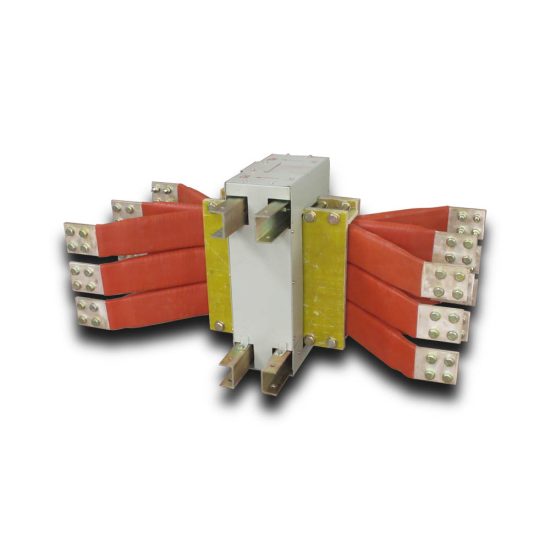
Introduction to the LJM-1 Current Transformer
The LJM-1 is a high-reliability, indoor/outdoor-rated cast-resin current transformer (CT) engineered for accurate current measurement and robust protective relay coordination in medium-voltage power systems operating at 11kV (IEC standard) or 10kV (domestic Chinese grid equivalent). Designed in strict compliance with IEC 61869-2 and GB/T 20840.2, this instrument transformer leverages advanced vacuum pressure impregnation (VPI) epoxy resin technology to deliver superior dielectric strength, environmental resilience, and long-term operational stability.
Unlike traditional oil-immersed CTs, which pose fire hazards, require periodic oil sampling, and are susceptible to leakage, the LJM-1’s solid cast-resin insulation eliminates these risks. The entire magnetic assembly—comprising grain-oriented electrical steel (GOES) laminations—is fully encapsulated in a homogeneous epoxy matrix under vacuum conditions. This process ensures complete void elimination, preventing partial discharge inception even under sustained overvoltage transients or polluted atmospheric conditions.
Typical deployment scenarios include 11kV switchgear bays in urban substations, industrial plant distribution centers, wind/solar farm collector systems, and rural feeder monitoring points. Its dual-purpose design supports both revenue-grade metering (accuracy class 0.2S or 0.5S) and high-speed protection functions (class 5P or 10P), enabling utilities to consolidate instrumentation without compromising performance.
Operating Principle of Cast-Resin Insulation
Cast-resin insulation in the LJM-1 operates on the principle of monolithic dielectric encapsulation. During manufacturing, the wound secondary coil and GOES core are placed in a mold and subjected to vacuum degassing to remove entrapped air. A two-component cycloaliphatic epoxy resin system is then injected under controlled pressure (typically 0.3–0.5 MPa) and cured at elevated temperatures (80–120°C). The resulting solid block exhibits a volume resistivity >1×10¹⁴ Ω·cm, dielectric constant (εr) of 3.8–4.2 at 50 Hz, and dissipation factor <0.005. Crucially, the coefficient of thermal expansion closely matches that of copper and steel, minimizing mechanical stress during thermal cycling from –40°C to +70°C ambient extremes. This construction provides a Basic Insulation Level (BIL) of 75 kV peak for lightning impulse withstand and 28 kV rms for 1-minute power frequency tests—exceeding IEC 61869-2 requirements for 12 kV systems (Um = 12 kV). The absence of liquid or gaseous media also renders the unit maintenance-free for its entire service life.
Advantages Over Oil-Immersed Designs
The LJM-1’s cast-resin architecture offers decisive technical advantages over legacy oil-filled CTs. First, it eliminates flammability: epoxy resin has a UL94 V-0 rating and does not support combustion, making it suitable for indoor installations near personnel or sensitive equipment. Second, there is no risk of oil degradation due to oxidation or moisture ingress, which in oil units leads to reduced breakdown voltage and increased acidity over time. Third, the solid body resists tracking and erosion under pollution (e.g., salt fog, cement dust), critical for coastal or industrial environments.
From an operational standpoint, the LJM-1 requires no oil level checks, dielectric loss measurements, or gas chromatography. Its weight is typically 30–40% lower than equivalent oil units, simplifying handling and mounting on busbars or support insulators. Furthermore, the compact footprint enables retrofitting into existing switchgear panels originally designed for older CT models.
Typical Applications Overview
The LJM-1 serves dual roles across diverse power infrastructure. In utility substations, it feeds kWh meters (class 0.2S) for billing accuracy while simultaneously supplying 5P20-class outputs to overcurrent relays for fault detection within 20 ms. In industrial settings, such as steel mills or data centers, it monitors load profiles and triggers differential protection schemes during internal winding faults. Renewable integration projects use the LJM-1 to measure export/import currents at 11kV interconnection points, ensuring compliance with grid codes requiring ±0.5% measurement uncertainty. Rural distribution networks deploy it on pole-mounted reclosers for single-phase ground-fault detection using residual current summation. Each application leverages the transformer’s stable ratio error (<±0.1% at 100% In) and phase displacement (<±5 minutes).
Technical Specifications
The LJM-1 is engineered to precise electrical and mechanical parameters aligned with international and domestic standards. Below is a representative specification table for a typical configuration:
| Parameter | Value |
|---|---|
| System Voltage (Um) | 12 kV (rated for 11kV IEC / 10kV domestic) |
| Primary Current (Ip) | 50–3000 A (standard); up to 4000 A optional |
| Secondary Current (Is) | 1 A or 5 A (per IEC 61869-2) |
| Current Ratio | e.g., 600/5 A, 1000/1 A (custom ratios available) |
| Metering Accuracy Class | 0.2S, 0.5S (per IEC 61869-2 Table 102) |
| Protection Accuracy Class | 5P10, 5P20, 10P10, 10P20 |
| Rated Burden | 2.5–30 VA (metering); 10–50 VA (protection) |
| Insulation Level | Power Freq: 28 kV rms / 1 min; Lightning Impulse: 75 kV peak |
| Short-Time Thermal Current | 25 kA / 1 s (for 600 A primary); scaled per Ip |
| Dynamic Withstand Current | 62.5 kA peak (2.5 × Ith) |
| Ambient Temperature Range | –40°C to +40°C (outdoor); –5°C to +40°C (indoor) |
| Altitude Limit | ≤1000 m (derating required above 1000 m) |
| Relative Humidity | ≤95% non-condensing |
| Core Material | Grain-Oriented Electrical Steel (GOES), 0.3 mm lamination |
| Insulation System | VPI Cycloaliphatic Epoxy Resin, Class F (155°C) |
Rated Voltage and System Compatibility
The LJM-1 is rated for a highest system voltage (Um) of 12 kV, making it suitable for nominal 11kV IEC-standard networks and 10kV domestic Chinese grids. This dual compatibility arises because 10kV systems in China operate with a maximum continuous voltage of 11.5 kV, well within the 12 kV Um envelope. The transformer’s insulation coordination is validated per IEC 60071-1, ensuring safe operation under temporary overvoltages (TOVs) up to 1.3 p.u. for 1 hour. For installations above 1000 m altitude, the power frequency withstand voltage must be reduced by 1% per 100 m above sea level, as per IEC 60060-1.
Accuracy Classes and Burden Requirements
Metering windings comply with IEC 61869-2 Class 0.2S, guaranteeing ratio error ≤±0.2% and phase displacement ≤±10 minutes at 20–120% of rated current (In). At 1% In, error limits tighten to ±0.75%. Protection windings meet Class 5P20 specifications: composite error ≤5% at 20× In with rated burden. Burden values (e.g., 15 VA) must match connected loads—meters, relays, or pilot wires—to avoid saturation. Exceeding burden increases magnetizing current, distorting secondary output during faults. For example, a 5P20 winding rated at 20 VA will saturate prematurely if connected to a 30 VA load, compromising relay operation.
Environmental and Mechanical Ratings
Designed for both indoor switchgear and outdoor pole mounting, the LJM-1 features UV-stabilized resin and IP54-rated secondary terminal boxes. The creepage distance exceeds 25 mm/kV (minimum 300 mm for 12 kV), satisfying pollution degree III per IEC 60664-1. Mechanical strength is validated through seismic testing (0.5g horizontal acceleration) and vibration resistance (10–55 Hz, 0.35 mm amplitude). Primary terminals accept bolted connections up to M16 size, rated for continuous current and short-circuit forces.
Typical Applications
Substation Secondary Metering
In 11kV/0.4kV urban substations, the LJM-1 provides revenue-grade current signals to digital kWh meters. Configured with 0.2S accuracy and 5 A secondary output, it ensures billing precision even under light-load conditions (e.g., nighttime residential demand at 5% In). The cast-resin body resists electromagnetic interference from adjacent busbars, maintaining signal integrity. Utilities often pair it with LZZBJ9-type VTs for three-phase energy measurement, forming a complete metering core compliant with DL/T 448 regulations.
Industrial Power Distribution
Heavy industries—such as aluminum smelters or chemical plants—deploy the LJM-1 on 11kV motor feeders for overload and short-circuit protection. A typical setup uses dual cores: one 0.5S winding for energy management systems and one 5P20 winding for SEL-751 relays. The transformer withstands harmonic distortion from variable-frequency drives (THD up to 15%) without significant accuracy drift, thanks to low-core-loss GOES material. Its compact size allows installation in confined MCC rooms where oil units would violate fire codes.
Renewable Energy Integration
Solar farms connect 1 MW inverters to 11kV collector buses via LJM-1 CTs. Here, the 1 A secondary output minimizes copper losses over long cable runs to SCADA RTUs. The 0.5S class meets IEEE 1547-2018 requirements for ±1% measurement accuracy at 10–100% power output. During islanding events, the protection winding (10P10) enables rapid disconnection within 2 cycles, preserving grid stability. Epoxy resin’s hydrophobicity prevents performance degradation in humid climates like Southeast Asia.
Rural and Suburban Distribution Networks
In remote areas, pole-mounted LJM-1 units monitor single-phase laterals for theft detection and load balancing. Mounted below reclosers, they feed residual current devices (RCDs) using summation CT technique. The –40°C cold-start capability ensures reliability in northern regions, while the IP54 enclosure resists dust ingress during sandstorms. Maintenance crews appreciate the lack of oil leaks—a common failure mode in legacy units exposed to temperature swings.
Backup Protection in Ring Main Units (RMUs)
Compact RMUs in commercial districts integrate the LJM-1 for earth-fault backup. With a 1000/1 A ratio and 5P10 class, it detects high-impedance faults (>500 Ω) missed by primary relays. The VPI resin prevents moisture absorption during monsoon seasons, avoiding insulation flashovers that plague paper-oil designs. Its 30-year design life reduces lifecycle costs compared to frequent replacements.
Compliance with International Standards
IEC 61869-2 Certification Details
The LJM-1 is fully certified to IEC 61869-2:2012 (“Instrument transformers – Part 2: Additional requirements for current transformers”). This includes validation of accuracy limits under defined burdens, temperature rise tests (Δθ ≤ 60 K for resin), and short-circuit performance per Clause 6.6. Type tests confirm ratio error, phase displacement, and knee-point voltage (e.g., ≥150 V for 5P20 at 1 A secondary). Routine tests on every unit include power frequency withstand (28 kV/1 min), partial discharge (<10 pC at 1.2 Um/√3), and polarity verification.
Alignment with GB/T 20840.2
For the Chinese market, the LJM-1 complies with GB/T 20840.2-2014, which largely harmonizes with IEC 61869-2 but adds specific requirements: mandatory seismic qualification (Class II, 0.2g), stricter partial discharge limits (<5 pC), and domestic burden definitions (e.g., “cos φ = 0.8 lag” instead of IEC’s “resistive-inductive”). The 10kV system compatibility is explicitly addressed, with test voltages referenced to 12 kV Um.
Key Differences Between IEC and Domestic Standards
While IEC 61869-2 permits 1 A or 5 A secondaries universally, GB/T 20840.2 historically favored 5 A in China—though 1 A is now accepted for new installations. IEC allows accuracy verification at 1%, 5%, 20%, 100%, and 120% In, whereas GB requires additional points at 10% and 150%. Environmental testing under GB includes salt fog (96 hours, 5% NaCl) not mandated by IEC. Despite these nuances, the LJM-1’s design envelope accommodates both regimes without modification.
On-Site Testing Procedures
Insulation Resistance Test
Perform using a 2500 V DC megohmmeter between primary-to-secondary/ground and secondary-to-ground. Acceptance criterion: ≥1000 MΩ at 20°C. Correct for temperature using RT = R20 × 2(20–T)/10. Low readings indicate moisture ingress or resin cracking—requiring drying or replacement. Test before energization and after prolonged storage.
Turns Ratio Test
Apply 1–5 V AC to secondary winding; measure induced primary voltage. Calculate ratio as Vp/Vs. Tolerance: ±0.5% of nameplate value. Alternatively, use a dedicated CT analyzer injecting 1–10 A primary current. Deviations >1% suggest turn-to-turn shorts or incorrect tap selection.
Polarity Test
Verify reducing polarity per IEC 61869-2 Figure 101. Connect DC source (+) to P1, (–) to P2; momentary closure should produce positive kick on S1 relative to S2 on a center-zero galvanometer. Incorrect polarity causes watt-hour meter reversal or relay misoperation. Document results with timestamped oscillograms.
Power Frequency Withstand Voltage Test
Apply 28 kV rms (50 Hz) between primary and grounded secondary/enclosure for 1 minute. Use a calibrated test transformer with overcurrent trip (≤5 A). No flashover or disruptive discharge permitted. Reduce voltage gradually post-test to avoid transient overvoltages. Mandatory after transportation or repair.
Excitation (Knee-Point) Test
For protection windings, inject increasing AC voltage (0–300 V) into secondary while measuring current. Plot V-I curve; knee-point is where slope decreases by 45°. For 5P20, knee-point ≥150 V ensures adequate saturation margin at 20× In. Low knee-point indicates core damage or excessive burden.
Preventive Maintenance Guide
Periodic Inspection Protocol
Conduct annual visual inspections: check for resin cracks, terminal corrosion, or tracking marks. Clean surface with isopropyl alcohol if contaminated. Verify torque on primary bolts (M12: 45 N·m; M16: 90 N·m). Inspect secondary wiring for loose connections—high resistance here causes metering errors. Record infrared thermograms during peak load; hotspots >10 K above ambient warrant investigation.
Maintenance Intervals and Fault Diagnosis
| Interval | Action |
|---|---|
| 1 year | Visual inspection, IR scan, insulation resistance |
| 5 years | Full electrical tests (ratio, polarity, excitation) |
| 10 years | Partial discharge measurement (if test equipment available) |
| After fault | Immediate ratio and insulation tests |
Common faults include open-circuited secondaries (causing dangerous overvoltages), core saturation from burden mismatch, and moisture-induced surface leakage. Diagnose ratio errors by comparing against a reference CT; excitation tests isolate core vs. winding issues.
Long-Term Reliability Practices
Never leave secondary windings open during operation—always short-circuit before disconnecting meters. Use burden resistors if relays are removed temporarily. Store spare units vertically in dry, shaded areas; avoid stacking. Replace units showing >20% increase in excitation current over baseline—indicative of aging insulation.
Conclusion
The LJM-1 11kV cast-resin current transformer represents a benchmark in medium-voltage instrumentation, combining IEC 61869-2-certified accuracy with rugged, maintenance-free construction. Its VPI epoxy resin encapsulation and GOES core deliver exceptional dielectric integrity and thermal stability across –40°C to +40°C environments, eliminating the fire risks and upkeep demands of oil-immersed alternatives. Engineered for dual metering (0.2S/0.5S) and protection (5P/10P) roles, it supports critical applications from urban substations to renewable integration points with ratio errors consistently below ±0.1% at rated current.
Compliance with both IEC 61869-2 and GB/T 20840.2 ensures global interoperability, while rigorous type testing—including 75 kV lightning impulse withstand and 25 kA thermal short-circuit validation—guarantees reliability under extreme grid disturbances. Field-proven preventive maintenance protocols extend service life to 25–30 years, significantly reducing total cost of ownership. For engineers specifying instrumentation in 11kV (or 10kV domestic) networks, the LJM-1 offers a technically superior, future-proof solution that aligns with modern grid digitization and safety mandates.