Article Content
High-Performance 11kV Cast-Resin Current Transformer LJ-2 for Metering & Protection per IEC 61869-2
Introduction to the LJ-2 Current Transformer
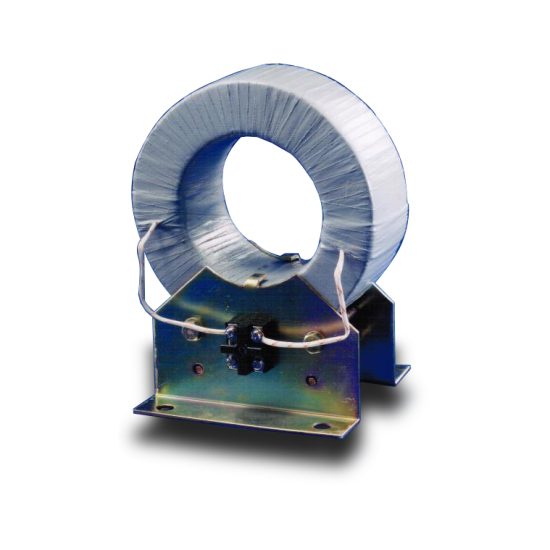
The LJ-2 is a high-accuracy, outdoor/indoor rated cast-resin current transformer (CT) engineered for reliable operation in 11kV (IEC standard) or 10kV (domestic system equivalent) medium-voltage networks. Designed in strict compliance with IEC 61869-2 and GB/T 20840.2, this instrument transformer leverages vacuum pressure impregnation (VPI) epoxy resin technology to provide superior dielectric strength, environmental resilience, and long-term stability. Unlike traditional oil-immersed CTs, the LJ-2 eliminates fire hazards, oil leakage risks, and maintenance-intensive sealing systems, making it ideal for urban substations, industrial facilities, and renewable energy interconnection points where safety and reliability are paramount.
Operating Principle of Cast-Resin Insulation
Cast-resin insulation in the LJ-2 utilizes a two-component cycloaliphatic epoxy resin system processed under vacuum and pressure (VPI). This method ensures complete impregnation of the grain-oriented electrical steel (GOES) core and secondary windings, eliminating air voids that could lead to partial discharge or thermal degradation. The resin cures into a rigid, monolithic structure with a dielectric strength exceeding 20 kV/mm and a comparative tracking index (CTI) >600. This solid insulation system provides consistent performance across temperature cycles from –40°C to +40°C and relative humidity up to 95%, without the need for breathers or conservator tanks. The absence of liquid media also prevents moisture ingress—a common failure mode in oil-filled units—thereby enhancing service life and reducing lifecycle costs.
Advantages Over Oil-Immersed Designs
The LJ-2’s cast-resin construction offers significant operational advantages over oil-immersed CTs. First, it is inherently non-flammable, meeting IEC 60695 flammability requirements and eliminating fire propagation risks in confined switchgear rooms. Second, its hermetically sealed design requires no periodic oil sampling, gas analysis, or gasket replacement, reducing preventive maintenance by up to 70%. Third, the compact mechanical footprint allows for easier integration into ring main units (RMUs) and metal-clad switchgear. Additionally, the thermal time constant of epoxy resin enables better short-circuit withstand capability—tested to 20 kA for 1 second per IEC 61869-2—without core saturation during fault conditions. These attributes make the LJ-2 particularly suitable for smart grid applications where minimal intervention and high availability are critical.
Typical Applications Overview
The LJ-2 serves dual roles in power systems: accurate energy metering and dependable protective relaying. In utility substations, it interfaces with revenue-class meters (Class 0.2S or 0.5S) and digital protective relays (Class 5P or 10P). Its robust design supports installation on overhead lines, cable terminations, and bus ducts in both indoor switchrooms and outdoor pad-mounted enclosures. Common deployment scenarios include 11kV distribution feeders, industrial motor control centers, solar PV collector substations, and railway traction power systems. With a standard burden rating of 15–30 VA and multiple ratio options (e.g., 100/5 A, 400/1 A), the LJ-2 adapts to diverse load profiles while maintaining linearity within ±0.1% for metering classes and ±1% for protection classes under specified operating conditions.
Technical Specifications
The LJ-2 current transformer is engineered to meet stringent electrical and environmental performance criteria. Below is a comprehensive specification table aligned with IEC 61869-2 and GB/T 20840.2:
| Parameter | Value |
|---|---|
| Rated System Voltage (Um) | 11 kV (IEC); 10 kV (GB) |
| Rated Primary Current (Ip) | 50 A to 3000 A (standard steps) |
| Rated Secondary Current (Is) | 1 A or 5 A |
| Accuracy Class (Metering) | 0.2S, 0.5S |
| Accuracy Class (Protection) | 5P10, 5P20, 10P10, 10P20 |
| Rated Output (Burden) | 5 VA, 10 VA, 15 VA, 30 VA |
| Short-Time Thermal Current (Ith) | 20 kA for 1 s (max) |
| Dynamic Withstand Current | 50 kA peak |
| Power Frequency Withstand Voltage | 28 kV rms, 1 min |
| Lightning Impulse Withstand Voltage | 75 kV peak (1.2/50 µs) |
| Insulation Material | VPI cycloaliphatic epoxy resin |
| Magnetic Core Material | Grain-Oriented Electrical Steel (GOES), M4 grade |
| Ambient Temperature Range | –40°C to +40°C |
| Altitude Limit | ≤1000 m above sea level (derating required above) |
| Relative Humidity | Up to 95% non-condensing |
Standard Service Conditions
The LJ-2 is rated for standard service conditions as defined in IEC 61869-2 Clause 4.1. It operates reliably at ambient temperatures between –40°C and +40°C, with a daily average not exceeding +35°C. Relative humidity may reach 95% provided condensation does not occur on the housing surface. Installation altitude must not exceed 1000 m; for sites between 1000–2000 m, the power frequency withstand voltage must be reduced by 1% per 100 m increment. The transformer is designed for continuous operation under unbalanced three-phase systems and can tolerate harmonic distortion up to 15% THD without accuracy degradation beyond class limits. Environmental pollution degree is classified as III per IEC 60664, suitable for industrial atmospheres with conductive dust or chemical exposure.
Core and Winding Design
The magnetic circuit employs M4-grade grain-oriented electrical steel (GOES) laminations, annealed to minimize hysteresis loss and maximize permeability at 50/60 Hz. Core stacking is optimized to reduce eddy current losses, achieving a core loss of ≤0.8 W/kg at 1.5 T flux density. Secondary windings use electrolytic-tough-pitch (ETP) copper, insulated with Class F (155°C) enamel, wound uniformly to ensure low leakage reactance. For multi-ratio configurations, taps are brought out via insulated terminals in a sealed IP54-rated secondary box. The primary conductor is a solid copper or aluminum busbar, sized to carry the rated current continuously without exceeding 65 K temperature rise above ambient. All internal connections are brazed or crimped to prevent loosening under electromagnetic forces during short circuits.
Typical Applications
The LJ-2 current transformer is deployed across a spectrum of medium-voltage infrastructure where precision, safety, and durability are non-negotiable. Its dual-certification to IEC and GB standards enables global deployment while supporting local grid codes.
Substation Secondary Metering
In 11kV distribution substations, the LJ-2 provides revenue-grade current signals to Class 0.2S or 0.5S energy meters. Installed on outgoing feeders, it ensures billing accuracy within ±0.2% error at 1–120% of rated current. The low phase displacement (<±10 minutes) minimizes reactive energy measurement errors. For example, in a municipal utility substation serving 5,000 residential customers, an LJ-2 with 600/5 A ratio and 15 VA burden feeds a smart meter communicating via DLMS/COSEM protocol. The cast-resin housing resists UV degradation and salt fog, critical for coastal installations.
Categories
Blog
Recommended Posts


