Article Content
For Substation Metering & Protection: SZW-10 11kV Cast-Resin Current Transformer per IEC 61869-2
Introduction to the SZW-10 Current Transformer
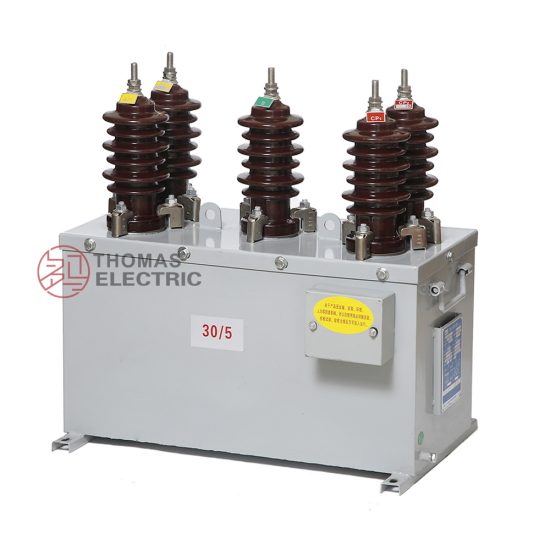
The SZW-10 is a medium-voltage cast-resin current transformer (CT) engineered for reliable operation in 10 kV distribution networks, with an IEC-rated system voltage of 11 kV. Designed in strict compliance with IEC 61869-2 and GB/T 20840.2, this instrument transformer leverages vacuum pressure impregnation (VPI) epoxy resin technology to encapsulate its magnetic core and windings, ensuring long-term dielectric integrity and mechanical robustness. Unlike traditional oil-immersed CTs, the SZW-10 eliminates fire hazards, environmental leakage risks, and maintenance-intensive fluid management, making it ideal for both indoor substations and outdoor switchyards.
Operating Principle and Core Construction
The SZW-10 functions on the principle of electromagnetic induction, where the primary current—typically flowing through a single-turn or multi-turn conductor passing through the central aperture—generates a proportional secondary current in the wound secondary coil. The magnetic circuit is constructed from grain-oriented electrical steel (GOES), specifically grade M4 or equivalent, which exhibits low core loss (<0.8 W/kg at 1.7 T, 50 Hz) and high permeability (>1,500 µr). This minimizes phase angle error and improves ratio accuracy under both steady-state and transient conditions. The primary conductor may be integrated as a bar-type element or configured as a window-type design to accommodate existing busbars, depending on the specified current ratio (e.g., 50/5 A up to 3000/5 A). The entire assembly is fully encapsulated in cycloaliphatic epoxy resin via VPI, which provides uniform insulation thickness, excellent tracking resistance (CTI >600 V), and superior thermal conductivity (0.2–0.3 W/m·K) to dissipate heat generated during continuous or short-circuit loading.
Advantages Over Oil-Immersed Designs
Cast-resin insulation offers significant operational and safety advantages over oil-filled alternatives. First, the SZW-10 is inherently non-flammable, meeting IEC 60695 flammability class V-0, thereby eliminating explosion and fire propagation risks in confined spaces such as urban substations or industrial plants. Second, the solid dielectric is immune to moisture ingress, oxidation, and gas decomposition—common failure modes in oil systems—resulting in a service life exceeding 25 years with minimal degradation. Third, the compact, monolithic housing reduces footprint by up to 30% compared to equivalent oil CTs, facilitating retrofitting in space-constrained installations. Additionally, the absence of oil eliminates the need for periodic sampling, degassing, or leak inspections, reducing lifecycle costs. Environmental compliance is also enhanced, as the unit contains no PCBs or hazardous fluids, aligning with RoHS and REACH directives.
Typical Deployment Scenarios
The SZW-10 is predominantly deployed in 10 kV (IEC 11 kV) radial or ring-main distribution networks serving commercial complexes, manufacturing facilities, utility substations, and renewable energy interconnection points. In urban secondary substations, it provides accurate metering inputs to revenue-class kWh meters (Class 0.5S or 0.2S) while simultaneously feeding protective relays (Class 5P10 or 5P20) for overcurrent and earth-fault detection. In industrial settings, it supports motor protection schemes requiring high saturation margins during inrush events. Its robust construction also makes it suitable for coastal or high-humidity environments where condensation could compromise air-insulated or oil-filled units.
Technical Specifications
The SZW-10 is engineered to deliver precise current transformation under defined electrical and environmental conditions. All parameters adhere to IEC 61869-2 (2012) and GB/T 20840.2 (2013), with verified test reports available upon request.
Rated Electrical Parameters
Key electrical ratings include: rated system voltage Um = 11 kV (IEC standard), corresponding to a domestic 10 kV network; power frequency = 50/60 Hz; primary current ratings from 50 A to 3000 A in standardized steps; secondary current = 1 A or 5 A (user-selectable); rated burden = 2.5 VA to 30 VA per accuracy class; insulation level = 12/28/75 kV (Um/LI/ACW), meaning 12 kV maximum system voltage, 75 kV lightning impulse withstand, and 28 kV power frequency withstand for 1 minute. Accuracy classes are dual-rated—for example, 0.5/5P20—enabling simultaneous use for metering (Class 0.5) and protection (Class 5P20, where 5% composite error at 20× rated current). Ratio tolerance is ±0.25% for metering classes and ±1% for protection classes under reference conditions (23°C, sinusoidal waveform, burden within rated range).
Environmental and Mechanical Ratings
The SZW-10 operates reliably under standard service conditions per IEC 60060-1: ambient temperature range –25°C to +40°C (with derating above +40°C), relative humidity ≤95% non-condensing, altitude ≤1000 m (above which insulation levels must be adjusted per IEC 60071), and pollution degree III (creepage distance ≥25 mm/kV). The housing is UV-stabilized cycloaliphatic epoxy with IP54 ingress protection on the secondary terminal box. Mounting options include flange (M12 bolts, PCD 120 mm) or support brackets for DIN rails or structural frames. The creepage distance between primary and secondary terminals exceeds 300 mm to prevent surface flashover in contaminated environments.
Thermal and Short-Circuit Performance
Thermal stability is ensured through rigorous testing: the unit withstands 1.2× rated primary current continuously without exceeding 60 K temperature rise above ambient (measured by resistance method). For fault conditions, it endures rated short-time thermal current (Ith) of 20 kA for 1 second or 12.5 kA for 3 seconds, with dynamic withstand current (Idyn) of 50 kA peak. These values satisfy typical 10 kV network fault levels in urban and industrial grids. The epoxy matrix maintains structural integrity up to 130°C, well above the 105°C hotspot limit for Class E insulation systems.
Typical Applications
The SZW-10’s dual-accuracy capability and rugged construction enable deployment across diverse power infrastructure segments.
Substation Secondary Metering
In utility-owned 10/0.4 kV distribution substations, the SZW-10 supplies Class 0.2S or 0.5S secondary current to smart meters for billing-grade energy measurement. Its low phase displacement (<±10 minutes at 1–120% In) ensures compliance with EN 50470-1 and DL/T 614 standards. The CT is typically installed on the HV side of the transformer, upstream of the circuit breaker, to capture total substation consumption. Dual-winding variants allow one output for AMI (Advanced Metering Infrastructure) telemetry and another for local display or SCADA integration.
Industrial Power Distribution
Within factories and process plants, the SZW-10 protects critical loads such as large induction motors (≥250 kW), transformers, and capacitor banks. Here, the 5P10 or 5P20 protection winding feeds microprocessor-based relays (e.g., Siemens 7SJ, SEL-751) that require linear response up to 10–20× rated current during motor start-up or downstream faults. The cast-resin body resists chemical vapors and dust common in foundries or chemical plants, unlike oil-filled units that may degrade seals over time. Installation on withdrawable switchgear (e.g., ABB UniGear ZS1) is simplified by the compact window-type design.
Renewable Energy Integration
At solar PV or wind farm collection substations, the SZW-10 monitors bidirectional power flow and provides fault current data for anti-islanding and grid-synchronization relays. Its symmetrical hysteresis loop (achieved via annealed GOES core) ensures consistent accuracy during reverse-power conditions. The unit complies with IEEE 1547 and GB/T 19964 requirements for distributed generation interconnection, particularly regarding harmonic distortion immunity (tested up to 15th harmonic at 5% THD).
Rural and Suburban Distribution Networks
In pole-mounted or pad-mounted RMUs (Ring Main Units) serving residential areas, the SZW-10 enables cost-effective feeder monitoring and earth-fault detection. Its maintenance-free nature is critical in remote locations where site visits are infrequent. The 1 A secondary option reduces copper losses over long cable runs to centralized RTUs (Remote Terminal Units), improving signal fidelity. Withstand tests confirm resilience against switching surges common in lightly loaded rural feeders.
Compliance with International Standards
The SZW-10 is certified to global and regional standards governing instrument transformer performance, safety, and interoperability.
IEC 61869-2 Certification Details
IEC 61869-2 specifies requirements for inductive measuring transformers, including accuracy definitions, test methods, and marking rules. The SZW-10 meets all clauses for indoor/outdoor CTs: ratio error and phase displacement limits per Table 2 (e.g., ±0.5% ratio error for Class 0.5 at 100% In), temperature rise ≤60 K, and insulation coordination per IEC 60071. Type tests include temperature rise, short-circuit, impulse, and partial discharge (<10 pC at 1.2 Um/√3). Routine tests (performed on every unit) cover turns ratio verification (±0.25%), polarity check, and power frequency withstand (28 kV, 1 min). The manufacturer’s test certificate includes traceable calibration data from an ISO/IEC 17025-accredited lab.
Alignment with GB/T 20840.2
GB/T 20840.2 is the Chinese national adoption of IEC 61869-2, with minor deviations in labeling and altitude correction factors. The SZW-10 complies fully, including the requirement for dual marking (10 kV domestic / 11 kV IEC) and mandatory CCC certification for sale in China. Key differences include stricter creepage distance requirements in polluted zones (≥31 mm/kV vs. IEC’s 25 mm/kV) and additional seismic testing (0.3g horizontal acceleration) for earthquake-prone regions. All units destined for the Chinese market undergo supplementary factory acceptance tests (FAT) witnessed by CQC inspectors.
Harmonization of Global and Local Requirements
While IEC 61869-2 focuses on performance, GB/T 20840.2 emphasizes local grid compatibility. The SZW-10 bridges both by incorporating design margins: e.g., insulation levels exceed minimum IEC values by 10% to accommodate Chinese utility practices. Harmonic immunity is validated per both IEC 61000-4-7 and GB/T 14549, ensuring stable operation in grids with nonlinear loads. Documentation packages include bilingual (English/Chinese) test reports, wiring diagrams, and installation manuals to satisfy procurement requirements across ASEAN, Middle East, and Latin American markets.
On-Site Testing Procedures
Post-installation verification ensures the SZW-10 performs within specification before energization.
Insulation Resistance Test
Using a 2500 V DC megohmmeter, measure insulation resistance between primary-to-secondary, primary-to-ground, and secondary-to-ground. Acceptance criteria: ≥1000 MΩ at 20°C. Correct for temperature using RT = R20 × 2(20−T)/10. Values below 500 MΩ indicate moisture ingress or resin cracking and require drying or replacement.
Turns Ratio Test
Apply a low-voltage AC source (5–10 V) to the secondary winding and measure induced primary voltage (for window-type) or inject primary current (1–10 A) and measure secondary current. Calculate actual ratio = Ip/Is. Tolerance: ±0.25% for metering classes, ±1% for protection. Deviations suggest turn-to-turn shorts or incorrect tap selection.
Polarity Verification
Confirm reducing polarity (IEC standard) using a 1.5 V battery and analog ammeter. Momentarily connect (+) to P1 and (−) to P2; the ammeter connected to S1(+) and S2(−) should deflect positively. Incorrect polarity causes relay misoperation and meter reversal.
Power Frequency Withstand Voltage Test
Apply 28 kV RMS at 50 Hz between primary and grounded secondary/housing for 1 minute. Use a calibrated test transformer with overcurrent trip (≤5 mA). No flashover or sustained discharge indicates intact insulation. Reduce voltage gradually post-test to avoid resonant overvoltages.
Short-Circuit Characteristic Test
For protection-class validation, inject 10–20× rated current (e.g., 100 A for 5 A secondary) into the primary and verify secondary current linearity and relay pickup. Composite error must be ≤5% for 5P class. Use a calibrated shunt and oscilloscope to capture waveform distortion during saturation onset.
Preventive Maintenance Guide
Although cast-resin CTs are largely maintenance-free, periodic checks extend service life and prevent unexpected failures.
Annual Visual and Functional Inspection
Inspect for surface cracks, UV degradation (chalking), terminal corrosion, or tracking marks. Clean with dry cloth; avoid solvents. Verify secondary connections are torque-tightened (2.5 N·m for M4 screws). Perform insulation resistance and ratio spot-checks if environmental stressors (e.g., salt fog, dust) are present. Document baseline readings for trend analysis.
Five-Year Comprehensive Maintenance
Every 60 months, conduct full suite of tests: partial discharge (should remain <15 pC), dielectric frequency response (DFR) to detect moisture, and thermal imaging under load to identify hotspots (>10 K above ambient warrants investigation). Replace terminal box gaskets if hardened. Review relay event logs for unexplained trips potentially linked to CT saturation.
Fault Diagnosis and Replacement Criteria
Common failure modes include: (1) secondary open-circuit during operation—causes dangerous overvoltage; always short secondary before disconnecting; (2) core saturation due to excessive DC offset—check for nearby rectifier loads; (3) resin delamination from thermal cycling—visible as internal voids via ultrasound. Replace if ratio error exceeds twice the tolerance band or insulation resistance drops below 200 MΩ after cleaning/drying.
Conclusion
The SZW-10 11kV cast-resin current transformer represents a technically mature solution for modern medium-voltage distribution systems operating at 10 kV nominal. By integrating GOES silicon steel cores, VPI epoxy encapsulation, and dual-accuracy windings compliant with IEC 61869-2 and GB/T 20840.2, it delivers exceptional metrological performance for revenue metering while ensuring dependable fault current replication for protection relaying. Its solid insulation eliminates the operational liabilities of oil-filled designs—fire risk, fluid maintenance, and environmental concerns—without compromising dielectric strength or thermal endurance. Field-proven in climates ranging from arid deserts to tropical coasts, the SZW-10 maintains stable characteristics across its rated temperature and pollution envelope. With a design life of 25–30 years and minimal preventive maintenance requirements, it offers a compelling total cost of ownership for utilities and industrial operators alike. As grids evolve toward smarter, more resilient architectures, the SZW-10’s compatibility with digital relays, AMI systems, and renewable integration protocols ensures continued relevance in next-generation power infrastructure.