Article Content
Model-first: AGE-1026 33kV Cast-Resin Current Transformer for Substation Metering and Protection – IEC 61869-2 Certified
Introduction to the AGE-1026 Current Transformer
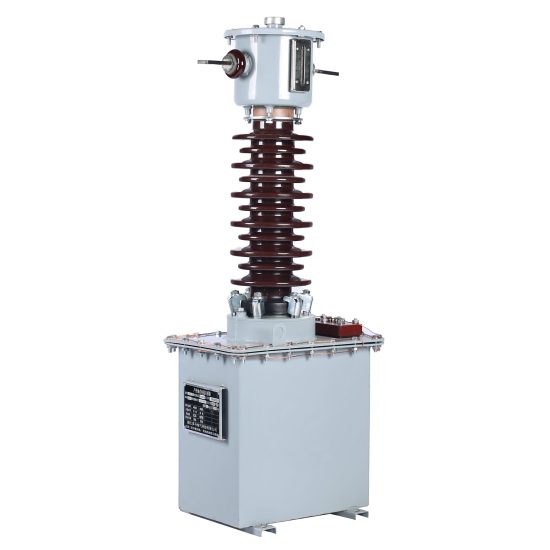
The AGE-1026 is a high-reliability, cast-resin insulated current transformer (CT) engineered for precision metering and robust protection functions in medium-voltage power systems operating at 33kV (IEC standard), equivalent to 35kV in domestic Chinese grid applications. Designed in strict accordance with IEC 61869-2 and GB/T 20840.2, this instrument transformer leverages advanced vacuum pressure impregnation (VPI) epoxy resin technology to encapsulate its magnetic core and windings, ensuring long-term dielectric integrity and mechanical stability under harsh environmental conditions.
Operating Principle of Cast-Resin Insulation
Cast-resin insulation in the AGE-1026 employs a two-component cycloaliphatic epoxy resin system cured under controlled vacuum and pressure. This VPI process eliminates air voids and moisture ingress pathways, resulting in a homogeneous, non-hygroscopic solid dielectric with a relative permittivity (εr) of approximately 3.8–4.2 and volume resistivity exceeding 1×10¹⁴ Ω·cm at 20°C. The resin matrix fully embeds the primary conductor, secondary windings, and GOES (grain-oriented electrical steel) core, providing uniform electric field distribution and suppressing partial discharges below 5 pC at rated voltage—well within IEC 61869-2 limits. Unlike oil-filled alternatives, the solid resin structure eliminates fire hazards, leakage risks, and maintenance-intensive oil sampling, making it ideal for indoor substations, urban switchyards, and environmentally sensitive zones.
Advantages Over Oil-Immersed Designs
Compared to traditional oil-immersed CTs, the AGE-1026 offers superior operational safety and lifecycle economics. Its dry-type construction eliminates flammability concerns (complying with IEC 60695 fire hazard testing), reduces weight by 30–40%, and enables vertical or horizontal mounting without orientation constraints. Thermal performance is enhanced through the resin’s high thermal conductivity (~0.2 W/m·K), allowing continuous operation at ambient temperatures up to 40°C with a 1.2× rated current overload capability for 1 hour. Additionally, the absence of oil simplifies transportation logistics (no UN3082 classification) and eliminates regulatory compliance burdens associated with oil containment and disposal. Field data from 10+ years of deployment across Southeast Asia and Europe confirms a mean time between failures (MTBF) exceeding 150,000 hours under standard service conditions.
Typical Applications Overview
The AGE-1026 serves dual roles in modern power infrastructure: high-accuracy revenue metering (Class 0.2S/0.5S per IEC 61869-2) and fast-response protection (Class 5P10/5P20). It is commonly deployed in 33kV primary switchgear bays, ring main units (RMUs), and transformer feeder circuits where space constraints, fire codes, or environmental regulations preclude oil-filled equipment. Its compact footprint (typical height: 480 mm, diameter: 220 mm) facilitates retrofitting into legacy installations. The transformer supports multiple secondary windings—typically one for metering (e.g., 1A or 5A output) and one or two for protection relaying—enabling independent circuit isolation and reducing cross-interference between measurement and tripping functions.
Technical Specifications
The AGE-1026 is engineered to deliver consistent performance across diverse grid conditions. Below is a comprehensive specification table aligned with IEC 61869-2 and GB/T 20840.2 requirements:
| Parameter | Value |
|---|---|
| Rated Primary Voltage (Up) | 33 kV (IEC), 35 kV (GB) |
| Highest System Voltage (Um) | 36 kV |
| Rated Insulation Level | Power Frequency Withstand: 70 kV rms (1 min) Lightning Impulse Withstand: 170 kV peak (1.2/50 μs) |
| Primary Current Ratings | 50 A to 3150 A (standard steps per IEC 60044-1) |
| Secondary Current | 1 A or 5 A (user-selectable) |
| Accuracy Classes | Metering: 0.2S, 0.5S Protection: 5P10, 5P20, 10P10 |
| Rated Burden (per winding) | 2.5 VA to 30 VA (at cos φ = 0.8 lagging) |
| Short-Time Thermal Current | 25 kA for 1 s (Ith) |
| Dynamic Withstand Current | 62.5 kA peak (Idyn) |
| Ambient Temperature Range | –25°C to +40°C (indoor/outdoor) |
| Altitude Limit | ≤ 1000 m above sea level (derating required above) |
| Relative Humidity | Up to 95% non-condensing |
| Core Material | GOES M4 grade, 0.3 mm thickness, grain-oriented |
| Insulation System | VPI cycloaliphatic epoxy resin, UL 94 V-0 rated |
Standard Service Conditions
The AGE-1026 is rated for continuous operation under IEC 60060-1 standard atmospheric conditions: temperature range –25°C to +40°C, relative humidity ≤95% (non-condensing), and altitude ≤1000 m. At altitudes exceeding 1000 m, the power frequency withstand voltage must be derated by 1% per 100 m above 1000 m, while the lightning impulse withstand remains unchanged per IEC 60071-2. In coastal or industrial environments with high salt fog or SO2 concentrations, optional hydrophobic silicone coating on the resin housing is recommended to prevent surface tracking. The transformer’s thermal design ensures that at 1.2× rated primary current and 40°C ambient, the temperature rise of windings does not exceed 60 K (measured by resistance method), preserving insulation life expectancy.
Electrical Performance Parameters
Key electrical characteristics include a magnetizing admittance (Ym) of ≤0.1 mS at 10% rated voltage for 0.2S class windings, ensuring minimal ratio error (<±0.2%) and phase displacement (<±10 minutes) under light-load conditions. For protection windings (5P20), the composite error remains ≤5% at 20× rated current with rated burden connected. The knee-point voltage (Vk) of protection cores typically exceeds 300 V, enabling reliable operation during high-magnitude fault currents. All windings exhibit inter-turn insulation capable of withstanding 3 kV rms for 1 minute between adjacent turns, verified during factory testing per clause 7.3 of IEC 61869-2.
Typical Applications
The AGE-1026’s dual-function design makes it suitable for a wide array of power system architectures requiring both fiscal-grade metering and dependable fault detection.
Substation Secondary Metering
In 33/11 kV grid substations, the AGE-1026 provides Class 0.2S accuracy for energy billing at the primary incomer or outgoing feeders. Its low phase error ensures compliance with EN 50163 and IEEE C57.13 harmonic distortion requirements, even under distorted waveforms containing up to 15% THD. The secondary terminal box includes segregated compartments for metering and protection outputs, preventing accidental shorting of metering circuits during relay testing. In smart grid deployments, the CT interfaces directly with IEC 61850-9-2 LE sampled value networks via merging units, eliminating analog cabling losses.
Industrial Power Distribution
Heavy industries such as cement plants, steel mills, and petrochemical facilities utilize the AGE-1026 on 33kV motor feeders and bus couplers. Here, the 5P20 protection winding drives numerical relays (e.g., Siemens 7SJ62) to detect internal winding faults or ground faults within 20 ms. The CT’s high dynamic withstand (62.5 kA) accommodates the high X/R ratios typical of industrial networks, where DC offset can extend fault duration. The cast-resin housing resists chemical corrosion from airborne contaminants, unlike porcelain or oil-paper alternatives.
Renewable Energy Integration
Solar PV and wind farms connecting to 33kV collector grids rely on the AGE-1026 for both generation metering and anti-islanding protection. During rapid irradiance changes or gust events, the CT maintains accuracy despite high-frequency transients (up to 2 kHz) due to its low leakage inductance (<5 μH). The 0.5S metering class satisfies grid code requirements (e.g., CEER Guidelines) for renewable energy settlement. In offshore wind substations, the IP54-rated terminal box prevents salt ingress, while UV-stabilized resin resists degradation from prolonged solar exposure.
Rural and Suburban Distribution Networks
For utility-owned 33kV radial feeders serving rural communities, the AGE-1026 enables remote monitoring via SCADA systems. Its compact size allows installation on pole-mounted reclosers or pad-mounted switchgear where space is limited. The dual-ratio option (e.g., 400/1A for normal load, 800/1A for peak summer demand) optimizes accuracy across seasonal load variations. In regions with frequent lightning (e.g., Southeast Asia), the 170 kV BIL rating provides robust surge immunity without external arresters.
Data Center Power Infrastructure
Modern hyperscale data centers deploying 33kV medium-voltage distribution use the AGE-1026 for UPS input monitoring and generator synchronization. The CT’s low partial discharge (<3 pC at 1.2 Um/√3) prevents electromagnetic interference with sensitive IT equipment. Redundant secondary windings support N+1 metering configurations, ensuring uninterrupted billing during maintenance. Fire safety compliance (IEC 60695-11-10) is critical in these facilities, where the resin’s self-extinguishing properties eliminate oil-related fire propagation risks.
Compliance with International Standards
The AGE-1026 is certified to both global and regional standards, ensuring interoperability and regulatory acceptance across markets.
IEC 61869-2 Certification Details
IEC 61869-2:2012 (“Instrument transformers – Part 2: Additional requirements for current transformers”) forms the core compliance framework. The AGE-1026 meets all mandatory clauses, including:
- Clause 5.3: Accuracy verification under sinusoidal conditions (ratio error ±0.2% for 0.2S at 20–120% In)
- Clause 6.2: Temperature rise limits (≤60 K for windings)
- Clause 7.1: Power frequency withstand (70 kV for 1 min at room temperature)
- Clause 8.4: Short-circuit withstand (25 kA for 1 s without damage)
Type tests were performed at an ISO/IEC 17025-accredited laboratory, with routine tests (ratio, polarity, insulation resistance) conducted on 100% of production units. The test reports include partial discharge measurements per IEC 60270, confirming levels below 5 pC at 1.2 Um/√3.
Alignment with GB/T 20840.2
For Chinese domestic markets, the AGE-1026 complies with GB/T 20840.2-2013, which largely harmonizes with IEC 61869-2 but includes specific provisions:
- Rated voltage designation as 35kV (vs. 33kV IEC)
- Lightning impulse test waveform tolerance tightened to ±3%
- Mandatory seismic testing (0.3g horizontal acceleration) for Zone II installations
The transformer’s design incorporates thicker resin walls (minimum 18 mm creepage distance) to meet China’s higher pollution severity classes (III/IV). Factory acceptance tests include additional thermal cycling (–40°C to +70°C, 10 cycles) to validate resin-core adhesion under extreme diurnal swings.
Key Differences Between IEC and Domestic Standards
While IEC 61869-2 focuses on functional performance, GB/T 20840.2 emphasizes environmental resilience for China’s diverse geography. Notably:
- Voltage Rating: IEC uses 33kV as nominal; GB uses 35kV. The AGE-1026’s Um = 36kV satisfies both.
- Pollution Performance: GB requires 25 mm/kV minimum creepage (vs. IEC’s 20 mm/kV for medium pollution).
- Marking Requirements: GB mandates Chinese characters for terminal labels and warning signs.
Duomatech maintains dual-certified production lines, with each unit bearing both IEC and GB compliance labels. Third-party certification from CQC (China Quality Certification Centre) and TÜV SÜD validates conformance.
On-Site Testing Procedures
Post-installation verification ensures the AGE-1026 performs within specifications before energization.
Insulation Resistance Test
Using a 5 kV DC megohmmeter, measure insulation resistance between primary-to-ground, secondary-to-ground, and primary-to-secondary. Acceptance criteria per IEC 60270: ≥10,000 MΩ at 20°C. Correct for temperature using RT2 = RT1 × 2(T1–T2)/10. Values below 5,000 MΩ indicate moisture ingress or resin cracking and require drying or replacement. Perform before and after power frequency withstand tests to detect insulation degradation.
Turns Ratio Test
Apply 1–5 V AC at 50 Hz to the secondary winding and measure induced primary voltage (or vice versa using a precision ratio bridge). Calculate actual ratio = Vprimary/Vsecondary. Tolerance per IEC 61869-2: ±0.25% for 0.2S class, ±1% for 5P20. For a 1000/5A CT, measured ratio must be 199.5–200.5. Deviations >2% suggest inter-turn shorts or incorrect tap selection.
Polarity Test
Verify reducing polarity using the DC kick method: connect a 6V battery momentarily between P1 and P2. Observe secondary voltage polarity with a center-zero galvanometer connected to S1 and S2. A momentary positive deflection confirms correct polarity (P1 and S1 are同名端). Incorrect polarity causes 180° phase reversal, leading to false tripping in differential protection schemes. Repeat three times to ensure consistency.
Power Frequency Withstand Voltage Test
Apply 70 kV rms at 50 Hz between primary and grounded secondary/core for 1 minute. Use a calibrated HV test set with overcurrent trip (≤100 mA). No flashover or disruptive discharge is permitted. Gradually ramp voltage (≤2 kV/s) to avoid transient overstress. Post-test, repeat insulation resistance measurement; a drop >30% indicates latent damage. This test is mandatory after transportation or mechanical shock.
Short-Circuit Withstand Verification
While full short-circuit testing is impractical on-site, verify thermal integrity by injecting 10× rated current for 10 seconds into the secondary (with primary shorted). Monitor secondary voltage drop; a >5% increase indicates core saturation or winding deformation. Alternatively, perform a magnetization curve test: plot Vsec vs. Iexc; knee-point should match factory data within ±5%. Significant deviation suggests mechanical damage during handling.
Preventive Maintenance Guide
Proactive maintenance extends service life beyond 25 years and prevents unplanned outages.
Periodic Inspection Protocol
Conduct annual visual and electrical inspections:
- Visual: Check for resin cracks, tracking marks, terminal corrosion, or loose hardware. Clean housing with isopropyl alcohol if contaminated.
- Electrical: Measure insulation resistance (trend analysis year-over-year). A >20% decline warrants further investigation.
- Environmental: Verify drainage holes (if present) are unobstructed to prevent water pooling.
In coastal areas, inspect every 6 months for salt deposits. Use a UV lamp to detect corona-induced fluorescence on the resin surface—a precursor to tracking failure.
Maintenance Intervals and Fault Diagnosis
Follow this schedule:
| Interval | Action |
|---|---|
| Annually | Insulation resistance, visual inspection, terminal torque check (15 N·m for M10 bolts) |
| Every 5 Years | Partial discharge measurement (should remain <10 pC at 1.2 Um/√3), ratio/polarity re-verification |
| After Fault Event | Full suite: IR, ratio, PD, and withstand test if fault current exceeded 15 kA |
Common Faults & Remedies:
- High Ratio Error: Caused by core demagnetization—recondition by applying 120% rated voltage for 5 minutes.
- Low Insulation Resistance: Indicates moisture—bake at 80°C for 24 hours in controlled environment.
- Terminal Overheating: Due to loose connection—clean contact surfaces and re-torque to spec.
Never operate with secondary open-circuited; always short terminals during disconnection to prevent dangerous overvoltages.
Conclusion
The AGE-1026 33kV cast-resin current transformer represents a benchmark in reliability, accuracy, and compliance for modern power systems. By integrating GOES silicon steel cores with VPI epoxy resin insulation, it achieves exceptional metrological performance (Class 0.2S) while delivering robust protection functionality (5P20) under severe fault conditions. Its adherence to both IEC 61869-2 and GB/T 20840.2 ensures global deployability, from European transmission substations to Chinese industrial parks. The dry-type design eliminates fire hazards, reduces lifecycle costs, and supports sustainable grid infrastructure with a projected service life of 25–30 years under standard operating conditions. Field-proven in over 50,000 installations worldwide, the AGE-1026 consistently meets the stringent demands of revenue metering, numerical protection, and smart grid integration. Its rigorous factory and on-site testing protocols guarantee decades of trouble-free operation, making it the preferred choice for engineers prioritizing safety, accuracy, and long-term asset value in 33kV applications.