Article Content
11kV Cast-Resin Voltage Transformer DZC-3 for Metering and Protection – IEC 61869-3 Standard
Introduction to the DZC-3 Voltage Transformer
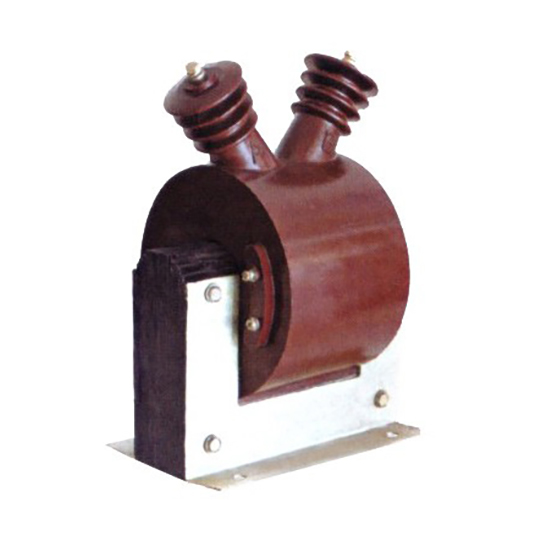
The DZC-3 is a single-phase, inductive-type voltage transformer (VT) engineered for medium-voltage distribution networks operating at a nominal system voltage of 10 kV, with a maximum service voltage of 11 kV as defined by IEC 60038. Designed in strict compliance with IEC 61869-3 and GB/T 20840.3, this device employs advanced cast-resin insulation technology to deliver high reliability, minimal maintenance, and long-term stability in both indoor and outdoor substations. Unlike traditional oil-immersed VTs, the DZC-3 eliminates fire hazards, environmental contamination risks, and complex sealing requirements, making it ideal for urban, industrial, and renewable energy applications where safety and space efficiency are critical.
Operating Principle of Cast-Resin Insulation
The DZC-3 utilizes vacuum pressure impregnation (VPI) epoxy resin casting to fully encapsulate its primary and secondary windings along with the magnetic core. This process involves degassing all components under vacuum before injecting a two-component epoxy resin mixture under controlled pressure, ensuring complete void-free encapsulation. The resulting monolithic structure provides exceptional dielectric strength, tracking resistance (CTI > 600 V), and mechanical robustness against thermal cycling and short-circuit forces. The resin matrix also offers superior moisture resistance (IP54 rating when mounted with standard terminal covers), preventing degradation even in high-humidity coastal or tropical environments. Thermal conductivity of the cured epoxy (~0.8 W/m·K) enables efficient heat dissipation from copper losses, supporting continuous operation at rated load without hot-spot overheating.
Advantages Over Oil-Immersed Designs
Compared to oil-filled VTs, the DZC-3’s dry-type cast-resin construction eliminates flammability risks (non-combustible per IEC 60695), removes the need for oil containment systems, and avoids periodic oil sampling or gas monitoring. Its compact footprint—typically 30% smaller than equivalent oil units—reduces switchgear bay dimensions and civil works costs. Additionally, the absence of liquid insulation prevents leakage-related failures and simplifies transportation and handling logistics. The DZC-3 exhibits lower partial discharge levels (<5 pC at 1.2 × Um/√3) due to homogeneous electric field distribution within the solid dielectric, enhancing long-term insulation integrity. These attributes make it particularly suitable for installations near residential zones, data centers, or underground substations where fire codes prohibit oil-filled equipment.
Typical Application Overview
The DZC-3 is deployed across diverse power infrastructure segments requiring precise voltage transformation for metering accuracy and protective relay coordination. Primary use cases include 10/11 kV ring-main units (RMUs), pad-mounted transformers, utility-owned distribution substations, and grid-connected solar or wind farms. In these settings, the VT supplies scaled-down secondary voltages (typically 100 V or 100/√3 V) to revenue meters, power quality analyzers, distance relays, and undervoltage protection schemes. Its dual-winding configuration often supports simultaneous connection to Class 0.2/0.5 metering circuits and Class 3P/6P protection circuits, enabling cost-effective dual-functionality without compromising performance.
Technical Specifications
The DZC-3 is engineered to meet stringent electrical and environmental performance criteria under IEC 61869-3. Below is a comprehensive specification table followed by detailed subsections on service conditions and output characteristics.
| Parameter | Value |
|---|---|
| System Voltage (IEC) | 11 kV (Um) |
| Nominal System Voltage (Domestic) | 10 kV |
| Primary Voltage (Rated) | 10/√3 kV or 11/√3 kV (line-to-ground) |
| Secondary Voltage(s) | 100/√3 V (metering), 100 V (protection) |
| Voltage Ratio | (10,000/√3) : (100/√3) = 100:1; (11,000/√3) : 100 = 63.5:1 |
| Accuracy Class (Metering) | 0.2, 0.5 (per IEC 61869-3) |
| Accuracy Class (Protection) | 3P, 6P |
| Rated Output (per winding) | 10–100 VA (metering); 50–200 VA (protection) |
| Insulation Level (LI/AC) | 75 kV / 28 kV (1 min, 50 Hz) |
| Short-Time Withstand Current | Not applicable (VTs are not designed for fault current) |
| Core Material | Grain-Oriented Electrical Steel (GOES), 0.27 mm thickness |
| Insulation System | Cast epoxy resin (Class F, 155°C) |
| Ambient Temperature Range | –25°C to +40°C (standard); –40°C to +55°C (optional) |
| Altitude Limit | ≤ 1,000 m (derating required above 1,000 m) |
| Relative Humidity | ≤ 95% (non-condensing) |
Standard Service Conditions
The DZC-3 is rated for continuous operation under standard IEC 60060-1 environmental conditions: ambient temperature between –25°C and +40°C, relative humidity up to 95% without condensation, and installation altitude not exceeding 1,000 meters above sea level. At altitudes above 1,000 m, the dielectric withstand voltage must be derated by 1% per 100 m increment due to reduced air density. For example, at 2,000 m, the AC test voltage becomes 28 kV × (1 – 0.10) = 25.2 kV. The transformer’s thermal design ensures that under full-load conditions at 40°C ambient, the hottest-spot temperature remains below 130°C, well within the Class F (155°C) insulation limit. Condensation prevention is achieved through hydrophobic resin formulation and optional built-in anti-condensation heaters for high-humidity deployments.
Accuracy and Burden Characteristics
Voltage error and phase displacement are tightly controlled per IEC 61869-3. At rated frequency (50/60 Hz) and burden within 25–100% of rated VA, a Class 0.2 VT exhibits voltage error ≤ ±0.2% and phase error ≤ ±10 minutes. For protection-class 3P, voltage error ≤ ±3% and phase error ≤ ±120 minutes are guaranteed up to 190% of rated primary voltage (i.e., 20.9 kV). The secondary burden must not fall below 25% of rated VA to avoid excessive magnetizing current distortion. Typical burden combinations include 30 VA (0.5) + 50 VA (3P), allowing concurrent metering and overvoltage protection. Core saturation is prevented by conservative flux density design (≤1.6 T at 1.9 × Un), ensuring linear response during transient overvoltages.
Typical Applications
The DZC-3’s robust design and dual-accuracy capability enable deployment across a wide spectrum of power systems requiring reliable voltage sensing.
Substation Secondary Metering
In 10/11 kV utility substations, the DZC-3 provides the reference voltage for revenue-grade kWh meters, demand recorders, and SCADA telemetry systems. Its Class 0.2 accuracy ensures billing precision compliant with regulatory requirements (e.g., EN 50163). The VT is typically installed on each phase of a three-phase busbar, with secondary windings connected in open-delta or wye configurations to supply 100/√3 V to polyphase meters. The low phase error minimizes reactive power measurement inaccuracies, critical for power factor correction schemes. In smart grid deployments, the DZC-3 interfaces with digital IEDs via analog inputs, supporting real-time voltage monitoring and event recording during sags or swells.
Industrial Power Distribution
Large manufacturing plants, mining operations, and petrochemical facilities rely on the DZC-3 for motor protection, arc-flash mitigation, and power quality management. Here, the protection-class (3P/6P) winding feeds undervoltage relays that trip motors during brownouts, preventing mechanical damage from stalled rotors. Simultaneously, the metering winding supplies data to energy management systems (EMS) for load profiling and tariff optimization. The cast-resin construction withstands harsh industrial atmospheres containing dust, chemicals, or explosive gases (when housed in appropriate enclosures per IEC 60079). Its immunity to vibration ensures stable performance near heavy machinery.
Renewable Energy Integration
Solar photovoltaic (PV) and wind farms utilize the DZC-3 at the point of interconnection (POI) to monitor grid voltage for anti-islanding protection and reactive power control. During grid faults, the VT must maintain accuracy under distorted waveforms—a requirement met by the DZC-3’s low harmonic distortion (<0.5% THD at rated load). Inverter-based resources (IBRs) use the secondary voltage signal to comply with grid codes (e.g., IEEE 1547, GB/T 19964) mandating ride-through during voltage dips. The VT’s fast response time (<20 ms) enables timely disconnection if voltage falls outside permissible bands (e.g., 0.88–1.10 pu for 2 seconds).
Rural and Suburban Distribution Networks
In remote or semi-urban areas with limited maintenance access, the DZC-3’s maintenance-free operation and 30-year design life reduce total cost of ownership. Mounted on pole-top platforms or in compact RMUs, it supports single-phase or three-phase metering for agricultural pumps, street lighting, and residential feeders. The high impulse withstand level (75 kV BIL) protects against lightning-induced surges common in overhead line networks. Optional surge arresters integrated into the primary terminals further enhance resilience. Its lightweight design (typically 45–60 kg) simplifies manual handling during rural electrification projects.
Compliance with International Standards
The DZC-3 is certified to both international and Chinese national standards, ensuring global interoperability and local regulatory acceptance.
IEC 61869-3 Compliance Details
IEC 61869-3 specifies performance, testing, and marking requirements for inductive voltage transformers. The DZC-3 meets all mandatory clauses, including: (1) accuracy class definitions under varying burdens and frequencies; (2) temperature rise limits (≤55 K for windings); (3) dielectric tests (power frequency 28 kV for 1 min, lightning impulse 75 kV); (4) short-circuit withstand verification via calculation (since VTs carry negligible fault current); and (5) marking requirements (rated voltages, ratio, accuracy classes, serial number). Type tests performed at accredited labs include temperature rise, accuracy verification, and partial discharge measurement (<10 pC at 1.2 × Um/√3). Routine tests on every unit include polarity check, turns ratio validation (±0.25% tolerance), and insulation resistance (>1,000 MΩ at 2,500 V DC).
GB/T 20840.3 Alignment
GB/T 20840.3 is the Chinese national adoption of IEC 61869-3, with minor editorial differences but identical technical content. The DZC-3 complies fully with GB/T 20840.3, enabling seamless integration into State Grid and China Southern Power Grid infrastructure. Key alignment points include identical accuracy class definitions, burden ratings, and test methodologies. Chinese utilities often specify additional requirements such as seismic withstand (0.3g horizontal acceleration) and salt fog resistance (for coastal regions), which the DZC-3 meets through reinforced mechanical bracing and UV-stabilized resin additives.
Differences Between IEC and Domestic Standards
While IEC 61869-3 and GB/T 20840.3 are technically harmonized, regional practices influence application. For instance, Chinese 10 kV systems commonly use 100/√3 V secondaries for metering, whereas European 11 kV systems may use 100 V or 110 V. The DZC-3 accommodates both via interchangeable secondary taps. Additionally, Chinese standards emphasize higher short-time overvoltage capability (up to 2.0 × Un for 8 hours), which the DZC-3 supports through enhanced core cross-section and resin thermal mass. Certification bodies differ: IEC units carry CB Scheme marks, while GB-compliant units require CQC certification with factory audits.
On-Site Testing Procedures
Post-installation verification ensures the DZC-3 performs within specifications before energization.
Insulation Resistance Test
Using a 2,500 V DC megohmmeter, measure insulation resistance between primary-to-secondary, primary-to-ground, and secondary-to-ground. Acceptance criterion: ≥1,000 MΩ at 20°C. Correct for temperature using RT2 = RT1 × 2(T1–T2)/10. Low readings indicate moisture ingress or resin cracking—requiring drying or replacement. Perform before and after dielectric tests to detect insulation degradation.
Turns Ratio Test
Apply a low-voltage AC source (50–100 V) to the primary and measure secondary voltage with a calibrated voltmeter. Calculate ratio = Vpri/Vsec. Compare to nameplate value; tolerance must be within ±0.25%. For a 10,000/√3 : 100/√3 VT, expected ratio is 100.0; measured values between 99.75 and 100.25 are acceptable. Use a dedicated ratio tester (e.g., Omicron CT Analyzer) for automated verification.
Polarity Test
Verify reducing polarity per IEC 61869-3: connect a 6–12 V battery momentarily between primary terminals (H1+, H2–). Observe secondary voltage spike on an oscilloscope or analog voltmeter connected to X1 and X2. A positive deflection confirms correct polarity (X1 corresponds to H1). Incorrect polarity causes 180° phase reversal, leading to metering errors or relay misoperation.
Power Frequency Withstand Voltage Test
Apply 28 kV RMS at 50 Hz between primary and grounded secondary/enclosure for 1 minute. Use a calibrated test transformer with overcurrent protection (trip at 5 mA). No flashover or disruptive discharge is permitted. Reduce voltage gradually post-test. This validates insulation integrity after transport-induced stresses. Do not perform if partial discharge exceeds 10 pC during factory tests.
Open-Circuit Characteristic Test
With secondary open, apply primary voltage from 0 to 1.5 × rated (e.g., 0–16.5 kV) in 10% steps. Record excitation current. Plot V vs. I curve; knee point should exceed 1.9 × Un (20.9 kV) to prevent saturation during overvoltages. Excessive magnetizing current at rated voltage indicates core defects or shorted turns. Acceptable no-load current: ≤0.5% of rated primary current.
Preventive Maintenance Guide
Although cast-resin VTs require minimal maintenance, periodic checks extend service life and prevent unexpected failures.
Annual Visual and Functional Inspection
Inspect for surface cracks, tracking marks, or discoloration on the resin housing. Check terminal tightness (torque: 15 N·m for M10 bolts) and corrosion on grounding lugs. Verify secondary wiring integrity and fuse condition (if used). Perform insulation resistance and ratio tests annually. Clean housing with mild detergent; avoid solvents that degrade epoxy. In polluted environments (industrial/coastal), inspect creepage distance (≥240 mm for 11 kV) for salt or dust accumulation.
Five-Year Comprehensive Maintenance
Every 60 months, conduct partial discharge measurement using IEC 60270 methods. Acceptable level: <10 pC at 1.2 × Um/√3 (7.6 kV). Re-measure open-circuit characteristics to detect core aging. Thermographic scan under load should show uniform temperature distribution; hot spots >10 K above ambient indicate internal faults. Replace if PD exceeds 20 pC or ratio drift exceeds ±0.5% from baseline.
Maintenance Intervals and Fault Diagnosis
| Interval | Action | Fault Indicator |
|---|---|---|
| Annually | Visual inspection, IR test, ratio check | Cracks, IR <500 MΩ, ratio error >0.5% |
| 5 Years | Partial discharge test, thermography | PD >20 pC, hotspot >130°C |
| After Fault | Full dielectric and accuracy retest | Flashover history, relay misoperation |
Common failure modes include moisture-induced tracking (from damaged sheds), core lamination shorts (audible hum), and secondary winding opens (infinite IR). Immediate replacement is required if any primary insulation defect is confirmed.
Conclusion
The DZC-3 11kV cast-resin voltage transformer represents a benchmark in medium-voltage instrumentation, combining IEC 61869-3 and GB/T 20840.3 compliance with field-proven reliability. Its vacuum-cast epoxy resin insulation eliminates fire hazards and environmental liabilities associated with oil-filled alternatives, while grain-oriented electrical steel cores ensure metrological precision across metering (Class 0.2/0.5) and protection (3P/6P) applications. Engineered for 25–30 years of maintenance-free service, the DZC-3 withstands harsh environmental conditions—from –25°C arctic winters to 95% humidity tropical climates—without performance degradation. Rigorous factory and site testing protocols guarantee accuracy within ±0.2% and phase error below ±10 minutes under rated burdens. With a compact form factor, high impulse withstand (75 kV BIL), and dual-winding flexibility, it optimizes space and cost in modern substations, renewable integration points, and industrial facilities. As power grids evolve toward digitalization and distributed generation, the DZC-3’s stable, linear response to transient overvoltages and harmonics ensures compatibility with next-generation protection and metering systems, solidifying its role as a cornerstone of safe, accurate, and resilient voltage measurement infrastructure.