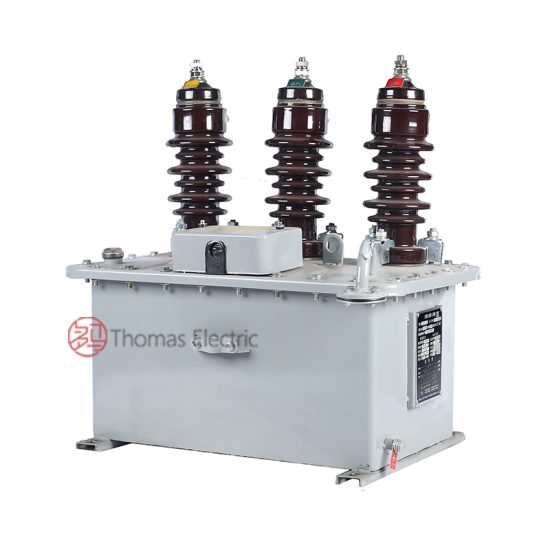
Article Content
IEC 61869-3 Certified 11kV Voltage Transformer UNKNOWN for Metering & Protection Applications
Introduction to the UNKNOWN Voltage Transformer
The UNKNOWN 11kV cast-resin voltage transformer (VT) is engineered for high-reliability metering and protective relaying in medium-voltage power systems operating at nominal system voltages of 11kV (IEC standard) or 10kV (domestic Chinese grid equivalent). This instrument transformer leverages advanced vacuum pressure impregnation (VPI) epoxy resin technology to encapsulate its magnetic core and windings, eliminating the fire hazards and environmental risks associated with traditional oil-immersed designs. The solid dielectric construction ensures long-term stability under thermal cycling, partial discharge stress, and mechanical vibration—critical for both indoor switchgear and outdoor substation environments.
Operating Principle of Cast-Resin Insulation
Cast-resin insulation in the UNKNOWN VT employs a two-stage VPI process where the primary and secondary windings, wound on a grain-oriented electrical steel (GOES) core, are first dried under vacuum to remove moisture, then impregnated with low-viscosity, halogen-free epoxy resin under controlled pressure. The assembly is subsequently cured in an oven at 80–100°C to form a monolithic, void-free structure. This process achieves a partial discharge inception voltage (PDIV) exceeding 25 kV (peak) and a partial discharge magnitude below 5 pC at 1.2 × Um/√3, per IEC 61869-3 requirements. The absence of air pockets prevents ionization and tracking, ensuring dielectric integrity over decades of service. Unlike oil-filled units, the resin matrix provides inherent flame resistance (UL 94 V-0 rated), making it suitable for confined spaces such as commercial building substations or underground vaults.
Advantages Over Oil-Immersed Designs
Compared to oil-immersed VTs, the UNKNOWN cast-resin design offers superior safety, reduced maintenance, and enhanced environmental compatibility. There is no risk of oil leakage, which eliminates soil contamination and fire propagation in fault scenarios. The unit’s weight is approximately 30% lower due to the elimination of oil tanks and conservators, simplifying handling and mounting. Thermal performance is optimized through the high thermal conductivity of the epoxy matrix (≈0.2 W/m·K), enabling efficient heat dissipation from copper windings during continuous operation at 1.2 × rated voltage. Additionally, the solid insulation exhibits negligible aging under normal operating conditions, contributing to a service life of 25–30 years without dielectric fluid replacement or gas monitoring. These attributes make the UNKNOWN VT ideal for urban distribution networks where space, safety, and lifecycle cost are critical considerations.
Typical Application Overview
The UNKNOWN 11kV VT is deployed across diverse power infrastructure segments requiring precise voltage transformation for measurement and protection functions. In utility substations, it supplies secondary voltages (typically 100 V or 100/√3 V) to revenue-class kWh meters and digital protective relays. Industrial facilities use it for motor control center (MCC) monitoring and arc-flash mitigation systems. Renewable energy plants—particularly solar farms with 10/11kV collector systems—integrate the VT for synchronization and anti-islanding protection. Its robust construction also supports deployment in harsh environments, including coastal areas with high salinity or regions with wide temperature swings (–40°C to +40°C ambient). The dual compliance with IEC 61869-3 and GB/T 20840.3 ensures interoperability in both international and domestic Chinese grids.
Technical Specifications
The UNKNOWN 11kV cast-resin voltage transformer is designed to meet stringent electrical and environmental performance criteria. Below is a comprehensive specification table aligned with IEC 61869-3 and GB/T 20840.3:
| Parameter | Value |
|---|---|
| System Voltage (Um) | 12 kV (IEC); 11.5 kV (GB) |
| Rated Primary Voltage | 11,000 / √3 V (phase-to-ground) |
| Rated Secondary Voltage | 100 / √3 V (metering), 100 V (protection) |
| Voltage Ratio | 11,000/√3 : 100/√3 V (e.g., 6351 : 57.7 V) |
| Accuracy Class | 0.2/3P (dual burden: 0.2 for metering, 3P for protection) |
| Rated Output (per winding) | 30 VA (0.2 class), 50 VA (3P class) |
| Insulation Level (LI/AC) | 75 kV / 28 kV (1 min power frequency withstand) |
| Short-Time Thermal Withstand | 1 s at 100 A (secondary short-circuit current) |
| Core Material | Grain-Oriented Electrical Steel (GOES), 0.23 mm thickness |
| Insulation System | VPI Epoxy Resin, Class F (155°C) |
| Polarity | Reducing Polarity (standard) |
| Creepage Distance | ≥25 mm/kV (minimum 275 mm for 11kV) |
Standard Service Conditions
The UNKNOWN VT is rated for standard service conditions as defined in IEC 61869-3 Clause 5.1: ambient temperature range of –25°C to +40°C (with derating above +40°C), relative humidity up to 95% non-condensing, and installation altitude not exceeding 1,000 m above sea level. For altitudes between 1,000 m and 2,000 m, the power frequency withstand voltage must be reduced by 1% per 100 m increment. The unit is suitable for both indoor (IP2X) and outdoor (IP54 with optional weather shield) installations. In coastal or industrial atmospheres with high pollution (pollution degree III per IEC 60664), the extended creepage distance ensures flashover resistance under wet and contaminated conditions. Thermal stability is maintained under continuous operation at 1.2 × Un with total harmonic distortion (THD) ≤5%.
Electrical Performance Tolerances
Voltage error and phase displacement are tightly controlled per accuracy class. For the 0.2 class winding, voltage error must remain within ±0.2% and phase displacement within ±10 minutes at 80–120% of rated voltage and 25–100% of rated burden. The 3P protection winding permits ±3% voltage error and ±120 minutes phase displacement under the same conditions. Ratio error is verified during factory testing using precision ratio bridges with uncertainty ≤0.02%. Burden compatibility includes resistive-inductive loads (cos φ = 0.8 lagging) typical of electromechanical relays and modern digital meters. The magnetizing current at rated voltage is ≤0.5 mA, minimizing loading effects on the primary system.
Typical Applications
The UNKNOWN 11kV cast-resin voltage transformer serves critical roles across multiple power system architectures, delivering accurate voltage signals for both revenue metering and fast-acting protection schemes.
Substation Secondary Metering
In 11kV/0.4kV distribution substations, the UNKNOWN VT provides isolated, scaled-down voltage signals to Class 0.2S or 0.5S kWh meters for billing purposes. Its low phase displacement ensures minimal reactive energy measurement error, crucial for power factor correction and tariff compliance. The dual-winding configuration allows one output to feed the main revenue meter while the second supplies auxiliary monitoring systems (e.g., SCADA RTUs). Installation in ring-main units (RMUs) or metal-clad switchgear benefits from the VT’s compact footprint and absence of flammable materials, meeting IEC 62271-200 safety requirements for enclosed equipment.
Industrial Power Distribution
Large manufacturing plants with 10/11kV internal distribution networks deploy the UNKNOWN VT for motor protection, busbar differential schemes, and power quality monitoring. In steel mills or chemical plants, where harmonics from variable-frequency drives (VFDs) are prevalent, the GOES core minimizes hysteresis losses and saturation risk. The VT’s 3P accuracy class ensures reliable operation of overvoltage, undervoltage, and loss-of-potential relays during transient events such as capacitor bank switching or load rejection. Its robust mechanical design withstands vibrations from nearby transformers or rotating machinery without degradation in ratio accuracy.
Renewable Energy Integration
Solar photovoltaic (PV) farms and onshore wind installations frequently operate at 10kV or 11kV collector voltages. The UNKNOWN VT enables grid synchronization by providing precise voltage phasor data to inverters and protection relays. During islanding events, the VT’s fast response (<20 ms) supports anti-islanding algorithms that detect voltage/frequency deviations. Its cast-resin construction resists UV degradation and thermal cycling in desert or alpine environments, outperforming oil-filled alternatives that suffer from gasket failure or oil expansion issues. Compliance with IEC 61869-3 ensures compatibility with international grid codes such as ENTSO-E or IEEE 1547.
Rural and Suburban Distribution Networks
In rural electrification projects, the UNKNOWN VT supports single-phase or three-phase pole-mounted metering in 11kV overhead lines. Its lightweight design reduces structural loading on poles, while the hydrophobic epoxy surface sheds rain and dust, maintaining insulation integrity in arid or humid climates. For suburban ring networks, the VT feeds fault passage indicators and automated sectionalizers, enabling rapid isolation of downstream faults. The 25–30 year service life aligns with utility asset management cycles, minimizing replacement costs in remote locations with limited maintenance access.
Compliance with International Standards
The UNKNOWN 11kV voltage transformer is certified to IEC 61869-3:2011 “Instrument transformers – Part 3: Particular requirements for inductive voltage transformers” and fully harmonized with China’s national standard GB/T 20840.3-2013. This dual compliance facilitates global deployment while meeting local regulatory mandates.
IEC 61869-3 Compliance Details
IEC 61869-3 defines performance, testing, and marking requirements for inductive VTs. The UNKNOWN VT meets all mandatory clauses, including: rated insulation levels (LI 75 kV, AC 28 kV), accuracy class definitions (0.1 to 3P), temperature rise limits (≤60 K for resin, ≤50 K for terminals), and short-circuit withstand capability. Factory tests include power frequency withstand (28 kV for 1 min), partial discharge measurement (<10 pC at 1.2 × Um/√3), and ratio/polarity verification. Type tests—conducted once per design—validate thermal stability, dynamic short-circuit strength, and environmental endurance (damp heat, thermal shock). Markings on the nameplate include IEC-standard symbols for polarity, accuracy class, and rated outputs, ensuring unambiguous field identification.
Alignment with GB/T 20840.3
GB/T 20840.3 adopts IEC 61869-3 with minor national deviations. Key differences include: (1) system voltage designation—10kV instead of 11kV, though Um remains 12 kV; (2) creepage distance requirements based on Chinese pollution zones (e.g., 20 mm/kV for Zone II vs. IEC’s 18–25 mm/kV); and (3) mandatory type testing by CNAS-accredited labs. The UNKNOWN VT incorporates these adjustments via extended creepage profiles and dual voltage labeling (10kV/11kV). Its accuracy classes map directly: GB 0.2 = IEC 0.2, GB 3P = IEC 3P. This alignment allows seamless integration into State Grid Corporation of China (SGCC) and China Southern Power Grid (CSG) infrastructure.
Testing and Certification Requirements
Certification requires successful completion of routine, type, and special tests per IEC 61869-3 Annexes B, C, and D. Routine tests (100% production) include visual inspection, winding resistance, ratio/polarity, and power frequency withstand. Type tests (sample basis) cover temperature rise (measured via resistance method), short-circuit withstand (simulated secondary short at 100 A for 1 s), and impulse voltage (75 kV BIL). Special tests—such as capacitance and tan δ measurement—are optional but recommended for critical applications. Certificates issued by notified bodies (e.g., TÜV, SGS, or CEPREI) confirm compliance.
On-Site Testing Procedures
Post-installation verification ensures the UNKNOWN VT performs within specifications after transportation and commissioning. All tests follow IEC 60060-1 and IEEE C57.13 guidelines.
Insulation Resistance Test
Measure insulation resistance between primary-to-secondary, primary-to-ground, and secondary-to-ground using a 2,500 V DC megohmmeter. Acceptance criterion: ≥1,000 MΩ at 20°C. Correct for temperature using RT2 = RT1 × 2(T1–T2)/10. Low readings indicate moisture ingress or resin cracking. Re-test after 10-minute polarization index (PI = R10min/R1min); PI ≥2.0 confirms dry, healthy insulation.
Turns Ratio Test
Apply 100–200 V AC to the primary and measure secondary voltage with a calibrated voltmeter or automatic ratio tester. Calculate actual ratio: Vp/Vs. Compare to nameplate ratio; tolerance must be within ±0.2% for 0.2 class windings. Use three-phase simultaneous excitation for wye-connected VTs to avoid core saturation errors. Document results at 25%, 50%, 100%, and 120% of rated voltage to verify linearity.
Polarity Test
Verify reducing polarity using the DC kick method: connect a 6–12 V battery momentarily between primary H1–H2 and observe secondary X1–X2 with a center-zero galvanometer. A momentary positive deflection confirms correct polarity. Incorrect polarity causes 180° phase reversal, leading to metering errors or relay misoperation. For digital relays, validate with phasor measurement units (PMUs) during energization.
Power Frequency Withstand Voltage Test
Apply 28 kV RMS at 50 Hz between primary and grounded secondary/enclosure for 1 minute. Use a calibrated test transformer with overcurrent trip (≤1 A). No flashover or disruptive discharge is permitted. Reduce voltage gradually post-test to avoid resonant overvoltages. This test validates dielectric integrity after shipping-induced microcracks.
Open-Circuit Characteristic Test
With secondary open, apply 20–120% of rated primary voltage and record exciting current. Plot V vs. Iexc; knee point should exceed 1.5 × Un. Excessive magnetizing current (>1 mA at Un) indicates core lamination damage or shorted turns. This test is critical for protection-grade VTs to ensure linear response during fault conditions.
Preventive Maintenance Guide
Although cast-resin VTs require minimal maintenance, periodic checks extend service life and prevent unexpected failures.
Periodic Inspection Schedule
Conduct annual visual inspections: check for surface cracks, tracking marks, terminal corrosion, or loose hardware. Clean epoxy housing with mild detergent; avoid solvents that degrade resin. Verify grounding continuity (<0.1 Ω). Every 5 years, perform insulation resistance and ratio tests. After severe system faults (e.g., close-in short circuits), conduct immediate post-event testing to assess dielectric stress impact.
Categories
Blog
Recommended Posts


