Article Content
LSZ-12 11kV Cast-Resin Voltage Transformer for Substation Metering and Protection – IEC 61869-3 Certified
Introduction to the LSZ-12 Voltage Transformer
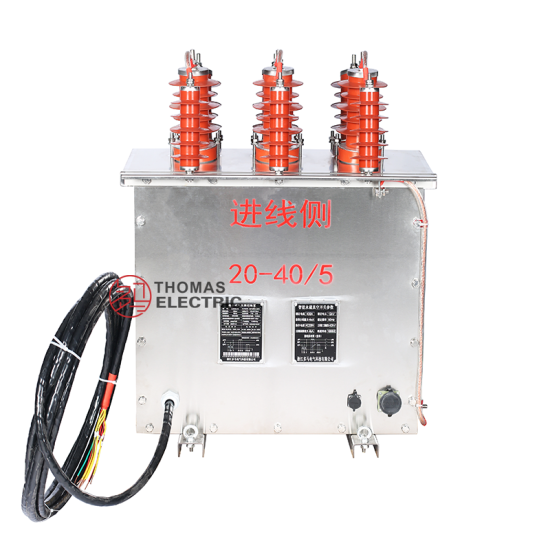
The LSZ-12 is a single-phase, inductive-type voltage transformer (VT) engineered for high-reliability operation in 11kV distribution networks—corresponding to domestic 10kV systems under Chinese grid conventions. Designed with modern cast-resin insulation technology, this VT provides accurate voltage transformation from primary system levels down to standardized secondary outputs of 100 V or 100/√3 V, enabling safe interfacing with metering instruments, protective relays, and monitoring equipment.
Operating Principle of Cast-Resin Insulation
Cast-resin insulation in the LSZ-12 employs vacuum pressure impregnation (VPI) of cycloaliphatic epoxy resin around the primary and secondary windings wound on grain-oriented electrical steel (GOES) cores. This process eliminates air voids and moisture ingress pathways, resulting in superior dielectric strength and partial discharge performance (<5 pC at 1.2 × Ur). Unlike oil-filled alternatives, the solid dielectric structure ensures maintenance-free operation, fire resistance (IEC 60695 glow-wire tested), and immunity to environmental contaminants such as dust, salt fog, and humidity. The homogeneous resin matrix also provides excellent thermal conductivity, facilitating efficient heat dissipation during continuous operation at rated load.
Advantages Over Oil-Immersed Designs
Compared to traditional oil-immersed VTs, the LSZ-12 offers significant operational and safety benefits. Its dry-type construction eliminates risks of oil leakage, fire hazards, and environmental contamination—critical for indoor substations, urban installations, and environmentally sensitive zones. The absence of conservators, breathers, and oil-level monitoring reduces lifecycle costs and simplifies commissioning. Furthermore, cast-resin VTs exhibit higher mechanical rigidity, making them resistant to seismic activity (tested per IEC 60068-2-6) and vibration from nearby switchgear operations. Weight is reduced by approximately 30%, easing handling and mounting on support structures without requiring oil containment basins.
Typical Applications Overview
The LSZ-12 is deployed across diverse medium-voltage infrastructure, including utility-owned primary substations, industrial plant switchyards, renewable energy collector substations (e.g., solar farms with 10kV AC collection), and rural distribution feeders. Its robust design supports both indoor and outdoor installation (IP54 rating with optional IP55 terminal box), operating reliably in ambient temperatures from –25°C to +40°C and altitudes up to 1,000 m above sea level. The transformer’s accuracy class stability under varying burden conditions makes it ideal for revenue metering (Class 0.2 or 0.5) and sensitive ground-fault protection schemes requiring precise phase-to-ground voltage representation.
Technical Specifications
The LSZ-12 adheres strictly to IEC 61869-3 and GB/T 20840.3, ensuring global interoperability and performance consistency. Below are its core electrical and environmental parameters:
| Parameter | Value |
|---|---|
| System Voltage (IEC) | 11 kV |
| Domestic System Voltage | 10 kV |
| Primary Voltage (Ur) | 11/√3 kV (phase-to-ground) |
| Secondary Voltage | 100/√3 V or 100 V (configurable) |
| Voltage Ratio | 11,000/√3 : 100/√3 V (standard) |
| Accuracy Class | 0.2 / 0.5 / 3P / 6P (per winding) |
| Rated Output (per class) | 30 VA (0.2), 50 VA (0.5), 100 VA (3P/6P) |
| Insulation Level (Um/Up/Ud) | 12 kV / 75 kV (LI) / 28 kV (ACW) |
| Short-Time Thermal Withstand | 1 second at 100× In (secondary short-circuit) |
| Frequency | 50 Hz (±0.5 Hz) |
| Ambient Temperature Range | –25°C to +40°C |
| Altitude Limit | ≤1,000 m (derating required above) |
| Partial Discharge | <5 pC at 1.2 × Ur |
Standard Service Conditions
The LSZ-12 is rated for standard service conditions as defined in IEC 61869-3: ambient temperature not exceeding +40°C (24-hour average ≤+35°C), relative humidity up to 95% non-condensing, and installation altitude ≤1,000 m. For installations above 1,000 m, voltage withstand values must be derated by 1% per 100 m increment. The transformer is designed for continuous operation at rated voltage and burden without exceeding temperature rise limits: 60 K for windings (measured by resistance method) and 50 K for terminals. It is suitable for both grounded and ungrounded neutral systems, though phase-to-ground configuration is standard.
Core and Winding Construction
The magnetic circuit utilizes high-permeability grain-oriented electrical steel (GOES) laminations, annealed to minimize hysteresis losses and ensure low no-load current (<0.5% of rated primary current). Primary windings consist of enameled copper wire with Class F (155°C) insulation, while secondary windings use double-insulated conductors to meet creepage and clearance requirements per IEC 60664-1. All windings are fully embedded in cycloaliphatic epoxy resin via VPI, providing uniform stress distribution and eliminating corona inception under normal operating voltages. Terminal blocks are made of flame-retardant PBT with screw-type clamps rated for 16 mm² conductors.
Typical Applications
The LSZ-12 voltage transformer serves critical roles across modern power systems where accuracy, reliability, and safety are paramount.
Substation Secondary Metering
In utility-owned 10kV/11kV primary substations, the LSZ-12 supplies scaled-down voltage signals to revenue-class kWh meters, demand recorders, and power quality analyzers. Its Class 0.2 accuracy ensures billing compliance per national regulations (e.g., China’s DL/T 448). The transformer maintains ratio error within ±0.2% and phase displacement below ±10 minutes under burdens from 25% to 100% of rated VA. This stability is essential for detecting energy theft and validating tariff structures in commercial and industrial supply points.
Industrial Power Distribution
Large manufacturing facilities often operate internal 10kV distribution networks fed from dedicated transformers. Here, the LSZ-12 enables real-time monitoring of bus voltage magnitude and phase angle for motor protection relays (e.g., undervoltage lockout), automatic transfer schemes, and harmonic distortion analysis. Its robust cast-resin housing withstands chemical exposure in petrochemical plants and high EMI environments near variable-frequency drives.
Renewable Energy Integration
Solar photovoltaic and wind farms frequently use 10kV collector systems to aggregate generation before step-up to transmission levels. The LSZ-12 provides synchronized voltage references for anti-islanding protection, reactive power control (Q(V) droop), and SCADA telemetry. Its fast transient response (<2 ms settling time after fault clearance) ensures accurate post-fault analysis and grid code compliance (e.g., GB/T 19964).
Rural and Suburban Distribution Networks
In remote or semi-urban areas with limited maintenance access, the LSZ-12’s maintenance-free design and long service life reduce operational expenditures. Mounted on pole-top platforms or pad-mounted switchgear, it supports single-phase VT configurations for cost-effective ground-fault detection in resonant-grounded (Petersen coil) systems. The transformer’s high saturation margin (>2.5 × Ur) prevents ferroresonance during single-pole switching events common in overhead networks.
Compliance with International Standards
The LSZ-12 is engineered to satisfy both international and domestic regulatory frameworks, ensuring seamless integration into global power infrastructure.
IEC 61869-3 Compliance Details
IEC 61869-3 specifies performance, testing, and marking requirements for inductive voltage transformers. The LSZ-12 meets all mandatory clauses, including accuracy verification under sinusoidal steady-state conditions, temperature rise limits, short-circuit withstand capability, and insulation coordination. Type tests include power frequency withstand (28 kV RMS for 1 min), lightning impulse (75 kV peak, 1.2/50 µs waveform), and partial discharge measurement. Routine tests performed on every unit include turns ratio verification (±0.25% tolerance), polarity check, and insulation resistance (>1,000 MΩ at 2,500 V DC).
Alignment with GB/T 20840.3
GB/T 20840.3 is the Chinese national adoption of IEC 61869-3, with minor editorial differences but identical technical content. The LSZ-12 carries dual certification, allowing deployment in both export markets and domestic Chinese grids. Key alignment points include identical accuracy class definitions, burden notation (VA-based), and test methodologies. However, GB/T 20840.3 mandates additional factory documentation in Mandarin and requires type test reports from CNAS-accredited laboratories—a requirement fulfilled by the manufacturer’s quality system.
Differences Between IEC and Domestic Interpretations
While technically harmonized, practical differences arise in application guidance. For instance, Chinese utilities often specify 10kV as the nominal system voltage, whereas IEC uses 11kV (Um = 12 kV). The LSZ-12 bridges this gap by being rated for 11kV (IEC) while optimized for 10kV system operation—ensuring adequate insulation margin (Um = 12 kV > 1.15 × 10kV = 11.5 kV). Additionally, GB/T standards emphasize seismic resilience for earthquake-prone regions (e.g., Sichuan), leading to optional bracing kits not commonly requested in European deployments.
On-Site Testing Procedures
Post-installation verification ensures the LSZ-12 performs within specification under actual site conditions. All tests should follow IEC 61869-3 Annex D and local utility protocols.
Insulation Resistance Test
Using a 2,500 V DC megohmmeter, measure insulation resistance between primary winding and ground, secondary winding and ground, and primary-to-secondary. Acceptance criterion: ≥1,000 MΩ at 20°C. Correct for temperature using RT2 = RT1 × 2(T1–T2)/10. Low readings indicate moisture ingress or resin cracking—requiring drying or replacement. Perform before and after high-voltage tests to detect insulation degradation.
Turns Ratio Test
Apply a low-voltage AC source (50–100 V) to the primary and measure secondary voltage with a calibrated voltmeter. Calculate actual ratio and compare to nameplate. Tolerance: ±0.25% for metering classes (0.2/0.5), ±1% for protection classes (3P/6P). Use a dedicated ratio tester (e.g., Omicron CT Analyzer) for automated comparison. Deviations beyond tolerance suggest winding faults or incorrect tap selection.
Polarity Test
Verify reducing polarity using the DC kick method: connect a 6–12 V battery momentarily across primary terminals (H1–H2). Observe secondary voltage polarity with an analog voltmeter connected to X1–X2. A momentary positive deflection confirms correct polarity. Incorrect polarity causes 180° phase shift, leading to metering errors or relay misoperation in directional schemes.
Power Frequency Withstand Voltage Test
Apply 28 kV RMS at 50 Hz between primary and ground (with secondary shorted and grounded) for 1 minute. Monitor for flashover, excessive leakage current (>1 mA), or audible discharge. This test validates insulation integrity after transport and installation stresses. Do not perform if partial discharge exceeds 10 pC during pre-test screening.
Open-Circuit Characteristic Test
With secondary open, gradually increase primary voltage from 0 to 1.5 × Ur (16.5 kV) while recording excitation current. Plot V vs. I curve. Saturation should occur above 1.5 × Ur. Excessive magnetizing current at rated voltage indicates core damage or shorted turns. This test is critical for VTs used in ferroresonance-prone networks.
Preventive Maintenance Guide
Although cast-resin VTs require minimal maintenance, periodic inspection extends service life and prevents unexpected failures.
Annual Visual and Electrical Inspection
Inspect for surface tracking, UV degradation (outdoor units), terminal corrosion, and mechanical damage. Clean housing with mild detergent; avoid solvents that attack epoxy. Measure insulation resistance annually. Check torque on terminal screws (8–10 N·m for M6). Verify secondary wiring integrity—loose connections cause arcing and metering errors. Record ambient temperature and load profile trends to detect abnormal heating.
Five-Year Comprehensive Maintenance
Every five years, perform partial discharge measurement using IEC 60270 methods. Acceptable level remains <5 pC at 1.2 × Ur. Re-calibrate accuracy if used for revenue metering—drift beyond ±0.1% warrants laboratory evaluation. Inspect mounting hardware for fatigue, especially in seismic zones. Replace silica gel in terminal boxes if fitted (though most LSZ-12 units are fully sealed). Update asset management records with test results.
Maintenance Intervals and Fault Diagnosis
| Interval | Action | Fault Indicator |
|---|---|---|
| Annually | Visual inspection, IR test | Cracks, discoloration, IR < 500 MΩ |
| 3 Years | Terminal torque check | Loose screws, overheating marks |
| 5 Years | PD test, accuracy verification | PD > 10 pC, ratio error > 0.3% |
| As Needed | Open-circuit test | Elevated excitation current |
Common failure modes include moisture-induced surface leakage (evidenced by carbon tracking), core lamination shorts (increased no-load loss), and secondary winding opens (infinite IR). Most issues stem from external factors—improper installation, overvoltage events, or physical impact—not inherent design flaws.
Conclusion
The LSZ-12 11kV cast-resin voltage transformer represents a benchmark in medium-voltage instrumentation, combining IEC 61869-3 compliance with rugged construction for demanding utility and industrial applications. Its VPI epoxy resin encapsulation eliminates fire risk and environmental concerns associated with oil-filled units, while GOES core technology ensures exceptional accuracy and low losses over a 25–30 year service life. Designed for both 11kV (IEC) and 10kV (domestic) systems, the LSZ-12 delivers stable performance across metering (Class 0.2/0.5) and protection (3P/6P) burdens, even under harsh environmental conditions. Rigorous factory and field testing protocols guarantee reliability from commissioning through decommissioning. With minimal maintenance requirements and proven resilience in renewable integration, rural distribution, and urban substations, the LSZ-12 provides a future-proof solution for modern grid monitoring and control. Its adherence to both international (IEC) and Chinese (GB/T) standards ensures global acceptance and regulatory compliance, making it a preferred choice for engineers prioritizing safety, precision, and longevity in voltage transformation.