Article Content
11kV Cast-Resin Voltage Transformer SJW-3 for Metering and Protection – IEC 61869-3 Standard
Introduction to the SJW-3 Voltage Transformer
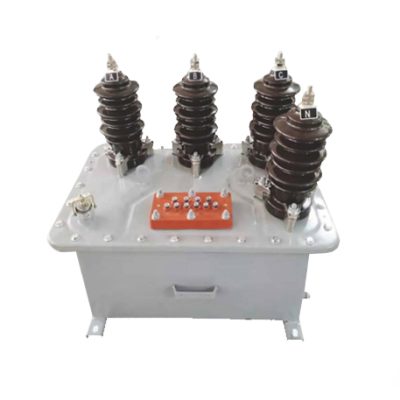
The SJW-3 is a single-phase, indoor/outdoor-rated cast-resin voltage transformer (VT) engineered for accurate voltage transformation in medium-voltage electrical distribution networks operating at a nominal system voltage of 10 kV, with an IEC-standard rated voltage of 11 kV. Designed in strict compliance with IEC 61869-3 and GB/T 20840.3, this instrument transformer reduces high primary voltages to standardized secondary levels—typically 100 V or 100/√3 V—for safe interfacing with metering instruments, protective relays, and control systems. Its robust construction ensures long-term reliability, minimal maintenance, and immunity to environmental stressors common in industrial and utility applications.
Operating Principle of Cast-Resin Insulation
The SJW-3 employs vacuum pressure impregnation (VPI) epoxy resin technology to fully encapsulate its magnetic core and windings. This process eliminates air voids and moisture ingress by saturating the entire active assembly under vacuum before curing the thermoset resin under controlled pressure and temperature. The resulting monolithic structure provides superior dielectric strength (≥28 kV rms for 1-minute power frequency withstand), excellent partial discharge performance (<5 pC at 1.2 × Um/√3), and resistance to tracking and erosion under polluted conditions. Unlike oil-filled alternatives, the solid insulation system eliminates fire hazards, leakage risks, and the need for periodic oil testing or topping-off, making it ideal for confined or environmentally sensitive installations such as urban substations, data centers, and renewable energy plants.
Advantages Over Oil-Immersed Designs
Cast-resin VTs like the SJW-3 offer significant operational and safety advantages over traditional oil-immersed units. First, they are inherently non-flammable, satisfying stringent fire safety codes (e.g., IEC 60695) without requiring fire barriers or containment pits. Second, their hermetic sealing prevents moisture absorption—a leading cause of insulation degradation in oil units—ensuring stable dielectric properties over decades. Third, the rigid epoxy matrix mechanically stabilizes windings against electromagnetic forces during short circuits, reducing risk of deformation or turn-to-turn faults. Additionally, the absence of liquid insulation simplifies transportation, handling, and disposal, while enabling vertical or horizontal mounting orientations without performance compromise. These attributes translate into lower lifecycle costs, reduced outage risk, and compliance with modern sustainability mandates.
Typical Application Overview
The SJW-3 is deployed across diverse 10 kV (11 kV IEC) distribution environments where precision, safety, and longevity are critical. Common use cases include utility-owned primary substations for revenue metering, industrial facilities requiring harmonic-resilient voltage sensing for motor protection, and solar/wind farms needing reliable synchronization signals for grid-tie inverters. Its compact footprint allows integration into ring main units (RMUs), gas-insulated switchgear (GIS), and pad-mounted transformers. With accuracy classes up to 0.2 for metering and 3P for protection, the SJW-3 supports both fiscal-grade energy measurement and fast-acting overvoltage/undervoltage relay schemes.
Technical Specifications
The SJW-3 voltage transformer is engineered to deliver consistent performance under defined electrical and environmental parameters. All specifications align with IEC 61869-3 (2011) and GB/T 20840.3 (2017), ensuring interoperability with global protection and metering ecosystems.
Rated Electrical Parameters
Primary rated voltage (Um): 11 kV (IEC standard); corresponds to 10 kV nominal system voltage per domestic practice. Secondary rated voltage: 100 V (line-to-line) or 100/√3 V (phase-to-neutral) for three-phase systems. Standard voltage ratios include 11000/100 V, 11000/√3 : 100/√3 V, and 10000/100 V (for 10 kV system alignment). Accuracy classes: 0.2, 0.5, 1, and 3P per IEC 61869-3; burden ratings range from 10 VA to 100 VA depending on class. Rated insulation level: 12/28/75 kV (Ur/Ud/Up), meaning 12 kV maximum system voltage, 28 kV power frequency withstand (1 min), and 75 kV lightning impulse withstand (1.2/50 µs wave). Thermal stability is guaranteed up to 1.5 × rated voltage for 30 seconds without damage.
Environmental and Mechanical Ratings
Designed for both indoor and outdoor service, the SJW-3 operates reliably within ambient temperatures of –25°C to +40°C (per IEC 60060-1). Relative humidity tolerance extends to 100% at 25°C, with condensation permitted. Maximum installation altitude: 1000 m above sea level; for altitudes up to 2000 m, derating factors apply per IEC 60071-2. The housing features UV-stabilized cycloaliphatic epoxy resin with hydrophobic surface properties, preventing flashover under light pollution (creepage distance ≥20 mm/kV). Mounting is via M12 stainless steel bolts on a standardized flange per IEC 61869-1 Annex A. Total weight: approximately 28 kg; dimensions: 320 mm (H) × 210 mm (W) × 180 mm (D).
Core and Winding Construction
The magnetic circuit utilizes grain-oriented (GOES) silicon steel laminations (M5 grade, 0.27 mm thickness) stacked in a closed-core configuration to minimize hysteresis and eddy current losses. Primary winding consists of enameled copper wire (Class F insulation, 155°C rating) wound directly onto the core leg, followed by multiple layers of polyester film for interlayer isolation. Secondary windings are bifilar-wound for tight coupling and low phase error. All windings undergo pre-cure drying at 120°C for 4 hours before VPI encapsulation with flame-retardant epoxy resin (UL 94 V-0 rated). Final partial discharge testing confirms values below 5 pC at 1.2 × (11/√3) kV, ensuring long-term dielectric integrity.
Typical Applications
The SJW-3’s combination of accuracy, ruggedness, and compact design makes it suitable for a wide array of medium-voltage infrastructure projects.
Substation Secondary Metering
In utility-owned 10/0.4 kV distribution substations, the SJW-3 provides the reference voltage signal for revenue-class kWh meters and power quality analyzers. Installed on the 11 kV busbar, it feeds secondary voltages to multi-function meters compliant with IEC 62053-22 Class 0.2S. Its low phase displacement (<10 minutes at 0.2 class) ensures accurate reactive energy measurement, critical for tariff billing. The cast-resin body withstands transient overvoltages from switching operations or nearby lightning strikes, protecting downstream electronics. In smart grid deployments, the SJW-3 interfaces with digital IEDs via analog inputs or through merging units in sampled value architectures.
Industrial Power Distribution Systems
Large manufacturing plants often operate internal 10 kV networks to reduce transmission losses. Here, the SJW-3 supplies voltage inputs to motor protection relays (e.g., thermal overload, undervoltage lockout) and arc-flash detection systems. Its 3P accuracy class guarantees reliable operation during fault conditions—maintaining ratio error within ±3% at 5% to 100% of rated voltage. The transformer’s immunity to vibration and chemical exposure (e.g., from coolants or solvents) ensures stable performance in harsh factory environments. Integration with SCADA systems enables real-time voltage monitoring and predictive maintenance alerts.
Renewable Energy Integration
Solar photovoltaic (PV) and onshore wind farms frequently connect to the grid via 10 kV collection systems. The SJW-3 provides the synchronization voltage for grid-tie inverters, ensuring phase alignment within ±0.5°—a requirement for anti-islanding protection per IEEE 1547. It also feeds voltage signals to protection relays that detect islanding, over/under-frequency, and loss-of-mains conditions. The VT’s low no-load losses (<15 W) contribute to overall plant efficiency, while its outdoor rating eliminates the need for climate-controlled enclosures at remote sites.
Categories
Blog
Recommended Posts


