Article Content
11kV Cast-Resin Voltage Transformer SZV-10R for Metering and Protection – IEC 61869-3 Standard
Introduction to the SZV-10R Voltage Transformer
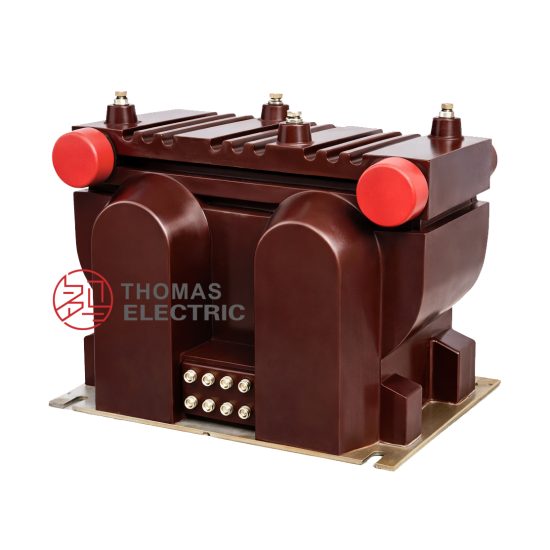
The SZV-10R is a single-phase, inductive (electromagnetic) voltage transformer engineered for reliable operation in 11kV medium-voltage (MV) distribution systems—corresponding to a nominal system voltage of 10kV in domestic applications. Designed in strict compliance with IEC 61869-3 and GB/T 20840.3, this device provides accurate voltage transformation for secondary circuits used in metering, protection, and monitoring functions within substations and industrial facilities. Its construction leverages advanced cast-resin insulation technology, eliminating flammable materials and enhancing environmental resilience.
Operating Principle and Core Design
The SZV-10R operates on Faraday’s law of electromagnetic induction. Primary and secondary windings are wound around a high-permeability grain-oriented electrical steel (GOES) core, which minimizes hysteresis and eddy current losses. The primary winding is connected phase-to-ground or phase-to-phase in the 11kV network, inducing a proportional voltage in the secondary winding—typically standardized at 100 V or 100/√3 V for three-phase systems. The magnetic circuit is optimized to maintain linearity across the operational range (80–120% of rated voltage), ensuring minimal ratio and phase angle errors. The use of GOES laminations with thicknesses of 0.27–0.30 mm reduces core losses to below 1.2 W/kg at 1.7 T flux density, contributing to thermal stability and long-term accuracy.
Advantages of Cast-Resin Insulation Over Oil-Immersed Designs
Unlike traditional oil-filled voltage transformers, the SZV-10R employs vacuum pressure impregnation (VPI) followed by epoxy resin casting under controlled conditions. This process fully encapsulates windings and core in a solid, non-hygroscopic dielectric matrix. Key advantages include: elimination of fire hazards (no combustible oil), immunity to leakage or maintenance-intensive oil sampling, superior resistance to pollution and moisture ingress (IP54 rating achievable), and reduced lifecycle costs. The resin compound exhibits a dielectric strength exceeding 20 kV/mm and a glass transition temperature (Tg) above 120°C, enabling stable performance in ambient temperatures from –40°C to +40°C. Additionally, the absence of oil simplifies transportation, installation, and disposal, aligning with modern environmental regulations such as RoHS and REACH.
Typical Deployment Scenarios
The SZV-10R is commonly deployed in indoor switchgear panels (e.g., RMU or metal-clad switchboards) and outdoor pole-mounted or pad-mounted substations. It supports both metering-class (0.2, 0.5) and protection-class (3P, 6P) secondary outputs, often with dual or triple secondary windings to serve concurrent functions. For example, one secondary may feed revenue meters while another supplies overvoltage relays. Its compact footprint (typically 320 mm height × 180 mm diameter) allows integration into space-constrained installations. In renewable energy applications, it enables grid synchronization and fault detection in solar farms and wind turbine step-up transformers operating at 10kV/11kV levels.
Technical Specifications
The SZV-10R is engineered to deliver precise voltage transformation under defined electrical and environmental parameters. All specifications adhere to IEC 61869-3 (2011) and GB/T 20840.3 (2013), ensuring interoperability and reliability across global markets.
Rated Electrical Parameters
The transformer features a highest voltage for equipment (Um) of 12 kV, corresponding to an IEC system voltage of 11 kV and a domestic nominal voltage of 10 kV. Standard voltage ratios include 10,000/100 V, 10,000/√3 / 100/√3 V, and 11,000/100 V. Accuracy classes are available in 0.2, 0.5 (for metering), and 3P, 6P (for protection). Rated burdens range from 10 VA to 100 VA per secondary winding, with thermal short-time withstand capability of 1 second at 100× rated voltage. The insulation level complies with IEC 60071-1: power frequency withstand voltage of 28 kV rms (1 min), lightning impulse withstand voltage of 75 kV peak (1.2/50 μs wave). Phase displacement is limited to ±10 minutes for class 0.2 and ±30 minutes for class 3P at rated burden and 100% voltage.
Environmental and Service Conditions
Designed for continuous operation under standard service conditions per IEC 60060-1: ambient temperature range of –40°C to +40°C, relative humidity up to 100% (condensing permitted), and installation altitude ≤1,000 m above sea level. For altitudes exceeding 1,000 m, derating factors apply per IEC 60076-2: insulation withstand voltages must be increased by 1% per 100 m above 1,000 m. The transformer is suitable for both indoor (pollution degree 2) and outdoor (pollution degree 3) environments when housed in appropriate enclosures. The creepage distance exceeds 25 mm/kV (minimum 275 mm for 11kV), meeting requirements for heavy industrial or coastal areas with high salt or dust contamination.
Construction and Materials
The magnetic core consists of CRGO (cold-rolled grain-oriented) silicon steel, annealed to reduce residual stress and improve magnetic properties. Windings are made of electrolytic-tough-pitch (ETP) copper, insulated with Class F (155°C) enamel. The entire assembly is vacuum-cast in cycloaliphatic epoxy resin with silica filler, providing excellent thermal conductivity (0.8 W/m·K) and coefficient of thermal expansion matched to copper. Terminal studs are M10 stainless steel with anti-corrosion plating. Secondary terminals are housed in a sealed IP65 terminal box with cable gland entries. The design ensures partial discharge levels below 10 pC at 1.2 Um/√3, verified during factory testing per IEC 60270.
Typical Applications
The SZV-10R serves critical roles across diverse power infrastructure sectors, leveraging its accuracy, safety, and durability.
Substation Secondary Metering Systems
In utility-owned 10kV/11kV distribution substations, the SZV-10R provides scaled-down voltage signals to revenue-class kWh meters, demand recorders, and power quality analyzers. With accuracy class 0.2 and burden stability from 25% to 100% of rated load, it ensures billing precision compliant with regulatory standards (e.g., EN 50470-3). Dual-secondary configurations allow one winding to feed the utility meter and another to supply customer-side monitoring, preventing tampering. Installation in ring main units (RMUs) benefits from the transformer’s compact size and flame-retardant resin, reducing fire risk in confined spaces.
Industrial Power Distribution Networks
Large manufacturing plants, data centers, and mining operations utilize the SZV-10R for internal energy management and protective relaying. For instance, in a 10kV motor control center, it supplies voltage inputs to multifunction relays (e.g., over/under-voltage, directional earth fault) with 3P accuracy. The cast-resin design resists chemical vapors and mechanical vibration common in industrial settings. Its immunity to oil degradation eliminates scheduled oil testing, reducing operational downtime. Integration with SCADA systems via analog or digital (IEC 61850-9-2 LE) interfaces further enhances real-time visibility.
Renewable Energy Integration
Solar photovoltaic (PV) farms and onshore wind turbines frequently operate at 10kV/11kV collection voltages. The SZV-10R enables grid code compliance by providing accurate voltage feedback for inverters and protection relays. During islanding events or voltage sags, its fast response (<10 ms rise time) ensures timely disconnection per IEEE 1547 or IEC 61727. Outdoor-rated versions withstand UV exposure and thermal cycling without cracking, critical for desert or alpine installations. Its low no-load losses (<15 W) contribute to overall plant efficiency.
Rural and Suburban Distribution Networks
In remote or semi-urban areas with limited maintenance access, the SZV-10R’s maintenance-free operation is a key advantage. Mounted on poles or ground platforms, it supports single-phase or three-phase metering for agricultural pumps, small commercial loads, and residential clusters. The high insulation coordination margin (BIL 75 kV vs. system surge levels of ~50 kV) protects against lightning-induced failures. Its lightweight (~25 kg) facilitates manual handling during rural electrification projects.
Backup and Redundancy Systems
Critical infrastructure such as hospitals and airports often deploy redundant VTs for fail-safe operation. The SZV-10R’s consistent performance across temperature extremes ensures backup metering remains accurate during primary VT outages. Its predictable aging characteristics (dielectric life >30 years at 90°C hotspot temperature) support long-term redundancy planning without frequent replacements.
Compliance with International Standards
The SZV-10R is certified to leading international and national standards, ensuring global acceptance and interoperability.
IEC 61869-3 Certification Details
IEC 61869-3 specifies requirements for inductive voltage transformers for measurement and protection. The SZV-10R meets all clauses regarding rated values, accuracy limits, temperature rise (≤55 K for windings, ≤60 K for terminals), short-circuit withstand, and insulation coordination. Factory tests include routine (every unit): power frequency withstand, partial discharge, and accuracy verification. Type tests (per design): temperature rise, short-circuit, and impulse tests. Special tests (on request): chopped wave, wet test, and seismic qualification. Compliance is validated by accredited third-party laboratories (e.g., KEMA, CESI).
Alignment with GB/T 20840.3
GB/T 20840.3 is the Chinese national adoption of IEC 61869-3, with minor deviations. Key differences include: slightly higher permissible phase error for protection class (±40′ vs. ±30′ in IEC for 3P at 100% voltage), and mandatory seismic testing for transformers installed in earthquake-prone zones (Zone II or higher per GB 50260). The SZV-10R is dual-certified, bearing both CE and CQC marks. Domestic Chinese utilities require GB/T compliance for grid interconnection, making this alignment essential for market access.
Testing and Certification Documentation
Each SZV-10R unit ships with a test report detailing individual results for ratio error, phase displacement, insulation resistance (>10,000 MΩ at 2,500 V DC), and partial discharge. Certificates of conformity reference IEC 61869-3:2011 Ed. 1.0 and GB/T 20840.3-2013. Additional certifications include ISO 9001 (quality management), ISO 14001 (environmental), and IECEx for hazardous area use (optional).
On-Site Testing Procedures
Post-installation verification ensures the SZV-10R performs within specification before energization.
Insulation Resistance Test
Using a 2,500 V DC megohmmeter, measure insulation resistance between primary and secondary/ground, and between secondary and ground. Acceptance criterion: ≥10,000 MΩ at 20°C. Correct for temperature using RT = R20 × 2(20–T)/10. Low readings indicate moisture ingress or resin cracking—requiring drying or replacement.
Turns Ratio and Polarity Verification
Apply 100–200 V AC to the primary and measure secondary voltage. Calculate actual ratio; tolerance must be within ±0.2% for class 0.2, ±0.5% for class 0.5, and ±1.0% for protection classes. Simultaneously verify reducing polarity: secondary terminal marked “•” should be in phase with primary “•”. Reversed polarity causes relay misoperation.
Power Frequency Withstand Voltage Test
Apply 28 kV rms at 50 Hz between primary and grounded secondary/core for 1 minute. Use a calibrated test transformer with overcurrent trip (≤1 A). No flashover or breakdown permitted. This validates insulation integrity after transport stresses.
Partial Discharge Measurement
At 1.2 × (11,000/√3) ≈ 7,620 V, measure apparent charge per IEC 60270. Acceptance: ≤10 pC. Higher values suggest voids in resin or winding defects. Requires specialized PD detector and shielded test environment.
Open-Circuit Characteristic Test
With secondary open, gradually increase primary voltage from 20% to 150% of rated. Record excitation current. A sharp current rise above 120% indicates core saturation—unacceptable for metering accuracy. The knee point should exceed 130% of rated voltage.
Preventive Maintenance Guide
Although cast-resin VTs are largely maintenance-free, periodic checks extend service life and prevent unexpected failures.
Annual Visual and Electrical Inspection
Inspect for surface cracks, tracking, or discoloration on the resin housing. Check terminal tightness (torque: 25 N·m for M10 studs). Measure insulation resistance annually; a drop >50% from baseline warrants investigation. Clean housing with non-abrasive detergent to remove conductive dust layers that could cause surface leakage currents.
Five-Year Comprehensive Assessment
Every five years, perform full on-site tests: ratio, polarity, insulation resistance, and partial discharge (if equipment available). Compare results with factory data. Drift in ratio error beyond half the accuracy class limit (e.g., >0.1% for class 0.2) indicates internal degradation. Also verify grounding continuity—resistance <0.1 Ω between terminal box and substation grid.
Maintenance Intervals and Fault Diagnosis
| Interval | Action | Fault Indicators |
|---|---|---|
| Annually | Visual check, IR test, terminal torque | |
| 5 Years | Full electrical tests, PD check | |
| After Fault | Post-fault inspection and testing |
Common failure modes include resin delamination (from thermal cycling), terminal corrosion (in coastal areas), and core lamination shorts (from mechanical shock). Replacement is recommended if any parameter exceeds acceptance criteria—repair is not feasible due to monolithic construction.
Conclusion
The SZV-10R 11kV cast-resin voltage transformer represents a robust, standards-compliant solution for modern medium-voltage networks operating at 10kV/11kV. By integrating GOES core technology with advanced epoxy resin encapsulation, it achieves exceptional accuracy (class 0.2), long-term stability, and environmental resilience. Its compliance with both IEC 61869-3 and GB/T 20840.3 ensures global applicability, while the elimination of oil enhances safety and reduces lifecycle costs. Field-proven in substations, industrial plants, and renewable energy sites, the SZV-10R delivers reliable performance across extreme temperatures, high humidity, and polluted atmospheres. With a design life exceeding 25–30 years under standard loading conditions, it offers a compelling combination of technical excellence, regulatory adherence, and operational economy. Engineers selecting instrumentation for critical metering and protection functions can rely on the SZV-10R for decades of maintenance-free service, supported by rigorous factory testing and comprehensive on-site verification protocols.