Article Content
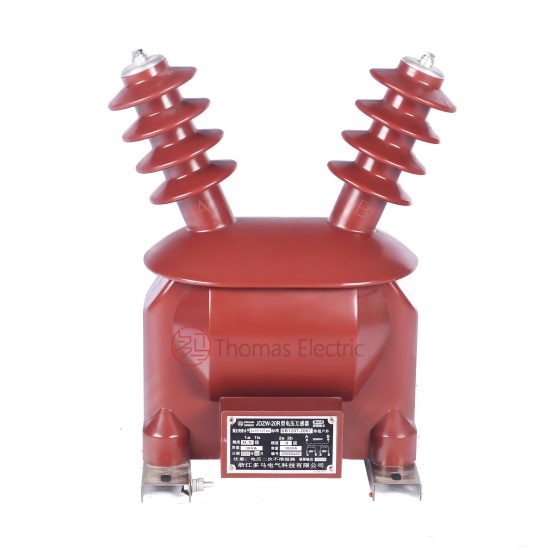
JDZW-20 21kV Cast-Resin Voltage Transformer for Substation Metering and Protection – IEC 61869-3 Certified
Introduction to the JDZW-20 Voltage Transformer
The JDZW-20 is a single-phase, indoor/outdoor-rated cast-resin voltage transformer (VT) engineered for accurate voltage measurement and protective relaying in medium-voltage distribution networks operating at a nominal system voltage of 20 kV. Per international practice defined in IEC 61869-3, the device is rated for a highest voltage for equipment (Um) of 21 kV, ensuring compatibility with global grid standards while serving domestic 20 kV infrastructure common in China and select Asian markets. This VT employs vacuum pressure impregnation (VPI) epoxy resin encapsulation technology to provide superior dielectric integrity, environmental resilience, and long-term operational stability.
Operating Principle of Cast-Resin Insulation
Cast-resin insulation in the JDZW-20 utilizes a high-purity cycloaliphatic epoxy resin system cured under controlled temperature and vacuum conditions. The primary and secondary windings—wound on grain-oriented electrical steel (GOES) cores—are fully embedded within this solid dielectric matrix. Unlike oil-filled units, the absence of liquid insulation eliminates fire hazards, leakage risks, and maintenance associated with fluid levels or degradation. The resin’s high thermal conductivity (≈0.2 W/m·K) facilitates efficient heat dissipation from copper losses, while its coefficient of thermal expansion closely matches that of embedded metallic components, minimizing mechanical stress during thermal cycling. Dielectric strength exceeds 20 kV/mm, enabling compact design without compromising insulation coordination for 21 kV systems. Partial discharge inception voltage (PDIV) typically exceeds 25 kV (rms), well above the maximum continuous operating voltage of 12.1 kV phase-to-ground (21 kV / √3), ensuring decades of reliable service under normal and transient overvoltage conditions.
Advantages Over Oil-Immersed Designs
Compared to traditional oil-immersed VTs, the JDZW-20 offers significant operational and safety benefits. Its dry-type construction eliminates flammability concerns, making it suitable for indoor substations, urban switchgear rooms, and environments with strict fire codes (e.g., IEC 61439 compliance). The hermetically sealed resin body resists moisture ingress (IP54 rating standard), preventing insulation deterioration in humid or coastal climates. Maintenance requirements are drastically reduced—no oil sampling, gas analysis, or tank inspections are needed. Additionally, the unit’s lighter weight (typically 45–60 kg vs. 80+ kg for oil equivalents) simplifies handling and installation. Environmental impact is minimized as no hazardous fluids require disposal at end-of-life. Crucially, the absence of oil prevents carbonization under fault conditions, maintaining insulation integrity during switching surges or lightning impulses.
Typical Applications Overview
The JDZW-20 is deployed across diverse 20/21 kV infrastructure where precision, reliability, and space efficiency are paramount. Primary use cases include utility-owned distribution substations for revenue metering (Class 0.2 or 0.5 accuracy), industrial plant switchyards for motor protection and power quality monitoring, and renewable energy interconnection points (e.g., solar farms) requiring synchronized voltage feedback for inverters and SCADA systems. Its robust design also supports rural electrification projects where exposure to dust, temperature extremes, and limited maintenance access demand fail-safe performance. The transformer interfaces directly with digital relays (e.g., SEL-751), multifunction meters (e.g., Schneider PM8000), and SCADA RTUs via standardized secondary outputs (100 V or 110 V).
Technical Specifications
The JDZW-20 adheres strictly to the electrical and dimensional parameters mandated by IEC 61869-3 and GB/T 20840.3, ensuring interoperability and predictable performance across global grids.
Rated Electrical Parameters
Key electrical ratings include: primary voltage 21/√3 kV (12.12 kV phase-to-ground); secondary voltage options of 100/√3 V, 100 V, or 110/√3 V; standard voltage ratios of 21000/√3 : 100/√3 V or 21000/√3 : 100 V; accuracy classes of 0.2, 0.5, 1, or 3 for metering and protection (per IEC 61869-3 Table 101); rated outputs ranging from 10 VA to 100 VA per burden class; and a thermal short-time current rating of 100 A for 1 second. Insulation levels comply with IEC 60071-1: power frequency withstand voltage of 50 kV rms (1 min) between HV and LV/ground, and lightning impulse withstand voltage of 125 kV peak (1.2/50 μs wave). The maximum permissible error at rated burden and 80–120% of rated voltage is ±0.2% for Class 0.2, ±0.5% for Class 0.5, and ±1.0% for Class 1. Phase displacement is limited to ≤10 minutes for Class 0.2 and ≤20 minutes for Class 0.5.
Environmental and Service Conditions
The JDZW-20 operates reliably under standard service conditions defined in IEC 60060-1: ambient temperature range of –25°C to +40°C (with derating above +40°C); relative humidity up to 95% non-condensing; altitude ≤1000 m above sea level (with 1% insulation strength reduction per 100 m above 1000 m); and pollution degree 3 (IEC 60664-1). For installations above 2000 m, external creepage distance must be increased per IEC 60815. The unit withstands seismic loads up to 0.3g horizontal acceleration (per IEEE 693). Storage temperature range is –40°C to +70°C. The expected thermal life under continuous rated load is ≥30 years, based on Arrhenius modeling of resin aging at hotspot temperatures ≤110°C.
Construction and Materials
The magnetic core consists of CRGO (cold-rolled grain-oriented) silicon steel laminations (M4 grade, 0.27 mm thickness), annealed to minimize hysteresis loss and magnetostriction. Windings use electrolytic-tough-pitch (ETP) copper, insulated with Class F (155°C) enamel. The epoxy resin system includes silica fillers (≥60% by weight) to reduce shrinkage and enhance thermal stability. External terminals are tinned copper with M10 studs for primary connection and screw-type blocks for secondary wiring. The housing features integrated lifting lugs and a removable terminal box (IP54) with cable gland entries. Creepage distance between primary and secondary terminals exceeds 375 mm, satisfying IEC 60664-1 for 21 kV systems in polluted environments.
Typical Applications
The JDZW-20’s versatility stems from its precision, ruggedness, and compliance with international standards, enabling deployment across critical infrastructure sectors.
Substation Secondary Metering
In utility distribution substations, the JDZW-20 provides the voltage reference for revenue-grade kWh meters and demand recorders. Installed on 20 kV busbars or feeder circuits, it delivers Class 0.2 or 0.5 accuracy at burdens of 15–30 VA, ensuring billing compliance per regulatory mandates (e.g., China’s DL/T 448). Its low phase error (<5 minutes for Class 0.2) minimizes vector mismatch in three-phase metering setups. The transformer’s stable ratio over time (±0.1% annual drift) reduces recalibration frequency. Integration with AMI (Advanced Metering Infrastructure) systems is seamless due to standardized 100 V secondary outputs compatible with modern smart meters.
Industrial Power Distribution
Within manufacturing facilities, the JDZW-20 monitors voltage for motor control centers (MCCs), capacitor banks, and process loads. It feeds data to power quality analyzers (e.g., Fluke 435) to detect sags, swells, and harmonics that could disrupt sensitive equipment. For arc-flash mitigation systems, its fast response (<20 ms rise time) enables rapid tripping during ground faults. In hazardous areas (Zone 2), its non-flammable construction meets ATEX/IECEx requirements without additional enclosures. Typical installations include steel mills, chemical plants, and data centers where uptime is critical.
Renewable Energy Integration
At solar photovoltaic (PV) and wind farm interconnection points, the JDZW-20 supplies grid-synchronization signals to inverters and protection relays. It ensures compliance with grid codes (e.g., IEEE 1547, GB/T 19964) by accurately measuring point-of-common-coupling (PCC) voltage during islanding events or low-voltage ride-through (LVRT) scenarios. Its immunity to DC offset (critical in inverter-fed networks) prevents core saturation. Units are often paired with cast-resin current transformers (e.g., LZZBJ9-20) in combined metering cores for compact switchgear integration.
Rural and Suburban Distribution Networks
In remote or semi-urban grids with limited maintenance resources, the JDZW-20’s maintenance-free operation and resistance to environmental stressors (UV, salt fog, dust) ensure uninterrupted service. Mounted on pole-top platforms or pad-mounted switchgear, it supports single-phase or three-phase VT banks for feeder automation (FA) schemes. Its lightweight design reduces structural loading on poles, while the IP54 terminal box protects secondary connections from rain and vermin. Utilities leverage its long service life to defer capital expenditures in cost-sensitive deployments.
Compliance with International Standards
The JDZW-20 is engineered to satisfy both global and domestic regulatory frameworks, ensuring technical equivalence and market access.
IEC 61869-3 Compliance Details
IEC 61869-3:2011 (“Instrument transformers – Part 3: Additional requirements for inductive voltage transformers”) governs all critical performance aspects. The JDZW-20 meets requirements for: rated insulation levels (Table 2); accuracy limits under defined burdens (Clause 5.3); temperature rise tests (≤60 K for resin, per Clause 6.4); short-circuit withstand (Clause 6.6); and partial discharge measurements (≤10 pC at 1.2 × Um/√3, per Clause 6.10). Type tests include temperature rise, short-time current, and impulse voltage tests, while routine tests cover ratio, polarity, and insulation resistance. The standard mandates that errors remain within class limits for frequencies 48–52 Hz and burdens 25–100% of rated VA.
GB/T 20840.3 Alignment
China’s national standard GB/T 20840.3-2013 aligns closely with IEC 61869-3 but includes localized provisions. Key differences include: acceptance of 20 kV as the nominal system voltage (vs. IEC’s 21 kV Um); mandatory seismic testing per GB/T 13540; and stricter pollution performance requirements for coastal regions (creepage distance ≥25 mm/kV). The JDZW-20 complies with both by designing to the more stringent criteria—e.g., using 21 kV Um for insulation coordination while labeling 20 kV for domestic identification. Chinese type test reports (issued by CEPREI or SGCC labs) validate conformance to GB/T 20840.3.
Testing and Certification Requirements
Certification requires third-party validation per ISO/IEC 17025. Type tests (performed once per design) include: power frequency withstand (50 kV, 1 min); lightning impulse (125 kV, 15 shots); temperature rise (resin hotspot ≤110°C at 1.2 × rated VA); and accuracy verification across burden and voltage ranges. Routine tests (100% production) cover: winding resistance; ratio and polarity; insulation resistance (>1000 MΩ at 2500 V DC); and partial discharge (<10 pC at 12.1 kV). Certificates from TÜV, SGS, or CQC confirm compliance.