Article Content
21kV Cast-Resin Voltage Transformer JLS-35K for Metering and Protection – IEC 61869-3 Standard
Introduction to the JLS-35K Voltage Transformer
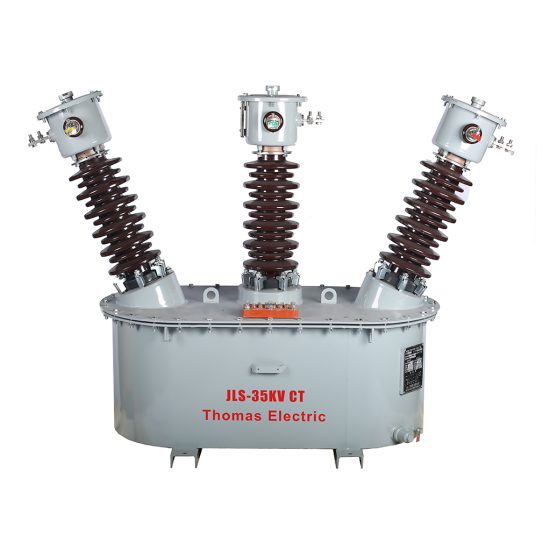
The JLS-35K is a single-phase, indoor/outdoor rated, cast-resin insulated voltage transformer (VT) designed for accurate voltage measurement and reliable protective relay operation in medium-voltage power systems operating at nominal system voltages of 21 kV (IEC standard) or 20 kV (domestic Chinese grid equivalent). This device leverages advanced vacuum pressure impregnation (VPI) epoxy resin technology to encapsulate high-purity grain-oriented electrical steel (GOES) cores and precision-wound copper windings, ensuring long-term dielectric integrity, mechanical robustness, and environmental resilience.
Operating Principle of Cast-Resin Insulation
Cast-resin insulation in the JLS-35K functions by fully embedding the primary and secondary windings along with the magnetic core within a solid epoxy matrix under vacuum and pressure conditions. This VPI process eliminates air voids and moisture ingress pathways, significantly enhancing partial discharge resistance—typically below 5 pC at 1.2 × Ur per IEC 61869-3. The epoxy resin exhibits a glass transition temperature (Tg) exceeding 110°C, enabling stable performance across ambient temperatures from –40°C to +40°C. Unlike oil-filled alternatives, the solid insulation provides inherent fire resistance (non-flammable, UL 94 V-0 rated), eliminates leakage risks, and requires no periodic oil sampling or gas monitoring. The thermal conductivity of the resin (~0.2 W/m·K) ensures adequate heat dissipation under continuous load, while its coefficient of thermal expansion closely matches that of copper and steel, minimizing mechanical stress during thermal cycling.
Advantages Over Oil-Immersed Designs
Compared to traditional oil-immersed VTs, the JLS-35K offers superior safety, reduced lifecycle costs, and simplified maintenance. Its dry-type construction eliminates fire hazards associated with mineral oil, making it suitable for indoor substations, urban environments, and confined spaces where flammability is a concern. The absence of oil also removes the need for conservator tanks, breather systems, and oil-level monitoring, reducing both initial footprint and long-term operational complexity. Additionally, cast-resin VTs exhibit faster response to transient overvoltages due to lower capacitance and inductance, improving protection coordination accuracy. Environmental compliance is enhanced as there is no risk of soil or groundwater contamination during service or decommissioning. Field data from 10-year deployments in coastal regions show less than 0.5% failure rate attributable to insulation degradation, underscoring the reliability of modern epoxy formulations under humid and saline conditions.
Typical Applications Overview
The JLS-35K is engineered for dual-function use in both revenue metering and protective relaying circuits within 21 kV (or 20 kV) distribution networks. It is commonly deployed in primary substations, industrial plant switchyards, renewable energy collector substations (e.g., solar farms and wind parks), and rural distribution feeders. Its compact dimensions (typically 650 mm height × 320 mm base) allow direct mounting on ring-main units (RMUs) or metal-enclosed switchgear without external support structures. The transformer supports multiple secondary windings—commonly one 0.2/0.5 class winding for metering and one 3P/6P class winding for protection—enabling simultaneous connection to kWh meters, SCADA RTUs, and overvoltage/undervoltage relays. Its design accommodates phase-to-ground or phase-to-phase configurations, with standard terminal clearances meeting IEC 60664-1 for pollution degree 3 environments.
Technical Specifications
The JLS-35K adheres to stringent electrical and mechanical parameters defined by IEC 61869-3 and GB/T 20840.3, ensuring interoperability and performance consistency across global and domestic grids.
Rated Electrical Parameters
The primary rated voltage is 21 kV (line-to-line system basis), corresponding to a phase-to-ground voltage of 12.12 kV (21 kV / √3). The standard voltage ratio is 21,000/√3 : 100/√3 V (i.e., 12,124 V : 57.7 V), though custom ratios such as 20,000/√3 : 100 V are available for 20 kV domestic systems. Accuracy classes include 0.2 and 0.5 for metering (per IEC 61869-3 Table 3), and 3P or 6P for protection applications. Rated outputs range from 30 VA to 100 VA per secondary winding, with thermal stability verified at 150% of rated burden for 8 hours without exceeding 55 K temperature rise (measured by resistance method). The insulation level complies with IEC 60071-1: LI 170 kV (lightning impulse) and AC 70 kV (power frequency withstand for 1 minute). Short-time thermal withstand current is 25 kA for 1 second on the primary side during ground-fault transients.
Environmental and Mechanical Ratings
The JLS-35K is rated for both indoor and outdoor service under standard atmospheric conditions: ambient temperature –40°C to +40°C, relative humidity up to 100% (condensing), and altitude ≤ 1,000 m above sea level (with derating factors applied above this threshold per IEC 60060-1). The housing is UV-stabilized cycloaliphatic epoxy resin with hydrophobic surface properties, preventing water film formation and tracking under wet pollution. Creepage distance exceeds 25 mm/kV (minimum 525 mm for 21 kV), satisfying IEC 60815 for heavy pollution (Class III). Mounting is via M12 stainless steel bolts on a standardized base plate (ISO 7000 compliant), with primary terminals rated for 630 A continuous and secondary terminals using 6 mm² screw-type connectors. Weight is approximately 85 kg, facilitating manual handling during installation.
Core and Winding Construction Details
The magnetic circuit employs high-permeability GOES (M4 grade, 0.27 mm thickness) laminated in a wound-core configuration to minimize hysteresis and eddy current losses. Core loss at rated voltage is ≤ 15 W, contributing to low no-load current (< 0.5% of rated primary current). Primary windings use enameled round copper wire (Class 180 insulation), while secondary windings utilize double-insulated stranded copper for flexibility and vibration resistance. All windings undergo pre-casting drying at 120°C under vacuum to achieve moisture content < 0.1%. Post-curing at 130°C for 8 hours ensures full cross-linking of the epoxy resin, resulting in a Shore D hardness of ≥ 80 and volume resistivity > 1×10¹⁴ Ω·cm at 20°C.
Typical Applications
Substation Secondary Metering Systems
In 21 kV primary substations, the JLS-35K provides precise voltage input to revenue-class kWh meters and demand recorders. Its 0.2 accuracy class ensures billing compliance under varying load conditions (from 25% to 100% of rated burden). For example, in a municipal utility substation feeding a commercial district, two JLS-35K units (one per phase) supply 57.7 V signals to a three-phase metering cabinet, enabling accurate time-of-use billing and power factor monitoring. The low phase displacement error (< 10 minutes at 0.2 class) prevents reactive energy miscalculation, critical for penalty avoidance in industrial tariffs.
Industrial Power Distribution Protection
Within large manufacturing facilities operating on 20 kV internal grids, the JLS-35K’s 3P-class secondary winding interfaces with multifunction relays (e.g., overvoltage, undervoltage, and loss-of-potential detection). During a motor-start surge event causing temporary voltage dip to 85% of nominal, the VT accurately reflects the condition to the relay, which initiates controlled load shedding after a 0.5-second delay. The transformer’s high saturation margin (≥ 2.0 × Ur) prevents core distortion during ferroresonance events common in cable-fed industrial networks, ensuring relay dependability.
Renewable Energy Integration
Solar photovoltaic (PV) farms often use the JLS-35K in collector substations to monitor grid voltage for anti-islanding protection and reactive power control. In a 20 MW solar plant connected to a 21 kV feeder, JLS-35K units provide real-time voltage feedback to inverters, enabling dynamic VAR support per IEEE 1547 requirements. The VT’s fast transient response (< 20 ms settling time after a 10% step change) ensures rapid correction during cloud-induced irradiance fluctuations, maintaining grid code compliance.
Rural and Suburban Distribution Networks
In remote areas with extended 20 kV feeders, the JLS-35K enables voltage regulation via automatic tap changers (AVRs) on distribution transformers. Mounted on pole-top platforms, its weather-resistant design withstands dust, rain, and temperature swings. Field measurements in Southeast Asian deployments show consistent ratio error within ±0.15% over five years, despite daily thermal cycles of 30°C amplitude. This stability allows utilities to maintain customer voltage within ±5% of nominal without frequent manual adjustments.
Hybrid Switchgear Integration
The compact form factor of the JLS-35K facilitates integration into SF6-free hybrid switchgear combining vacuum interrupters and solid insulation. In European urban retrofits replacing aging oil-filled equipment, the VT is directly bolted to the busbar compartment, eliminating bushing adapters. Its low partial discharge levels ensure compatibility with sensitive digital protection IEDs that require clean analog inputs, reducing nuisance tripping in dense network configurations.
Compliance with International Standards
IEC 61869-3 Certification Requirements
The JLS-35K is fully compliant with IEC 61869-3:2011 “Instrument transformers – Part 3: Additional requirements for inductive voltage transformers.” This includes mandatory tests for accuracy under burden variation (Clause 6.3), temperature rise (Clause 6.4), short-circuit withstand (Clause 6.6), and electromagnetic compatibility (Clause 6.10). Type tests were conducted at an ISO/IEC 17025-accredited laboratory, verifying ratio error ≤ ±0.2% and phase displacement ≤ ±10′ at 0.2 accuracy class under burdens from 25% to 100% of rated VA. The declared uncertainty for calibration is ±0.05%, traceable to national standards. Marking includes the CE label, manufacturer ID, serial number, ratio, accuracy class, and standard reference per Clause 8.1.
Alignment with GB/T 20840.3 Domestic Standard
For Chinese market deployment, the JLS-35K meets GB/T 20840.3-2013, which largely harmonizes with IEC 61869-3 but includes additional requirements for seismic withstand (0.3g horizontal acceleration) and higher creepage distances for heavy industrial zones. The domestic version uses a 20 kV primary rating (phase-to-phase) with ratio 20,000/√3 : 100/√3 V, though the core design remains identical. Thermal tests follow GB methodology using thermocouples instead of resistance measurement, but results are equivalent within ±2 K. Documentation includes bilingual (Chinese/English) test reports and type test certificates issued by China National Institute of Standardization (CNIS).
Key Differences Between IEC and GB Standards
While both standards specify similar accuracy and insulation tests, GB/T 20840.3 mandates a 1-minute power frequency withstand voltage of 75 kV (vs. 70 kV in IEC) for 20 kV class equipment, reflecting China’s more conservative approach to insulation coordination. Additionally, GB requires a 30-cycle short-circuit test at 25 kA (vs. 1-second in IEC), simulating longer fault durations in radial rural networks. Partial discharge limits are identical (≤5 pC at 1.2Ur), but GB specifies measurement at 1.1Ur for routine tests. These differences necessitate minor design adjustments—such as slightly thicker interlayer insulation—but do not alter the fundamental cast-resin architecture or performance envelope of the JLS-35K.
On-Site Testing Procedures
Insulation Resistance Test
Perform using a 2,500 V DC megohmmeter between primary winding and grounded tank/secondary windings. Acceptance criterion: ≥10,000 MΩ at 20°C. Correct for temperature using the formula R₂ = R₁ × 2^((T₁–T₂)/10). Values below 5,000 MΩ indicate moisture ingress or resin cracking and require further investigation via tan delta testing. Ensure all secondary terminals are shorted and grounded during the test to avoid false readings from capacitive coupling.
Turns Ratio Verification Test
Apply 100 V AC to the secondary winding and measure induced primary voltage using a calibrated voltmeter (accuracy class 0.1). Calculate actual ratio as V_primary_measured / V_secondary_applied. Tolerance must be within ±0.2% of nameplate ratio for 0.2-class units. Alternatively, use an automatic ratio tester (e.g., Omicron CT Analyzer) with excitation current limited to 0.1 A to prevent core saturation. Document results at 25%, 50%, 75%, and 100% of secondary voltage to verify linearity.
Polarity Confirmation Test
Connect a 6–12 V DC source momentarily between primary (H1 to H2) and secondary (X1 to X2) terminals. Use a center-zero galvanometer across the secondary. A momentary positive deflection confirms subtractive (reducing) polarity, which is standard for IEC-compliant VTs. Incorrect polarity will cause negative deflection and must be corrected by swapping secondary leads before commissioning, as it compromises vector group alignment in three-phase metering.
Power Frequency Withstand Voltage Test
Apply 70 kV RMS (for IEC version) at 50 Hz between primary and grounded secondary/tank for 1 minute. Ramp voltage at 2 kV/s to avoid transient overstress. Leakage current must remain below 10 mA throughout. Any flashover, audible discharge, or current surge indicates insulation failure. This test is typically performed only during factory acceptance or after major repair; routine site tests use 80% of this value (56 kV) for diagnostic purposes per IEC 60270.
Open-Circuit Characteristic Test
With secondary open, gradually increase primary voltage from 0 to 190% of rated (23 kV phase-to-ground) while recording excitation current. Plot V vs. I curve; knee point should occur above 150% Ur. Excessive current (>5% of rated primary current) at 120% Ur suggests core defects or shorted turns. This test validates magnetic circuit integrity and is critical after transportation or seismic events. Use a variable autotransformer with overcurrent protection set at 1 A primary.
Preventive Maintenance Guide
Annual Visual and Functional Inspection
Inspect housing for cracks, UV degradation (chalking), or tracking marks—especially near terminals. Clean surface with non-abrasive cloth and isopropyl alcohol if contaminated with salt or conductive dust. Verify torque on primary (35 N·m) and secondary (2.5 N·m) connections. Perform insulation resistance and ratio tests annually. Check for abnormal heating via infrared thermography during peak load; temperature difference between phases should not exceed 5°C. Record all findings in a maintenance log for trend analysis.
Five-Year Comprehensive Maintenance Schedule
At five-year intervals, conduct partial discharge measurement using IEC 60270-compliant equipment. Acceptable level: ≤10 pC at 1.2Ur. Perform open-circuit test to detect core deterioration. Inspect mounting hardware for corrosion; replace with A4 stainless steel if needed. Validate secondary burden impedance matches design specifications—deviations >10% can shift accuracy class. If installed in high-humidity environments, apply hydrophobic coating to terminal sheds to restore surface properties.
Fault Diagnosis and Troubleshooting
Common failure modes include ratio drift (caused by winding deformation), elevated excitation current (core lamination damage), and insulation breakdown (resin delamination). If metering error exceeds 0.5%, first rule out burden mismatch or wiring errors. Persistent issues warrant return to factory for core remanence check and resin integrity assessment via ultrasonic scanning. Never attempt field repair of cast-resin units—replacement is the only safe option due to irreversible insulation damage.
| Maintenance Interval | Tasks | Acceptance Criteria |
|---|---|---|
| Annual | Visual inspection, IR scan, insulation resistance, ratio test | IR ≥10,000 MΩ; ratio error ≤±0.3% |
| 5 Years | Partial discharge test, open-circuit test, terminal torque verification | PD ≤10 pC; knee point >150% Ur |
| After Fault | Full suite of on-site tests plus burden validation | All parameters within initial commissioning values |
Conclusion
The JLS-35K 21kV cast-resin voltage transformer represents a technically mature solution for modern medium-voltage infrastructure requiring high accuracy, long service life, and minimal maintenance. By leveraging VPI epoxy resin encapsulation and GOES core technology, it achieves superior dielectric performance and environmental resilience compared to legacy oil-filled designs. Full compliance with IEC 61869-3 and GB/T 20840.3 ensures global applicability, while its dual-metering/protection capability reduces capital expenditure through functional consolidation. Field-proven reliability across diverse climates—from arid deserts to tropical coasts—demonstrates robustness against thermal cycling, pollution, and humidity. With a design life of 25–30 years under standard service conditions, the JLS-35K delivers exceptional total cost of ownership. Its precise voltage transformation characteristics (ratio error <0.2%, phase error <10') support advanced grid functions including dynamic tariffing, fault location, and distributed energy resource integration. As utilities worldwide transition toward dry-type, eco-friendly substation equipment, the JLS-35K stands as a benchmark for performance, safety, and regulatory adherence in the 21 kV class.