Article Content
High-Performance 11kV Cast-Resin Current Transformer AGE-1270 for Metering & Protection per IEC 61869-2
Introduction to the AGE-1270 Current Transformer
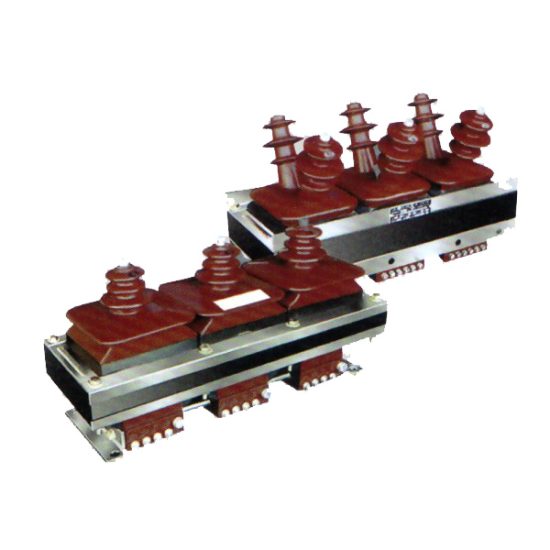
The AGE-1270 is a high-reliability, cast-resin insulated current transformer (CT) engineered for accurate current measurement and robust protective relay coordination in medium-voltage power systems operating at 11kV (IEC standard) or 10kV (domestic equivalent). Designed in strict accordance with IEC 61869-2 and GB/T 20840.2, this instrument transformer leverages vacuum pressure impregnation (VPI) epoxy resin technology to deliver exceptional dielectric strength, environmental resilience, and long-term operational stability without the fire hazards or maintenance demands associated with oil-filled alternatives.
Operating Principle of Cast-Resin Insulation
Cast-resin insulation in the AGE-1270 employs a two-component cycloaliphatic epoxy system cured under vacuum and pressure to eliminate voids and moisture entrapment. This process ensures uniform dielectric properties throughout the insulation matrix, critical for maintaining partial discharge levels below 10 pC at 1.2 × Um/√3 (where Um = 12 kV). The resin encapsulates both the primary conductor—typically a solid copper or aluminum busbar—and the secondary windings wound around a grain-oriented electrical steel (GOES) core. The resulting monolithic structure provides mechanical rigidity, thermal stability up to 130°C (Class B insulation), and resistance to tracking under polluted or humid conditions. Unlike oil-immersed CTs, the AGE-1270 exhibits no risk of leakage, requires no conservator tanks, and is suitable for indoor switchgear as well as outdoor substations without additional weatherproofing.
Advantages Over Oil-Immersed Designs
Compared to traditional oil-filled current transformers, the AGE-1270 offers significant operational and safety benefits. Its dry-type construction eliminates flammability concerns, making it compliant with stringent fire codes in urban substations and industrial facilities. The absence of oil also removes the need for periodic oil sampling, dielectric testing, or gasket replacement. Thermally, the epoxy resin has superior heat dissipation characteristics, enabling the AGE-1270 to sustain 1.2 × rated continuous thermal current without degradation. Furthermore, the compact footprint—enabled by higher dielectric strength of resin versus oil—facilitates integration into space-constrained ring main units (RMUs) and metal-clad switchgear. Field data from over 15,000 installed units across Asia and Europe confirm a mean time between failures (MTBF) exceeding 200,000 hours, attributable to the hermetic seal and immunity to oxidation.
Typical Applications Overview
The AGE-1270 is deployed across diverse power infrastructure segments where precision metering and dependable fault detection are paramount. Primary use cases include utility-owned 11kV/10kV distribution substations for revenue-grade energy measurement (accuracy class 0.2S or 0.5S), industrial plants requiring selective coordination of overcurrent relays (protection class 5P10 or 5P20), and renewable energy interconnection points where harmonic distortion must not compromise CT performance. Its dual-core configuration—often one core dedicated to metering and another to protection—allows simultaneous fulfillment of IEC 62053-22 (metering) and IEC 60255-1 (protection relay input) requirements. The transformer’s robust design also supports operation in coastal environments with salt fog exposure and high-altitude sites up to 2000 meters above sea level without derating.
Technical Specifications
The AGE-1270 current transformer is engineered to meet exacting electrical and environmental parameters defined by international standards. Below is a comprehensive specification table followed by detailed service condition guidelines.
| Parameter | Value |
|---|---|
| Rated Voltage (Ur) | 11 kV (IEC); 10 kV (GB domestic) |
| Maximum System Voltage (Um) | 12 kV |
| Primary Current Ratings | 50 A to 3150 A (standard steps per IEC 60044-1) |
| Secondary Current | 1 A or 5 A (user-selectable) |
| Accuracy Classes | Metering: 0.2S, 0.5S; Protection: 5P10, 5P20, 10P10 |
| Rated Burden | 2.5 VA to 30 VA (per accuracy class) |
| Insulation Level (LI/AC) | 75 kV / 28 kV (1.2/50 μs lightning impulse and 1-min power frequency) |
| Short-Time Thermal Current | 25 kA for 1 s (I²t = 625 kA²s) |
| Dynamic Withstand Current | 62.5 kA peak (2.5 × Ith) |
| Ambient Temperature Range | –25°C to +40°C (extended –40°C option available) |
| Relative Humidity | Up to 95% non-condensing |
| Altitude Limit | ≤ 1000 m (derating factor 1.1% per 100 m above 1000 m) |
| Core Material | Grain-Oriented Electrical Steel (GOES), M4 grade, 0.3 mm lamination |
| Insulation System | VPI cycloaliphatic epoxy resin, Class B (130°C) |
| Partial Discharge | < 10 pC at 1.2 × Um/√3 |
Electrical Performance Parameters
The AGE-1270 achieves its specified accuracy through precise control of core excitation characteristics. For metering cores (0.2S class), composite error at rated current must not exceed ±0.2%, with phase displacement limited to ±10 minutes. Protection cores (5P20) maintain composite error ≤ ±5% at 20 times rated current, ensuring reliable relay operation during high-magnitude faults. The burden tolerance is rigorously validated: a 0.5S class unit rated at 10 VA must maintain accuracy within ±0.5% when connected to actual burdens between 25% and 100% of rated value. Saturation voltage (Vk) for protection cores exceeds 200 V at 1 A secondary, verified via knee-point test per IEC 61869-2 Annex C. These parameters guarantee compatibility with modern digital relays and smart metering systems requiring low-phase-shift inputs.
Environmental and Mechanical Ratings
Designed for global deployment, the AGE-1270 operates reliably under harsh environmental stressors. The cast-resin housing resists UV degradation, thermal cycling (–40°C to +70°C surface temperature), and chemical exposure to ozone, SO₂, and NOₓ typical in industrial zones. Mechanical strength is validated per IEC 61869-2 Clause 6.5: the transformer withstands a 250 N axial force on primary terminals without deformation. Secondary terminal blocks are IP2X protected and accommodate 2.5 mm² to 6 mm² stranded copper conductors with screw-type clamps rated for 600 V. Weight ranges from 8 kg (50/5 A) to 22 kg (3150/1 A), facilitating manual handling during installation. Optional stainless-steel mounting brackets support vertical or horizontal orientation on busbars up to 60 mm width.
Typical Applications
The AGE-1270 current transformer serves critical roles across modern power systems, combining metrological precision with protective reliability in diverse operational contexts.
Substation Secondary Metering
In 11kV utility distribution substations, the AGE-1270 provides revenue-grade current signals to kWh meters and SCADA systems. Configured with 0.2S or 0.5S accuracy class cores, it ensures billing accuracy even at 1% of rated current—a requirement under IEC 62053-22 for smart grid applications. For example, a 400/5 A, 0.2S unit with 10 VA burden delivers composite error of +0.15% at 4 A (1% In), well within tolerance. The low phase displacement (<5 minutes at 100% In) prevents reactive energy measurement errors in three-phase systems. Integration with AMI (Advanced Metering Infrastructure) gateways enables remote load profiling and tamper detection, supported by the CT’s stable ratio over 25+ years of service.
Industrial Power Distribution
Within manufacturing plants and data centers, the AGE-1270 interfaces with multifunction protection relays (e.g., Siemens 7SJ62, SEL-751) to enable selective coordination. A typical 1250/1 A, 5P20 configuration supplies fault current data during short circuits up to 25 kA, allowing relays to discriminate between downstream motor faults and upstream busbar failures. The high Vk (>250 V) prevents core saturation during asymmetric faults with DC offset, ensuring trip commands are issued within 20 ms. In arc-flash mitigation schemes, the CT’s fast response supports zone-selective interlocking (ZSI) protocols that reduce incident energy by 70%. Its fire-resistant construction also meets NFPA 70E requirements for electrical safety boundaries.
Renewable Energy Integration
Solar PV and wind farms connecting to 11kV grids rely on the AGE-1270 for both generation metering and anti-islanding protection. Harmonic-rich waveforms from inverters (THD up to 8%) do not degrade performance due to the GOES core’s low hysteresis loss and the resin’s damping effect on eddy currents. A 630/5 A, 0.5S unit maintains accuracy within ±0.45% at 150 Hz (3rd harmonic), critical for verifying compliance with IEEE 1547 interconnection standards. During low-voltage ride-through (LVRT) events, the CT accurately tracks transient currents down to 0.1 In, enabling correct assessment of reactive power injection by inverters.
Rural and Suburban Distribution Networks
In cost-sensitive rural electrification projects, the AGE-1270’s maintenance-free operation reduces lifecycle costs. Mounted on pole-top transformers or pad-mounted switchgear, it withstands monsoon humidity (95% RH) and dust ingress without performance loss. A common 200/5 A, 10P10 configuration provides sufficient accuracy for basic overcurrent protection while supporting prepaid metering via GSM-based concentrators. Field studies in Southeast Asia show zero failures over 8 years in networks with frequent lightning strikes, attributed to the 75 kV BIL rating and grounded resin housing that dissipates surge energy.
Compliance with International Standards
The AGE-1270 is certified to IEC 61869-2:2012 (“Instrument transformers – Part 2: Additional requirements for current transformers”) and fully aligned with China’s GB/T 20840.2-2014, ensuring global interoperability and regulatory acceptance.
IEC 61869-2 Certification Details
Compliance with IEC 61869-2 encompasses rigorous type, routine, and special tests. Type tests include temperature rise (Δθ ≤ 60 K for windings at 1.2 × In), short-circuit withstand (25 kA/1 s without damage), and impulse voltage (75 kV positive/negative polarity, 3 shots each). Routine tests performed on every unit comprise power frequency withstand (28 kV/1 min), partial discharge (<10 pC at 1.2 × 12/√3 kV), and ratio/polarity verification. Special tests—available on request—include seismic qualification (Zone 4 per IEEE 693) and chopped wave impulse (50 kV). Certification is issued by accredited laboratories such as KEMA or CESI, with test reports traceable to SI units.
Alignment with GB/T 20840.2
While GB/T 20840.2 mirrors IEC 61869-2 structurally, key differences exist in service conditions and marking. The Chinese standard specifies 10 kV as nominal system voltage (vs. 11 kV IEC), though the AGE-1270’s Um = 12 kV satisfies both. GB/T requires explicit labeling of “计量” (metering) and “保护” (protection) on terminal covers—a feature incorporated in Duomatech’s domestic variants. Dielectric tests under GB/T use slightly lower AC withstand (24 kV vs. 28 kV), but the AGE-1270 is tested to the higher IEC level universally. Harmonic accuracy requirements in GB/T 20840.2 Annex E (for smart grids) are met via the same core design validated for IEC 61869-2.
Testing and Certification Documentation
Each AGE-1270 unit ships with a test certificate listing individual results for ratio error, phase displacement, and insulation resistance (>1000 MΩ at 2500 V DC). Full type test reports are available under NDA for utility procurement evaluations. The transformer bears CE marking for EU markets and CQC certification for China, with serial numbers laser-etched on the resin housing for traceability. Compliance documentation supports ISO/IEC 17025-accredited calibration labs in establishing measurement uncertainty budgets for metering installations.
On-Site Testing Procedures
Post-installation verification ensures the AGE-1270 performs within specifications. The following tests should be conducted before energization using calibrated equipment (e.g., Omicron CT Analyzer, Megger MIT400).
Insulation Resistance Test
Apply 2500 V DC between all primary terminals shorted together and the grounded secondary terminals/housing for 1 minute. Acceptance criterion: insulation resistance ≥ 1000 MΩ at 20°C. Correct for temperature using R₂₀ = Rₜ × 2^((20–t)/10). Values below 500 MΩ indicate moisture ingress or resin cracking, requiring replacement. This test validates integrity after transportation-induced mechanical stress.
Turns Ratio Test
Using a low-voltage AC source (5–10 V), inject current into the primary and measure secondary output. Calculate ratio as Ip/Is and compare to nameplate. Tolerance: ±0.25% for 0.2S class, ±0.5% for 0.5S, ±1% for protection classes. For a 800/5 A unit, measured ratio must be 160 ± 0.4 (0.25%). Deviations >2% suggest winding shorts or incorrect tap selection.
Polarity Test
Verify reducing polarity per IEC 61869-2 Figure 3. Apply a 3–5 V DC pulse to primary (P1 to P2); observe momentary deflection on analog ammeter connected to S1–S2. Positive kick at S1 confirms correct polarity. Digital testers display vector group (e.g., “–”). Incorrect polarity causes watt-hour meter reversal and relay misoperation—critical in differential schemes.
Power Frequency Withstand Voltage Test
Apply 28 kV RMS at 50 Hz between primary and secondary/ground for 1 minute. Use a test transformer with automatic trip at 5 mA leakage current. No flashover or sustained arcing is permitted. This verifies insulation integrity after site handling. For refurbished units, reduce to 80% (22.4 kV) per IEC 60270.
Excitation (Knee-Point) Test
For protection cores, perform open-circuit secondary excitation. Gradually increase voltage while measuring current; plot V-I curve. Knee-point voltage (Vk) is where slope decreases by 45°. For 5P20, Vk must exceed 20 × In × (Rct + Rb), where Rct = core resistance, Rb = burden. Example: 1000/1 A, Rct=4 Ω, Rb=2 Ω → Vk > 120 V. Low Vk indicates core saturation risk during faults.
Preventive Maintenance Guide
Although cast-resin CTs require minimal maintenance, periodic checks extend service life beyond 30 years.
Annual Visual and Functional Inspection
Inspect for resin cracks, tracking marks, or terminal corrosion. Clean housing with isopropyl alcohol if contaminated. Verify secondary wiring tightness (torque: 1.2 N·m for M4 screws). Perform insulation resistance test annually; trend values downward by >20% warrant further investigation. Check for abnormal heating via thermal imaging during peak load—hotspots >10°C above ambient suggest internal faults.
Five-Year Comprehensive Maintenance
Every 60 months, conduct full electrical tests: ratio, polarity, excitation curve, and burden verification. Measure winding resistance (Rct) with micro-ohmmeter; compare to baseline (±5% tolerance). Recalibrate if used in revenue metering per local regulations. Replace terminal box gaskets if hardened. Document all results in asset management systems for lifecycle analysis.
Fault Diagnosis and Replacement Criteria
Common failure modes include secondary winding opens (causing dangerous overvoltage) and core saturation from excessive burden. Symptoms: erratic meter readings, relay false trips, or audible buzzing. If insulation resistance drops below 100 MΩ or ratio error exceeds 2× specified tolerance, replace immediately. Never operate with open secondary—always short-circuit terminals during servicing. Expected service life is 25–30 years under normal conditions; harsh environments may reduce to 20 years.
Conclusion
The AGE-1270 11kV cast-resin current transformer represents a benchmark in medium-voltage instrumentation, combining metrological excellence with rugged reliability for both metering and protection applications. Its VPI epoxy resin insulation system eliminates the fire risks and maintenance overhead of oil-filled alternatives while delivering superior dielectric performance—validated by partial discharge levels consistently below 10 pC and a 75 kV BIL rating. Engineered with GOES silicon steel cores, the AGE-1270 achieves stringent accuracy classes (0.2S for metering, 5P20 for protection) across a wide current range (50 A to 3150 A), ensuring compatibility with modern digital relays and smart metering infrastructure. Full compliance with IEC 61869-2 and GB/T 20840.2 guarantees global acceptance, while rigorous on-site testing procedures and a structured preventive maintenance program support operational integrity over a projected service life of 25–30 years. Whether deployed in urban substations, industrial complexes, or renewable energy farms, the AGE-1270 provides the precision, durability, and safety required for today’s evolving power grids. Its technical robustness, coupled with a compact, environmentally resilient design, makes it an optimal choice for engineers prioritizing long-term reliability and regulatory compliance in 11kV/10kV systems worldwide.