Article Content
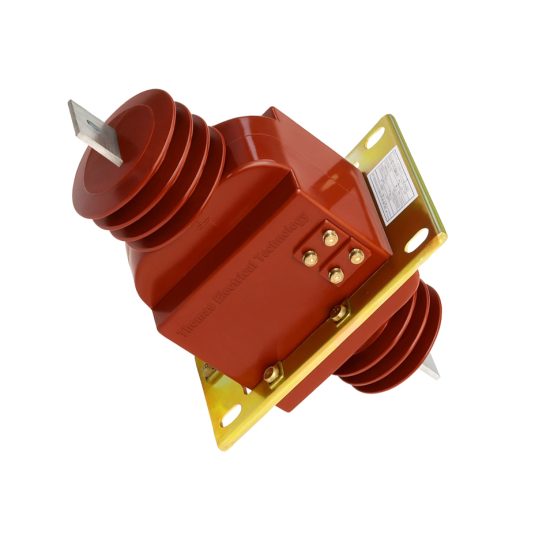
LAJ-10Q 11kV Cast-Resin Current Transformer for Substation Metering and Protection – IEC 61869-2 Certified
Introduction to the LAJ-10Q Current Transformer
The LAJ-10Q is a high-reliability, cast-resin insulated current transformer (CT) engineered for 11kV medium-voltage networks—corresponding to domestic 10kV systems—and designed to meet the stringent demands of both metering and protective relaying applications. Its construction leverages vacuum pressure impregnation (VPI) epoxy resin technology combined with grain-oriented (GOES) silicon steel cores to ensure exceptional magnetic performance, thermal stability, and long-term dielectric integrity.
Operating Principle of Cast-Resin Insulation
Cast-resin insulation in the LAJ-10Q employs a two-component cycloaliphatic epoxy resin system cured under vacuum and pressure. This process eliminates air voids and moisture ingress pathways, resulting in a monolithic, non-hygroscopic solid insulation structure. Unlike oil-filled or paper-insulated CTs, the cast-resin design provides superior partial discharge resistance (<5 pC at 1.2 × Um/√3), enhanced mechanical strength, and immunity to environmental contaminants such as dust, salt fog, and industrial pollutants. The resin matrix also acts as an effective thermal conductor, facilitating uniform heat dissipation during continuous or short-circuit current conditions. This insulation method complies fully with IEC 61869-2 clause 5.3 on solid insulation requirements and ensures stable performance across the full operational temperature range of –25°C to +40°C ambient.
Advantages Over Oil-Immersed Designs
Compared to traditional oil-immersed current transformers, the LAJ-10Q offers significant operational and safety benefits. It eliminates fire hazards associated with flammable insulating oils, making it suitable for indoor substations, commercial buildings, and confined urban installations. Maintenance requirements are drastically reduced—no oil sampling, level checks, or gas monitoring is needed. The compact, lightweight design (typically 12–15 kg depending on ratio) simplifies handling and mounting in switchgear panels. Furthermore, the absence of liquid insulation prevents leakage risks and extends service life to 25–30 years under normal operating conditions. Electromagnetic performance is also enhanced due to the precise winding geometry achievable with resin casting, yielding lower phase displacement errors and tighter ratio accuracy—critical for revenue metering per IEC 62053-11 Class 0.2S.
Typical Applications Overview
The LAJ-10Q is deployed across diverse 11kV (10kV nominal) infrastructure, including utility substations, industrial plants, renewable energy interconnection points, and municipal distribution networks. In utility settings, it supports accurate energy billing via Class 0.2S secondary windings while simultaneously feeding protective relays (e.g., overcurrent, earth fault) through Class 5P10 or 5P20 windings. Industrial users leverage its dual-core configuration for simultaneous process monitoring and motor protection. Its robustness against transient overvoltages and harmonics makes it ideal for integration with solar inverters or wind turbine step-up transformers. The transformer’s IP00 rating assumes enclosure within metal-clad switchgear, ensuring operator safety and electromagnetic compatibility (EMC) in EMI-prone environments.
Technical Specifications
The LAJ-10Q adheres to precise electrical and mechanical parameters defined by IEC 61869-2 and GB/T 20840.2, ensuring interoperability and reliability in global power systems.
Rated Electrical Parameters
Primary voltage rating: 11kV (Um = 12kV), corresponding to 10kV domestic systems. Primary current ratings range from 50A to 3000A in standard steps (e.g., 100/5A, 600/1A, 1250/5A). Secondary outputs are available in 1A or 5A configurations. Accuracy classes include 0.2S, 0.5S for metering and 5P10, 5P20 for protection. Rated burden values span 2.5 VA to 30 VA depending on class and secondary current. The short-time thermal current withstand is 20 kA for 1 second (Ith), with a dynamic peak withstand of 50 kA (Idyn). Insulation levels comply with IEC 60071-1: power frequency withstand voltage of 28 kV rms for 1 minute and lightning impulse withstand of 75 kV peak (1.2/50 µs waveform).
Core and Winding Construction
Each secondary winding is wound on a toroidal core fabricated from high-permeability GOES silicon steel (grade M6 or equivalent), with lamination thickness ≤0.3 mm to minimize eddy current losses. Core gaps are eliminated through precision stacking, reducing remanence and improving linearity under DC offset conditions. Windings use electrolytic-tough-pitch (ETP) copper, insulated with Class F (155°C) enamel. Multiple secondary windings (up to three) can be integrated into a single housing, electrically isolated by ≥8 mm creepage distance in resin. Terminal blocks feature tinned copper studs rated for 600 V and compatible with standard ring lugs (M6 or M8). Polarity marking follows IEC 61869-2 reducing polarity convention: primary current entering P1 results in secondary current exiting S1.
Environmental and Service Conditions
The LAJ-10Q is rated for indoor installation within metal-enclosed switchgear (IP2X minimum). Ambient temperature range: –25°C to +40°C; relative humidity up to 95% non-condensing. Maximum installation altitude: 1000 m above sea level without derating; above 1000 m, voltage withstand must be adjusted per IEC 60071-2 (3% reduction per 100 m). No special ventilation is required. The transformer is not suitable for outdoor exposure unless housed in a weatherproof enclosure meeting IP54 or higher. Service life exceeds 25 years under continuous load at rated current and ambient conditions, assuming no external mechanical stress or chemical corrosion.
Typical Applications
The LAJ-10Q serves critical roles across modern power infrastructure where accuracy, safety, and reliability are non-negotiable.
Substation Secondary Metering
In 11kV/0.4kV distribution substations, the LAJ-10Q provides Class 0.2S metering-grade current signals to revenue meters compliant with IEC 62053-22. Its low phase error (<±10 minutes at 100% In) ensures minimal reactive energy measurement deviation. Dual-core variants supply one winding to the utility meter and another to the customer’s internal energy management system (EMS), enabling transparent billing and load profiling. Installation within ring-main units (RMUs) or withdrawable switchgear allows easy replacement without network interruption. The transformer’s linear response from 1% to 120% of rated current supports accurate billing even under light-load nighttime conditions common in residential areas.
Industrial Power Distribution
Heavy industries—such as cement plants, steel mills, and data centers—deploy the LAJ-10Q on 11kV feeders supplying large motors, rectifiers, or UPS systems. Here, the 5P20 protection winding feeds digital relays (e.g., Siemens 7SJ62) for instantaneous overcurrent and thermal overload protection. The high saturation point (>20× In) prevents core saturation during motor inrush currents (typically 6–8× In for 0.2–0.5 s). Harmonic-rich environments (THD up to 15%) do not significantly degrade performance due to the low-loss GOES core. Ground-fault detection is enhanced when used with residual-connected CTs in three-phase systems.
Renewable Energy Integration
Solar photovoltaic (PV) farms and wind parks connect to the grid via 11kV collection systems where the LAJ-10Q monitors export/import power and enables anti-islanding protection. Its fast transient response (<10 ms rise time) captures fault currents during grid disturbances, critical for compliance with IEEE 1547 or IEC 61850-90-7. The CT’s immunity to DC injection—common during inverter faults—is ensured by the air-gap-free core design. For bi-directional metering, dual-secondary models support separate import/export channels with independent accuracy certification.
Rural and Suburban Distribution Networks
In remote or semi-urban grids with limited maintenance access, the LAJ-10Q’s maintenance-free operation is a key advantage. Mounted in pole-top or pad-mounted switchgear, it enables remote fault location via SCADA systems using 5P10 outputs. Its compact size fits legacy enclosures originally designed for older oil-filled CTs. Temperature cycling resistance (–25°C to +55°C during peak load) prevents resin cracking in regions with extreme diurnal swings. Utilities report >99.5% field reliability over 15 years in such deployments.
Compliance with International Standards
The LAJ-10Q is engineered to satisfy both international and Chinese national standards, ensuring global acceptance and regulatory compliance.
IEC 61869-2 Certification Requirements
IEC 61869-2 defines performance, testing, and marking criteria for instrument transformers. The LAJ-10Q meets all mandatory clauses: ratio error and phase displacement limits per Table 3 (e.g., ±0.2% for Class 0.2S at 100% In), temperature rise ≤55 K for windings, partial discharge <10 pC at 1.2 × Um/√3, and short-circuit withstand per Annex B. Type tests include temperature rise, short-time current, and impulse voltage tests conducted in accredited laboratories. Routine tests (performed on every unit) cover turns ratio, polarity, insulation resistance (>1000 MΩ at 500 V DC), and power frequency withstand. Marking includes model, ratio, accuracy class, burden, and IEC 61869-2 compliance symbol.
Alignment with GB/T 20840.2
GB/T 20840.2 is China’s national adoption of IEC 61869-2 with minor modifications. Key differences include: (1) altitude derating starts at 1000 m (vs. 2000 m in IEC); (2) lightning impulse level for 10kV systems is 75 kV (same as IEC); (3) accuracy verification includes additional points at 1% and 120% In for Class 0.2S. The LAJ-10Q is certified by CQC (China Quality Certification Center) and bears the CCC mark for domestic sales. Core material must meet GB/T 2521 for GOES steel, which aligns closely with IEC 60404-8-4.
Testing and Certification Documentation
Each LAJ-10Q unit ships with a test report detailing routine test results. Type test certificates (valid for 5 years) are available upon request and include data from third-party labs like KEMA or CESI. Certifications cover IEC 61869-2, GB/T 20840.2, and RoHS compliance. For projects requiring grid code compliance (e.g., ENTSO-E, ANEEL), supplementary harmonic distortion and DC offset tests can be provided. All markings are laser-etched on the resin housing for permanence.
On-Site Testing Procedures
Post-installation verification ensures the LAJ-10Q performs within specification before energization.
Insulation Resistance Test
Using a 500 V DC megohmmeter, measure insulation resistance between primary and secondary windings, and between windings and ground. Acceptance criterion: ≥1000 MΩ at 20°C. Correct for temperature using RT = R20 × 2(20–T)/10. Low readings indicate moisture ingress or resin cracking—requiring unit replacement. Perform before and after power frequency withstand tests.
Turns Ratio Test
Apply low-voltage AC (e.g., 120 V) to the secondary and measure induced primary voltage, or use a dedicated CT analyzer (e.g., Omicron CT Analyzer). Verify ratio within ±0.5% of nameplate for metering classes, ±1% for protection. Example: for 600/5A, measured ratio must be 120 ±0.6. Deviations suggest turn-to-turn shorts or incorrect tap selection.
Polarity Test
Connect a 1.5 V battery between P1 and P2. Momentarily close the circuit and observe a DC milliammeter connected to S1–S2. A positive deflection confirms reducing polarity (standard per IEC). Incorrect polarity causes relay misoperation or negative meter readings. Repeat three times for consistency.
Power Frequency Withstand Voltage Test
Apply 28 kV rms at 50 Hz between primary and grounded secondary/enclosure for 60 seconds. Use a calibrated HV test set with automatic trip at 10 mA leakage. No flashover or sustained arcing is permitted. Pre-test: ensure all secondary terminals are shorted and grounded. Post-test: recheck insulation resistance.
Short-Circuit Test (for CT)
Inject 10× rated secondary current (e.g., 50 A for 5A CT) into the secondary winding with primary shorted. Measure voltage drop; calculate impedance. Compare with factory data—deviation >10% indicates core damage or winding deformation. Not required routinely but recommended after seismic events or transport drops.
Preventive Maintenance Guide
Although maintenance-free by design, periodic checks extend service life and prevent unexpected failures.
Annual Visual and Electrical Inspection
Inspect for surface cracks, tracking marks, or discoloration on resin housing. Check terminal tightness (torque: 8 N·m for M6). Measure insulation resistance and compare with baseline. Verify secondary wiring continuity and grounding integrity. Clean dust with dry, lint-free cloth—never use solvents. Record all findings in asset management logs.
Five-Year Comprehensive Maintenance
Perform full ratio, polarity, and excitation curve tests using a CT analyzer. Excitation knee-point voltage should match factory data within ±5%. Significant reduction indicates core degradation. Re-torque all mechanical connections. Update test records in CMMS. If installed in corrosive environments (e.g., coastal), inspect for salt deposits and apply conformal coating if needed.
Maintenance Intervals and Fault Diagnosis
| Interval | Task | Fault Indicator |
|---|---|---|
| Annually | Visual inspection, IR test | IR <500 MΩ → moisture/resin defect |
| Every 5 years | Ratio, polarity, excitation test | Knee-point ↓10% → core aging |
| After fault | Full suite + short-circuit test | Ratio error >1% → winding damage |
Common failure modes include open secondary circuits (causing dangerous overvoltages), loose terminals (leading to arcing), and UV degradation in outdoor misuse. Never operate with secondary open—always short before disconnecting.
Conclusion
The LAJ-10Q 11kV cast-resin current transformer represents a benchmark in medium-voltage instrumentation, combining IEC 61869-2 and GB/T 20840.2 compliance with robust engineering for demanding metering and protection duties. Its VPI epoxy resin insulation eliminates fire risk and maintenance overhead, while the GOES silicon steel core ensures metrological precision from 1% to 120% of rated current. Field-proven in utilities, industry, and renewables, it delivers reliable performance across –25°C to +40°C ambient conditions with a design life exceeding 25 years. The dual-core flexibility, high short-circuit withstand (20 kA/1s), and immunity to environmental stressors make it ideal for modern, compact switchgear installations. By adhering to rigorous type and routine testing protocols, the LAJ-10Q minimizes lifecycle costs while maximizing grid safety and measurement integrity—solidifying its role as a cornerstone component in resilient 11kV infrastructure worldwide.