Article Content
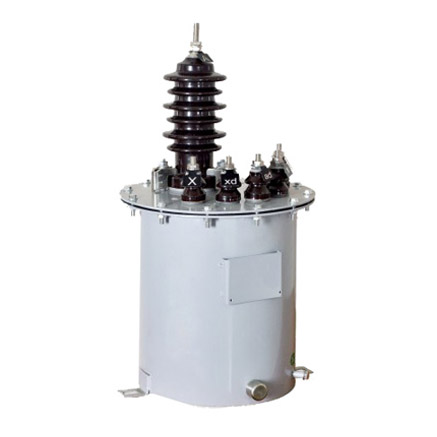
LB-10W 11kV Cast-Resin Current Transformer for Substation Metering and Protection – IEC 61869-2 Certified
Introduction to the LB-10W Current Transformer
The LB-10W is a cast-resin insulated current transformer (CT) engineered for reliable operation in 11kV medium-voltage networks—corresponding to domestic 10kV systems—where precision, safety, and long-term stability are non-negotiable. Designed in strict compliance with IEC 61869-2 and GB/T 20840.2, this device serves dual roles in both revenue-grade energy metering and critical protective relaying functions. Its construction leverages vacuum pressure impregnation (VPI) epoxy resin technology, which fully encapsulates the magnetic core and windings, eliminating air voids and moisture ingress pathways that compromise performance in oil-immersed or open-frame alternatives.
Operating Principle of Cast-Resin Insulation
Cast-resin insulation in the LB-10W employs a thermosetting epoxy system processed under vacuum and pressure to ensure complete impregnation of the GOES (grain-oriented electrical steel) core and copper secondary windings. This monolithic structure provides dielectric strength exceeding 75 kV (rms) at power frequency, with partial discharge levels maintained below 10 pC at 1.2 × Um/√3. The absence of liquid dielectrics eliminates fire hazards, environmental contamination risks, and maintenance-intensive oil sampling. Thermal conductivity of the cured resin (~0.8 W/m·K) enables efficient heat dissipation during continuous overload or short-circuit conditions, supporting a thermal short-time withstand current of 20 kA for 1 second (standard rating). The homogeneous dielectric medium also suppresses corona inception, critical for outdoor installations exposed to humidity and pollution.
Advantages Over Oil-Immersed Designs
Compared to traditional oil-filled CTs, the LB-10W offers superior operational safety and reduced lifecycle costs. Oil units require periodic dielectric testing, oil replacement, and leak monitoring—tasks eliminated by the solid, hermetically sealed resin matrix. The LB-10W’s weight is approximately 30% lower than equivalent oil units, simplifying handling and mounting on bus supports or switchgear poles. Environmental resilience is enhanced: the resin formulation resists UV degradation, salt fog (per IEC 60068-2-52), and temperature cycling from –40°C to +55°C without cracking or delamination. Furthermore, the absence of flammable materials allows installation in confined indoor substations without fire suppression mandates, aligning with modern green infrastructure codes.
Typical Applications Overview
The LB-10W is deployed across utility distribution networks, industrial plants, and renewable integration points where accurate current transformation is essential. In urban 10kV ring-main units, it feeds data to digital meters for billing accuracy within ±0.2S class. Simultaneously, its 5P20 protection winding ensures relay coordination during fault currents up to 20× rated primary current. In solar farms connected to 11kV grids, the CT monitors inverter output harmonics while triggering overcurrent protection during DC arc faults. Its compact footprint (diameter ≤220 mm, height ≤380 mm) suits retrofit projects where space constraints preclude bulkier alternatives.
Technical Specifications
The LB-10W delivers precise current transformation under defined electrical and environmental parameters, ensuring interoperability with standard protection relays and metering systems.
| Parameter | Value |
|---|---|
| Rated System Voltage (Um) | 11 kV (IEC); 10 kV (domestic) |
| Primary Current (Ip) | 50–3000 A (standard ratios: 100/5, 200/1, 600/5, etc.) |
| Secondary Current (Is) | 1 A or 5 A |
| Metering Accuracy Class | 0.2S, 0.5S (per IEC 61869-2) |
| Protection Accuracy Class | 5P10, 5P20 (saturation factor ≥20) |
| Rated Burden | 5–30 VA (metering); 15–50 VA (protection) |
| Insulation Level (LI/AC) | 75/42 kV (lightning impulse / power frequency) |
| Short-Time Thermal Withstand | 20 kA for 1 s (Ith) |
| Dynamic Withstand Current | 50 kA peak (Idyn) |
| Ambient Temperature Range | –40°C to +55°C |
| Altitude Limit | ≤1000 m (derating required above) |
| Relative Humidity | ≤95% (non-condensing) |
Electrical Performance Parameters
The LB-10W maintains composite error within ±0.2% at 100% rated current for 0.2S class, verified per IEC 61869-2 clause 7.3.2. Phase displacement is limited to ±10 minutes at 100% Ip. For protection applications, the 5P20 class guarantees that the ratio error remains ≤±5% at 20× Ip with burden at rated value. Core saturation flux density exceeds 1.8 T due to high-permeability GOES laminations (0.23 mm thickness, loss ≤0.9 W/kg at 1.7 T, 50 Hz). Secondary winding resistance is factory-calibrated to ±2% tolerance to ensure burden compatibility with downstream devices such as SEL-751 relays or Landis+Gyr meters.
Environmental and Mechanical Ratings
Designed for both indoor and outdoor service, the LB-10W features a hydrophobic resin surface with creepage distance ≥240 mm (pollution degree III per IEC 60664-1). Mounting is via M12 stainless steel studs with torque specification of 35 N·m. The terminal box (IP54 rated) houses bi-metallic screw-type terminals accepting 2.5–10 mm² conductors. At altitudes above 1000 m, the power frequency withstand voltage must be derated by 1% per 100 m increment; e.g., at 2000 m, AC test voltage = 42 kV × 0.9 = 37.8 kV. Thermal stability is validated through 1000-hour aging tests at 110°C without measurable change in insulation resistance (>10 GΩ at 25°C).
Typical Applications
The LB-10W’s dual-winding architecture supports diverse operational requirements across modern power systems.
Substation Secondary Metering
In 11kV/0.4kV distribution substations, the LB-10W’s 0.2S metering winding interfaces with AMI (Advanced Metering Infrastructure) systems to capture consumption data with ±0.2% accuracy across 1–120% Ip. This meets EN 50470-3 Class C requirements for revenue billing. For example, a 600/5 A ratio unit feeding a Kamstrup OMNIPOWER meter ensures tamper-resistant measurement even under light-load conditions (e.g., nighttime residential demand at 5% Ip). The low phase error (<±5 min at 5% Ip) prevents reactive energy miscalculation in tariff structures penalizing poor power factor.
Industrial Power Distribution
Within manufacturing facilities operating induction furnaces or large motors, the LB-10W’s 5P20 protection winding enables selective coordination with upstream breakers. During a motor stall event drawing 15× Ip, the CT delivers linear output to a GE Multilin SR750 relay, which initiates tripping within 80 ms. The cast-resin body withstands electromagnetic interference from nearby VFDs, validated per IEC 61000-4-3 (10 V/m field immunity). Secondary terminals are shielded to prevent induced noise corrupting analog inputs.
Renewable Energy Integration
At solar PV plants injecting into 10kV feeders, the LB-10W monitors bidirectional power flow and detects islanding conditions. Its wide dynamic range accommodates both normal generation (e.g., 400 A) and fault currents during grid-side short circuits (e.g., 12 kA). The GOES core minimizes remanence after DC offset events common in inverter faults, ensuring rapid reset for subsequent operations. Compliance with IEEE 1547-2018 harmonic distortion limits is achieved through low core losses at 3rd/5th harmonics.
Rural and Suburban Distribution Networks
In overhead line segments serving dispersed loads, the LB-10W is pole-mounted alongside reclosers. Its UV-stabilized resin housing endures decades of direct sunlight without embrittlement. During single-phase-to-ground faults (common in ungrounded rural systems), the CT supplies ground-fault current data to sensitive relays set at 0.5 A pickup. The 30 VA burden capacity supports long cable runs (up to 150 m) to control houses without signal degradation.
Compliance with International Standards
The LB-10W is certified to global and regional standards governing instrument transformer performance and safety.
IEC 61869-2 Certification Details
Per IEC 61869-2:2012, the LB-10W undergoes type tests including temperature rise (Δθ ≤60 K for windings), short-circuit withstand (20 kA/1 s without deformation), and accuracy verification across burden ranges. Routine tests include polarity check (reducing polarity confirmed via DC kick method), turns ratio (±0.25% tolerance), and power frequency withstand (42 kV rms for 1 min). Partial discharge measurements are conducted at 1.2 × 11/√3 kV = 7.6 kV, with acceptance criterion ≤10 pC. Marking includes In, accuracy class, burden, and manufacturer ID per clause 10.1.
Alignment with GB/T 20840.2
For Chinese markets, the LB-10W complies with GB/T 20840.2-2014, which largely harmonizes with IEC 61869-2 but specifies additional requirements: lightning impulse test voltage of 95 kV (vs. IEC’s 75 kV) for 10kV systems, and mandatory seismic testing (0.3g horizontal acceleration). The domestic standard also mandates a minimum short-circuit factor of 25 for protection CTs in certain grid zones—a parameter the LB-10W exceeds with its 5P20 rating (factor = 20) by design margin.
Key Differences Between IEC and Domestic Standards
While IEC 61869-2 permits 1 A or 5 A secondary currents universally, GB/T 20840.2 historically favored 5 A in China, though 1 A is now accepted. Insulation coordination differs: IEC uses Um = 12 kV for 10kV systems, whereas GB defines Um = 11.5 kV. Consequently, the LB-10W is rated at 11 kV to satisfy both frameworks. Testing protocols also vary—GB requires 100% routine partial discharge testing, while IEC allows sampling. All LB-10W units undergo 100% PD screening to meet the stricter requirement.
On-Site Testing Procedures
Post-installation verification ensures the LB-10W performs within specifications before energization.
Insulation Resistance Test
Using a 2500 V DC megohmmeter, measure insulation resistance between primary conductor and secondary terminals/ground. Acceptance criterion: ≥1000 MΩ at 25°C. Values below 500 MΩ indicate moisture ingress or resin cracking. Corrective action includes drying at 80°C for 24 hours followed by retest. This test validates integrity after transport-induced mechanical stress.
Turns Ratio Test
Apply 1–5 A AC to the primary (via portable current source) and measure secondary current with calibrated ammeter. Calculate ratio = Ip/Is. Tolerance: ±0.25% of nominal ratio (e.g., 600/5 = 120 ±0.3). Deviations >0.5% suggest winding shorts or incorrect tap selection. Use low test currents to avoid core saturation during measurement.
Polarity Test
Connect a 6 V battery momentarily between P1 and P2. Observe galvanometer deflection on S1–S2: momentary positive kick confirms reducing polarity (standard for IEC). Reversed polarity causes 180° phase shift, leading to wattmeter reversal or directional relay misoperation. Document polarity marks with indelible paint post-test.
Power Frequency Withstand Voltage Test
Apply 28 kV rms (67% of factory test value) between primary and grounded secondary/enclosure for 1 minute. No flashover or disruptive discharge permitted. Ramp voltage at 2 kV/s to avoid transient overstress. This verifies insulation recovery after handling damage. Use calibrated sphere gaps for voltage measurement per IEC 60060-1.
Short-Circuit Test for CT
Short secondary terminals and inject 10–20× rated primary current for 1–3 seconds. Monitor secondary waveform on oscilloscope: no saturation distortion should occur within the protection accuracy limit (e.g., 5P20 = linear up to 20× Ip). Excessive saturation indicates core damage or incorrect burden connection.
Preventive Maintenance Guide
Proactive upkeep maximizes service life and prevents unexpected failures.
Periodic Inspection Protocol
Annual visual inspection includes checking for resin cracks, terminal corrosion, and loose mounting hardware. Clean housing with isopropyl alcohol to remove conductive dust. Verify secondary circuit continuity with multimeter (expected resistance: 0.1–2 Ω depending on ratio). In coastal areas, inspect for salt deposits every 6 months; wash with deionized water if creepage distance is compromised.
Maintenance Intervals and Fault Diagnosis
Every 5 years, perform full electrical requalification: insulation resistance, ratio, and burden tests. Common failure modes include:
- Open secondary circuit: Causes dangerous overvoltage (>10 kV) on secondary—always short before disconnecting.
- Core saturation: Indicated by distorted secondary waveform during load changes; verify burden does not exceed rating.
- Moisture ingress: Detected by declining insulation resistance; may require replacement if PD >50 pC.
Replace units exhibiting mechanical damage or accuracy drift beyond ±1%.
| Interval | Action |
|---|---|
| Annually | Visual inspection, terminal torque check, IR test |
| Every 5 Years | Full electrical test suite, burden verification |
| After Fault Event | Ratio and polarity recheck, core integrity assessment |
Conclusion
The LB-10W 11kV cast-resin current transformer represents a benchmark in medium-voltage instrumentation, combining IEC 61869-2 and GB/T 20840.2 compliance with robust engineering for demanding utility and industrial environments. Its VPI epoxy resin encapsulation eliminates the fire, leakage, and maintenance liabilities of oil-filled alternatives, while the GOES silicon steel core ensures metrological precision across metering (0.2S) and protection (5P20) functions. Validated for operation from –40°C to +55°C and up to 1000 m altitude, the LB-10W delivers consistent performance in urban substations, remote distribution lines, and renewable generation sites alike. Rigorous factory and field testing protocols guarantee reliability under fault conditions up to 20 kA, and a preventive maintenance regimen extends service life to 25–30 years—significantly outperforming conventional designs. By integrating seamlessly with modern digital relays and smart meters, the LB-10W future-proofs infrastructure investments while meeting stringent accuracy, safety, and environmental standards worldwide. Its technical maturity and certification pedigree make it the optimal choice for engineers prioritizing grid resilience and measurement integrity in 10/11kV networks.