Article Content
DZJ-3 11kV Cast-Resin Voltage Transformer for Substation Metering and Protection – IEC 61869-3 Certified
Introduction to the DZJ-3 Voltage Transformer
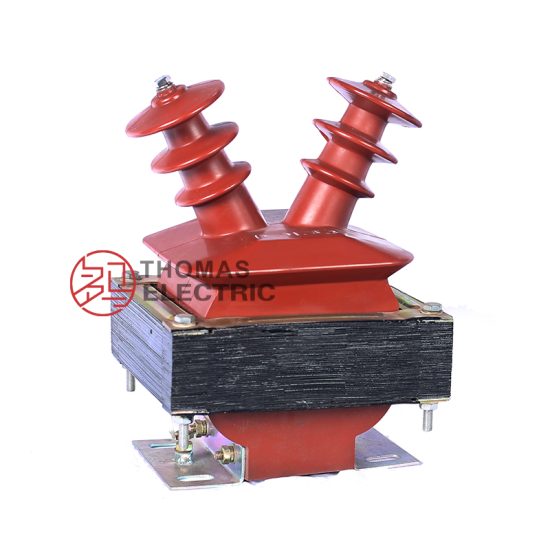
The DZJ-3 is a single-phase, indoor/outdoor-rated cast-resin voltage transformer (VT) engineered for high-reliability applications in 11kV (IEC) or 10kV (domestic Chinese) power systems. Designed in strict accordance with IEC 61869-3 and GB/T 20840.3, this instrument transformer delivers precise voltage transformation for both metering and protective relaying functions. Its construction leverages vacuum pressure impregnation (VPI) epoxy resin technology, which fully encapsulates the magnetic core and windings, eliminating air voids and moisture ingress pathways.
Operating Principle of Cast-Resin Insulation
Cast-resin insulation in the DZJ-3 employs a two-component cycloaliphatic epoxy system cured under controlled vacuum and pressure conditions. This VPI process ensures complete penetration into winding interstices and around the grain-oriented electrical steel (GOES) core laminations. The resulting monolithic structure provides superior dielectric strength (≥30 kV/mm), excellent tracking resistance (CTI ≥600 V), and negligible partial discharge activity (<5 pC at 1.2 × Ur). Unlike oil-filled units, the solid dielectric eliminates fire hazards, environmental contamination risks, and the need for oil monitoring or replenishment. Thermal conductivity of the resin (~0.8 W/m·K) enables efficient heat dissipation from copper windings during continuous operation or transient overloads.
Advantages Over Oil-Immersed Designs
Compared to traditional oil-immersed VTs, the DZJ-3 offers significant operational and safety benefits. The absence of flammable insulating oil makes it suitable for indoor switchgear, urban substations, and confined industrial facilities where fire codes restrict hydrocarbon-based equipment. Maintenance requirements are drastically reduced—no oil sampling, gas analysis, or tank sealing inspections are needed. The hermetic resin seal prevents moisture absorption, ensuring stable dielectric properties across humidity ranges from 10% to 95% RH. Additionally, the compact footprint (typically 30–40% smaller than equivalent oil units) simplifies integration into space-constrained ring main units (RMUs) or prefabricated substations. Long-term reliability is enhanced by the elimination of gasket aging, oil oxidation, and internal corrosion mechanisms inherent in liquid-filled designs.
Typical Applications Overview
The DZJ-3 is deployed across diverse power infrastructure segments requiring accurate voltage sensing. Primary use cases include medium-voltage (MV) substation metering panels, where its Class 0.2 or 0.5 accuracy ensures billing-grade energy measurement per IEC 62053-22. In protection schemes, it supplies inputs to overvoltage, undervoltage, and directional earth-fault relays with Class 3P or 6P accuracy. The unit’s robust thermal design supports continuous operation at 1.2 × rated voltage and short-time withstand of 1.9 × Ur for 8 hours, making it ideal for networks with frequent switching transients or renewable intermittency. Its dual-voltage compatibility (11kV IEC / 10kV domestic) allows seamless deployment in export projects and domestic Chinese grids without redesign.
Technical Specifications
The DZJ-3 voltage transformer is engineered to meet stringent performance criteria under defined service conditions. Key parameters are summarized below:
| Parameter | Value |
|---|---|
| System Voltage (Ur) | 11 kV (IEC) / 10 kV (GB) |
| Primary Voltage | 11/√3 kV or 10/√3 kV |
| Secondary Voltage | 100/√3 V or 100/3 V (residual) |
| Voltage Ratio | 11000/√3 : 100/√3 V (standard) |
| Accuracy Class (Metering) | 0.2, 0.5 |
| Accuracy Class (Protection) | 3P, 6P |
| Rated Output (per class) | 30 VA (0.2), 50 VA (0.5), 100 VA (3P/6P) |
| Insulation Level (Um/Up1/Up2) | 12 kV / 75 kV (1 min) / 95 kV (LI) |
| Short-Time Thermal Withstand | 1.9 × Ur for 8 h |
| Frequency | 50 Hz ± 0.5 Hz |
| Ambient Temperature Range | –40°C to +40°C |
| Altitude | ≤1000 m (derating required above) |
| Relative Humidity | ≤95% (non-condensing) |
| Core Material | Grain-Oriented Electrical Steel (GOES), 0.27 mm thickness |
| Insulation System | VPI Epoxy Resin, UL 94 V-0 rated |
Standard Service Conditions
The DZJ-3 is rated for standard service conditions as defined in IEC 61869-3 Clause 5. Ambient temperature must remain within –40°C to +40°C; operation above +40°C requires derating of output burden by 1.5% per °C. Relative humidity up to 95% is permissible provided no condensation occurs on terminals or housing. Installation altitude must not exceed 1000 meters above sea level; for altitudes between 1000–2000 m, the power frequency withstand voltage must be reduced by 1% per 100 m increment. The transformer assumes a symmetrical three-phase system with balanced loading and sinusoidal voltage waveform (THD ≤5%). Operation in DC-biased or highly distorted networks may require harmonic mitigation measures.
Accuracy and Burden Characteristics
Accuracy classes define permissible ratio and phase errors under specified burdens. For Class 0.2 metering, ratio error must not exceed ±0.2% and phase displacement ≤±10 minutes at 25–100% of rated voltage and 25–100% of rated burden. Protection class 3P permits ±3% ratio error and ±120 minutes phase error at 5%–100% of rated voltage. Burden is expressed in volt-amperes (VA) at cos φ = 0.8 lagging. Exceeding rated burden degrades accuracy and may cause thermal overload; the DZJ-3 includes thermal sensors for optional alarm circuits. Residual windings (100/3 V) are designed for earth-fault detection with accuracy maintained down to 5% of primary voltage.
Typical Applications
The DZJ-3 voltage transformer serves critical roles across modern power systems due to its precision, reliability, and environmental resilience.
Substation Secondary Metering
In 11kV distribution substations, the DZJ-3 provides voltage inputs to revenue-class energy meters (e.g., IEC 62053-22 Class 0.2S). Its low phase error ensures accurate reactive energy measurement essential for power factor billing. The transformer is typically installed on the busbar side of circuit breakers, feeding metering panels via shielded twisted-pair cables. To minimize burden-induced errors, secondary wiring impedance must be kept below 0.1 Ω per conductor. In smart substations, the DZJ-3 interfaces with digital metering units through analog-to-digital converters, maintaining compliance with IEC 61850-9-2 LE sampled value protocols when paired with merging units.
Industrial Power Distribution
Heavy industries such as steel mills, chemical plants, and data centers rely on the DZJ-3 for both protection and power quality monitoring. In arc furnace installations, the VT withstands frequent voltage sags and harmonics while supplying signals to undervoltage relays that initiate motor re-acceleration sequences. Its cast-resin construction resists chemical vapors and dust ingress (IP54 rating achievable with optional terminal box), unlike oil-filled alternatives vulnerable to seal degradation. For critical processes, dual VT configurations provide redundancy—one for metering, another for protection—ensuring continuity during maintenance.
Renewable Energy Integration
Solar photovoltaic (PV) and wind farms utilize the DZJ-3 at the point of interconnection (POI) to grid operators. During cloud-induced irradiance fluctuations or wind gusts, the VT accurately tracks rapid voltage changes for anti-islanding protection and reactive power control per IEEE 1547 or GB/T 19964. Its ability to operate continuously at 1.1 × Ur accommodates typical PV overvoltage scenarios. In microgrids, the DZJ-3 enables seamless transition between grid-connected and islanded modes by providing stable voltage references to synchronizing relays.
Rural and Suburban Distribution Networks
In remote or mountainous regions, the DZJ-3’s maintenance-free design reduces operational costs where technician access is limited. Mounted on pole-top platforms or pad-mounted switchgear, it supplies voltage signals to automated feeder sectionalizers and reclosers for fault location and isolation. The wide ambient temperature tolerance (–40°C) ensures reliable startup in cold climates, while UV-stabilized resin housings resist degradation in high-solar-exposure areas. For rural electrification projects, the 10kV domestic variant integrates directly into China’s standardized distribution architecture without interface modifications.
Compliance with International Standards
The DZJ-3 is certified to both international and Chinese national standards, ensuring global interoperability and regulatory acceptance.
IEC 61869-3 Compliance Details
IEC 61869-3 specifies requirements for electromagnetic voltage transformers for measurement and protection. The DZJ-3 meets all mandatory clauses, including insulation coordination (Clause 6), temperature rise limits (≤60 K for resin, measured by resistance method), and short-circuit withstand capability. Partial discharge measurements are conducted per IEC 60270 at 1.2 × Ur/√3, with acceptance criteria of ≤5 pC. Accuracy verification follows IEC 61869-3 Annex B, using calibrated reference standards traceable to national laboratories. Markings include rated voltage factor (1.2 or 1.5), accuracy class, burden, and polarity indicators per Clause 10.
Alignment with GB/T 20840.3
GB/T 20840.3 is China’s adoption of IEC 61869-3 with minor national deviations. Key differences include the use of 10kV as the nominal system voltage (vs. 11kV in IEC) and specific test voltage values for lightning impulse (95 kV vs. IEC’s 95 kV for Um=12 kV). The DZJ-3 is dual-marked to satisfy both standards: primary terminals labeled “10/√3 kV” for domestic markets and “11/√3 kV” for export. Thermal stability tests under GB require 4-hour duration at 1.2 × Ur, whereas IEC mandates 8 hours—the DZJ-3 exceeds both. Chinese certification (CQC mark) validates compliance with GB/T 20840.3 and associated EMC requirements (GB/T 14598).
Testing and Certification Requirements
Type tests per IEC 61869-3 include temperature rise, short-circuit, impulse, and accuracy verification. Routine tests performed on every unit comprise insulation resistance (>1000 MΩ at 2500 V DC), power frequency withstand (75 kV for 1 min), turns ratio (±0.2% tolerance), and polarity check. Special tests—such as seismic withstand (for earthquake-prone zones) or elevated partial discharge mapping—are available on request. Third-party certification from bodies like TÜV, SGS, or CQC confirms adherence.
On-Site Testing Procedures
Post-installation verification ensures the DZJ-3 performs within specifications before energization.
Insulation Resistance Test
Conducted using a 2500 V DC megohmmeter between primary winding and ground, and between secondary windings and ground. Acceptance criterion: ≥1000 MΩ at 20°C. Temperature correction applies per IEEE 43: Rcorr = Rmeas × 2(40–T)/10. Low readings indicate moisture ingress or resin cracking; values below 500 MΩ warrant drying or replacement. Test leads must be shielded to avoid surface leakage errors.
Turns Ratio Test
Performed with a dedicated ratio bridge or portable tester applying 100–200 V AC to the primary. Measured secondary voltage is compared to theoretical value. Tolerance: ±0.2% for metering classes, ±0.5% for protection. Example: for 11000/√3 : 100/√3 ratio, expected secondary = 100 V at 11000 V primary. Deviations beyond tolerance suggest turn-to-turn shorts or incorrect tap selection.
Polarity Test
Verifies reducing polarity (ANSI/IEEE standard). A 6–12 V battery is momentarily connected to primary terminals (H1+, H2–); a DC voltmeter on secondary (X1, X2) should show positive kick on closure. Incorrect polarity causes 180° phase reversal, leading to metering errors or relay misoperation. Digital testers automate this via low-voltage AC injection and phase comparison.
Power Frequency Withstand Voltage Test
Applies 75 kV RMS at 50 Hz between primary and grounded enclosure for 1 minute. Secondary windings are short-circuited and grounded. No flashover or disruptive discharge is permitted. Test voltage is ramped at 2 kV/s to avoid transient overstress. This verifies insulation integrity after transport and installation stresses.
Open-Circuit Characteristic Test
Measures excitation current vs. applied voltage on the secondary (primary open). Conducted up to 190 V (1.9 × 100 V) to assess core saturation. Excitation current should increase gradually; a sharp rise indicates core defects or shorted laminations. Results are compared to factory curves—deviations >10% require investigation. This test is critical for protection-class VTs used in residual voltage schemes.
Preventive Maintenance Guide
Although cast-resin VTs require minimal maintenance, periodic checks extend service life and prevent unexpected failures.
Periodic Inspection Schedule
Annual visual inspections should verify: (1) terminal tightness (torque: 15 N·m for M8 studs), (2) absence of surface cracks or tracking on resin, (3) cleanliness of bushings (wipe with isopropyl alcohol if dusty), and (4) grounding continuity (<0.1 Ω resistance). In coastal or industrial areas, inspect for salt/fume deposits quarterly. Secondary wiring should be checked for insulation brittleness or rodent damage.
Categories
Blog
Recommended Posts


