Article Content
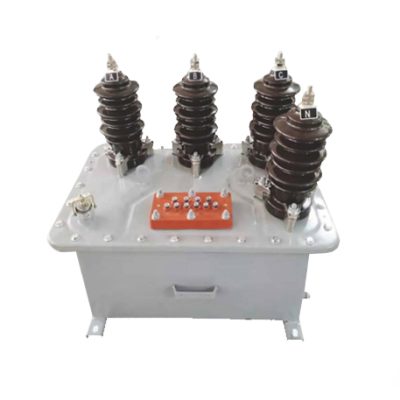
IEC 61869-3 Certified 11kV Voltage Transformer SJW-3 for Metering & Protection Applications
Introduction to the SJW-3 Voltage Transformer
The SJW-3 is a single-phase, cast-resin insulated voltage transformer (VT) engineered for high-reliability operation in 11kV (IEC standard) or 10kV (domestic Chinese system) medium-voltage networks. Designed in strict accordance with IEC 61869-3 and GB/T 20840.3, this instrument transformer provides accurate voltage transformation for both metering and protective relaying functions in utility substations, industrial facilities, and renewable energy interconnection points.
Operating Principle of Cast-Resin Insulation
Cast-resin insulation in the SJW-3 employs vacuum pressure impregnation (VPI) epoxy resin technology to encapsulate the primary and secondary windings along with the magnetic core. This process eliminates air voids and moisture ingress pathways, resulting in superior dielectric strength and long-term environmental stability. The epoxy matrix bonds molecularly with copper conductors and grain-oriented electrical steel (GOES), creating a monolithic structure that resists thermal cycling, partial discharge, and surface tracking. Unlike oil-filled units, the solid insulation system requires no maintenance related to fluid levels or gas monitoring, making it ideal for indoor switchgear and compact outdoor installations where fire safety and environmental containment are critical.
Advantages Over Oil-Immersed Designs
Compared to traditional oil-immersed VTs, the SJW-3 offers significant operational and safety benefits. Its dry-type construction eliminates fire hazards associated with mineral oil, enabling safe deployment in confined spaces such as commercial buildings or underground substations. The absence of oil also removes risks of leakage, contamination, and regulatory disposal requirements. Mechanically, the rigid epoxy housing provides excellent resistance to vibration and seismic loads (tested per IEC 60068-2-6). Thermally, the design achieves Class F (155°C) insulation rating with a typical temperature rise of ≤60K under rated load, ensuring stable accuracy over decades of service. Additionally, the lightweight profile (typically 25–35 kg) simplifies handling and reduces structural support requirements during installation.
Typical Application Overview
The SJW-3 is primarily deployed in 11kV/√3 : 100/√3 V or 11kV/√3 : 100/3 V configurations to interface with revenue-class meters, digital protective relays, and power quality analyzers. It supports dual secondary windings—one optimized for 0.2 or 0.5 accuracy class metering, the other for 3P or 6P protection class—enabling simultaneous billing and fault detection without cross-interference. Common use cases include ring main units (RMUs), pad-mounted transformers, solar inverter stations, and railway traction feeders. Its robust design meets pollution degree III (IEC 60664-1) and can operate reliably at altitudes up to 1,000 m above sea level without derating.
Technical Specifications
The SJW-3 voltage transformer delivers precise performance across defined electrical and environmental parameters, ensuring compatibility with global grid infrastructure.
Rated Electrical Parameters
The primary rated voltage is 11 kV (line-to-ground, corresponding to 19 kV line-to-line in a three-phase system). Standard secondary voltages include 100/√3 V (for phase-to-ground metering) and 100/3 V (for residual voltage measurement in earth-fault protection schemes). Accuracy classes comply with IEC 61869-3: 0.2 and 0.5 for metering; 3P and 6P for protection. Rated outputs range from 30 VA to 100 VA per winding, with burden compatibility verified at cos φ = 0.8 (inductive) for protection and unity power factor for metering. The nominal transformation ratio tolerance is ±0.1% for metering windings and ±3% for protection windings under specified burdens. Insulation levels meet IEC 60071-1: LI 75 kV (lightning impulse) and AC 28 kV rms (power frequency withstand for 1 minute).
Environmental and Mechanical Ratings
The SJW-3 operates within an ambient temperature range of –25°C to +40°C, with a maximum daily average of +35°C. Relative humidity tolerance extends to 95% non-condensing. The unit is rated for indoor or outdoor installation, featuring UV-stabilized cycloaliphatic epoxy resin and stainless-steel hardware resistant to salt spray (tested per ISO 9227). Creepage distance exceeds 25 mm/kV for polluted environments (e.g., coastal or industrial zones). Terminal markings follow IEC 61869-3 polarity conventions: A and N for primary; a, n, da, dn for secondary metering and protection taps. Mounting is via M12 threaded inserts on the base flange, compatible with standard IEC 61936-1 substation foundations.
Core and Winding Construction Details
The magnetic circuit utilizes high-permeability grain-oriented electrical steel (GOES) laminations, annealed to minimize hysteresis loss and core excitation current. Primary windings consist of enameled copper wire wound in layered concentric sections with electrostatic shielding between layers to suppress capacitive coupling and ensure linear voltage division. Secondary windings employ multi-turn bifilar winding techniques to maintain tight ratio accuracy. All windings are fully embedded in flame-retardant (UL 94 V-0) epoxy resin under vacuum, achieving partial discharge levels below 5 pC at 1.2 × Ur/√3, well beneath the IEC 61869-3 limit of 10 pC.
Typical Applications
The SJW-3’s dual-function design enables versatile deployment across modern power systems requiring both precision metering and fast-acting protection.
Substation Secondary Metering Systems
In 11kV distribution substations, the SJW-3 supplies scaled-down voltage signals to revenue meters compliant with IEC 62053-22 Class 0.2S. Its low phase error (<10 minutes) and ratio error (<±0.2%) ensure billing accuracy even under light-load conditions (down to 25% of rated burden). The transformer integrates seamlessly with AMI (Advanced Metering Infrastructure) gateways and SCADA RTUs, providing stable input for kWh, kVArh, and power factor calculations. In China, it interfaces with DL/T 645-compliant meters in 10kV networks, leveraging its dual-standard compliance (IEC 61869-3 and GB/T 20840.3).
Industrial Power Distribution Monitoring
Within manufacturing plants, the SJW-3 monitors bus voltage for motor control centers (MCCs) and process automation systems. Its protection-class secondary (3P/6P) feeds undervoltage, overvoltage, and vector shift relays (e.g., IEC 60255-151 compliant devices) to prevent equipment damage during grid disturbances. The cast-resin body withstands EMI from variable-frequency drives and arc furnaces, maintaining signal integrity. Typical installations include steel mills, chemical plants, and data center backup generators, where reliability outweighs initial cost considerations.
Renewable Energy Integration Points
Solar photovoltaic (PV) farms and wind turbine clusters use the SJW-3 at the point of common coupling (PCC) to satisfy grid code requirements for voltage ride-through (VRT) and reactive power control. The VT provides real-time voltage feedback to inverters and STATCOMs, enabling dynamic VAR support during faults. Its fast response time (<20 ms to 90% of final value after step change) ensures compliance with IEEE 1547 and GB/T 19964 standards. Outdoor-rated versions feature hydrophobic surfaces to shed rain and dust accumulation in desert or agricultural settings.
Rural and Suburban Distribution Networks
In remote areas with limited maintenance access, the SJW-3’s maintenance-free design reduces lifecycle costs. Deployed on pole-top platforms or ground-mounted enclosures, it serves single-phase and three-phase customer transformers. The 100/3 V tertiary winding enables sensitive earth-fault detection in unearthed or Petersen-coil compensated networks, crucial for minimizing fire risks in forested regions. Its compact footprint allows retrofitting into legacy switchgear without civil works modifications.
Harmonics and Power Quality Assessment
Although not a dedicated harmonic metering VT, the SJW-3 maintains acceptable accuracy up to the 13th harmonic (per IEC 61869-3 Annex C) when used with class-compliant analyzers. This supports basic THD (Total Harmonic Distortion) monitoring in commercial districts with high nonlinear loads (e.g., LED lighting, UPS systems). For specialized applications, Duomatech offers modified variants with extended bandwidth—.
Compliance with International Standards
The SJW-3 is engineered to satisfy both global and regional regulatory frameworks governing instrument transformer performance and safety.
IEC 61869-3 Certification Requirements
Compliance with IEC 61869-3 (Instrument transformers – Part 3: Additional requirements for inductive voltage transformers) mandates rigorous validation of accuracy, thermal stability, and insulation integrity. Key tests include temperature rise (≤60 K for windings), short-circuit withstand (secondary shorted, primary energized at 1.2 × Ur for 1 s), and composite error under transient conditions. The SJW-3 undergoes type testing at accredited laboratories (e.g., KEMA, CESI), with certificates available upon request. Markings include the CE logo, manufacturer ID, serial number, and standard reference (IEC 61869-3:2011).
Alignment with GB/T 20840.3
For the Chinese market, the SJW-3 concurrently meets GB/T 20840.3-2013, which largely harmonizes with IEC 61869-3 but includes localized requirements such as mandatory 10kV system voltage labeling and stricter altitude derating above 1,000 m. Domestic certification (CQC mark) confirms compliance with electromagnetic compatibility (EMC) limits per GB/T 14598.26 and seismic resilience per GB/T 13540. The dual-standard approach allows seamless integration into State Grid and China Southern Power Grid infrastructure.
Differences Between IEC and Domestic Standards
While IEC 61869-3 permits 11kV as the nominal system voltage, GB/T 20840.3 references 10kV, reflecting historical Chinese grid practices. The SJW-3 accommodates both by specifying dual nameplate ratings. Additionally, GB/T requires higher creepage distances (≥31 mm/kV vs. IEC’s 25 mm/kV) for heavy pollution zones, addressed via extended sheds on the resin housing. Testing protocols also differ slightly: GB/T mandates a 5-minute power frequency withstand test versus IEC’s 1-minute duration, though the SJW-3 exceeds both with a 28 kV/5 min capability.
On-Site Testing Procedures
Post-installation verification ensures the SJW-3 performs within specification before commissioning.
Insulation Resistance Test
Using a 2,500 V DC megohmmeter, measure insulation resistance between primary-to-secondary, primary-to-ground, and secondary-to-ground. Acceptance criteria: ≥1,000 MΩ at 20°C. Correct for temperature using RT2 = RT1 × 2(T1–T2)/10. Low readings indicate moisture ingress or resin cracking—requiring drying or replacement. Perform before and after high-voltage tests to detect insulation degradation.
Turns Ratio Verification
Apply 100–200 V AC to the primary and measure secondary voltage with a calibrated true-RMS multimeter. Calculate actual ratio: Vp/Vs. Tolerance: ±0.1% for metering windings, ±3% for protection. Use a dedicated ratio tester (e.g., Omicron CT Analyzer) for automated comparison against nameplate values. Deviations beyond tolerance suggest winding shorts or incorrect tap selection.
Polarity Confirmation
Verify reducing polarity per IEC 61869-3 Figure 3. Connect a 6–12 V battery momentarily between A (+) and N (–) on the primary. Observe secondary voltage polarity between a (+) and n (–) with an analog voltmeter—the needle should kick positive. Incorrect polarity causes 180° phase reversal, leading to metering errors or relay misoperation. Document results in the commissioning report.
Power Frequency Withstand Voltage Test
Apply 28 kV rms (50 Hz) between primary and grounded secondary/frame for 1 minute. Monitor for flashover, excessive leakage current (>1 mA), or audible discharge. Use a calibrated HV test set with overcurrent trip. This validates insulation integrity after transport stresses. Do not perform if ambient humidity exceeds 80% to avoid surface flashover masking internal defects.
Open-Circuit Characteristic Test
Energize the primary at increasing voltages (20%, 50%, 80%, 100%, 120% of Ur/√3) with secondaries open. Record excitation current. Plot Iexc vs. Vp. The knee point should exceed 1.5 × Ur/√3. Excessive magnetizing current at rated voltage indicates core saturation due to mechanical shock or manufacturing defect. Compare against factory baseline curves.
Preventive Maintenance Guide
Although cast-resin VTs require minimal upkeep, periodic checks extend service life and prevent unexpected failures.
Annual Visual and Functional Inspection
Inspect for surface cracks, tracking marks, or discoloration on the resin housing. Clean with mild detergent and deionized water—never abrasive cleaners. Check terminal tightness (torque: 25 N·m for M12 studs). Verify secondary wiring integrity and grounding continuity (<0.1 Ω resistance). Confirm no unauthorized burdens are connected. Review historical metering data for sudden ratio shifts indicating internal degradation.
Five-Year Dielectric and Accuracy Revalidation
Every 60 months, repeat insulation resistance, turns ratio, and polarity tests. Additionally, perform a full accuracy verification per IEC 61869-3 Clause 8 using a portable calibrator (e.g., Doble M4100). Test at 25%, 50%, 100%, and 120% of rated voltage with burdens matching installed loads. Record deviations; replace if metering winding exceeds ±0.25% ratio error or protection winding exceeds ±4%.
Fault Diagnosis and Failure Modes
Common issues include: (1) Partial discharge leading to resin carbonization—detected via ultrasonic emission or tan δ increase; (2) Secondary winding open-circuit causing overvoltage—evidenced by burnt terminals; (3) Moisture ingress at terminal seals—visible as white efflorescence. Never operate with an open secondary; always short-circuit during maintenance. Maintain spares inventory for critical substations—.
| Maintenance Interval | Tasks |
|---|---|
| Annually | Visual inspection, cleaning, terminal torque check, grounding verification |
| Every 5 Years | Full electrical retesting (insulation, ratio, accuracy), dielectric assessment |
| After Major Fault | Post-fault inspection, open-circuit test, thermal imaging |
Conclusion
The SJW-3 11kV cast-resin voltage transformer represents a benchmark in reliability, accuracy, and compliance for modern medium-voltage networks. By leveraging advanced VPI epoxy resin technology and GOES core materials, it delivers stable performance across metering and protection applications while eliminating the fire, environmental, and maintenance liabilities of oil-filled alternatives. Its dual adherence to IEC 61869-3 and GB/T 20840.3 ensures global interoperability, whether deployed in European urban substations, Chinese rural grids, or solar farms in arid climates. Rigorous factory testing and straightforward field verification procedures guarantee decades of trouble-free operation, with an expected service life of 25–30 years under standard conditions. For engineers prioritizing lifecycle cost, safety, and regulatory conformity, the SJW-3 provides a technically sound and economically rational solution for voltage measurement at the 11kV level. Its robust design withstands harsh electrical transients, thermal cycling, and pollution exposure, making it a cornerstone component in resilient power infrastructure worldwide.